Seoul · Central Seoul (Jung-gu)
Namdaemun Market 남대문시장
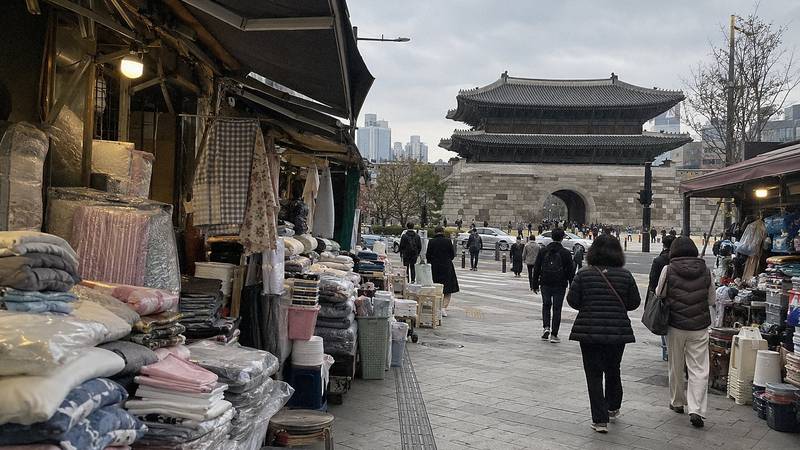
Seoul's biggest traditional market: about 10,000 shops selling clothes, kitchenware and ginseng, plus food alleys. Closed Sundays.
Updated
Essentials
- Hours
- Monday–Saturday. Each building and shop sets its own hours: some arcades trade wholesale overnight, so Visit Seoul lists the market as 00:00–23:00 on weekdays
- Most visitors come between mid-morning and mid-afternoon, when retail shops, food alleys and street stalls are all trading
- Car-free streets: 12:00–18:00 every day from 24 October 2026
- Closed
- Sundays are the market's day off, so most shops are shut. Buildings also take their own breaks around Seollal and Chuseok and in summer; the market posts each building's schedule on its notice board.
- Admission
- Free to enter; you pay shop by shop
- Getting there
- Subway Line 4, Hoehyeon (Namdaemun Market) Station: Exit 5 for Gate 5 and Kalguksu Alley; Exits 6 and 7 for Gate 4. About 5 minutes on foot
- From Seoul Station (KTX, AREX): about 5 minutes on foot past Sungnyemun Gate to Gate 1
- Address
- 21 Namdaemunsijang 4-gil, Jung-gu, Seoul 04529
서울 중구 남대문시장4길 21 - Website
- namdaemunmarket.co.kr
Book your trip
Namdaemun Market is Seoul’s biggest traditional market, a free-to-enter maze of about 10,000 shops beside Sungnyemun Gate. Go Monday to Saturday, mid-morning to mid-afternoon: Sunday is the market’s day off. Enter from Hoehyeon Station Exit 5, eat in Kalguksu or Galchi Alley, and allow one to two hours.
It suits a half day around Myeongdong or Seoul Station. Come for cheap kitchenware, children’s clothes, ginseng, glasses and souvenirs, and for market food. Since 24 October 2026, the main lanes have been closed to vehicles from 12:00 to 18:00, so early afternoon is the easiest time to walk around.
When to go
There is no single opening time: each building and shop keeps its own hours. Some clothing and import arcades trade wholesale through the night, which is why Visit Seoul lists the market as open 00:00–23:00 on weekdays.
| Time | What you find | Good for |
|---|---|---|
| Early morning, Mon–Sat | Wholesale buyers, deliveries, flower wholesalers | Seeing the market at work; vehicles in the lanes |
| Mid-morning to mid-afternoon, Mon–Sat | Retail shops, food alleys and street stalls all trading | First visits, shopping, lunch |
| 12:00–18:00 daily | Main lanes closed to cars and motorbikes | Walking without traffic |
| Evening | Day shops closing; some arcades open later for wholesale | Not ideal for a first visit |
| Sunday | Market’s day off; most shops shut | Go to Myeongdong instead |
Day and Sunday closing from Visit Seoul (edited 10 September 2026); car-free hours from the market’s notice of 16 October 2026. The time-of-day pattern follows the market’s standing hours notice from 2016, so treat it as a guide.
Which gate to use
The market is ringed by numbered gates. Pick your entrance by what you want first.
| Arrive from | Gate | What is nearby |
|---|---|---|
| Hoehyeon Station Exit 5 (Line 4) | Gate 5 | Kalguksu Alley, an information booth, accessory arcades |
| Hoehyeon Station Exits 6 and 7 | Gate 4 | Children’s clothing arcades (F and G buildings) |
| Seoul Station or Sungnyemun | Gate 1 | Galchi Alley, the imported-goods arcade by Sungnyemun |
| Myeongdong, along Namdaemun-ro | Gates 2 and 3 | Camera street, stationery alley, accessory and jewellery buildings |
Gates from the market’s car-free zone map (October 2026); exits from the market’s directions page and Visit Seoul.
A good loop for a first visit: enter at Gate 5, eat in Kalguksu Alley, walk the central lanes north to Gates 2–3, and leave towards Myeongdong.
What to eat
The market has two food alleys and several long-running restaurants on its own list.
- Galchi Alley (갈치조림 골목) – braised hairtail in a spicy sauce, the market’s best-known dish. The alley grew up around the late 1980s and sits on the Sungnyemun (Gate 1) side.
- Kalguksu Alley (칼국수 골목) – a narrow lane by Gate 5 at 42-1 Namdaemunsijang 4-gil. Counters serve knife-cut noodles in broth, often together with barley rice and cold noodles in one order.
- Hotteok – sweet or vegetable-filled griddle pancakes from street stands, a classic snack between shops.
- Older restaurants – the market’s list includes oxtail soup (kkori gomtang) houses, dumpling shops, chicken soup and Buwon Myeonok for Pyongyang-style naengmyeon.
Most counters are small and seating is tight, so lunchtime queues build quickly. Arriving before 12:00 or after 13:30 helps. For dishes and typical meal costs across the country, see the Korean food guide.
What to buy
The market sells around 1,700 kinds of goods. Many shops make what they sell and trade wholesale, and some are set up mainly for trade buyers, so ask whether single items are sold.
| Looking for | Where in the market |
|---|---|
| Children’s clothing | Arcades around Gates 4 and 6 (Pokki, Mama, Bourdeng, Crayon) |
| Kitchenware and tableware | Third floors of the Jungang (C) and Daedo (D) arcades |
| Ginseng, seaweed and food gifts | Bondong arcade and stalls along the main lanes |
| Glasses | Glasses street off Namdaemunsijang 2ga-gil |
| Cameras | Camera street on Namdaemun-ro |
| Souvenirs, hats and socks | Souvenir street along Namdaemunsijang 4-gil |
| Artificial and fresh flowers | Daedo flower arcade and the flower wholesale market |
Specialty alleys and arcades from the market’s official site, checked 28 October 2026.
If you only want souvenirs and cosmetics, Myeongdong next door is simpler. Come to Namdaemun for everyday goods at market prices. See shopping in Korea for tax refunds and where else to shop.
Practical tips
- Toilets are inside the main arcade buildings, including Bondong A, C, D and E buildings.
- Information booths stand at Gate 5 and Gate 3. Banks, ATMs and currency exchange points are spread around Gate 1, Gate 2 and the central buildings.
- Lanes are narrow and busy. Keep bags in front of you and step aside for carts, especially before 12:00 and after 18:00.
- Check holiday breaks. Buildings close on different days around Seollal, Chuseok and the summer holidays, and the market posts their schedules on its notice board.
History in brief
The market traces its start to 1414, under King Taejong, when the Joseon court let merchants trade from government-leased shops near the city’s south gate. Later it became known as the Chilpae market. The market describes itself as Korea’s first modern permanent market, from 1897.
After the Korean War, traders dealt in relief goods and US military surplus, earning names such as the Dokkaebi (goblin) and Yankee markets. Fires in 1954, 1968 and 1977 damaged parts of the market, and since 1964 it has been run by a company jointly owned by building owners and merchants.
Nearby
Sungnyemun, the old south gate the market is named after, stands at the western edge. Seoullo 7017, the planted walkway over the railway, starts by Seoul Station a few minutes away. To the east lie Myeongdong and Namsan, topped by N Seoul Tower, and Deoksugung is a walk north past City Hall. For other markets, including the food-focused Gwangjang Market, see markets in Korea.
Nearby
Myeongdong
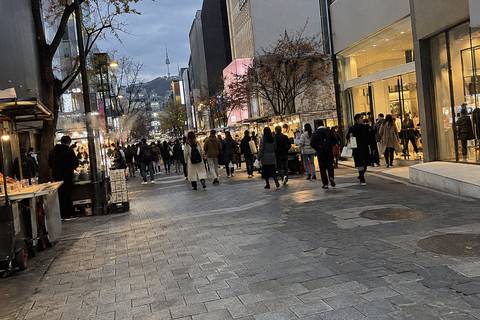
Seoul's best-known shopping district for cosmetics and fashion, with evening street-food stalls and a historic cathedral.
Seoullo 7017
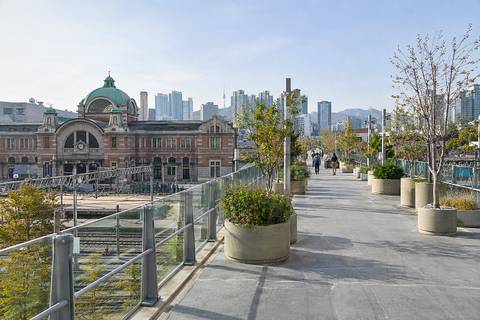
A former highway overpass by Seoul Station reborn as an elevated walkway planted with trees and flowers in round planters.
Deoksugung Palace
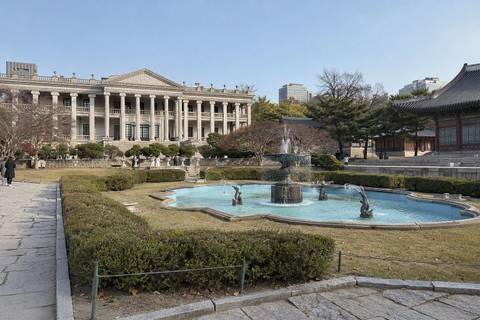
A compact palace by City Hall mixing Korean halls with early 1900s Western-style stone buildings; its stone-wall road is a classic stroll.
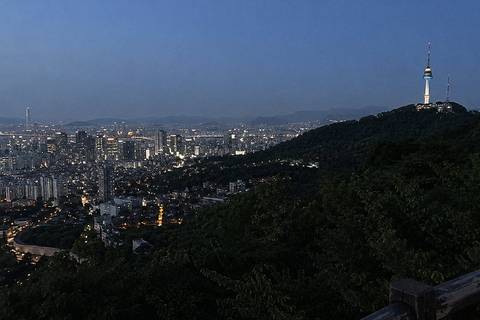
N Seoul Tower
The tower atop Namsan, reached by cable car, bus or a walk up the hill, with panoramic views over the whole city.
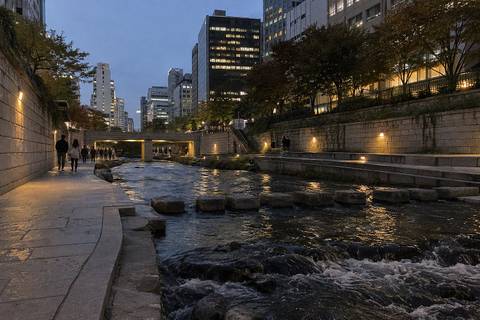
Cheonggyecheon Stream
A restored urban stream with walking paths below street level, running east from Gwanghwamun; pleasant on summer evenings.
Frequently asked questions
Is Namdaemun Market open on Sundays?
Mostly not. Sunday is the market's official day off, and Visit Seoul lists it as open Monday to Saturday. Plan your visit for a weekday or Saturday.
What are Namdaemun Market's opening hours?
There is no single opening time. Each building and shop sets its own hours, and some clothing and import arcades trade wholesale through the night, so Visit Seoul lists the market as 00:00–23:00 on weekdays. For shopping and eating, mid-morning to mid-afternoon, Monday to Saturday, is the safest window.
Which subway exit is best for Namdaemun Market?
Use Hoehyeon (Namdaemun Market) Station on Line 4. Exit 5 comes up by Gate 5 and Kalguksu Alley; Exits 6 and 7 are by Gate 4. From Seoul Station it is about a 5-minute walk past Sungnyemun Gate.
What should I eat at Namdaemun Market?
The market's two food alleys are the classics: Galchi Alley for braised hairtail (galchi-jorim), and Kalguksu Alley by Gate 5, where knife-cut noodles come with barley rice and cold noodles. Street stands sell vegetable-filled hotteok, and long-running restaurants serve oxtail soup and Pyongyang-style naengmyeon.
Is Namdaemun Market closed to cars?
Partly. From 24 October 2026, the main lanes inside the market are closed to cars and motorbikes every day from 12:00 to 18:00 for pedestrian safety. Outside those hours, delivery traffic uses the same lanes.
Sources
Facts on this page were checked against these sources on 28 October 2026. Prices, hours and rules change — confirm with the operator before you go.
- 남대문시장 – 남대문시장 차 없는 거리 시행 안내 (2026-10-16: 10월 24일부터 매일 12:00~18:00 차량·오토바이 출입금지, 운영구간 지도) (Korean) · official
- 남대문시장 – 개요 (점포 약 10,172개, 1일 방문객 30만 명, 이용시간 상가별 상이, 회현역 5·6·7번 출구) (Korean) · official
- 남대문시장 – 역사 (1414년 시전, 1897년 근대적 상설시장, 1964년 주식회사) (Korean) · official
- 남대문시장 – 찾아오는 길 (서울역 도보 5분, 회현역) (Korean) · official
- 남대문시장 – 특화골목 (갈치조림 골목, 칼국수 골목, 안경·카메라·문구·군인용품·아동복 거리) (Korean) · official
- 남대문시장 – 주요 맛집 (야채호떡, 진주집, 부원면옥, 가메골손왕만두 등) (Korean) · official
- 남대문시장 – 편의시설 (화장실, 안내소, 은행·ATM, 환전) (Korean) · official
- 남대문시장 – 상가별 영업시간 안내 (공지, 2016-11-15 게시) (Korean) · official
- Visit Seoul – Namdaemun Market (Mon–Sat, Sunday holiday, hours vary per stall; edited 10 Sep 2026) · official
- 서울관광재단 Visit Seoul – 남대문시장 (월~토, 일요일 휴무, 회현역 5번 출구; 수정 2026-09-10) (Korean) · official
- Visit Seoul – Namdaemun Kalguksu Alley (42-1 Namdaemunsijang 4-gil, Hoehyeon Exit 5) · official
- 내 손안에 서울 – 남대문시장의 재미있는 역사 이야기 (갈치조림 골목, 칼국수 골목, 도깨비시장) (Korean) · official
- OpenStreetMap – Namdaemun Market (coordinates)