Daegu 대구
Daegu is worth one night on the Seoul–Busan KTX line, about 1 h 40 min from Seoul Station, if you come for food and markets. Seomun Market's night market runs Friday to Sunday until 23:30, the modern-history alleys and both big museums are free, and Palgongsan's temples rise on the city's north-east edge.
Updated
Is Daegu worth it?
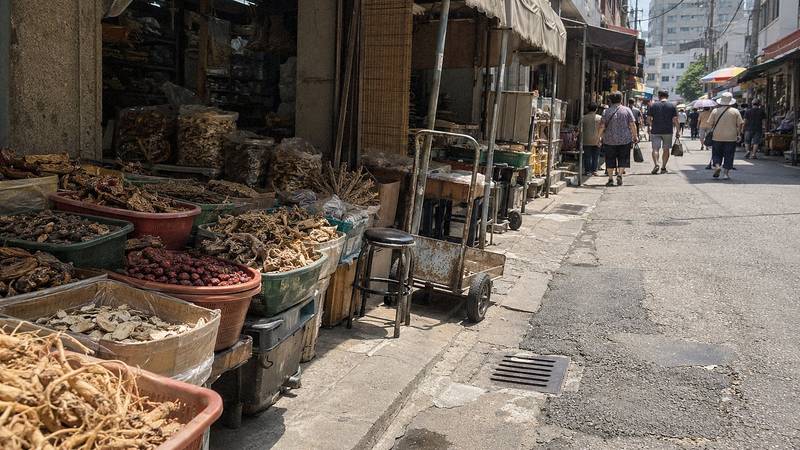
Daegu, about 2.36 million people in a basin ringed by mountains, is the big city of the south-east and a stop on the KTX line between Seoul and Busan. It has no single famous sight. People come for its food, its markets and a walkable old centre, and the city works well as a one-night break in a Seoul–Busan trip.
| Your situation | Do this |
|---|---|
| One night between Seoul and Busan | Modern alleys and Seomun Market by day, makchang or the night market in the evening |
| Here Friday to Sunday | Plan the evening around the Seomun night market (from 19:00) |
| Here on a Monday | Both museums, the herbal museum and the City Tour bus are closed; walk the alleys and markets instead |
| A free morning | Palgongsan by cable car, plus Donghwasa (free) |
| Only one stop on the KTX line and you want history | Choose Gyeongju instead and keep Daegu for food |
| Late October to early November | Palgongsan’s leaves are forecast to peak around 30 October |
Facts checked 25 October 2026. Seomun Market itself closes on the 1st and 3rd Sundays of the month, so check the date if markets are the reason you are coming.
Seomun Market and the night market
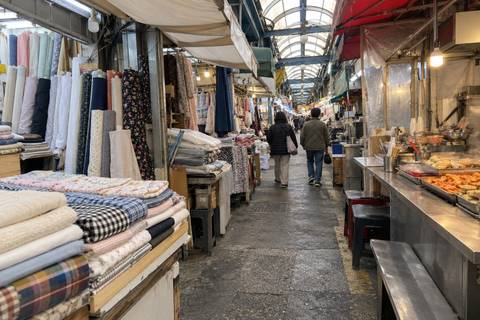
Seomun Market is Daegu’s biggest market and one of the three great markets of the Joseon era. More than 5,000 shops fill eight sections, selling fabrics and silk, kitchenware, fruit and dried seafood. It is open 09:00–18:00 and closes on the 1st and 3rd Sundays of each month. The Line 3 monorail stops at Seomun Market Station, three minutes’ walk away.
Come hungry. More than 20 stalls between Zones 1 and 4 form a noodle alley serving nureun guksu, noodles in anchovy broth.
| Market | Days | Hours | Season |
|---|---|---|---|
| Seomun Market (day) | Daily except 1st and 3rd Sun | 09:00–18:00 | All year |
| Seomun night market | Fri–Sat | 19:00–23:30 | March to December 2026 |
| Seomun night market | Sun | 19:00–22:30 | March to December 2026 |
From the Daegu tourism and Seomun night market sites, checked 25 October 2026. The night market fills the main lane with food stalls and has free stage performances in the evening. Rain can cancel it, and stalls sell out, so go early. For other night markets in Korea, see markets in Korea.
Central Daegu on foot: the modern alleys
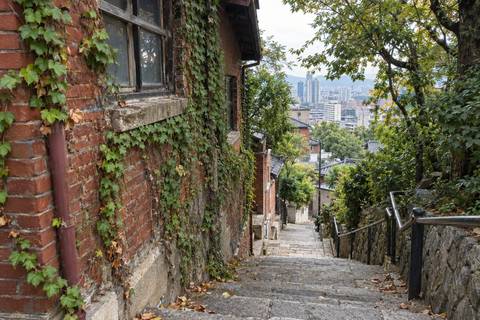
Central Daegu is best seen on foot. The city’s Modern History Alley course covers 1.64 km and takes about two hours. It starts at Cheongna Hill, where early 20th-century missionary houses of red brick stand among the trees. It then runs down the 3·1 Movement Road, 90 steps through the trees used by students preparing the 1919 independence protests, to the twin-spired Gyesan Cathedral. Gyesan is a working parish, so visit quietly outside Mass. The walk is free, open-air and open at any hour.
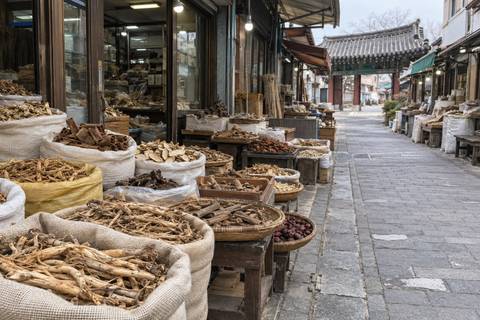
The route continues past the old houses of the poet Yi Sang-hwa and of Seo Sang-don into Yangnyeongsi, the herbal medicine market. It has traded since 1658, and today about 350 herbal pharmacies, clinics and tea shops line a 650 m stretch of Namseong-ro. Its Herbal Medicine Museum is free, open 09:00–18:00 with last entry at 17:30, and closed on Mondays. Free guided walks of the alley course run on Saturdays at 10:00 and 14:00.
A short ride south, Kim Gwang-seok Street is a 350 m alley of murals behind Bangcheon Market, made for the much-loved folk singer who lived in this neighbourhood. Dongseongno, the shopping and nightlife district on the line of the old city wall, is a few minutes north of Banwoldang Station.
Palgongsan: Donghwasa, Gatbawi and the cable car
Palgongsan, the granite ridge on the north-east edge of the city, became Korea’s 23rd national park in December 2023. Walking in is free, as in all Korean national parks. Allow half a day, and check the bus route on Naver Map before you set out.
Donghwasa, the best-known temple on the mountain, has been free to enter since May 2023, when most temple heritage fees were dropped; only parking is charged. The Palgongsan cable car rises to 820 m for a view along the ridge.
| Palgongsan cable car | Adult | Child (4–11) |
|---|---|---|
| Return | ₩14,000 | ₩8,000 |
| One way | ₩11,000 | ₩5,500 |
| Hours | 09:00–18:00 Jun–Nov, 09:00–19:00 Apr–May, 09:30–17:00 Dec–Mar |
From the cable car operator’s site, checked 25 October 2026. Ticket sales stop an hour before closing, and visitors aged 65 and over pay ₩12,000 return.
The Gatbawi stone Buddha sits on a summit with a flat stone slab on its head like a hat. The usual path from Seonbonsa temple, on the Gyeongsan side of the mountain, is 1.6 km and takes about an hour each way on steep stone steps. The Korea Forest Service forecast Palgongsan’s 2026 autumn peak for 30 October; see autumn leaves in Korea and national parks.
Views and evenings: Apsan, 83 Tower and Suseongmot
Apsan Park, the mountain on the south side of the city, has a cable car that climbs towards an observatory with a view over the whole basin. It costs ₩14,000 return or ₩10,000 one way for adults. Near the foot of the mountain, the Anjirang gopchang alley is the place for grilled intestine and makchang.
83 Tower, in Duryu Park beside the E-World amusement park, has an observation deck and exhibition floor on the 76th and 77th floors. Entry costs ₩18,000 for adults and ₩14,000 for children and seniors. It opens at 11:00 and stays open into the evening. Suseongmot Lake, a reservoir from 1925, has a 2 km lakeside path and cafés and is free at all hours.
The Daegu National Museum in Suseong-gu covers the region from prehistory to Buddhist art. It is free, open 09:00–18:00, and closed on Mondays, 1 January and the days of Seollal and Chuseok.
Getting there and around
The KTX from Seoul Station reaches Dongdaegu in about 1 h 40 min to 2 h. The same line continues to Gyeongju and Busan, so Daegu fits into a Seoul–Busan trip without backtracking. If you have a rail pass, see the Korail Pass guide.
In the city, the metro covers almost everything. Take Line 1 from Dongdaegu to Banwoldang for the centre, and Line 3 for Seomun Market. A ride costs ₩1,500 with a T-money or other transport card. Palgongsan needs a city bus, and the hop-on, hop-off Daegu City Tour (₩10,000, Tuesday to Sunday) links the central and southern sights in one loop.
Haeinsa, the temple of the Tripitaka Koreana woodblocks, lies outside the city in Hapcheon and makes a day trip by bus. See the Gyeongsang guide for it and the rest of the region.
When to go
Spring and autumn are the best times. Summer is long and very hot in the Daegu basin, and the city has a reputation as one of the hottest places in Korea. If you are here in summer, do the walking in the morning and the markets at night.
The Daegu Chimac Festival, a summer festival of fried chicken and beer, ran from 1 to 5 July 2026 in Duryu Park; the 2027 dates have not been announced. The night market season ends in December and starts again in March. For more traditional Korea in the region, see Andong.
Book your trip
Top attractions in Daegu
Central Daegu (Jung-gu)
The old walled centre: Seomun Market, the modern-history alleys around Cheongna Hill, the herbal medicine street and the Dongseongno shopping area. Almost everything is walkable from Banwoldang Station.
Seomun Market
Daegu's biggest market, with over 5,000 shops in eight sections and a noodle alley; the night market runs Fri–Sun, March to December.
Modern History Alleys and Cheongna Hill
A free 1.64 km walk from the missionary houses on Cheongna Hill down the 90-step 3·1 Movement Road to Gyesan Cathedral.
Yangnyeongsi Herbal Medicine Market and Museum
A 650 m street of about 350 herbal medicine shops, with a free museum of Korean medicine; the museum is closed on Mondays.
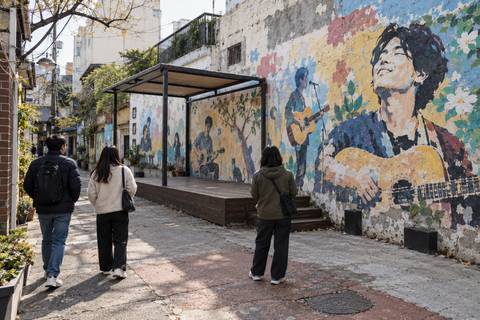
Kim Gwang-seok Street
A 350 m mural alley behind Bangcheon Market in memory of the folk singer Kim Gwang-seok; free and open at all hours.
Dongseongno
Daegu's main shopping and nightlife district on the line of the old city wall, centred on a car-free street near Banwoldang.
Apsan, Duryu and Suseong (south)
The southern side of the city: the Apsan cable car and viewpoints, 83 Tower in Duryu Park, the gopchang alley at Anjirang, Suseongmot Lake and the national museum.
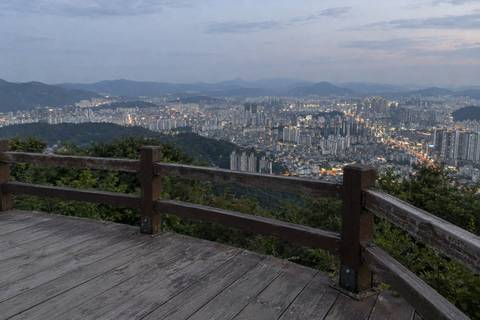
Apsan Park and cable car
The mountain park on the south side of the city; a cable car climbs towards the observatory with a view over the whole basin.
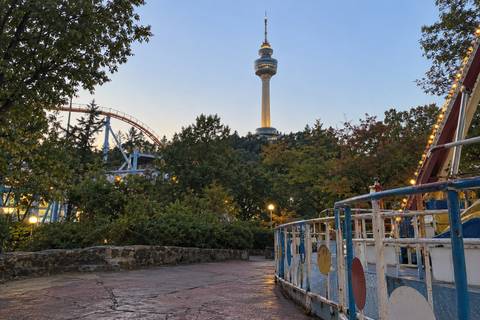
83 Tower
An observation tower in Duryu Park, next to the E-World amusement park, with a viewing deck on the 77th floor.
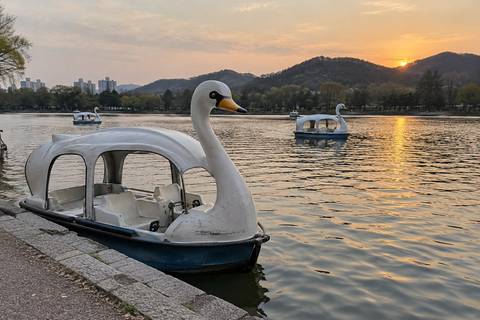
Suseongmot Lake
A reservoir from 1925 with a 2 km lakeside path, cafés and duck boats; free and open at all hours.
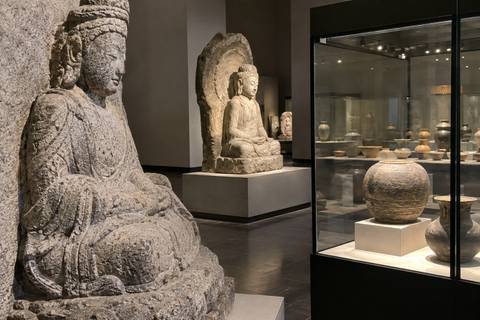
Daegu National Museum
The national museum for the Daegu and North Gyeongsang area, from prehistoric finds to Buddhist art; free, closed on Mondays.
Palgongsan (north-east)
The granite ridge on the north-east edge of the city, a national park since 2023, with Donghwasa temple, a cable car and the Gatbawi stone Buddha. Plan half a day or more.
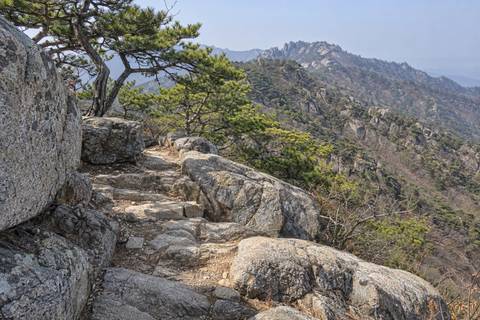
Palgongsan National Park
Granite ridge north-east of Daegu, a national park since December 2023; a cable car climbs to 820 m and leaves peak in late October.
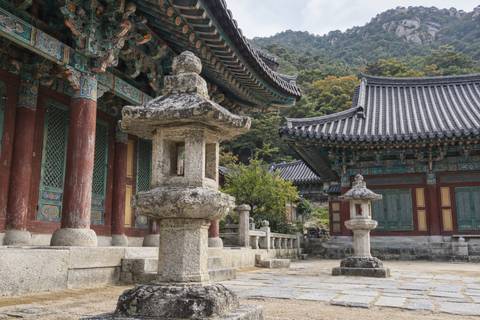
Donghwasa Temple
The best-known temple on Palgongsan; free to enter since May 2023, with a fee only for parking.
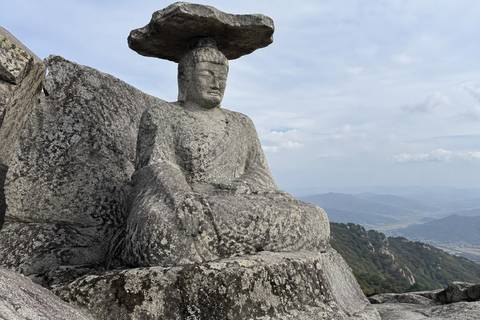
Gatbawi Stone Buddha
A seated stone Buddha with a flat stone 'hat' on a Palgongsan summit, reached by a 1.6 km climb of about an hour.
Daegu by interest
Getting to Daegu
| From | How | Time | Notes |
|---|---|---|---|
| Seoul Station | KTX to Dongdaegu Station | about 1 h 40 min – 2 h | Trains run all day on the Seoul–Busan line. Book on the Korail app or website, which since 1 September 2026 also sells the former SRT trains from Suseo; see how to book KTX tickets. |
| Incheon Airport | AREX to Seoul Station, then KTX to Dongdaegu | about 2 h 30 min or more with the change | Usually quicker and more frequent than a direct airport bus. Leave time for the change at Seoul Station; see Incheon Airport to Seoul. |
| Seoul Express Bus Terminal | Express bus to Dongdaegu | about 3 h 30 min | Cheaper than the train but slower. Fares rose on 1 October 2026, so check the current price on Kobus or T-money Bus; see long-distance buses. |
| Daegu International Airport | City bus, or bus to Ayanggyo Station and then metro Line 1 | a short city bus ride | Daegu has its own airport with domestic and international flights, on the eastern side of the city. The airport lists buses Express 1 (급행1), 101, 101-1, 401 and 719 at the terminal. |
Dongdaegu Station, on the east side of the centre, is the KTX stop and the main transport hub, with the express and intercity bus terminal in the same complex. Metro Line 1 runs from there to Banwoldang and Jungangno in the centre. From 30 October to 14 November 2026, the last KTX from Seoul (22:58) ends at Seodaegu Station because of track work at Daegu Station; take the 22:28 if you need Dongdaegu.
Getting around
Daegu has three metro lines. Line 1 links Dongdaegu with the centre, Line 2 crosses it from west to east, and Line 3 is an elevated monorail that passes Seomun Market. A ride costs ₩1,500 with a transport card such as T-money or ₩1,700 with a single-journey token. Transfers between metro and city buses are free within 30 minutes if you tap the reader when you get off. The Daegyeong commuter line (Gumi–Seodaegu–Daegu–Dongdaegu–Gyeongsan) costs ₩1,500–2,800 by distance, with a 50% discount when you transfer to the metro. The Daegu City Tour hop-on, hop-off bus (Tuesday to Sunday, 09:30–17:30) starts at Dongdaegu Station and loops past Kim Gwang-seok Street, the modern alleys, Seomun Market, 83 Tower, Apsan and Suseongmot; a day ticket costs ₩10,000 for adults, bought on board. See T-money.
Long-distance trains: see KORAIL PASS and transportation in Korea.
Itineraries
Daegu in one night
Arrive by KTX at midday and take Line 1 to Banwoldang. Walk the modern-history alleys from Cheongna Hill down to Gyesan Cathedral and through the herbal medicine street, then head to Seomun Market for noodles. On a Friday, Saturday or Sunday, stay for the night market from 19:00; otherwise eat makchang or jjimgalbi. Next morning, go up Palgongsan or the Apsan cable car before the train on.
Seoul to Busan via Daegu
Take a morning KTX to Dongdaegu, leave your bag in a station locker and spend the afternoon in the centre: Kim Gwang-seok Street, the modern alleys and Seomun Market. Return to Dongdaegu and continue to Busan on an evening KTX. Gyeongju is on the same line, so you can also make it a stop on the way.
Palgongsan half day
Ride the Palgongsan cable car up the ridge for the view, then visit Donghwasa, which is free. Fit walkers can add the hour's climb to the Gatbawi Buddha from Seonbonsa on the Gyeongsan side instead. In late October and early November the slopes are at their autumn best, and busy at weekends.
Where to stay in Daegu
Dongseongno and Banwoldang
The centre of the city, a short walk from the modern alleys, the herbal street and the shopping streets, and a few metro stops from Seomun Market.
Best for: First-timers, food, evenings
See hotels in Dongseongno and BanwoldangDongdaegu Station
Hotels around the KTX station and bus terminal are practical for a one-night stop, with Line 1 straight into the centre.
Best for: Short stays, early trains
See hotels in Dongdaegu StationSuseongmot Lake
A residential area by the lake with cafés and restaurants, south-east of the centre; quieter than Dongseongno at night.
Best for: Couples, quieter evenings
See hotels in Suseongmot Lake
Some links on this page are affiliate links: if you book through them we may earn a commission at no extra cost to you. It never decides what we recommend. Affiliate disclosure.
Food and restaurants in Daegu
Daegu takes its food seriously enough to publish an official list, the Daegu 10 Flavours (대구10미). Most are hearty, spicy and meant for sharing, and many come with their own alley of specialist restaurants.
What to eat
| Makchang (grilled intestine) 막창구이 | Charcoal-grilled and dipped in a soybean-paste sauce with garlic and scallions; the classic Daegu night out with soju. |
|---|---|
| Ttaro gukbap (Daegu yukgaejang) 따로국밥 | A fiery beef and radish soup with the rice served separately (ttaro means 'apart'), its chilli oil made with beef fat. |
| Dongin-dong jjimgalbi 동인동 찜갈비 | Beef ribs braised with plenty of chilli powder and garlic, served in a battered aluminium pot. |
| Mungtigi 뭉티기 | Thick slices of very fresh raw beef dipped in a sauce of sesame oil, garlic and chilli. |
| Napjak mandu 납작만두 | Thin, flat dumplings with a glass-noodle filling, boiled then pan-fried and eaten with soy sauce and chilli. |
| Nureun guksu 누른국수 | Hand-cut wheat and soybean-flour noodles in an anchovy broth, the dish of Seomun Market's noodle alley. |
Where to eat
- Seomun Market noodle alley — More than 20 stalls between Zones 1 and 4 serve nureun guksu and other noodles; see markets in Korea.
- Anjirang gopchang alley — A street of grilled gopchang and makchang restaurants running from Anjirang crossroads towards Apsan.
- Dongin-dong jjimgalbi alley — The home of Daegu's chilli-braised ribs, a few blocks east of the centre in Jung-gu.
- Pyeonghwa Market chicken gizzard alley — About 25 restaurants frying dakttongjip, crisp chicken gizzards, near Dongdaegu Station.
Experiences and tours in Daegu
KTX train tickets to Daegu
Book the KTX to Dongdaegu in English with a foreign card; the official Korail site also takes foreign cards.
Check on KlookKorea Rail Pass
Worth it if Daegu is one stop on a longer rail trip with Gyeongju, Busan or Andong; see the Korail Pass guide.
Check on KlookE-World and 83 Tower tickets
The amusement park and observation tower in Duryu Park, popular in the evening when the park is lit.
Check on KlookDaegu day tours
Guided trips around Daegu and Palgongsan, worth comparing with the city's own hop-on, hop-off bus.
Check on Klook
Some links on this page are affiliate links: if you book through them we may earn a commission at no extra cost to you. It never decides what we recommend. Affiliate disclosure.
Frequently asked questions
Is Daegu worth visiting?
Yes, for one night, if you like food and markets. Seomun Market and its weekend night market, the free modern-history alleys and Palgongsan's temples are the highlights. If you only have time for one stop between Seoul and Busan and want ancient sites, choose Gyeongju instead.
How long is the KTX from Seoul to Daegu?
About 1 h 40 min to 2 h from Seoul Station to Dongdaegu, with trains through the day. The express bus from the Seoul Express Bus Terminal takes about 3 h 30 min. From Incheon Airport, take the AREX to Seoul Station and change to the KTX.
When is the Seomun night market open?
On Fridays and Saturdays from 19:00 to 23:30, and on Sundays from 19:00 to 22:30, from March to December 2026. It is closed Monday to Thursday, and rain can cancel the stalls. The day market is open 09:00–18:00 except on the 1st and 3rd Sundays.
What food is Daegu famous for?
Makchang (grilled intestine), ttaro gukbap (spicy beef soup with the rice apart), Dongin-dong jjimgalbi (chilli-braised ribs), mungtigi (raw beef) and napjak mandu (flat dumplings). All five are on the city's official list of ten local dishes.
How do I visit Palgongsan from Daegu?
City buses run up to Palgongsan from the city; check the current route on Naver Map. Donghwasa temple is free, and the Palgongsan cable car costs ₩14,000 return for adults. The Gatbawi Buddha is a 1.6 km climb of about an hour from Seonbonsa.
Sources
Facts on this page were checked against these sources on 25 October 2026. Prices, hours and rules change — confirm with the operator before you go.
- 대구관광 – 서문시장 (이용시간 9시~18시, 첫째·셋째 일요일 휴무) (Korean) · official
- VisitKorea – Seomun Market · official
- 서문야시장 (대구전통시장진흥재단) – 운영시간 (Korean) · official
- 뉴시스 – 대구 야간 명소 서문·칠성야시장 27일 개장 (2026-03-26) (Korean)
- 대구관광 – 근대문화골목 (1.64km, 토요일 10:00·14:00 무료 해설) (Korean) · official
- VisitKorea – 3·1 Movement Road (90 steps, open 24 hours, free) · official
- 대구관광 – 김광석 다시그리기길 (350m, 무료) (Korean) · official
- 대구관광 – 약령시 (약 650m, 한약방 약 350곳) (Korean) · official
- 대구약령시한의약박물관 – 관람안내 (09:00~18:00, 월요일 휴관, 무료) (Korean) · official
- 대구관광 – 동성로 (Korean) · official
- 대구관광 – 83타워 (Korean) · official
- 이월드 – 요금안내 (대구83타워 요금표, 2026-10) (Korean) · official
- 대구관광 – 앞산공원 케이블카 (대인 왕복 14,000원·편도 10,000원) (Korean) · official
- VisitKorea – Apsan Park Cable Car · official
- 대구관광 – 수성못 (Korean) · official
- VisitKorea – Suseongmot Lake · official
- 국립대구박물관 – 관람안내 (09:00~18:00, 월요일 휴관, 무료) (Korean) · official
- 팔공산케이블카 – 요금 및 운행시간 (Korean) · official
- 동화사 – 관람안내 (주차요금) (Korean) · official
- 정책브리핑 – 5월 4일부터 국가지정문화재 관람료 감면 (2023-05) (Korean) · official
- 경북매일 – 동화사·파계사·용연사 문화재관람료 면제 (2023-05-02) (Korean)
- 국립공원공단 – 팔공산 탐방로 (선본사~갓바위 1.6km, 약 1시간) (Korean) · official
- 국립공원공단 – 연혁 (팔공산 국립공원 지정 2023) (Korean) · official
- 산림청 보도자료: 2026년 한반도 단풍절정 예측지도 발표 (2026-09-22) (Korean) · official
- 대구교통공사 – 운임 및 환승 안내 (도시철도 1,500원, 대경선 1,500~2,800원) (Korean) · official
- 대구교통공사 – 노선 현황 (Korean) · official
- 정책브리핑 – 대경선 14일 개통 (2024-12-12) (Korean) · official
- 한국공항공사 대구공항 – 오시는 길 (버스·지하철) (Korean) · official
- 코레일 승차권 예매 (Korail ticketing and timetables) (Korean) · official
- SBS Biz – 서울발 KTX 막차, 30일부터 서대구역까지만 운행 (코레일 발표, 2026-10-12) (Korean)
- 정책브리핑 – 시외·고속버스 운임 상한 조정 (2026-08-26) (Korean) · official
- 대구시티투어 – 이용안내 (순환코스·요금) (Korean) · official
- 대구관광 – 대구10미 (Korean) · official
- VisitKorea – Daegu Travel Guidebook (English, July 2025) · official
- 대구치맥페스티벌 – 2026 프로그램 (7.1~7.5, 두류공원) (Korean) · official
- 헤럴드경제 – 2026 대구치맥페스티벌 개막 (2026-06-29) (Korean)