Transportation
Domestic Flights in Korea
Updated
Book your trip
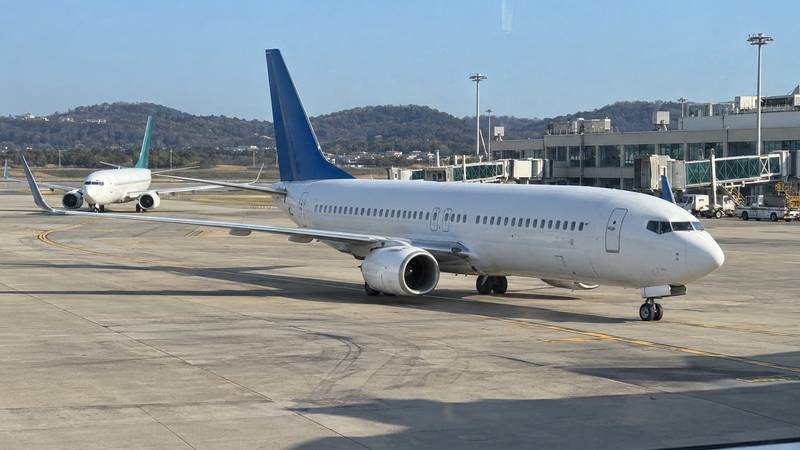
In Korea, a domestic flight is worth it mainly for Jeju: Seoul’s Gimpo Airport to Jeju takes about 75 minutes, and nine airlines fly the route through the day. For Seoul to Busan the KTX train is the better choice, because it runs centre to centre. Foreign visitors show their passport at the gate. Since 20 April 2026, each passenger may carry at most two power banks, in hand luggage only, and may not charge with them on board. Fares, schedules and rules below were checked on airline and airport sites on 16 October 2026.
| Your situation | What to do |
|---|---|
| Going from Seoul to Jeju | Fly from Gimpo, not Incheon; it is 22 minutes from Seoul Station by AREX |
| Going from Busan to Jeju | Fly from Gimhae Airport: about 1 hour, five airlines |
| Going from Seoul to Busan | Take the KTX (about 2 h 20 min, ₩54,400) rather than flying |
| Landing at Incheon and heading straight to Jeju | Take AREX to Gimpo (37–44 min) and fly from there; allow at least 3 hours for the transfer |
| Travelling with a big suitcase on a low-cost fare | Check the fare type: some cheapest fares include no checked bag |
Which domestic routes are worth flying?
Korea’s mainland is well covered by fast trains, so most visitors fly only to and from Jeju. The three routes first-time visitors use most are below. Times are the scheduled gate-to-gate times in the Korea Airports Corporation (KAC) schedule for 20 October 2026.
| Route | Scheduled time | Airlines (October 2026) | Better alternative? |
|---|---|---|---|
| Seoul Gimpo – Jeju | 75 min (some flights 80–85) | Korean Air, Asiana, Jeju Air, Jin Air, Trinity Airways, Air Busan, Air Seoul, Eastar Jet, Parata Air | No: flying is the only practical way |
| Busan Gimhae – Jeju | 60–65 min | Korean Air, Jeju Air, Jin Air, Air Busan, Eastar Jet | No |
| Seoul Gimpo – Busan Gimhae | 65 min | Korean Air, Air Busan, Trinity Airways, Jeju Air | Yes: the KTX from Seoul Station |
Gimpo–Jeju has flights from early morning to late evening. Some airlines on the list run only a few flights a day, so most of the choice of times comes from the larger carriers.
These lists come from the summer schedule, which ends on 24 October 2026. Airlines publish their winter timetables separately, so check the booking site for travel from late October.
Seoul to Busan: why the train usually wins
The flight itself is 65 minutes, but Gimpo and Gimhae both sit on the edge of their cities. Add the trips to both airports and the 30-minute check-in cut-off, and the journey takes about as long as the KTX, which runs from Seoul Station to Busan Station in about 2 h 20 min for ₩54,400. Korean Air’s regular Gimpo–Gimhae fare is ₩100,900 on weekdays. Fly only if a cheap fare turns up or you are staying near Gimpo.
Which airline should you choose?
All the airlines on these routes are Korean, and the flights are short, so the main differences are price and baggage.
- Full-service: Korean Air and Asiana. A checked bag of 20 kg is included, and the schedule is the widest. Asiana still flies and sells tickets under its own name.
- Low-cost: Jeju Air, Jin Air, Trinity Airways, Air Busan, Air Seoul, Eastar Jet, Parata Air. These are often cheaper, but the checked bag depends on the fare type you buy. Trinity Airways is the airline formerly called T’way Air, with the same TW flight codes.
How much does a domestic flight cost?
Korean fares are quoted as a total that already includes the fuel surcharge and the airport usage fee. Korean Air publishes its regular economy fares in a monthly fare table. The October 2026 one-way fares are below.
| Route | Weekday (Mon–Thu) | Weekend (Fri–Sun) | Peak days |
|---|---|---|---|
| Gimpo – Jeju | ₩106,900–110,900 | ₩119,900–124,900 | ₩141,900 |
| Gimhae – Jeju | ₩88,900–94,900 | ₩97,900–103,900 | ₩114,900 |
| Gimpo – Gimhae | ₩100,900 | ₩112,900 | ₩122,900 |
- Why two prices: the higher figure is for “preferred” times, which means flights to Jeju before 15:00 and flights from Jeju from 12:00.
- Busy days: Korean Air applies its peak price to Jeju-bound flights on Fridays and Saturday mornings, and to flights from Jeju on Sunday afternoons. Peak dates in late 2026 include 24–25 and 31 December.
- What is included: the fuel surcharge of ₩20,900 one way applies to tickets issued in October 2026 and can change each month. The ₩4,000 domestic airport usage fee is the same at every airport KAC runs. Children aged 2–12 pay half the airport fee, and infants under 2 pay none.
- Cheaper fares: these are Korean Air’s regular fares. Its discount fares and the low-cost airlines’ fares are often well below them, especially on weekdays, but they change daily and are not published in a table. Compare a few airlines for your date.
How to book and check in
- Book on the airline’s own site or app. Korean Air, Asiana and Jeju Air have English sites. Trinity Airways states that it accepts overseas Visa, Mastercard and JCB cards, with a 3D Secure check.
- Enter your name exactly as in your passport. It is checked against your ID at the gate.
- Check in online or at the airport. With hand luggage only, mobile check-in lets you go straight to security. With a bag, use the airline’s counter or bag-drop.
- Be at the airport 1 to 2 hours before departure. Airlines advise different times, but every airline below closes its check-in counter 30 minutes before departure.
- Show your passport and boarding pass at the entrance to the departure area, then go through security to the gate.
Each airline sets its own deadlines. These are the times on each airline’s own pages:
| Airline | Check-in counter closes | Boarding gate closes |
|---|---|---|
| Korean Air | 30 min before departure | 10 min before (boarding from 20 min) |
| Asiana | 30 min before | 5 min before (boarding from 15 min) |
| Jeju Air | 30 min before | Not stated |
| Jin Air | 30 min before | 5 min before |
| Trinity Airways | 30 min before | 10 min before (boarding from 20 min) |
Jin Air adds that passengers who are not inside the departure area 30 minutes before departure may be refused boarding. Treat 30 minutes as the real deadline on every airline.
How much baggage can you take?
Free baggage for economy passengers on domestic routes, from each airline’s baggage pages (checked 16 October 2026):
| Airline | Free checked bag | Hand luggage |
|---|---|---|
| Korean Air | 20 kg | 1 bag (55 × 40 × 20 cm) plus 1 small item, 10 kg in total |
| Asiana | 20 kg | 1 bag (115 cm in total) plus 1 small item, 10 kg in total |
| Jeju Air | 15 kg on Standard fares, 30 kg on Biz Lite, none on Basic | Bag plus small item, 10 kg in total |
| Jin Air | 15 kg | 1 bag of 10 kg (12 kg on flights between Jeju and Gimpo, Cheongju, Gwangju or Busan) plus a laptop bag or handbag |
| Trinity Airways | 20 kg on regular fares, 15 kg on Smart fares, none on event fares | Bag plus small item, 10 kg in total |
On the low-cost airlines the cheapest fare often has no checked bag, so add one when you book if you need it. A full-size suitcase is usually over 15 kg by the end of a trip, so check the weight before you choose a fare.
What you need at the airport
Your passport
Every passenger shows photo ID with their boarding pass before security. Foreign visitors should carry their passport itself: Incheon Airport’s list of accepted ID rules out expired documents, photocopies, photos and screenshots. Residents can use an alien registration card instead.
Gimpo and Jeju have fast lanes for passengers who have registered biometric ID, but KAC limits that registration to Korean nationals. Korean mobile IDs are for Korean-issued cards, so tourists use the normal lane with a passport.
Power banks: the 2026 rules
The transport ministry tightened the rules for power banks on all flights from 20 April 2026, in line with a new international standard:
- No more than two power banks per person, each 160 Wh (43,000 mAh) or less. Before April 2026 the domestic limit was five.
- No charging on board: you may not charge the power bank, or plug your phone or another device into it.
- Hand luggage only: never in a checked bag. Asiana also asks you to keep them on you or in the seat pocket, not in the overhead bin.
- Cover the terminals with tape, a cap or a small zip bag so they cannot short-circuit. Asiana’s notice adds that spare lithium batteries of 100–160 Wh need the airline’s approval.
Liquids are not limited on domestic flights
Korea’s 100 ml rule for liquids applies to international and transfer flights only. A full bottle of water or sunscreen can go through security on a flight from Gimpo or Jeju. Dangerous goods such as fuel, bleach and pesticides are banned on all flights. If you connect to an international flight on the same ticket, the 100 ml rule applies.
Getting to Gimpo Airport
Gimpo is Seoul’s domestic airport, west of the city centre. The subway station is under the airport, served by the AREX airport railway, subway lines 5 and 9, the Gimpo Goldline and the Seohae line.
- From Seoul Station: the AREX all-stop train takes 22 minutes and costs ₩1,750 by transport card, from 05:20 to midnight. A T-money card works on every line to the airport.
- From Incheon Airport: the AREX all-stop train takes 37 minutes from Terminal 1 (₩4,350 by card) and 44 minutes from Terminal 2 (₩4,950). With the walk to the domestic terminal and the 30-minute cut-off, allow at least 3 hours between landing at Incheon and a flight from Gimpo.
- Domestic and international terminals are separate buildings. For a domestic flight, head for the domestic terminal. A free shuttle bus links the two terminals from 08:00 to 23:00, every 12–15 minutes.
From Busan, Gimhae Airport is on the city’s western edge, near the Nakdong River. Allow extra time if you are coming from Haeundae or the east of the city.
Arriving at Jeju Airport
Jeju International Airport is on the edge of Jeju City, so hotels in the city are a short taxi or bus ride away. For Jungmun and Seogwipo on the south coast, airport limousine bus 600 leaves from the stop in front of Gate 5, from 06:00 to 22:40. Express and local island buses leave from the stops along the arrivals hall. For buses, rental cars and where to stay, see the Jeju guide.
What can go wrong
Where to next
For the mainland, compare KTX trains and express buses, or start with the transportation overview. The Jeju guide covers Hallasan, Seongsan Ilchulbong and getting around the island. The 10-day Korea itinerary shows how a Busan–Jeju flight and a Jeju–Gimpo return fit into one trip.
City guides
Busan
Korea's second city and busiest port, wrapped around beaches, hillside villages, fish markets and a temple on the rocks.
Jeju Island
Korea's volcanic holiday island, with the country's highest peak, UNESCO-listed craters and lava tubes, black-sand coves and waterfalls.
Seoul
Korea's capital: Joseon palaces and hanok lanes beside skyscrapers, night markets, Han River parks and granite peaks inside the city limits.
Frequently asked questions
Which Seoul airport has flights to Jeju?
Gimpo Airport. It is Seoul's domestic airport, 22 minutes from Seoul Station on the AREX all-stop train (₩1,750 by transport card). Nine Korean airlines fly Gimpo–Jeju, about 75 minutes scheduled. Incheon has almost no domestic flights; from Incheon take AREX to Gimpo, 37–44 minutes.
Do foreigners need a passport for domestic flights in Korea?
Yes. You show photo ID with your boarding pass at the departure gate, and for tourists that means the passport itself. Photocopies, photos and screenshots are not accepted. Residents can use an alien registration card. The biometric and mobile-ID lanes are for Korean nationals.
How much is a flight from Seoul to Jeju?
Korean Air's published regular one-way fare from Gimpo to Jeju is ₩106,900–110,900 on weekdays and ₩119,900–124,900 at weekends, including the ₩20,900 fuel surcharge and ₩4,000 airport fee (October 2026 tickets). Discount and low-cost fares are often lower and vary by date.
Should I fly or take the KTX from Seoul to Busan?
Take the KTX. The train runs from central Seoul Station to Busan Station in about 2 h 20 min for ₩54,400. The Gimpo–Gimhae flight is scheduled at 65 minutes, but with the trips to both airports and check-in it takes longer door to door, and Korean Air's regular fare is ₩100,900.
Can I bring a power bank on a domestic flight in Korea?
Yes, in your hand luggage only: at most two per person, each 160 Wh (43,000 mAh) or less, under rules in force since 20 April 2026. You may not charge the power bank or use it to charge your phone on board. Never put one in checked baggage.
Does the 100 ml liquid rule apply on Korean domestic flights?
No. Korea's transport ministry applies the 100 ml limit to international and transfer flights only, so a full-size bottle of water or sunscreen can go through security at Gimpo or Jeju. Flammable, toxic and other dangerous liquids are banned on every flight.
Sources
Facts on this page were checked against these sources on 16 October 2026. Prices, hours and rules change — confirm with the operator before you go.
- Korea Airports Corporation – 김포국제공항 운항스케줄 (Gimpo flight schedule, queried for 20 Oct 2026) (Korean) · official
- Korea Airports Corporation – 공항시설사용료 (domestic airport usage fee) (Korean) · official
- Korean Air – 국내선 운임표 2026년 10월 기준 (domestic fare table, October 2026) (Korean) · official
- 대한민국 정책브리핑 (국토교통부) – 국토부, 대한항공-아시아나 합병 인가…12월 통합항공사 출범 (2026-06-26) (Korean) · official
- 대한민국 정책브리핑 (국토교통부) – 보조배터리 여객기 반입, 20일부터 1인당 2개까지만 허용 (2026-04-08) (Korean) · official
- Asiana Airlines – Carry-on Regulations and Storage Guidelines for Power Banks and Electronic Cigarettes (as of April 20, 2026) · official
- 국토교통부 제주지방항공청 – 액체류 등 기내반입 제한물품 안내 (Korean) · official
- Incheon International Airport – Domestic Boarding Information (accepted ID) · official
- Korea Airports Corporation – Gimpo International Airport: Boarding Simulation · official
- Korea Airports Corporation – 바이오정보 등록·조회 (biometric boarding registration) (Korean) · official
- Korean Air – 국내선 탑승 (domestic boarding procedure) (Korean) · official
- Korean Air – Free baggage allowance · official
- Korean Air – Carry-on baggage · official
- Asiana Airlines – 국내선 탑승수속 (domestic check-in procedure) (Korean) · official
- Jeju Air – 위탁 수하물 (checked baggage) (Korean) · official
- Jin Air – 무료 위탁/휴대 수하물 (free checked and carry-on baggage) (Korean) · official
- Jin Air – 웹/모바일 체크인 (check-in and boarding cut-off times) (Korean) · official
- Jeju Air – 빠른 수속 안내 (check-in counter times) (Korean) · official
- 트리니티항공 (Trinity Airways) – 무료 / 위탁 수하물 (Korean) · official
- 트리니티항공 (Trinity Airways) – 탑승 수속 안내 (Korean) · official
- Korea Airports Corporation – 김포국제공항 대중교통 (Gimpo public transport and terminal shuttle) (Korean) · official
- AREX Airport Railroad – timetable and fares, Seoul Station ↔ Gimpo Airport · official
- Korea Airports Corporation – Jeju International Airport: Public Transportation · official
- 머니투데이 – 국내선 유류할증료 반등 (2026-08-05) (Korean)