Before you go
Korean etiquette for visitors: rules, fines and manners
Updated
Book your trip
Most etiquette slips in Korea cost nothing, but a few carry fines: smoking or vaping in a no-smoking area (₩100,000), dropping a cigarette butt (₩50,000), and drinking (₩100,000) or smoking (₩600,000) in national parks. Seoul bus drivers can also refuse a takeaway cup. Laws and fines checked on 16 October 2026.
- Smoking is the one visitors hit most. Restaurants and cafés of every size are no-smoking. In Seoul, so are bus stops, taxi stands and the 10 m around subway exits.
- Vapes count. Since 24 April 2026 synthetic-nicotine e-cigarettes are legally tobacco too.
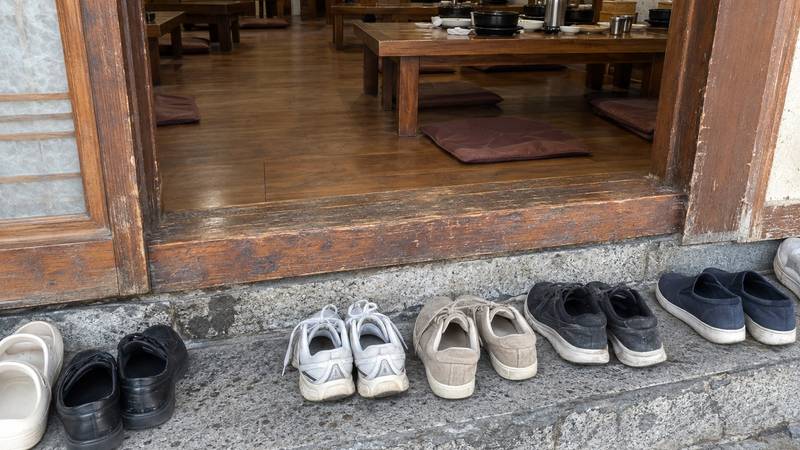
- Manners that matter most: shoes off on raised floors, two hands when giving or taking, a small nod as a greeting, quiet voices on transit.
- No tipping needed in restaurants, taxis or hotels.
For entry rules, money and phones, see Before you go.
Quick answer: your situation, what to do
| Your situation | What to do |
|---|---|
| You smoke or vape | Use marked smoking booths. Never at bus stops, near subway exits, in parks or inside any restaurant. |
| You have a coffee and the bus is coming | Finish it or put it in a sealed tumbler. A driver can refuse an open cup. |
| You see shoes at a step or a raised floor | Take yours off and leave them there. |
| Someone hands you something | Take it with both hands. |
| Drinks at dinner with Korean hosts | Let others pour your glass, and pour for them. |
| Hiking in a national park | No alcohol in shelters or at signposted summits and trails, and no smoking at all. |
| Visiting a temple | Dress modestly, keep your voice down and use the side doors of the main hall. |
Based on Korean law and Seoul Tourism Organization and Templestay guidance, checked 16 October 2026.
The first three rows are where tourists most often get a fine or a refusal. The rest is politeness that locals notice but rarely comment on.
Rules that carry fines
These are set by national law or by Seoul city ordinance, and they apply to visitors as well as residents.
| Slip | Where | Fine |
|---|---|---|
| Smoking or vaping in a no-smoking area | Restaurants, cafés and bakeries of every size; station platforms and waiting rooms; underpasses; buses; tourist hotels; bathhouses; PC bangs; large shops | ₩100,000 |
| Smoking in a Seoul no-smoking area | Bus stops, taxi stands, city parks, within 10 m of any subway entrance | ₩100,000 |
| Dropping a cigarette butt or tissue | Anywhere outside a bin | ₩50,000 |
| Drinking in a national park | Shelters and their facilities, plus signposted summits, trails and rocks | ₩100,000 from the first offence |
| Smoking in a national park | Anywhere outside a designated spot | ₩600,000 first, ₩1,000,000 second, ₩2,000,000 third |
| Camping or entering a closed trail | National parks | ₩200,000 first, ₩300,000 second, ₩500,000 third |
National Health Promotion Act, Seoul no-smoking ordinance, Waste Control Act and Natural Parks Act decrees, checked 16 October 2026.
If you smoke, the safe rule is to assume you cannot unless you see a smoking booth or a sign that allows it. Most of the rest is common sense, but the park fines are steep, so read the park section before a hike.
Vapes and heated tobacco. The Tobacco Business Act was amended so that tobacco now means any product made with tobacco leaf or nicotine. Since 24 April 2026, synthetic-nicotine liquid e-cigarettes are covered too. The Ministry of Health and Welfare ran a two-month grace period, then inspections from 24 June 2026. Every tobacco product, vapes included, is banned in no-smoking areas.
Litter. Carry a small bag for rubbish until you find a bin. The ₩50,000 fine is for small items you carry, such as a cigarette butt or a tissue. Dumping a bag of rubbish costs more.
Age limits. Under the Juvenile Protection Act you count as an adult from 1 January of the year you turn 19. A shop or bar selling alcohol or tobacco must check your age and identity, and staff can refuse entry if you cannot prove it. Carry your passport on nights out.
National parks: drinking, smoking and trails
Rangers run enforcement drives in the popular parks in peak season. The national parks and hiking pages cover trails and entry hours in detail. The etiquette points are:
- No alcohol in shelters or at signposted spots. The park service designates the summits, trails, rocks and falls where drinking is banned and marks them on site. A first offence costs ₩100,000.
- No smoking anywhere outside a designated spot. At ₩600,000 for a first offence, this is the biggest fine a visitor is likely to meet.
- Stay on open trails. Entering a closed area costs ₩200,000 for a first offence.
- No cooking or camping outside designated campsites.
- Take your rubbish down with you.
The same rules apply on Bukhansan in Seoul and on Hallasan on Jeju.
Buses, the subway and taxis
Takeaway cups on Seoul buses. Since 4 January 2018, Seoul city bus drivers can refuse a passenger carrying food or drink that could spill with a light knock. That includes:
- drinks or ice in a disposable cup
- street food such as tteokbokki or chicken in a cup
- cans or bottles that are open or have a straw in them
Sealed bottles, unopened cans, closed tumblers and thermoses, boxed pizza or chicken, and bagged groceries are fine. A passenger eating on board can be asked to get off. This is a refusal of carriage, not a fine.
Subway seats. Seats at the ends of each car are priority seats for older, disabled and other passengers who need them. The pink seats in the middle are kept for pregnant women. Locals leave both free even on an empty train. More on seats and rush hour is on the Seoul subway page.
Voices and phones. Keep your voice down on trains and buses, especially when speaking your own language, and keep calls short. Music goes in headphones.
Taxis and tipping. Pay what the meter shows. Tipping is not customary in Korea, in taxis or anywhere else. Some people accept a tip and some refuse it, so there is no need to leave one. How to pay by card or transport card is on the money page.
Shoes, greetings and everyday manners
Shoes. Take your shoes off at the door of a home, a guesthouse or a temple hall. Some restaurants have a raised floor with low tables and cushions. Leave your shoes at the edge before stepping up. A row of shoes or a shoe rack is the cue. Hanok stays and traditional inns work the same way.
Greetings. A short bow, close to a nod, is the normal greeting, sometimes with a soft handshake using both hands.
Giving and receiving. Hand over and take money, cards, gifts and business cards with both hands. This also applies to pouring and taking drinks.
Names. Korean family names come first. Use a title or Mr/Ms with the family name until someone invites you to use their first name, especially with older people.
In public. Avoid pointing at people, and try not to blow your nose in public.
Eating and drinking with Koreans
- Wait for the eldest at the table to start eating before you begin.
- Never stand chopsticks or a spoon upright in your rice. Eat rice with the spoon. When you finish, put the chopsticks and spoon back where they were.
- Use the lettuce leaves for wrapping grilled meat. Otherwise avoid touching food with your fingers.
- Don’t pour your own drink. Others fill your glass and you fill theirs, older people first, holding the bottle or glass with both hands.
- The price on the menu is the price you pay. There is no service charge to add and no tip.
What to order city by city, and how ordering and paying work, is on the Korean food page. Market stalls are covered on the markets page.
Temples, palaces and bathhouses
Temples. Korean temples are working monasteries, and Templestay’s visitor guidance asks for:
- Clean, modest clothes. No sleeveless tops, mini skirts or short shorts, and no bare feet.
- Quiet. No loud talk, no alcohol and no smoking anywhere in the grounds.
- Respect for the stone. Don’t sit or climb on pagodas, stupas or stone lanterns.
- Side doors only. Use the left or right doors of the main hall. The central door is for monks and nuns.
- No interrupting. Don’t disturb people who are praying.
Our temples page lists the best ones to visit, from Haedong Yonggungsa to Bulguksa in Gyeongju.
Palaces. Seoul’s palaces are museums with lawns and ponds, not religious sites, so ordinary dress is fine. Visitors wearing hanbok that meets the palace guideline enter Gyeongbokgung free. See palaces for details.
Bathhouses (jjimjilbang). The whole building is a no-smoking area under the national law, vapes included. Take your shoes off at the entrance, as you would at a home or temple. Baths are single-sex and used without swimsuits; hot springs in Korea walks through the routine step by step.
Common mistakes
- Stepping onto a raised restaurant floor in shoes.
- Sitting in a pink or priority seat on the subway.
- Pouring your own soju at a shared dinner.
- Leaving chopsticks in the rice bowl.
- Opening a beer on a mountain summit.
Where to next
- Before you go for K-ETA, money, phones and emergency numbers
- Seoul subway for fares, seats and luggage storage
- City guides: Seoul, Busan, Jeju and Gyeongju
City guides
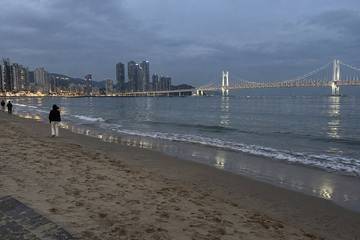
Busan
Korea's second city and busiest port, wrapped around beaches, hillside villages, fish markets and a temple on the rocks.
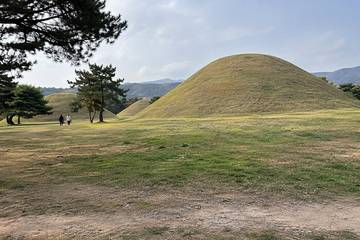
Gyeongju
The former Silla capital, an open-air museum of grassy royal tombs, ancient temples and stone Buddhas in the southeast.

Jeju Island
Korea's volcanic holiday island, with the country's highest peak, UNESCO-listed craters and lava tubes, black-sand coves and waterfalls.
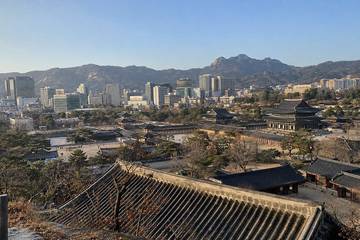
Seoul
Korea's capital: Joseon palaces and hanok lanes beside skyscrapers, night markets, Han River parks and granite peaks inside the city limits.
Frequently asked questions
Can I smoke on the street in Korea?
Only where it is not a designated no-smoking area, and in cities those areas are wide. Smoking in one costs ₩100,000. In Seoul that includes bus stops, taxi stands, city parks and the 10 m around every subway entrance. Restaurants and cafés of every size are no-smoking indoors. Use the marked smoking booths.
Do vapes count as smoking in Korea?
Yes. Since 24 April 2026 the Tobacco Business Act also treats liquid e-cigarettes made with synthetic nicotine as tobacco. All tobacco products, including vapes, are banned in no-smoking areas, and the ₩100,000 fine applies.
Is it rude to tip in Korea?
Not rude, just not expected. The Seoul Tourism Organization says tipping is not customary. Some people accept a tip and some refuse it, so there is no need to leave one in restaurants, taxis or hotels.
Can I drink alcohol while hiking in Korea?
Not in national park shelters or on the summits, trails and rocks that the park service has signposted as alcohol-free. The fine is ₩100,000 from the first offence. Smoking anywhere in a national park outside designated spots costs ₩600,000 for a first offence.
Can I take a coffee on a Seoul bus?
The driver can refuse to let you on with a drink in a disposable takeaway cup, an open can or a bottle with a straw. Sealed bottles, closed tumblers and boxed or bagged food are fine. Finish the drink before the bus arrives.
What is the drinking age in Korea?
You can buy alcohol and tobacco from 1 January of the year you turn 19. Sellers must check age and identity, so carry your passport when you go to bars or buy drinks.
Sources
Facts on this page were checked against these sources on 16 October 2026. Prices, hours and rules change — confirm with the operator before you go.
- 국가법령정보센터: 국민건강증진법 제9조·제34조 (금연구역, 흡연 시 10만원 이하 과태료) 및 시행령 별표 (1~3차 10만원) (Korean) · official
- 국가법령정보센터: 국민건강증진법 시행규칙 제6조 (2015년 1월 1일부터 모든 음식점·카페 금연) (Korean) · official
- 보건복지부: 합성니코틴 전자담배도 금연구역에서는 금연입니다 (담배사업법 시행 2026.4.24, 보도자료 2026-06-23) (Korean) · official
- 국가법령정보센터: 서울특별시 금연환경 조성 및 간접흡연 피해방지조례 (버스정류소·택시승차대·지하철역 출입구 10 m, 과태료 10만원; 2026-10-01 시행본) (Korean) · official
- 서울시 미디어허브: 지하철역 출입구 10 m 이내 금연구역 지정 (과태료 10만원) (Korean) · official
- 국가법령정보센터: 폐기물관리법 시행령 별표 (담배꽁초·휴지 등 휴대 생활폐기물 투기 과태료 5만원) (Korean) · official
- 대한민국 정책브리핑 (환경부): 국립공원서 담배 피우면 첫 적발부터 60만원…최대 200만원 (음주 첫 적발 10만원, 야영·출입금지 20만·30만·50만원) (Korean) · official
- 쿠키뉴스: 국립공원 음주 과태료 5만원→10만원 인상 (2022-10-26) (Korean)
- 서울시 교통: 시내버스 음식물 반입금지에 따른 세부기준 마련 (일회용 컵 음료 운송 거부 가능) (Korean) · official
- 국가법령정보센터: 청소년보호법 제2조·제28조 (19세가 되는 해 1월 1일부터 성인, 판매자 나이·본인 확인 의무) (Korean) · official
- Visit Seoul (Seoul Tourism Organization): Etiquette (shoes, bowing, two hands, tipping, dining) · official
- Visit Seoul (Seoul Tourism Organization): Korean Etiquette (shoes in restaurants and temples, pouring drinks, public behaviour) · official
- Templestay (Cultural Corps of Korean Buddhism): Temple etiquette · official