Jeonju 전주
Jeonju is worth one night for first-timers who want Korea's largest hanok quarter and its food; KTX trains from Yongsan take about 1 h 40 min. The Hanok Village is free to walk, Gyeonggijeon costs ₩3,000, and a long day trip works if you skip the evening food scene.
Updated
Is Jeonju worth it?
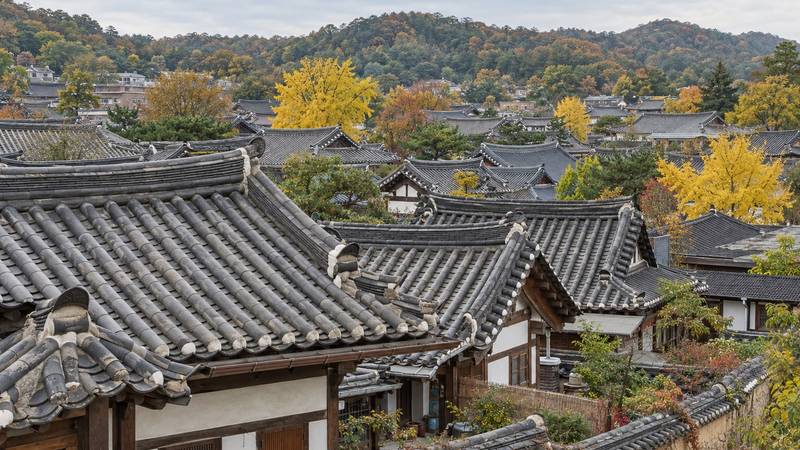
Jeonju, the capital of North Jeolla, is where Koreans go for traditional houses and food. Its Hanok Village covers about 298,000 m² of the old town, with 735 tiled-roof hanok among 947 buildings. Many of them are now guesthouses, restaurants and workshops. The area was declared a hanok preservation zone in 1977 and an International Slow City in 2010, and the street is free to walk at any hour.
| Your situation | Go here |
|---|---|
| One night between Seoul and the south | The Hanok Village: Gyeonggijeon, Omokdae, Nambu Market |
| Only a day from Seoul | Early KTX from Yongsan, back in the evening; book both ways first |
| Here for the food | Bibimbap at lunch, makgeolli or gamaek at night, gukbap for breakfast |
| Arriving on a Friday or Saturday | The Nambu Market night market, from 17:00 |
| Arriving on a Monday | Fine: Gyeonggijeon and the museum open; only the craft hall and youth mall close |
Facts checked 24 October 2026. The village drew about 15.4 million visitors in 2023, by the city’s count, so weekends and holidays are crowded. Arrive on a weekday, or walk the lanes early in the morning and after dinner.
What to see in the Hanok Village
Start at Gyeonggijeon, built in 1410 to house the portrait of Taejo, founder of the Joseon dynasty. The present buildings date from 1614, after the original burned in 1597, and the Royal Portrait Museum in the grounds is included in the ticket. Across the road stands Jeondong Cathedral, built 1907–14 on a site where Catholics were martyred, its foundations laid with stones from the demolished city wall.
From there, walk east along Taejo-ro to Omokdae for the view over the roofs, then cross the footbridge to the Jaman murals. Come back down through the lanes to the Hyanggyo, the old Confucian academy, and the cliffside Hanbyeokdang pavilion above the stream. Finish at Pungnammun, the old south gate, and Nambu Market next to it.
| Sight | Adult fee | Hours |
|---|---|---|
| Gyeonggijeon (with the Royal Portrait Museum) | ₩3,000 | 09:00–19:00 Mar–May and Sep–Oct; 09:00–20:00 Jun–Aug; 09:00–18:00 Nov–Feb |
| Jeondong Cathedral | Free | 09:00–17:00, except during Mass |
| Jeonju Hyanggyo | Free | 10:00–18:00 |
| Pungnammun | Free | Open at all times |
| Jeonju National Museum | Free | 10:00–18:00, last entry 17:30; open Mondays |
From the Jeonju Hanok Village and Jeonju National Museum sites, checked 24 October 2026. At Gyeonggijeon, youths pay ₩2,000 and children ₩1,000, and entry is free for everyone on the last Wednesday of the month. The free entry for over-65s applies to Korean nationals only, so overseas seniors pay the adult fare.
Eating and drinking in Jeonju
Jeonju has been a UNESCO Creative City of Gastronomy since 2012. Have bibimbap at least once, but the city’s everyday dishes are just as good. Kongnamul gukbap, a bean-sprout soup with rice, is the classic breakfast at Nambu Market.
In the evening, a makgeolli house brings a kettle of rice wine with a table of side dishes; order another kettle and more dishes come. Gamaek is the cheaper local habit: beer bought at a corner shop and drunk at its outdoor tables with grilled dried fish. The Nambu Market night market runs on Fridays and Saturdays, 17:00–23:00, in the 2026 season, which reopened on 1 March after the winter break. The youth mall upstairs is open 11:00–23:00 and closes on Mondays. For the rest of the country, see the Korean food guide.
When to go
Spring and autumn are the most comfortable seasons for walking the lanes. The Jeonju International Film Festival fills the city in late April and early May; in 2026 it ran from 29 April to 8 May. The Jeonju Bibimbap Festival is held in early October, from 2 to 4 October in 2026, at Deokjin Park. Dates for 2027 have not been announced.
From April to October, a traditional performance parade runs on Saturdays at 15:00 from Namcheon Bridge to Gyeonggijeon (18 April to 31 October in 2026). Summer brings the lotus bloom at Deokjin Park, from late June to early August. Winter is quiet and cold, and Gyeonggijeon closes at 18:00 from November to February.
Getting there: which arrival point
The KTX from Yongsan is the fastest way from Seoul, at about 1 h 40 min. Express buses from Seoul’s Central City terminal take about 2 h 40 min and cost ₩16,400 in a regular seat. From Incheon Airport a direct bus avoids Seoul altogether. Jeonju Station is being rebuilt, with completion now planned for the end of 2027, so expect temporary entrances and walkways.
The four arrival points are in different parts of the city, so put the right one into your map app. Jeonju Station is at 680 Dongbu-daero, the airport-bus limousine terminal at 30 Yuyeon-ro, and the express and intercity bus terminals at 70 and 30 Garinae-ro, 3 minutes’ walk apart. The Hanok Village tourist information centre at 99 Girin-daero is open 09:00–18:00 and answers on 063-282-1330.
Beyond the Hanok Village
Most visitors never leave the old town, and on a short stay that is the right choice. With a spare half day, Jeonju National Museum is free and open on Mondays, a bus or taxi ride from the old town. Gunsan, on the coast, is about an hour away by intercity bus. For the rest of the south-west, including Suncheon Bay and Yeosu, see the Jeolla region guide. For other Seoul-side options, compare Gyeongju, the other classic heritage city, or a day trip to Suwon.
Book your trip
Top attractions in Jeonju
Hanok Village and the old town (Wansan-gu)
The 298,000 m² hanok quarter in Pungnam-dong and Gyo-dong, with Gyeonggijeon, Jeondong Cathedral, the Pungnammun gate and Nambu Market on its edge. Everything here is walkable.
Jeonju Hanok Village
Korea's largest urban hanok quarter: 735 traditional houses, now guesthouses, cafés, workshops and food stalls; free and open at all hours.
Gyeonggijeon and the Royal Portrait Museum
The 1410 shrine to the portrait of Joseon's founder, King Taejo, in a walled garden of bamboo and old trees; ₩3,000 includes the museum.
Jeondong Catholic Church
A brick Romanesque-Byzantine church built 1907–14 on a Catholic martyrs' site, opposite Gyeonggijeon; free, 09:00–17:00 outside Mass.
Nambu Market and Youth Mall
The old market by Pungnammun, known for kongnamul gukbap; a youth mall of small shops upstairs and a Friday–Saturday night market.
Pungnammun Gate
The south gate and only survivor of the four gates of Jeonju's old city wall, between the Hanok Village and Nambu Market; free.
Omokdae and Imokdae
A wooded hilltop pavilion where Yi Seong-gye, later King Taejo, is said to have feasted after a victory; the classic view over the roofs.
Jaman Mural Village
A former refugee settlement on the hill above the Hanok Village, repainted with murals in 2011; reached by footbridge from Omokdae.
Jeonju Hyanggyo
The old Confucian school and shrine, said to date from the Goryeo era, with halls rebuilt in the late 1500s; free, 10:00–18:00.
Hanbyeokdang Pavilion
A pavilion built into a cliff above the Jeonjucheon stream, counted among the eight classic views of Jeonju.
Jeonju Craft Exhibition Hall
City-run hall for hanji paper, fans and other local crafts on Taejo-ro, the main street of the village; Tue–Sun 10:00–18:00.
Beyond the Hanok Village
The modern city around the old town, with Jeonju National Museum, Deokjin Park, the KTX station and the bus terminals, each a city-bus or taxi ride from the Hanok Village.
Jeonju National Museum
The national museum in Jeonju, outside the old town; free, 10:00–18:00 (last entry 17:30), and open on Mondays.
Deokjin Park
A city park around a large lotus pond, at its best when the lotus blooms from late June to early August.
Jeonju by interest
Getting to Jeonju
| From | How | Time | Notes |
|---|---|---|---|
| Yongsan or Seoul Station | KTX to Jeonju Station | about 1 h 40 min | More Jeonju trains start at Yongsan than at Seoul Station, so search from Yongsan. Weekend, holiday and festival trains sell out; see how to book KTX tickets. |
| Suseo (Gangnam) | SRT to Jeonju, or SRT to Iksan and change | about 15–20 min extra from Iksan | Only two direct SRT trains a day run to Jeonju. Otherwise take an SRT to Iksan and change to a Korail train or an intercity bus. |
| Seoul Central City (Express Bus Terminal) | Express bus to Jeonju Express Bus Terminal | about 2 h 40 min | ₩16,400 regular, ₩23,900 deluxe, ₩31,000 premium by day (Kobus, October 2026). Buses also leave from Dong Seoul; see long-distance buses. |
| Incheon Airport | Direct airport bus (Daehan Limousine) to Jeonju | varies with traffic | Board at T1 arrivals level, outside, regional bus stands 12–13, or at T2 basement level 1, regional stand 8. Buy tickets at the airport bus counters or kiosks. Late-night buses run at a higher fare. |
Jeonju is in North Jeolla, roughly halfway between Seoul and the south coast. Check where you arrive: Jeonju Station (KTX), the Jeonju limousine terminal (airport buses), the express bus terminal and the intercity bus terminal are four separate places, although the two bus terminals are only 3 minutes apart on foot. All four are a city-bus or taxi ride from the Hanok Village.
Getting around
Inside the Hanok Village everything is on foot. To get there from the station or the terminals, take a city bus or a taxi; the official VisitJeonju guide recommends Naver Map for routes, and buses can be paid with a T-money card, which gives free transfers between Jeonju city buses within 30 minutes if you tap out when you get off (up to two transfers). Taxis take T-money, cash and foreign cards, and the k.ride and Uber apps work in Jeonju. See T-money.
Long-distance trains: see KORAIL PASS and transportation in Korea.
Itineraries
Jeonju in one night
Arrive by midday. Visit Gyeonggijeon and Jeondong Cathedral, walk Taejo-ro to Omokdae for the view and cross to the Jaman murals. Eat bibimbap for lunch. On a Friday or Saturday, go to the Nambu night market; otherwise try a makgeolli house. Next morning have kongnamul gukbap at Nambu Market, then visit the Hyanggyo and Hanbyeokdang before the train.
Long day trip from Seoul
Take an early KTX from Yongsan and book the return before you leave Seoul. Cover Gyeonggijeon, the cathedral, Omokdae and lunch, then Nambu Market and Pungnammun. You miss the evening, which is when the village is quietest and the food alleys busiest.
Where to stay in Jeonju
Hanok Village
Hanok guesthouses with floor beds and courtyards, inside the quarter where the sights are; see hanok stays for what to expect.
Best for: First-timers, couples, one night
See hotels in Hanok VillageGaeksa and the old downtown
The old city centre around the Gaeksa guesthouse hall, with ordinary hotels and restaurants within reach of the Hanok Village.
Best for: Hotels with beds, budget, food
See hotels in Gaeksa and the old downtownJeonju Station area
Practical for an early KTX, but a bus or taxi ride from the Hanok Village.
Best for: Early trains, short stays
See hotels in Jeonju Station area
Some links on this page are affiliate links: if you book through them we may earn a commission at no extra cost to you. It never decides what we recommend. Affiliate disclosure.
Food and restaurants in Jeonju
Food is the main reason many Koreans come to Jeonju, a UNESCO Creative City of Gastronomy since 2012. The city's bibimbap is its signature: rice cooked in beef-bone broth, local bean sprouts and more than 30 toppings, mixed by the diner. Breakfast is kongnamul gukbap, and in the evening locals drink makgeolli by the kettle or beer at corner shops.
What to eat
| Jeonju bibimbap 전주비빔밥 | Rice cooked in bone broth, topped with namul, acorn jelly and aged gochujang in the five traditional colours; some places add raw beef or serve it in a brass bowl. |
|---|---|
| Kongnamul gukbap 콩나물국밥 | Bean-sprout and rice soup, the Jeonju breakfast and hangover cure; Nambu Market is the traditional place to eat it. |
| Makgeolli by the kettle 막걸리 한상 | In Jeonju's makgeolli alleys, such as Samcheon-dong, each kettle of rice wine comes with a spread of side dishes, and more dishes come with each new kettle. |
| Gamaek 가맥 | Short for corner-shop beer: bottled beer at plastic tables outside small stores, with grilled dried pollack. |
Where to eat
- Hanok Village and Taejo-ro — Bibimbap restaurants, snack stalls and cafés in the lanes around Gyeonggijeon.
- Nambu Market — Kongnamul gukbap in the day, the youth mall upstairs, and night-market stalls on Fridays and Saturdays; see markets in Korea.
- Samcheon-dong makgeolli alley — A street of makgeolli houses in south-west Jeonju, a taxi ride from the village.
Experiences and tours in Jeonju
Jeonju day tour from Seoul
A guided day trip with transport from Seoul, if you would rather not book trains and plan the walk yourself.
Check on KlookHanbok rental in the Hanok Village
Rental shops fill the village, with traditional and modernised hanbok and early-20th-century outfits.
Check on Klook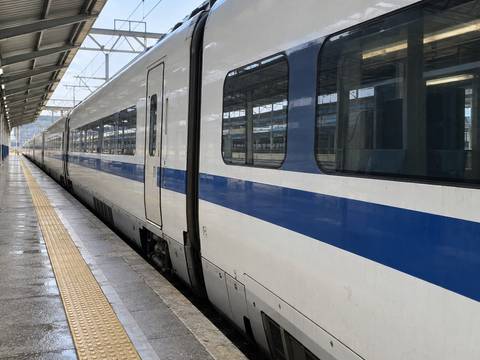
KTX train tickets Seoul–Jeonju
Book the KTX from Yongsan in English with a foreign card; the official Korail site also takes foreign cards.
Check on Klook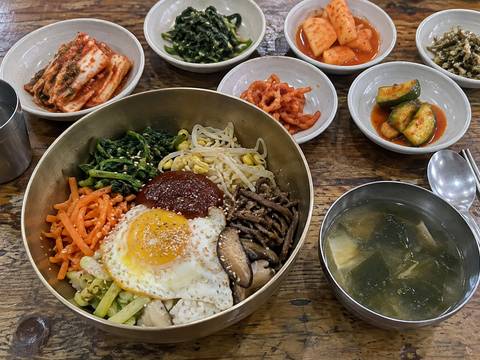
Jeonju food and hanok tour
A tasting walk through the Hanok Village and market, useful for ordering dishes you cannot read on a Korean menu.
Check on GetYourGuide
Some links on this page are affiliate links: if you book through them we may earn a commission at no extra cost to you. It never decides what we recommend. Affiliate disclosure.
Frequently asked questions
Is Jeonju worth visiting?
Yes, if you want traditional houses and Korean food in one walkable place. The Hanok Village has 735 hanok and is free to walk at any time, and the main sights, from Gyeonggijeon to Nambu Market, are all within walking distance. One night is enough.
Can you do Jeonju as a day trip from Seoul?
Yes. The KTX from Yongsan takes about 1 h 40 min, so a long day covers Gyeonggijeon, the cathedral, Omokdae and lunch. Book both ways ahead at weekends and in May, September and October, when Jeonju trains and buses sell out.
How much is Gyeonggijeon?
₩3,000 for adults, ₩2,000 for youths and ₩1,000 for children, including the Royal Portrait Museum. It opens 09:00–19:00 from March to May and in September and October, 09:00–20:00 in summer and 09:00–18:00 from November to February. Entry is free on the last Wednesday of each month.
Where does the airport bus to Jeonju stop?
The direct bus from Incheon Airport ends at the Jeonju limousine terminal, which is not the KTX station or the express bus terminal. Long-distance buses also stop at points on the way into the city, so listen for the announcements if one is nearer your hotel. Allow 1.5–2 hours after landing before your bus.
What is closed on Mondays in Jeonju?
The Craft Exhibition Hall and the Nambu Market youth mall close on Mondays. Gyeonggijeon, Jeondong Cathedral, the Hyanggyo and Jeonju National Museum are open, and the Hanok Village itself never closes.
Sources
Facts on this page were checked against these sources on 24 October 2026. Prices, hours and rules change — confirm with the operator before you go.
- 전주한옥마을 (전주시) – 한옥마을 소개·현황 (한옥 735동, 국제슬로시티) (Korean) · official
- 전주한옥마을 (전주시) – 문화유산 (경기전·전동성당·전주향교·풍남문·오목대·한벽당 관람안내) (Korean) · official
- 전주한옥마을 (전주시) – 문화시설 (전주공예품전시관 등) (Korean) · official
- 전주한옥마을 (전주시) – 한복체험 (Korean) · official
- 어진박물관 (전주시) – 관람안내 (Korean) · official
- 비짓전주 – 전주행 교통편 (공항버스 승차장, KTX, SRT·익산 환승, 터미널 위치) (Korean) · official
- 비짓전주 – 교통카드 활용법 (시내버스 환승, 택시) (Korean) · official
- 비짓전주 – 관광안내소 (Korean) · official
- 비짓전주 – 전주비빔밥 (Korean) · official
- 비짓전주 – 전주의 맛 (콩나물국밥) (Korean) · official
- 비짓전주 – 남부시장 (Korean) · official
- 비짓전주 – 청년몰 (Korean) · official
- 비짓전주 – 남부시장 야시장 운영 안내 (Korean) · official
- 투데이안 – 전주 남부시장 야시장 3월 재개장 (2026) (Korean)
- 비짓전주 – 메인 (토요 전통공연 퍼레이드 2026) (Korean) · official
- 비짓전주 – 축제·행사 일정 (Korean) · official
- 국립전주박물관 – 관람안내 (Korean) · official
- UNESCO Creative Cities Network – Jeonju (Gastronomy, 2012) · official
- 전주시 보도자료 – 2023년 전주한옥마을 방문객 1,536만 명 (Korean) · official
- 고속버스통합예매 (Kobus) – 노선 조회 (센트럴시티–전주) (Korean) · official
- 디지털데일리 – 제27회 전주국제영화제 4월 29일 개막 (2026) (Korean)
- 아이뉴스24 – 2026 전주비빔밥축제 10월 2~4일 덕진공원 (Korean)
- 세계일보 – 전주역 신역사 공정률 68%, 2027년 말 준공 (2026-07-15) (Korean)