By Season
Winter
Updated
Korea in winter is cold, dry and bright, and the snow you are probably hoping for is in the Gangwon mountains, not in Seoul. Seoul averages −5.5 °C (22 °F) on January nights, and its first snow came only on 4 December in 2025. Ski resorts in Pyeongchang open in late November or early December, the Hwacheon ice festival runs 9–31 January 2027, and Seoul’s winter lights run from 11 December 2026 to 31 January 2027.
For most first trips the answer is a Seoul base with one day or overnight in Gangwon for snow, plus the free lights in central Seoul in the evenings. Dates and prices on this page come from the operators’, city and weather-service pages, checked on 27 October 2026; 2026–27 ski prices were not out yet.
What to do in winter: pick by trip
| Your situation | Do this |
|---|---|
| First time seeing snow, Seoul-based | One night in Pyeongchang: ski at Mona Yongpyong or Alpensia, December to February |
| Want to ski with little travel | Gonjiam, 40 minutes from Gangnam by subway line plus a short taxi |
| In Korea in January | A day at the Hwacheon ice-fishing festival (9–31 January 2027) |
| Seoul in December or early January | Lanterns on Cheonggyecheon and an hour on the Seoul Plaza ice rink |
| Hiker | Hallasan on Jeju with crampons and an early start; check closures the day before |
| Want mild weather instead | Busan and Jeju, where January highs are around 8–11 °C |
The short version: snow scenery means Gangwon, festivals mean January, and Seoul’s lights and rink cover the run from mid-December to the end of January.
Will you see snow?
Probably, if you go to the mountains; not reliably in Seoul. Seoul’s average first snow (1991–2020) is on 20 November, but that counts any flakes or sleet seen at the weather station. In 2025 the first snow came on 4 December, two weeks late. January in Seoul brings only 17 mm of precipitation, so most days are dry and sunny.
The Daegwallyeong plateau around Pyeongchang is different. It sits at 832 m, averages −5.3 °C across the winter and has January nights averaging −12.2 °C (10 °F). The Korea Meteorological Administration notes it gets a lot of snow, which is why the big ski resorts are there. The east coast below it, around Gangneung, is milder, with a winter mean of 2.3 °C.
| Place | Winter conditions | Snow | Best for |
|---|---|---|---|
| Seoul | January 2.1 °C (36 °F) by day, −5.5 °C (22 °F) at night | Occasional; first snow average 20 Nov | Lights, ice rink, palaces with few crowds |
| Daegwallyeong / Pyeongchang | Winter mean −5.3 °C; January lows −12.2 °C (10 °F) | Heavy and reliable | Skiing, snow scenery, trout festival |
| Gangneung | Winter mean 2.3 °C | – | Sea views, an add-on to Pyeongchang |
| Busan | January high 8.2 °C (47 °F) | Rare | Mild city break |
| Jeju | Above freezing on the coast | On Hallasan’s upper slopes | Winter hike, mild coast |
KMA climate pages and 1991–2020 averages, checked 27 October 2026. If seeing snow is the point of the trip, book the Gangwon night while the ski resorts are open, from December to February. For month-by-month figures see the best time to visit Korea.
Skiing and snowboarding
The main resorts are within about three hours of Seoul, and several run night skiing. Most open in late November or early December and close in March. None had published 2026–27 opening dates or day-ticket prices by 27 October 2026, so the table shows last season.
| Resort | Where | 2025–26 season | Getting there from Seoul |
|---|---|---|---|
| Mona Yongpyong | Pyeongchang, Gangwon | 21 Nov 2025 – late March 2026 | KTX to Jinbu, then about 20 min by taxi |
| High1 | Jeongseon, Gangwon | Opened 28 Nov 2025 | Bus to Gohan-Sabuk terminal, about 2 h 40 min; or train from Cheongnyangni to Gohan, about 3 h 30 min |
| Gonjiam | Gwangju, Gyeonggi | Opened early December 2025 | Gyeonggang Line to Gonjiam (40 min from Gangnam), then 10 min by taxi or bus 9 |
From the resorts’ Korean pages and Korean press, checked 27 October 2026. Alpensia, the 2018 Olympic resort, is also near Daegwallyeong; its 2025–26 season ran from 4 December to 2 March. For snow and scenery, choose Pyeongchang; for the least travel, choose Gonjiam.
- Lift tickets: in 2025–26 Gonjiam charged ₩81,000 on weekdays and ₩96,000 at weekends for 4 hours, with no child discount. High1’s site still listed ₩86,000 for 7 hours and ₩111,000 for a full day in October 2026. New prices usually appear shortly before opening.
- Mona Yongpyong has 28 slopes and 14 lifts. Its ski school lists a class for foreign visitors with English-speaking instructors.
- Ski buses from Seoul: Mona Yongpyong runs a shuttle from the Seoul area, and in 2025–26 High1’s ski buses were sold through travel agencies in each region. Routes and fares for 2026–27 were not published yet.
Winter festivals and lights
Seoul Winter Festival (December–January)
The city combines its winter events under one name. For 2026–27 it runs from 11 December 2026 to 31 January 2027 around Gwanghwamun, Cheonggyecheon, Seoul Plaza and DDP.
- Seoul Lantern Festival: lit sculptures along Cheonggyecheon stream, 11 December–31 January. The 2025–26 edition was free to enter, with some paid hands-on activities.
- Seoul Plaza ice rink: in front of City Hall, 18 December 2026 – 9 February 2027. In 2025–26 a one-hour session cost ₩1,000 including skates and helmet, the same price as when it first opened in 2004.
- Seoul Light shows at Gwanghwamun (to 10 January) and at DDP (to 31 January), plus the Gwanghwamun Market to 10 January.
- New Year’s Eve bell ringing at Bosingak, the night of 31 December.
All of these are within walking distance of Myeongdong and Insadong. Opening hours for 2026–27 were not published yet.
Ice-fishing festivals in Gangwon (January)
Hwacheon Sancheoneo Ice Festival is the big one: you fish for mountain trout through holes in a frozen river. The organisers list 9–31 January 2027. The Pyeongchang Trout Festival in Jinbu is similar and ran from 9 January to 9 February in 2026, when indoor fishing cost ₩20,000. Both depend on the ice being thick enough, so check the official site before you set off. The Taebaeksan Snow Festival, with snow sculptures, ran from 31 January to 8 February in 2026. More dates are in the festival calendar.
Garden of Morning Calm lights (December–March)
This hillside garden in Gapyeong, north-east of Seoul, is lit with coloured lights from early December to mid-March each year. During the festival it opens 10:00–21:00, and until 23:00 on Saturdays; adult entry is ₩11,000. Take the Gyeongchun Line or ITX-Cheongchun train to Cheongpyeong, then bus 30-6 to the end of the line. Check the last bus back before you stay for the lights, or plan on a taxi.
Winter hiking
Snow-covered ridges are one of the best sights of a Korean winter, but trails need more care and close earlier.
- Hallasan, Jeju: summit trails need a free booking. From October to March the last entry at Seongpanak and Gwaneumsa is 11:30, and you must leave the summit by 13:30. The park tells hikers to bring crampons, and trails close when snow warnings are in force.
- Seoraksan, Gangwon: trail entry hours are shorter from November to March, and high routes can close for snow.
See hiking in Korea for trails and rules.
Tips for a winter trip
- Dress for wind, not just cold. A down or padded coat, hat, gloves and thermal base layers are enough for Seoul. Add waterproof boots for the mountains. If you are coming from Singapore, Manila, Kuala Lumpur or Mumbai, pack more layers than you think you need.
- Warm up indoors. Hot springs and jjimjilbang bathhouses are a winter staple; see hot springs.
- Plan around Seollal. The Lunar New Year holiday runs 6–9 February 2027. Trains and buses out of Seoul sell out, and some shops and restaurants close.
- Daylight is short. Plan outdoor sights for the middle of the day, and leave the evenings for the lights and markets.
- Australians: December to February is your summer, so this is a chance to swap a hot Christmas for a white one.
Book your trip
Best winter in Korea
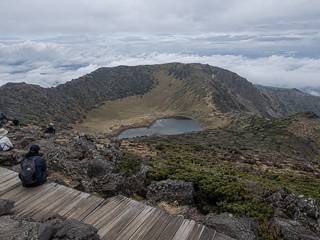
Hallasan 한라산
South Korea's highest peak. A long day hike leads to the Baengnokdam crater; summit trails need advance booking.
Jeju Island · Jeju ·
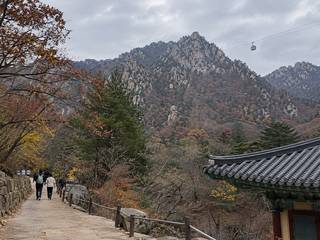
Seoraksan National Park 설악산국립공원
Granite peaks topped by Daecheongbong (1,708 m), a UNESCO biosphere reserve since 1982; easy trails start at Seorak-dong.
Sokcho · Gangwon ·
Seoul Lantern Festival 서울빛초롱축제
Lit lantern sculptures along Cheonggyecheon stream in central Seoul, part of the city's winter festival; 11 December 2026 to 31 January 2027. Entry was free in 2025–26.
Seoul · Seoul ·
The Garden of Morning Calm Lighting Festival 아침고요수목원 오색별빛정원전
A hillside garden lit with coloured lights from early December to mid-March, open 10:00–21:00 (Saturdays to 23:00); adult ₩11,000. Bus 30-6 from Cheongpyeong.
Gapyeong · Gyeonggi & Incheon ·
Hwacheon Sancheoneo Ice Festival 화천 산천어축제
Ice fishing for mountain trout on a frozen river in northern Gangwon, Korea's best-known winter festival; 9–31 January 2027, according to the organisers.
Hwacheon · Gangwon ·
Mona Yongpyong 모나용평 (용평리조트)
Korea's best-known ski resort, high in the Daegwallyeong snow belt, with 28 slopes and 14 lifts; opened on 21 November in 2025. KTX to Jinbu, then about 20 minutes by taxi.
Pyeongchang · Gangwon ·
Seoul Plaza Ice Rink 서울광장 스케이트장
An open-air rink in front of City Hall, 18 December 2026 to 9 February 2027; in 2025–26 an hour on the ice cost ₩1,000 including skates and helmet.
Seoul · Seoul ·
Gonjiam Resort 곤지암리조트
The ski resort nearest Seoul: 40 minutes from Gangnam on the Gyeonggang Line, then a 10-minute taxi; 2025–26 lift tickets from ₩81,000 for 4 hours on weekdays.
Gwangju (Gyeonggi) · Gyeonggi & Incheon ·
High1 하이원리조트
A large ski resort in the southern Gangwon mountains, reached by bus or train to Gohan; listed at ₩111,000 for an adult full-day lift ticket before 2026–27 prices were out.
Jeongseon · Gangwon ·
Alpensia 알펜시아
The 2018 Winter Olympics resort near Daegwallyeong, with six ski slopes; its 2025–26 season ran from 4 December to 2 March.
Pyeongchang · Gangwon ·
Pyeongchang Trout Festival 평창송어축제
Ice and indoor trout fishing on the Odaecheon stream in Jinbu; it ran from 9 January to 9 February in 2026.
Pyeongchang · Gangwon ·
Taebaeksan Snow Festival 태백산 눈축제
Snow sculptures and winter events at the foot of Taebaeksan National Park for about nine days; 31 January to 8 February in 2026.
Taebaek · Gangwon ·
Frequently asked questions
Does it snow in Seoul in winter?
Sometimes, but not reliably. Seoul's average first snow is on 20 November, and in 2025 it came on 4 December. Winters there are mostly dry and sunny, with only 17 mm of precipitation in January, so for a snowy landscape go to the Gangwon mountains.
Where is the best place to see snow in Korea?
The Daegwallyeong highlands in Gangwon, around Pyeongchang. The Korea Meteorological Administration notes the area gets a lot of snow, with a winter mean of −5.3 °C. Mona Yongpyong and Alpensia ski resorts are there; for Mona Yongpyong take the KTX to Jinbu, then a 20-minute taxi.
When does ski season start in Korea?
Late November to early December. In 2025 Mona Yongpyong opened on 21 November, High1 on 28 November and Alpensia on 4 December, and most resorts closed in early to late March. Dates for 2026–27 had not been announced on 27 October 2026.
How cold is Korea in January?
Seoul averages 2.1 °C (36 °F) by day and −5.5 °C (22 °F) at night, and wind makes it feel colder. Busan's January high is about 8 °C (47 °F). In the Daegwallyeong highlands the average January low is −12.2 °C (10 °F).
Can I hike Hallasan in winter?
Yes, with a free booking for the summit trails and an early start. From October to March you must pass the Seongpanak or Gwaneumsa trailhead by 11:30 and leave the summit by 13:30. The park tells hikers to bring crampons, and trails close in heavy snow.
Sources
Facts on this page were checked against these sources on 27 October 2026. Prices, hours and rules change — confirm with the operator before you go.
- 2026 서울윈터페스티벌 공식 사이트 (2026.12.11.~2027.1.31.; 서울빛초롱축제 12.11.~1.31.; 서울광장 스케이트장 12.18.~2.9.) (Korean) · official
- 서울축제지도 FUN SEOUL – 서울윈터페스티벌 (2026-12-11 ~ 2027-01-31) (Korean) · official
- 내 손안에 서울 – 올해도 1,000원…서울광장 스케이트장 19일 개장 (2025-12-16; 스케이트·헬멧 대여 포함) (Korean) · official
- 경향신문 – 서울광장 스케이트장 (2025–26 시즌, 입장료 1,000원) (Korean)
- 내 손안에 서울 – 서울빛초롱축제 입장료 무료 (일부 체험 프로그램 유료) (Korean) · official
- 기상청 – 서울·경기 기후특성 (첫눈 평년 11월 20일) (Korean) · official
- 기상청 – 강원 기후특성 (대관령 겨울 평균 −5.3℃, 1월 평균 최저 −12.2℃) (Korean) · official
- 기상자료개방포털 – 평년값 (1991–2020) (Korean) · official
- 헤럴드경제 – 서울 첫눈 12월 4일, 평년보다 14일 늦어 (2025) (Korean)
- 모나용평 – 슬로프 운영 일정 (2025–26 시즌 11.21 개장) (Korean) · official
- 모나용평 – 스키장 소개 (슬로프 28면, 리프트 14기) (Korean) · official
- 모나용평 – 오시는 길: KTX 진부역 (Korean) · official
- 아시아경제 – 용평·휘닉스 21일 개장 (2025-11-20) (Korean)
- 하이원 – 리프트 요금 (7시간 86,000원, 종일권 111,000원) (Korean) · official
- 모나용평 – 오시는 길: 수도권 셔틀버스 (Korean) · official
- 하이원 – 스키버스 (25/26 동계시즌, 지역별 여행사 판매) (Korean) · official
- 하이원 – 대중교통 (고한사북공영버스터미널, 고한역) (Korean) · official
- 헤럴드경제 – 하이원 스키장 11월 28일 개장 (2025) (Korean)
- 알펜시아 – 슬로프 운영 일정 (2025.12.04~2026.03.02) (Korean) · official
- LG 보도자료 – 곤지암리조트 2025/26 시즌 (리프트 요금, 경강선 곤지암역) (Korean) · official
- 아침고요수목원 – 이용안내 (오색별빛정원전 12월초~3월 중순, 10:00~21:00, 토 23:00; 입장료) (Korean) · official
- 아침고요수목원 – 오시는 길 (청평역·청평터미널, 버스 30-6) (Korean) · official
- 화천 산천어축제 (English) – 2027 Hwacheon Sancheoneo Ice Festival, Jan. 9 – Jan. 31, 2027 · official
- VisitKorea – Hwacheon Sancheoneo Ice Festival · official
- 평창송어축제 – 2026.01.09~02.09, 진부면 오대천 (Korean) · official
- 태백시 공지 – 제33회 태백산 눈축제 (2026. 1. 31.~2. 8., 9일간) (Korean) · official
- 한라산탐방 예약시스템 – 예약안내 (Korean) · official
- 한라산국립공원 탐방객 출입(입·하산) 제한 시간 변경공고 (Korean) · official
- 한라산국립공원 (아이젠 등 장비 준비 안내) (Korean) · official
- 파이낸셜뉴스 – 한라산 입산 마감 최대 3시간 당겨진다… 10월부터 동절기 시간 적용 (2026-09-28) (Korean)