Before you go
K-ETA: Korea's electronic travel authorization
Updated
Book your trip
K-ETA (Korea Electronic Travel Authorization) is an online pre-travel check for visitors who can enter South Korea without a visa. It is run by the Ministry of Justice. If your nationality falls under the scheme, airlines and ferry operators will not let you board for Korea without an approval. For 2026, though, many of the most common visitor nationalities are temporarily exempt. This page covers the rules as verified on 2 October 2026. For other things to sort out before the trip, see Before you go.
Who is exempt in 2026
The Ministry of Justice has extended its temporary K-ETA exemption to 31 December 2026 (Korean time). The scheme started in April 2023 to support tourism, and this is the second time it has been extended. The 2026 notice applies to the same countries that were exempt before, which are these 22 countries and territories:
Australia, Austria, Belgium, Canada, Denmark, Finland, France, Germany, Hong Kong, Italy, Japan, Macao, the Netherlands, New Zealand, Norway, Poland, Singapore, Spain, Sweden, Taiwan, the United Kingdom and the United States (including Guam).
If you hold one of these passports and travel on or before 31 December 2026, you can enter visa-free with just your passport. The K-ETA site also shows an “exempt” pop-up when you scan an exempt passport. As of 2 October 2026 there was no official word on whether the exemption continues in 2027. Check the notices on k-eta.go.kr before booking a trip for next year.
These travellers never need K-ETA, whatever their nationality:
- anyone aged 17 or under, or 65 or over, on the day they arrive
- holders of a Korean visa or a Korean alien registration card
- diplomatic, official and UN passport holders
- airline crew and seafarers
- cruise passengers
- transit passengers who stay airside. You need K-ETA if you pass immigration to collect bags or change your plans.
- APEC Business Travel Card holders, except US and Canadian cardholders, who still need K-ETA
Who still needs K-ETA
Everyone else from the roughly 112 visa-free countries and territories needs K-ETA for tourism, family visits, events and meetings. Paid work is not allowed on K-ETA. Nationals of countries that need a visa for Korea cannot use K-ETA at all and must get a visa from a Korean embassy or consulate.
Fee, validity and timing
- Fee: KRW 10,000, plus an online card fee of about 3 percent. The official site gives this as roughly USD 7–8. You can pay with Visa, Mastercard, JCB, AMEX, UnionPay and other international cards. The fee is not refunded if you are refused.
- Validity: 3 years from the date of approval, or until your passport expires if that is sooner. One approval covers repeat visits. You must reapply if you get a new passport or if key details change.
- Processing: results usually arrive within 72 hours, but they can take longer. The K-ETA Center suggests applying one to two months before your trip. In any case, apply well before you book a tight itinerary.
- What you need: a valid passport, an email address, a payment card and a face photo. The app can take the photo for you. The form itself must be filled in in English.
Exempt travellers can still apply voluntarily and pay the fee. The benefit is that K-ETA holders skip the arrival card, which can make immigration a little quicker.
Arrival card and e-Arrival Card
Korea’s arrival card can now be filed online at e-arrivalcard.go.kr. It is free and can be submitted from 3 days before arrival (Korean time). The online card counts the same as the paper one, so either is accepted. A submission expires after 72 hours or once you pass immigration.
- K-ETA holders do not need to file an arrival card.
- Travellers using the 2026 exemption, visa holders and the other exempt groups listed on the official site must file one, either online or on paper.
- The e-Arrival Card is not a K-ETA and does not replace one.
Jeju Island
K-ETA has covered Jeju since 1 September 2022. If you need K-ETA for the mainland, you also need it for a direct flight or ferry to Jeju. Jeju also has its own visa-free scheme for nationals who usually need a visa. Under it, they can stay up to 30 days if they arrive directly at Jeju’s airport or port, but they must stay on the island unless immigration grants permission to travel further. Nationals of 23 countries are excluded from this scheme. See the Jeju guide for the island itself.
After you land
Most visitors arrive at Incheon for Seoul. For airport rail, KTX and buses, see Transportation.
City guides

Jeju Island
Korea's volcanic holiday island, with the country's highest peak, UNESCO-listed craters and lava tubes, black-sand coves and waterfalls.
Seoul
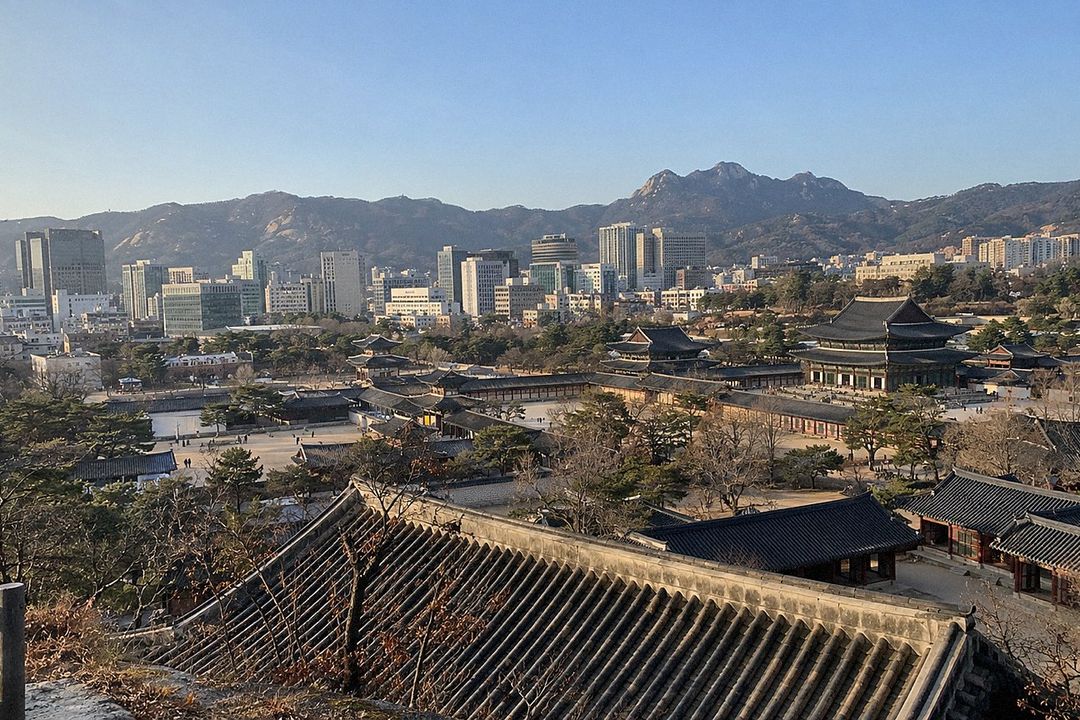
Korea's capital: Joseon palaces and hanok lanes beside skyscrapers, night markets, Han River parks and granite peaks inside the city limits.
Frequently asked questions
Do I need a K-ETA to visit Korea in 2026?
Only if your passport is from one of the roughly 112 visa-free countries and territories and you are not exempt. Citizens of 22 countries and territories, including the US, UK, Canada, Australia, Japan, Germany and France, are temporarily exempt until 31 December 2026. Travellers aged 17 or under or 65 or over on the day of arrival are also exempt.
How much does K-ETA cost and how long is it valid?
The fee is KRW 10,000 plus an online card fee of about 3 percent, and it is not refunded if the application is refused. An approval is valid for 3 years, or until your passport expires if that is sooner.
How far ahead should I apply?
You must be approved before boarding. Results normally arrive within 72 hours but can take longer, and the K-ETA Center recommends applying one to two months before travel.
Is the exemption extended into 2027?
As of 2 October 2026 the Ministry of Justice has only confirmed the exemption until 31 December 2026. No decision on 2027 had been published on k-eta.go.kr by that date, so check the official notices before booking travel for next year.
Do I need K-ETA for Jeju Island?
Yes, if your nationality is K-ETA-eligible and you are not exempt. K-ETA has applied to flights and ships to Jeju since 1 September 2022.
What is the e-Arrival Card and do I need it?
It is the free online version of the arrival card, submitted on e-arrivalcard.go.kr from 3 days before arrival. Holders of an approved K-ETA do not need to file an arrival card; travellers using the K-ETA exemption still do, either online or on paper.
Sources
Facts on this page were checked against these sources on 2 October 2026. Prices, hours and rules change — confirm with the operator before you go.
- K-ETA official website (fee, processing time, notices and FAQ) (Korean) · official
- 대한민국 전자여행허가제(K-ETA) 한시 면제 기간 연장 알림 (법무부, 2025-12-23) (Korean) · official
- K-ETA 자주 묻는 질문 (FAQ) (Korean) · official
- 17세 이하, 65세 이상 K-ETA 의무 적용 제외 및 K-ETA 허가서 유효기간 확대 (Korean) · official
- 전자여행허가(K-ETA) 비공식 웹사이트 및 대행업체 주의 (Korean) · official
- 대한민국 전자여행허가제(K-ETA) 제주도 적용 알림 (22. 9. 1.부) (Korean) · official
- Embassy of Korea in the Netherlands: K-ETA temporary waiver extension (list of 22 countries/regions) · official
- 주미국 대한민국 대사관: K-ETA 한시 면제 기간연장 알림 (26.12.31까지) (Korean) · official
- Korea Immigration Service: K-ETA overview (Korean) · official
- e-Arrival Card official site: guide and who must report (Korean) · official
- 주광저우 총영사관: 무사증 입국허가 (제주도 무사증입국 불허국가) (Korean) · official
- 파이낸셜뉴스: 제주 무사증 제도 (2026-09-18) (Korean)