Gongju 공주
Gongju is the quickest Baekje capital to reach from Seoul: express buses take about 1 h 30 (₩14,900), 28 a day. Gongsanseong fortress and the royal tombs cost ₩3,000 each or ₩6,000 together with a museum, the National Museum is free, and Magoksa temple is 40 minutes away by city bus.
Updated
Is Gongju worth it?
Gongju, a city of about 99,000 people in South Chungcheong, was Ungjin, the capital of the Baekje kingdom from 475 to 538, before the court moved south to Buyeo. Its fortress and royal tombs belong to the UNESCO-listed Baekje Historic Areas (2015), and Magoksa, in the hills outside town, is one of the seven Sansa mountain monasteries (2018). It suits history fans looking for a day trip from Seoul that is not another palace.
| Your situation | Do this |
|---|---|
| Based in Seoul, one free day | Express bus from Seoul Express Bus Terminal; Gongsanseong, the royal tombs and the National Museum |
| Two days for Baekje | Gongju one day, Buyeo the next; the bus between them takes about 55 minutes |
| Holding a Korail Pass or already on the KTX | Get off at Gongju Station, but allow about an hour by bus 200 to reach the town |
| Arriving on a Monday | The National Museum is closed; the fortress and tombs are open |
| Want a temple too | Add Magoksa by bus 770 (about 40 minutes), or Gapsa in autumn |
| Coming from Daejeon | Bus from Yuseong Terminal, about 40 minutes and ₩4,200 |
Facts checked 2 November 2026. Most visitors come by express bus, which stops on the north bank of the river, a short ride from the old town.
| Sight | Adult | Hours (Mar–Oct / Nov–Feb) | Closed |
|---|---|---|---|
| Gongsanseong | ₩3,000 | 09:00–18:00 / 09:00–17:00 | 1 Jan, Seollal and Chuseok days |
| Royal Tombs (King Muryeong) | ₩3,000 | 09:00–18:00 / 09:00–17:00 | 1 Jan, Seollal and Chuseok days |
| Seokjang-ri Museum | ₩3,000 | 09:00–18:00 / 09:00–17:00 | 1 Jan, Seollal and Chuseok days |
| Combined ticket (all three) | ₩6,000 | – | – |
| Gongju National Museum | Free | 09:00–18:00 | Mondays, 1 Jan, Seollal, Chuseok |
| Magoksa, Gapsa | Free | Open all year | – |
From Gongju City’s sight pages and fee table and the National Museum, checked 2 November 2026. Last entry is 30 minutes before closing. Youth pay ₩2,000 and children ₩1,000 at each site (₩4,000 and ₩2,000 for the combined ticket). Gongju residents enter free, and other free-entry groups are listed on the city’s fee page.
Gongsanseong Fortress
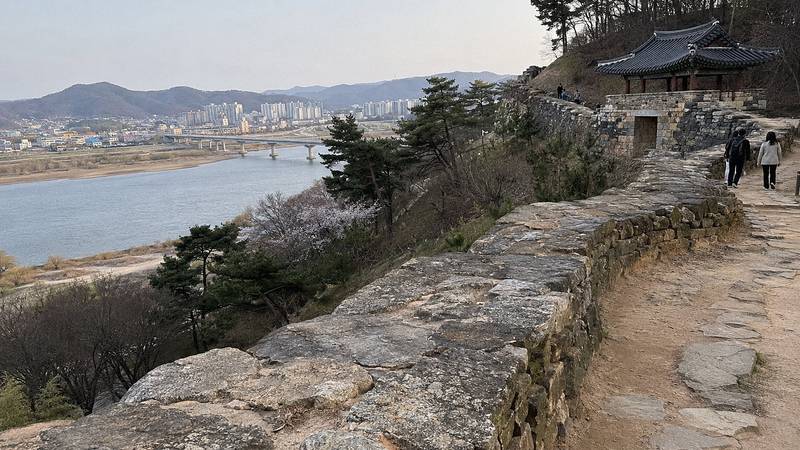
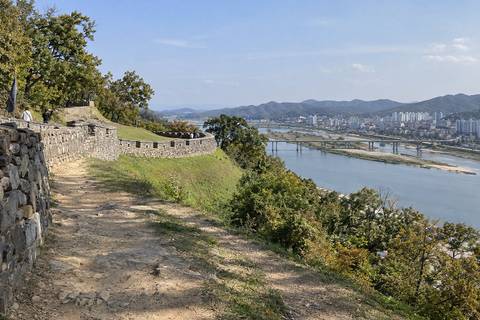
Gongsanseong follows a ridge about 110 m high on the south bank of the Geumgang River. It was the royal fortress of Ungjin, first built of earth and later rebuilt in stone, and the path along its walls takes in pavilions, gates and views over the river and the town. The west gate, Geumseoru, by the car park and the main bus stop, is the usual way in.
The walk is steep in places, with steps on the river side; allow about 1 h 30 for the full circuit. Free guided commentary starts on the hour from 09:00 to 16:00. Parking is free. No 2026 schedule for the gate guard ceremony could be found when this page was checked. Hours, the walking route, tickets and buses are on the Gongsanseong page.
The fortress is best seen from the north bank at night: Geumgang Sinkwan Park, across the bridge from the fortress and near the bus terminal, is the viewing spot, and during the Baekje Cultural Festival a pontoon bridge links it to the fortress. See fortresses in Korea.
The royal tombs and the National Museum
The Royal Tombs of Gongju (공주 무령왕릉과 왕릉원), west of the centre, are seven Baekje tombs on a low hillside. One of them, the tomb of King Muryeong (r. 501–523) and his queen, was found by chance in 1971 during drainage work. It was untouched, with a stone tablet naming the king, which makes it one of the few Baekje tombs whose owner is known. The tombs are seen from outside; the exhibition hall at the site reproduces the burial chambers. Take bus 125 to the 무령왕릉 stop or the next one, the Gongju Arts Center (문예회관). Fees, the replica, the visit order and the return stop are on the Royal Tombs page.
The finds from the tomb are in the Gongju National Museum, about 800 m on foot from the tombs: gold crown ornaments, earrings, the stone tablet and a guardian beast. Entry is free; collect a free ticket at the counter. It opens 09:00–18:00, the same on weekends and holidays, and closes on Mondays (on Tuesday when the Monday is a substitute holiday), 1 January, Seollal and Chuseok. Allow about an hour.
Next to the tombs, the city-run Hanok Village has rooms in new-built traditional houses (check-in from 15:00, check-out by 11:00), and a 1 km walk from the Arts Center stop leads to Gomanaru, a pine grove at the old ferry crossing on the river with the Ungjindan altar.
The old town
Between Gongsanseong and the Jemincheon stream is the small old town, with Sanseong Market and a few sights from Gongju’s later history. Jungdong Catholic Church (1937) is a red-brick Gothic church on a hill, free and always open. Close to the fortress, the Hwangsaebawi martyrs’ shrine remembers Catholics executed in Gongju in the 18th and 19th centuries. The Pulkkot Literature Museum (free, Tuesday to Sunday 10:00–17:00), in a 1930s Japanese-style house, is linked to the poet Na Tae-ju. The free Chungnam History Museum (09:00–18:00, to 17:00 in winter; closed Mondays and 1 January) covers the history of the province.
Magoksa, Gapsa and Gyeryongsan
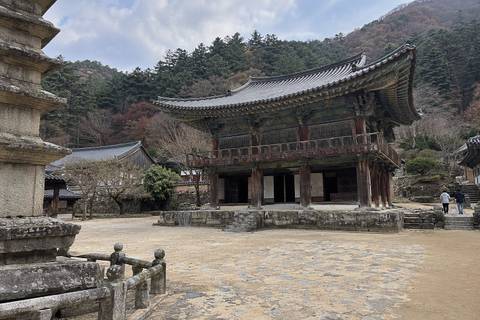
Magoksa, in Sagok-myeon about 40 minutes north-west of town, was founded in 643 or 640 and is divided in two by a stream, with the main Daegwangbojeon hall on the far side. It is one of the seven Sansa monasteries on the UNESCO list. The Baekbeom trail, with three courses through the woods, is named after the independence leader Kim Gu (Baekbeom), who once lived at the temple; the Baekbeomdang hall also bears his name. Entry and parking are free. Bus 770 runs 8 times a day towards the temple (06:20–20:30 from Sanseong-dong, calling at the terminal) and 9 times back (07:10–21:10). The temple runs a paid templestay, booked on templestay.com.
East of town, two temples sit on opposite sides of Gyeryongsan National Park. Gapsa (free) is reached by the Ori-sup path, about 2 km of forest from the car park to the main hall, which is at its best in autumn; take bus 320 (22 trips a day, about 30 minutes). Donghaksa (free) is in a valley on the eastern side, reached by bus 350, and is the usual start of the best-known ridge hike over Gwaneumbong to Gapsa. Hiking rules and seasonal trail closures are on the national parks page; for more temples, see temples in Korea.
Gongju or Buyeo?
Both Baekje capitals are about 55 minutes apart by bus. Gongju (475–538) is the quicker trip from Seoul, by express bus or KTX, and has King Muryeong’s tomb and its gold treasures in the museum. Buyeo (538–660) has the better woodland walk at Busosanseong, the river boat and the Jeongnimsa pagoda, but is about 2 hours by bus from Seoul. With one day, choose Gongju for the tomb treasures or Buyeo for the walk; with two, see both. See UNESCO sites in Korea.
Getting there and around
From Seoul, the express bus from Seoul Express Bus Terminal (Gyeongbu side, subway Lines 3, 7 and 9) is the easiest route: 28 buses a day from 06:45 to 23:35, about 1 h 30, ₩14,900 for premium seats. Gongju buses do not leave from Seoul Nambu. Dong Seoul has seven buses a day, and Incheon Airport 11 from each terminal. From Daejeon, buses from Yuseong Terminal take about 40 minutes. See long-distance buses.
Gongju Station on the Honam KTX line is about an hour from Yongsan, but it stands in farmland in Iin-myeon well south of town. City bus 200 runs from the station via the city hall and Gongsanseong to the terminal, about 14 times a day from 07:30 to 20:50, with a few extra on non-working days, and takes about an hour. It is worth it with a Korail Pass or as a stop on the way to Jeolla; otherwise the bus is simpler. The station has a tourist information centre (041-852-8513).
Buses arrive at the Gongju Bus Terminal in Singwan-dong on the north bank. City bus 125 runs to Gongsanseong and the royal tombs, bus 200 reaches Gongsanseong in two stops, and taxis serve the terminal. The tourist information centres at the terminal (041-852-5567), Gongsanseong (041-856-7700) and the royal tombs (041-856-3151) have bus times and maps. Bus 500 runs from the terminal to Sejong.
When to go
Spring and autumn suit the fortress walk best, and the Gapsa forest path is best known for its autumn leaves. The Baekje Cultural Festival, held in Gongju and Buyeo each autumn, ran from 3 to 11 October in 2026, with Gongju’s events at Gongsanseong and Geumgang Sinkwan Park; the 2027 dates had not been announced. The 2027 Korea Chestnut Industry Expo is set for 20–24 January 2027 at Geumgang Sinkwan Park. In winter the fortress and tombs close at 17:00. For the rest of the region, see the Chungcheong guide.
Book your trip
Top attractions in Gongju
Gongsanseong and the old town
The town centre south of the Geumgang River: Gongsanseong on its ridge above the water, Sanseong Market, Jungdong Catholic Church and the Jemincheon stream. The bus terminal is across the bridge in Singwan-dong, on the north bank.
Gongsanseong Fortress
Baekje's royal fortress of 475–538, a wall walk along a ridge above the Geumgang River with the Geumseoru gate; ₩3,000, allow about 1 h 30.
Jungdong Catholic Church
A red-brick Gothic church of 1937 on a hill in the old town; free and always open.
Hwangsaebawi Martyrs' Shrine
A hillside shrine to the Catholics executed in Gongju in the 18th and 19th centuries, a short walk from Gongsanseong; free.
Royal tombs and the museum quarter
A short ride west of the centre: the royal tombs of the Ungjin-era Baekje kings, the Gongju National Museum, the city-run Hanok Village and the Gomanaru pine grove by the river.
Royal Tombs of Gongju (King Muryeong's tomb)
Baekje royal tombs, including King Muryeong's, found intact in 1971; an exhibition hall reproduces the chambers. ₩3,000.
Gongju National Museum
The gold crown ornaments, stone tablets, guardian beast and other finds from King Muryeong's tomb; free, closed Mondays.
Gongju Hanok Village
A city-run cluster of new-built hanok next to the royal tombs, with rooms for overnight stays and a courtyard to stroll through.
Gomanaru
A pine grove on the Geumgang at the old ferry crossing, with the Ungjindan altar and a bear legend behind Gongju's old name; free.
Temples and the countryside
Magoksa in the north-western hills, Gapsa and Donghaksa on the slopes of Gyeryongsan to the east, the Seokjang-ri Palaeolithic site upriver, and the KTX station in Iin-myeon to the south.
Magoksa Temple
A valley temple founded in 643 and split in two by a stream, one of the seven UNESCO-listed Sansa; free, about 40 minutes by bus 770.
Gapsa Temple
An old temple on the western slope of Gyeryongsan, reached by a 2 km forest path famous in autumn; free.
Donghaksa Temple
A temple in a Gyeryongsan valley and the usual start of the ridge hike over to Gapsa; free.
Seokjang-ri Museum
A museum at a Palaeolithic site on the Geumgang, the first such site excavated in South Korea; ₩3,000 or in the combined ticket.
Gongju by interest
Getting to Gongju
| From | How | Time | Notes |
|---|---|---|---|
| Seoul Express Bus Terminal (Gyeongbu) | Express bus to Gongju | about 1 h 30 min | The main link: 28 buses a day from 06:45 to 23:35. Most are premium (우등) seats at ₩14,900; a few standard buses cost ₩10,200 and the two late-night buses ₩17,800. Not from Seoul Nambu. Book on Kobus. |
| Yongsan Station | KTX to Gongju Station, then bus 200 | about 1 h by train + about 1 h by bus | Honam-line KTX trains take about 1 hour, but Gongju Station is in farmland well south of town. Bus 200 runs from the station to Gongsanseong and the terminal (about 14 trips a day, 07:30–20:50). Book on Korail. |
| Dong Seoul Terminal | Intercity bus to Gongju | about 2 h 10 min | Seven buses a day from 06:40 to 19:40, premium seats ₩16,000. |
| Daejeon (Yuseong Terminal) | Intercity bus to Gongju | about 40 min | 49 buses a day from 07:00 to 22:00, ₩4,200; many are unreserved, so buy at the counter. Daejeon Complex Terminal also has 16 a day (about 1 h 05, ₩6,100). |
| Incheon Airport | Intercity bus to Gongju | about 2 h 10 min – 2 h 55 min | 11 buses a day from each terminal: T1 08:10–21:00, T2 07:45–20:35; ₩26,300. |
| Buyeo | Intercity bus to Gongju | about 55 min | The link between the two Baekje capitals; see the Buyeo page for times from Gongju. Few buses run in the Buyeo-to-Gongju direction, so check T-money Bus first. |
All buses stop at the Gongju Intercity and Express Bus Terminal in Singwan-dong, on the north bank of the Geumgang; Gongsanseong is across the bridge. Bus times and fares are from the Kobus and T-money Bus booking systems for 5 November 2026 (weekend timetables were the same). City bus 125 runs from the terminal to Gongsanseong and the royal tombs; bus 200 is the quicker hop to Gongsanseong.
Getting around
City buses link the terminal with the sights: 125 to Gongsanseong and on to the royal tombs, 200 to Gongsanseong in two stops, 770 to Magoksa (8 trips out from 06:20 to 20:30 and 9 back from 07:10 to 21:10, about 40 minutes), 320 to Gapsa (22 trips a day, about 30 minutes), 350 to Donghaksa and 570 or 580 to Seokjang-ri. The museum is about 800 m on foot from the royal tombs. Tourist information: the terminal (041-852-5567), Gongsanseong (041-856-7700) and the royal tombs (041-856-3151), or call 1330.
Long-distance trains: see KORAIL PASS and transportation in Korea.
Itineraries
A day from Seoul
Take an early express bus from Seoul Express Bus Terminal. Start at Gongsanseong and walk the wall, then take bus 125 to the royal tombs, walk to the National Museum (closed on Mondays) and finish at Gomanaru by the river. Take an evening bus back; the last one leaves after 21:00.
Gongju and Magoksa
Spend the morning at Gongsanseong, then ride bus 770 from the terminal to Magoksa for the afternoon and walk part of the Baekbeom trail. Check the return times at the stop; the trip takes about 40 minutes each way.
Two Baekje capitals in two days
Gongju on day one for the fortress, tombs and museum, a night in the Hanok Village, then the 55-minute bus to Buyeo for Busosanseong and the Jeongnimsa pagoda. From Buyeo, buses return to Seoul Nambu.
Where to stay in Gongju
Hanok Village
City-run hanok rooms beside the royal tombs and the museum; check-in from 15:00, check-out by 11:00. Book on the city's hanok site or below.
Best for: Couples, families, a night in a traditional house
See hotels in Hanok VillageOld town near Gongsanseong
Small hotels and guesthouses within walking distance of the fortress, Sanseong Market and the restaurants of the old town.
Best for: First-timers, no car
See hotels in Old town near GongsanseongSingwan-dong (bus terminal)
Motels and business hotels on the north bank around the terminal, with the city buses to every sight.
Best for: Early or late buses
See hotels in Singwan-dong (bus terminal)Magoksa templestay
Magoksa runs a paid templestay booked through templestay.com; you sleep at the temple and join early morning practice.
Best for: A quiet night in the hills
See hotels in Magoksa templestay
Some links on this page are affiliate links: if you book through them we may earn a commission at no extra cost to you. It never decides what we recommend. Affiliate disclosure.
Food and restaurants in Gongju
Gongju is known for its chestnuts (알밤); the city calls them large and sweet, and they turn up in bread, desserts and side dishes across town. Sanseong Market, near the fortress, is the place for everyday Korean meals and snacks.
What to eat
| Gongju chestnuts 공주 알밤 | Roasted or steamed chestnuts, sold fresh in autumn and as chestnut bread and sweets all year. |
|---|
Where to eat
- Sanseong Market — The traditional market of the old town, a short walk from Gongsanseong.
- Around the bus terminal — Everyday Korean restaurants and cafés in Singwan-dong on the north bank; see Korean food.
Experiences and tours in Gongju
Baekje history day tours from Seoul
Guided day trips to Gongju and Buyeo, an option if you would rather not handle buses between the sites.
Check on Klook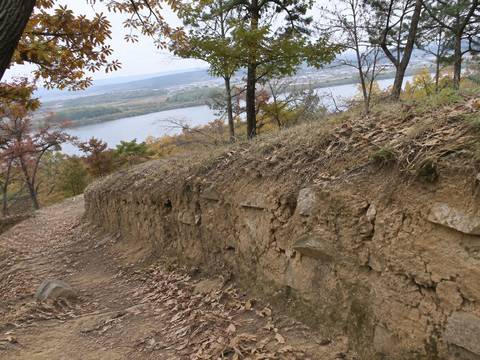
Baekje Historic Areas tours
Guided tours that cover the UNESCO Baekje sites of Gongju and Buyeo in one trip.
Check on GetYourGuide
Private car for Gongju and Magoksa
A driver for the day links Gongsanseong, the tombs, Magoksa and Gapsa, which are spread out by bus.
Check on Klook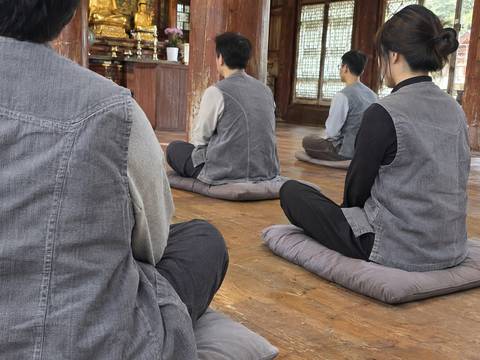
Temple stays in Korea
Overnight temple programmes with meals and morning practice, for those who want more than a day visit.
Check on Klook
Some links on this page are affiliate links: if you book through them we may earn a commission at no extra cost to you. It never decides what we recommend. Affiliate disclosure.
Frequently asked questions
Is Gongju worth visiting?
Yes, if you are interested in Korean history. Gongsanseong, the royal tombs and the National Museum fill a day for about ₩6,000, and Gongju is the closest Baekje capital to Seoul, about 1 h 30 by express bus. Add Magoksa for a second day.
How do I get from Seoul to Gongju?
The express bus from Seoul Express Bus Terminal (Gyeongbu side) is the simplest: 28 a day, about 1 h 30, ₩14,900 premium. The KTX to Gongju Station takes about an hour from Yongsan, but the station is about an hour from the town by city bus 200.
Is there a combined ticket?
Yes. A ₩6,000 adult ticket covers Gongsanseong, the royal tombs and the Seokjang-ri Museum, against ₩9,000 bought separately. Youth pay ₩4,000 and children ₩2,000. The National Museum is free.
Can I go inside King Muryeong's tomb?
No. The tombs are seen from outside, and the exhibition hall at the site reproduces the burial chambers. The treasures found in the tomb are in the Gongju National Museum, about 800 m away.
Should I visit Gongju or Buyeo?
With one day from Seoul, Gongju is quicker to reach and has King Muryeong's tomb and its treasures; Buyeo has the better woodland fortress walk and the stone pagoda. With two days, see both: the bus between them takes about 55 minutes.
Sources
Facts on this page were checked against these sources on 13 November 2026. Prices, hours and rules change — confirm with the operator before you go.
- 공주시 – 공산성 (관람료·관람시간·휴관일) (Korean) · official
- 공주시 – 공주 무령왕릉과 왕릉원 (Korean) · official
- 공주시 – 마곡사 (Korean) · official
- 공주시 – 갑사 (Korean) · official
- 공주시 – 동학사 (Korean) · official
- 공주시 – 석장리박물관 (Korean) · official
- 공주시 – 고마나루 (Korean) · official
- 공주시 – 공주 중동성당 (Korean) · official
- 공주시 – 황새바위 순교성지 (Korean) · official
- 공주시 – 공주한옥마을 (Korean) · official
- 공주한옥마을 – 객실 요금·입퇴실 안내 (Korean) · official
- 공주시 – 관람료 안내 (통합권 포함) (Korean) · official
- 공주시 – 관광안내소 (Korean) · official
- 공주시 – 교통 안내 (고속·시외버스, KTX 공주역) (Korean) · official
- 공주시 – 시내버스 노선·시간표 (Korean) · official
- 공주시 – 인구 통계 (2026년 9월 말) (Korean) · official
- 공주시 – 공주 알밤 / 2027 대한민국 밤산업 박람회 (2027.1.20~1.24) (Korean) · official
- 국립공주박물관 – 관람안내 (Korean) · official
- Gongju National Museum (English) · official
- 백제문화제 – 제72회 백제문화제 (2026.10.3~10.11) (Korean) · official
- UNESCO World Heritage List – Baekje Historic Areas · official
- 고속버스통합예매 – 서울경부→공주 배차조회 (2026.11.05) (Korean) · official
- 시외버스 통합예매 – 동서울·대전복합·유성·인천공항→공주 배차조회 (2026.11.05) (Korean) · official
- 리포테라 – 공주 무령왕릉과 왕릉원 관람료·관람시간 (2026.7.6) (Korean)