Before you go
Korea Weather and the Best Time to Visit
Updated
Book your trip
May and October are the best months to visit Korea. Seoul averages 23.6 °C (74 °F) by day in May and 20.2 °C (68 °F) in October, with little rain, against 414 mm in July and −5.5 °C (22 °F) nights in January. The figures on this page are the Korea Meteorological Administration’s (KMA) 1991–2020 averages, checked on 6 October 2026, so look at the real forecast about ten days before you fly.
- Best for city sightseeing: May and October, then April and late September to early November.
- Rain to avoid: the monsoon, from about 19–25 June to 20–26 July depending on the region.
- Typhoons: July to September, 3.4 a year affecting Korea on average.
- Winter: dry and sunny in Seoul but well below freezing at night. Busan and Jeju are milder.
- Holidays to plan around: Seollal (6–9 February 2027) and Chuseok (14–16 September 2027).
For entry rules, money and phones, see Before you go.
Best time to visit Korea, month by month
The table uses Seoul, where almost every first trip starts. Rain is the month’s total precipitation, including snow measured as water. Sunshine is the average number of sunny hours in the month.
| Month | Seoul high | Seoul low | Rain (mm) | Sunshine (h) | Verdict |
|---|---|---|---|---|---|
| Jan | 2.1 °C (36 °F) | −5.5 °C (22 °F) | 17 | 170 | Cold, dry, clear |
| Feb | 5.1 °C (41 °F) | −3.2 °C (26 °F) | 28 | 171 | Cold; Seollal in 2027 |
| Mar | 11.0 °C (52 °F) | 1.9 °C (35 °F) | 37 | 198 | Cool, early blossoms in the south |
| Apr | 17.9 °C (64 °F) | 8.0 °C (46 °F) | 73 | 206 | Good: cherry blossoms |
| May | 23.6 °C (74 °F) | 13.5 °C (56 °F) | 104 | 223 | Best: warm and sunny |
| Jun | 27.6 °C (82 °F) | 18.7 °C (66 °F) | 130 | 189 | Good early, monsoon from late June |
| Jul | 29.0 °C (84 °F) | 22.3 °C (72 °F) | 414 | 124 | Wettest month |
| Aug | 30.0 °C (86 °F) | 22.9 °C (73 °F) | 348 | 156 | Hottest, humid, typhoons |
| Sep | 26.2 °C (79 °F) | 17.7 °C (64 °F) | 142 | 180 | Warm, still some rain |
| Oct | 20.2 °C (68 °F) | 10.6 °C (51 °F) | 52 | 206 | Best: dry, clear, autumn colour |
| Nov | 11.9 °C (53 °F) | 3.5 °C (38 °F) | 51 | 157 | Cool, late autumn colour |
| Dec | 4.2 °C (40 °F) | −3.4 °C (26 °F) | 23 | 163 | Cold, dry |
Seoul weather station, KMA 1991–2020 monthly averages, checked 6 October 2026.
If your dates are flexible, aim for May or October. April, early June, September and early November are close behind, each with one catch noted in the sections below.
When to avoid: monsoon and typhoons
The monsoon (jangma). Korea’s summer rainy season arrives from the south. The KMA’s long-term averages put it at:
| Region | Starts | Ends | Rain days | Rain (mm) |
|---|---|---|---|---|
| Jeju | 19 June | 20 July | 17.5 | 349 |
| South (Busan, Gyeongju, Jeolla) | 23 June | 24 July | 17.0 | 341 |
| Central (Seoul, Gangwon, Chungcheong) | 25 June | 26 July | 17.7 | 378 |
KMA monsoon averages, checked 6 October 2026.
The rain does not fall all day, every day. Fronts drift north and south, so downpours alternate with dry and very humid spells. The start date also moves by a week or more from year to year. Indoor sights such as museums, markets and shopping streets like Myeongdong are the easiest to fit around the weather.
Typhoons. About 25 typhoons form in the western Pacific each year, and on average 3.4 of them affect Korea. Almost all arrive in summer: about 1.0 in July, 1.2 in August and 0.8 in September, with a small chance in June and October. When one passes, flights and ferries can be cancelled for a day or more. On a trip to Jeju or the islands from July to September, leave a spare day before your flight home.
Spring: March to May
Spring warms quickly. Seoul goes from a 1.9 °C (35 °F) night in March to a 23.6 °C (74 °F) day in May, and nights stay cool, so bring a light jacket.
Cherry blossoms. The KMA judges Seoul’s blossom by a single official tree at its Seoul weather station. Its long-term average is first flowers on 8 April and full bloom on 10 April. Recent years have run earlier: from 2021 to 2026 the tree first flowered between 24 March and 4 April, and in 2026 it bloomed on 29 March, ten days ahead of the average. For a blossom trip, book flexible dates around early April and watch the KMA’s spring flower updates in March. For festival dates and the best spots by city, see cherry blossoms in Korea.
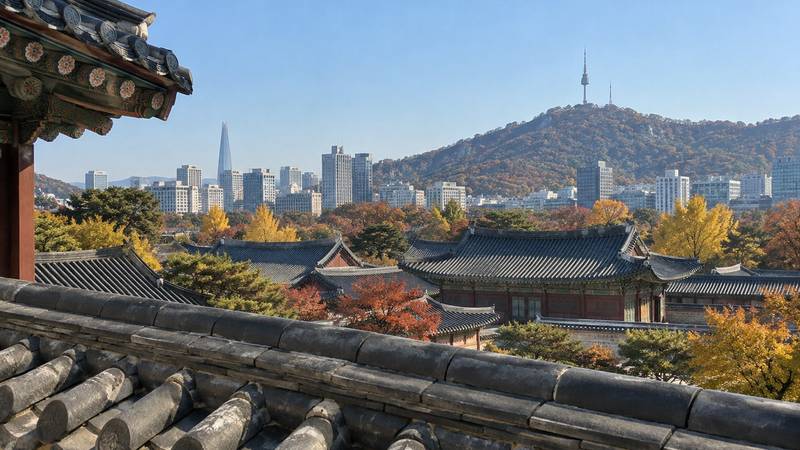
Palace grounds such as Gyeongbokgung and Changdeokgung are classic blossom settings; see Korea’s palaces for the full list. May is the most reliable month overall: Seoul gets 223 hours of sunshine, the most of any month, and humidity is still low.
Summer: June to August
Early June is often pleasant, with warm days before the monsoon arrives. From late June to late July expect heavy rain, and from mid-July to August heat and humidity. August is the hottest month in every city on this page, with average highs of 28.6–30.1 °C (83–86 °F) and nights above 21 °C (70 °F).
Summer is also beach season. Busan’s city beaches, such as Haeundae and Gwangalli, and the beaches of Jeju are at their busiest in July and August. In the heat, start hikes such as Bukhansan on Seoul’s northern edge early in the morning and carry plenty of water.
Autumn: September to November
September is still warm, with a 26.2 °C (79 °F) Seoul high, and typhoons are still possible. It is wetter than people expect on Jeju (228 mm in Jeju City) and on the east coast (229 mm in Gangneung).
October is the driest of the comfortable months: Seoul gets 52 mm of rain and 206 hours of sunshine, with days around 20 °C (68 °F) and nights around 11 °C (51 °F). Busan and Jeju stay a couple of degrees warmer.
Autumn colour starts in the high mountains of Gangwon in late September and early October, then moves south and down into the cities through late October and November. At Seoraksan the KMA’s long-term averages are first colour on 28 September and peak on 17 October. Our autumn leaves 2026 report lists the official peak forecasts by mountain, and autumn leaves in Korea shows where to go from each base and how to check live status. Seoul’s palaces and parks usually turn from late October to early November, and Gyeongju is a popular autumn base in the south-east.
November cools fast. Seoul’s average high drops to 11.9 °C (53 °F) and the night low to 3.5 °C (38 °F), so pack a warm coat for the second half of the month.
Winter: December to February
Seoul winters are cold, dry and often sunny. January averages 2.1 °C (36 °F) by day and −5.5 °C (22 °F) at night, with only 17 mm of precipitation, and wind makes it feel colder. A proper winter coat, hat and gloves are needed for Seoul and the Gangwon mountains.
The south coast is much milder. Busan’s January high is 8.2 °C (47 °F) and its night low sits just below freezing. Jeju stays above freezing on average, but the two sides of the island differ: Jeju City on the north coast gets only 70 hours of January sunshine, while Seogwipo on the south coast gets 154 hours and is about 2 °C warmer by day.
Seoul, Busan, Jeju and the east coast compared
Korea is small, but the climate shifts from the cold north-west to the mild south. The table shows average highs and lows in °C at five KMA stations: Seoul, Busan, Jeju City and Seogwipo on Jeju, and Gangneung on the Gangwon east coast.
| Month | Seoul | Busan | Jeju City | Seogwipo | Gangneung |
|---|---|---|---|---|---|
| Jan | 2.1 / −5.5 | 8.2 / −0.1 | 8.6 / 3.7 | 10.8 / 4.1 | 5.3 / −2.7 |
| Feb | 5.1 / −3.2 | 10.2 / 1.5 | 9.9 / 4.0 | 11.8 / 4.8 | 7.1 / −1.3 |
| Mar | 11.0 / 1.9 | 13.8 / 5.3 | 13.3 / 6.6 | 14.7 / 7.5 | 11.7 / 2.6 |
| Apr | 17.9 / 8.0 | 18.2 / 10.1 | 18.0 / 10.8 | 18.6 / 11.6 | 17.9 / 8.2 |
| May | 23.6 / 13.5 | 22.0 / 14.6 | 22.1 / 15.0 | 22.3 / 15.8 | 22.7 / 13.3 |
| Jun | 27.6 / 18.7 | 24.6 / 18.3 | 24.9 / 19.1 | 24.7 / 19.5 | 25.4 / 17.5 |
| Jul | 29.0 / 22.3 | 27.5 / 22.1 | 29.3 / 23.7 | 28.3 / 23.8 | 28.1 / 21.6 |
| Aug | 30.0 / 22.9 | 29.5 / 23.7 | 30.1 / 24.8 | 30.1 / 24.9 | 28.6 / 21.9 |
| Sep | 26.2 / 17.7 | 26.4 / 19.8 | 26.1 / 20.9 | 27.4 / 21.5 | 24.6 / 17.0 |
| Oct | 20.2 / 10.6 | 22.5 / 14.5 | 21.6 / 15.7 | 23.5 / 16.4 | 20.3 / 11.5 |
| Nov | 11.9 / 3.5 | 16.6 / 8.3 | 16.4 / 10.4 | 18.4 / 11.2 | 14.0 / 5.6 |
| Dec | 4.2 / −3.4 | 10.4 / 2.0 | 11.0 / 5.6 | 13.1 / 6.2 | 7.7 / −0.5 |
Average daily high / low in °C, KMA 1991–2020, checked 6 October 2026.
From April to September the cities are within a few degrees of each other. The real difference is winter: in December and January, Busan and Jeju City average 5–9 °C warmer than Seoul at night.
Rain differs more than temperature:
| Month | Seoul | Busan | Jeju City | Seogwipo | Gangneung |
|---|---|---|---|---|---|
| Apr | 73 | 141 | 90 | 187 | 82 |
| May | 104 | 156 | 96 | 224 | 79 |
| Jul | 414 | 327 | 210 | 276 | 250 |
| Aug | 348 | 266 | 272 | 316 | 293 |
| Sep | 142 | 161 | 228 | 209 | 229 |
| Oct | 52 | 80 | 95 | 100 | 114 |
| Year | 1,418 | 1,577 | 1,502 | 1,990 | 1,445 |
Average precipitation in mm, KMA 1991–2020, checked 6 October 2026.
Two things stand out. Seoul is the wettest of the five in July and August but the driest in April, September and October. Seogwipo, on the south side of Jeju, gets about twice as much spring rain as Jeju City on the north side, so a spring trip that is all about outdoor walks may stay drier in the north.
Holidays to plan around in 2027
Korea’s two big family holidays move with the lunar calendar. During both, much of the country travels to their home towns, so long-distance trains, express buses and domestic flights fill up early, and some family-run restaurants and market stalls close on the main days.
| Holiday | 2027 dates | Note |
|---|---|---|
| Seollal (Lunar New Year) | 6–9 February | 7 February is the day itself; 9 February is a substitute holiday |
| Chuseok (harvest festival) | 14–16 September | 15 September is the day itself |
Korea AeroSpace Administration 2027 calendar, published 29 June 2026.
The 2027 calendar also has eight three-day weekends that make domestic travel busier: 1–3 January, 27 February–1 March, 1–3 May, 17–19 July, 14–16 August, 2–4 October, 9–11 October and 25–27 December. If you plan to take the KTX on any of these dates, book as early as you can; our Korail Pass guide and Transportation page explain the options.
What to pack by season
Korea uses 220 V sockets with two round pins; see Before you go for plugs, apps and emergency numbers. For a deeper month-by-month look at clothing and packing, Korea Field Notes has a Korea weather by month guide.
Where to next
- Seoul, Busan, Jeju and Gyeongju city guides
- Autumn leaves 2026 for this season’s peak foliage forecast
- Seoul in 3 days for a first-trip plan
- K-ETA and entry rules and SIM cards and eSIMs before you fly
City guides
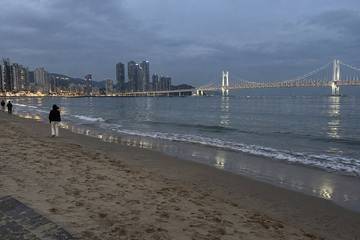
Busan
Korea's second city and busiest port, wrapped around beaches, hillside villages, fish markets and a temple on the rocks.
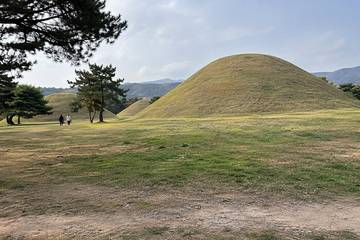
Gyeongju
The former Silla capital, an open-air museum of grassy royal tombs, ancient temples and stone Buddhas in the southeast.
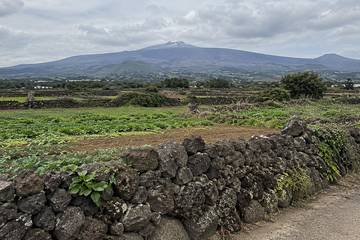
Jeju Island
Korea's volcanic holiday island, with the country's highest peak, UNESCO-listed craters and lava tubes, black-sand coves and waterfalls.
Seoul
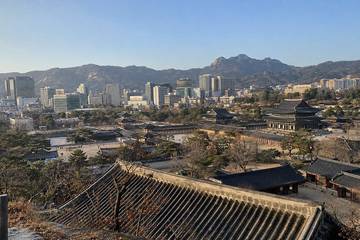
Korea's capital: Joseon palaces and hanok lanes beside skyscrapers, night markets, Han River parks and granite peaks inside the city limits.
Frequently asked questions
What is the best month to visit Korea?
May or October. Seoul averages a 23.6 °C (74 °F) high in May and 20.2 °C (68 °F) in October, with 104 mm and 52 mm of rain. Both months avoid the summer monsoon and the winter cold.
When is the rainy season in Korea?
The summer monsoon, called jangma, normally runs from 19 June to 20 July on Jeju, 23 June to 24 July in the south and 25 June to 26 July in the central region around Seoul. It brings about 17 to 18 rain days and roughly 340 to 380 mm of rain.
When is typhoon season in Korea?
July to September. On average 3.4 typhoons a year affect Korea: about 1.0 in July, 1.2 in August and 0.8 in September. They can cancel flights and ferries, especially to and from Jeju.
When do cherry blossoms bloom in Seoul?
The long-term average date for the first blossoms at Seoul's official observation tree is 8 April, with full bloom on 10 April. Recent springs have been earlier: in 2026 the tree flowered on 29 March, ten days ahead of the average.
How cold is Korea in winter?
Seoul averages 2.1 °C (36 °F) by day and −5.5 °C (22 °F) at night in January. Busan and Jeju are much milder, with January highs of 8 to 11 °C, but Jeju City is often grey.
Which holidays should I avoid in 2027?
Seollal (Lunar New Year), with holidays from 6 to 9 February 2027, and Chuseok, from 14 to 16 September 2027. Much of the country travels home on these dates, so long-distance trains and buses fill up early.
Sources
Facts on this page were checked against these sources on 6 October 2026. Prices, hours and rules change — confirm with the operator before you go.
- 기상자료개방포털: 우리나라 기후평년값 (1991–2020 월별 평년값, 서울·부산·제주·서귀포·강릉) (Korean) · official
- 기상자료개방포털: 장마 평년값 (중부·남부·제주 시작일, 종료일, 강수일수, 강수량) (Korean) · official
- 기상청 날씨누리: 태풍 통계 (1991–2020 평년 월별 발생 및 영향 수) (Korean) · official
- 수도권기상청 보도자료: 서울과 여의도 윤중로 벚꽃 개화 (2026-03-29, 평년 개화 4월 8일·만발 4월 10일) (Korean) · official
- 강원지방기상청 보도자료: 설악산 첫 단풍 (2026-09-28, 평년 첫 단풍 9월 28일·절정 10월 17일) (Korean) · official
- 우주항공청 보도자료: 「2027년 월력요항」 발표 (2026-06-29) (Korean) · official
- 파이낸셜뉴스: 내년 공휴일 72일, 3일 이상 연휴는 10번 (2026-06-29) (Korean)