Before you go
Money in Korea: cards, cash, ATMs and exchange
Updated
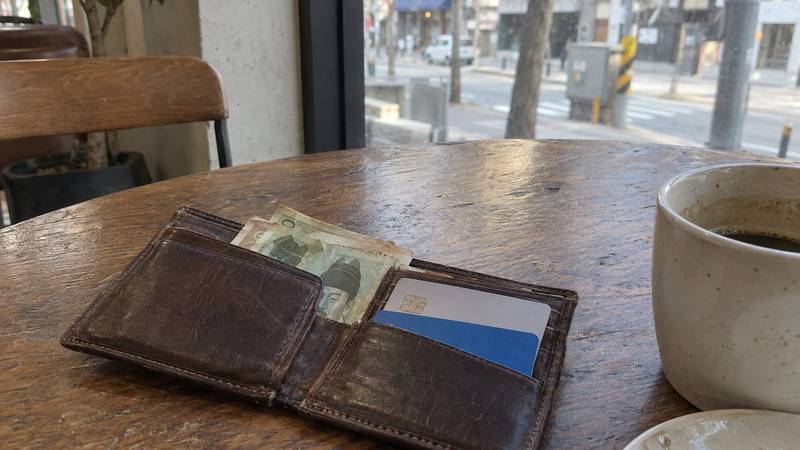
Book your trip
South Korea is one of the easiest countries in Asia to pay your way through. Cards work almost everywhere, many city buses no longer take cash, and visitors can claim back sales tax on shopping, often right at the till. Still, a little cash and a few rules make the trip smoother. This page covers the currency, cards, ATMs and exchange, transport cards and tax refunds, as checked on 5 October 2026. For entry rules, data and weather, see Before you go.
The won: notes and coins
Korea’s currency is the won, written KRW or ₩. The Bank of Korea issues four banknotes:
- 50,000 won, the largest note, first issued in 2009
- 10,000 won
- 5,000 won
- 1,000 won
The coins you will handle are 500, 100, 50 and 10 won. The Bank of Korea also lists 1 and 5 won coins as current, but you are unlikely to see them in change.
Tipping is not a custom in Korea, whether in restaurants, taxis or hotels.
Paying by card
Most businesses accept credit and debit cards, including major hotels, department stores, chain restaurants, cafes, convenience stores and taxis with card readers. Visa, Mastercard and American Express are widely taken. The Korea Tourism Organization still advises checking before you buy, because some smaller shops do not accept every card, and this is most common at traditional market stalls such as Gwangjang Market and with street food vendors in areas like Myeongdong.
A few habits help:
- Bring two cards on different networks, in case one is declined.
- Carry some cash in won for markets, small restaurants and transport top-ups.
- Keep your passport on you when shopping. It is needed for tax refunds.
ATMs and changing money
ATMs: not every ATM in Korea accepts foreign cards. Machines marked “Global ATM” or showing foreign card logos are the ones to look for, and they are common at airports, bank branches, major stations and some convenience stores. Fees depend on both the ATM operator and your own bank, so check your bank’s foreign withdrawal charges before you travel.
Exchange: you can change foreign currency into won at banks and authorised exchange offices. International airports have bank exchange counters for arriving passengers, so you can change a small amount on landing and the rest in town. Some banks and exchange offices do not accept old-series foreign notes, so bring current bills.
Bank hours: banks generally open 09:00–16:00 on weekdays and close at weekends and on public holidays. A provisional agreement between bank unions and management in September 2026 would move bank opening to 09:30 from April 2027, so check hours if you plan a bank visit next year.
Bringing cash in: there is no limit, but cash and other means of payment worth more than USD 10,000 in total must be declared to customs on arrival. This includes won, foreign currency and cheques. Non-residents leaving with more than USD 10,000 need permission from the Bank of Korea or customs, unless the money was declared when they arrived. Violations are penalised under the Foreign Exchange Transactions Act.
Transport cards and cash-free buses
Subways and buses run on rechargeable transport cards. A Tmoney card is sold for a few thousand won at convenience stores and Seoul subway information centres. It can be topped up at subway ticket machines to a maximum balance of KRW 500,000 and works on subways, city and intercity buses and in taxis across the country. Top-ups at station machines and convenience store counters are usually paid in cash, so keep some won for this.
Cash is disappearing from Seoul buses. As of January 2026, 183 Seoul city bus routes are cash-free, which means you can only board with a transport card or another accepted card. Buses with a cash box still exist on other routes, but a card is far simpler everywhere.
WOWPASS is a prepaid card for foreign visitors that combines a transport card with a payment card. It costs KRW 5,000, needs a passport, and is sold through its app and at kiosks in airports, stations and hotels. The kiosks accept won and several foreign currencies, and you can withdraw the remaining balance in won before you leave. How to buy, top up and refund a T-money card, and how it compares with Seoul’s unlimited Climate Card for visitors, is covered in T-money and transit cards in Korea.
Tax refunds on shopping
Korea charges 10 percent VAT, and visitors can claim it back at stores displaying a “Tax Free” or “Tax Refund” sign. To qualify you must:
- be a foreign national who has stayed in Korea for less than six months (overseas Koreans have separate rules)
- spend at least KRW 15,000 on one receipt
- buy new, unused goods
- leave Korea within three months of the purchase
Immediate refund: at participating stores, mostly department stores, large supermarkets and some smaller shops and convenience stores, you show your passport at the till and pay the price without tax. Each payment must be at least KRW 15,000 and under KRW 1,000,000, and the total for the trip must stay within KRW 5,000,000.
Refund later: at other stores you pay the full price and get a refund receipt. You then claim at a downtown refund booth in a city or at the airport or port when you leave. At Incheon Airport, show the goods and receipts to customs before checking your bags. Then claim from the refund counters or kiosks beyond security, which are near Gate 28 in Terminal 1 and near Gate 253 in Terminal 2. Refund companies keep a handling fee, so you get back somewhat less than the full tax.
For where to spend it, from Myeongdong’s cosmetics shops to Dongdaemun’s late-night malls, see shopping in Korea.
Where to next
- K-ETA and entry rules for the paperwork before you fly
- Transportation for trains, buses and transport passes
- Seoul, Busan and Jeju city guides
City guides
Busan
Korea's second city and busiest port, wrapped around beaches, hillside villages, fish markets and a temple on the rocks.
Gyeongju
The former Silla capital, an open-air museum of grassy royal tombs, ancient temples and stone Buddhas in the southeast.
Jeju Island
Korea's volcanic holiday island, with the country's highest peak, UNESCO-listed craters and lava tubes, black-sand coves and waterfalls.
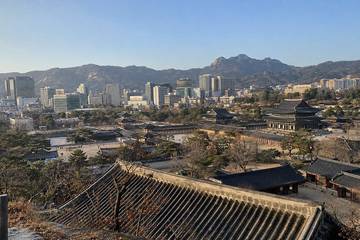
Seoul
Korea's capital: Joseon palaces and hanok lanes beside skyscrapers, night markets, Han River parks and granite peaks inside the city limits.
Frequently asked questions
Do I need cash in Korea?
Not much. Visa, Mastercard and American Express are accepted at most hotels, department stores and shops, and many Seoul buses no longer take cash at all. A small amount of won is still useful for market stalls, street food, small shops and topping up a transport card.
What notes and coins does Korea use?
The Bank of Korea issues 1,000, 5,000, 10,000 and 50,000 won notes. The coins you will meet are 10, 50, 100 and 500 won. 1 and 5 won coins still exist but are not in everyday use.
How much can I save with a tax refund?
Visitors staying under six months can reclaim tax on purchases of at least KRW 15,000 per receipt at tax refund stores, as long as they leave Korea within three months. At stores offering immediate refund, the tax comes off at the till for payments under KRW 1,000,000, up to KRW 5,000,000 per trip. Refund operators keep a handling fee, so the amount returned is less than the full 10 percent VAT.
Can I bring a lot of cash into Korea?
You can, but cash and other means of payment worth more than USD 10,000 in total, including won and cheques, must be declared to customs on arrival. The same threshold applies when you leave. Breaking the rule is penalised under the Foreign Exchange Transactions Act.
Are bank opening hours changing?
As of October 2026 banks generally open 09:00–16:00 on weekdays. A provisional agreement reached in late September 2026 would move the opening time to 09:30 from April 2027, with closing still at 16:00.
Should I tip in Korea?
Tipping is not a custom in Korea. It is not expected in restaurants, taxis or hotels, and the price you see is normally the price you pay.
Sources
Facts on this page were checked against these sources on 5 October 2026. Prices, hours and rules change — confirm with the operator before you go.
- VisitKorea: Korean Currency & Exchange Info (notes and coins, credit cards, money exchange, bank hours) · official
- VisitKorea: Duty Free & Tax Refunds (eligibility, minimum purchase, immediate refund limits, Incheon Airport counters; updated 2026-08-03) · official
- VisitKorea: Transportation Cards (Tmoney, WOWPASS, Climate Card; updated 2026-08-03) · official
- 다음(Daum): 티머니 교통카드 사용법 총정리 (충전 한도 50만원) (Korean)
- Seoul Tourism Organization (Visit Seoul): Tax Refund · official
- 한국은행: 현용은행권 (Korean) · official
- 한국은행: 현용주화 (Korean) · official
- 서울특별시 교통: 현금 없는 버스 운영 노선번호 안내 ('26.1월 기준) (Korean) · official
- Consulate General of Korea in Montreal: Guidelines for currency regulation · official
- 뉴스서울: 관세청, 해외여행객 대상 외국환 신고 규정 안내 및 준수 당부 (2026-02-19) (Korean)
- 쿠키뉴스: 관세청, 크루즈 관광객 '즉시 환급' 도입 (2026-04-03) (Korean)
- 나만의카드: 2026년 한국 부가세 환급 자격 요건 (Korean)
- 머니투데이: 은행 문 30분 늦게 (2026-09-29) (Korean)
- The Korea Times: Why tipping culture remains controversial in Korea (2025)