Seoul · Palace Quarter (Jongno)
Gwangjang Market 광장시장
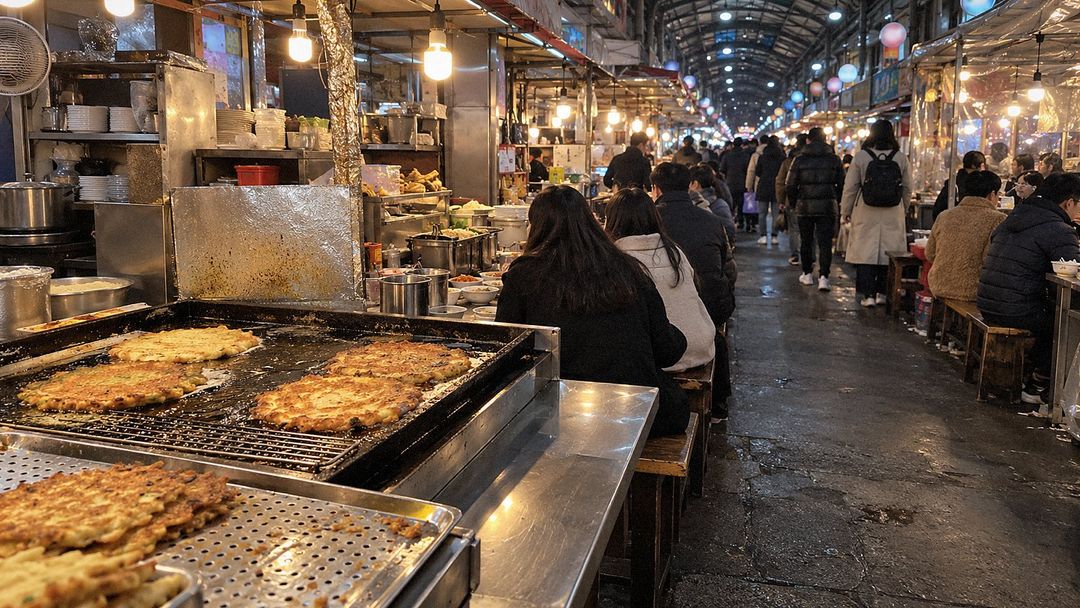
One of Seoul's oldest covered markets, best known for its food alleys serving mung bean pancakes, gimbap and raw beef dishes.
Updated
Essentials
- Hours
- General market: 09:00–18:00 (closed Sundays)
- Vintage clothing arcade: 10:00–19:00 (closed Sundays, open on public holidays)
- Food alley: 09:00–23:00, open every day
- These are the market's typical hours; individual stalls and shops set their own
- Getting there
- Subway Line 1, Jongno 5-ga Station, Exit 8
- Subway Lines 2 and 5, Euljiro 4-ga Station, Exit 4 (about 100 m)
- Address
- 88 Changgyeonggung-ro, Jongno-gu, Seoul 03195
서울 종로구 창경궁로 88 - Website
- kwangjangmarket.co.kr
Book your trip
Gwangjang Market, between Jongno 4-ga and the Cheonggyecheon stream, is one of the oldest and largest traditional markets in Seoul and is widely described as Korea’s first permanent market. Today it is best known for the food alley at its centre, where rows of stalls serve pancakes, gimbap and raw beef to diners perched on benches. Away from the griddles, much of the market still trades in what it was built on: fabric, bedding and hanbok.
History in brief
In 1905, as the Japanese-led currency reform squeezed Korean traders, local merchants pooled their money and set up the Gwangjang Company in July that year to run a market of their own. Its official history stresses that, unlike other markets of the period run by Japanese interests, this one stayed under Korean ownership. The site grew out of Baeogae (Ihyeon) market, counted among the three great markets of late-Joseon Seoul. It was registered under the name Dongdaemun Market and only became generally known as Gwangjang Market from the 1960s.
Part of the market was destroyed in the Korean War, and trade revived as refugees bought and sold daily necessities and military surplus goods, which the market itself regards as the beginning of Korea’s imported second-hand clothing trade. From around 1970 it developed into a specialist market for textiles and clothing.
What to eat
The food alley is the main reason most visitors come. Signature dishes include:
- Bindae-tteok – thick pancakes of ground mung beans, fried crisp in oil; often sold with meat patties as a set.
- Mini gimbap – finger-sized rolls served with a dipping sauce. Long nicknamed “mayak gimbap” (addictive gimbap), they are now more often called kkoma gimbap (“little gimbap”).
- Yukhoe – seasoned raw beef, sometimes served with chopped raw octopus.
- Sundae and pressed head meat, assorted jeon, and spicy fish stew.
Newer bakeries and dessert stands have joined the old stalls, so it is easy to graze through several small plates rather than sit down for one meal.
Tips for visiting
Queues at the best-known stalls can be long around meal times, so arriving outside the lunch and dinner peaks helps. Check prices before ordering and carry some cash for smaller stalls. If you want to see the textile and vintage sections, visit Monday to Saturday before 18:00, since only the food alley stays open on Sundays and late.
The market is a short walk from DDP and from the stream paths of Cheonggyecheon, and it makes an easy lunch stop between Changdeokgung and Dongdaemun. For more food areas in the city, see the Seoul guide.
Nearby
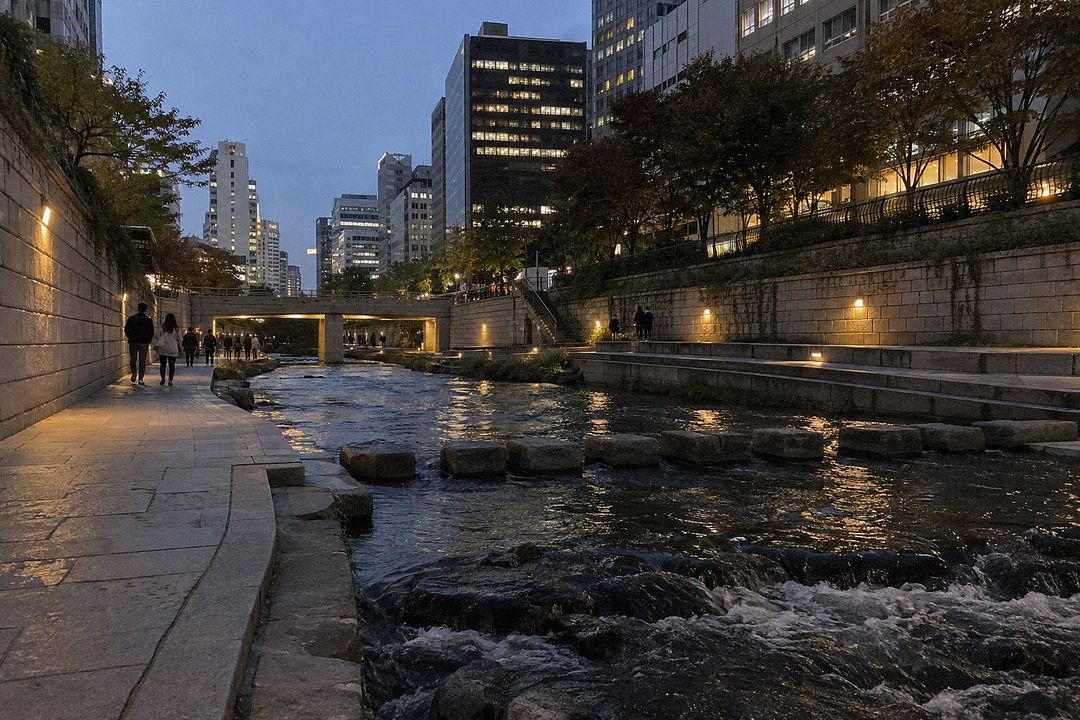
Cheonggyecheon Stream
A restored urban stream with walking paths below street level, running east from Gwanghwamun; pleasant on summer evenings.
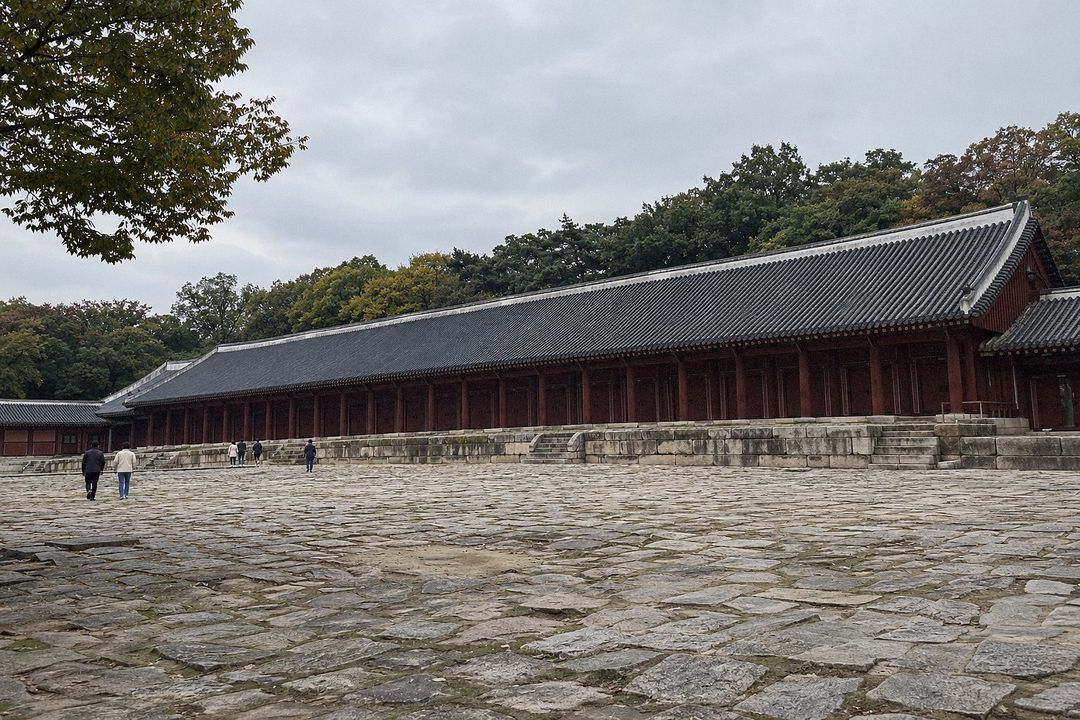
Jongmyo Shrine
The austere royal ancestral shrine of the Joseon kings, a UNESCO site whose long main hall is one of Korea's finest wooden buildings.
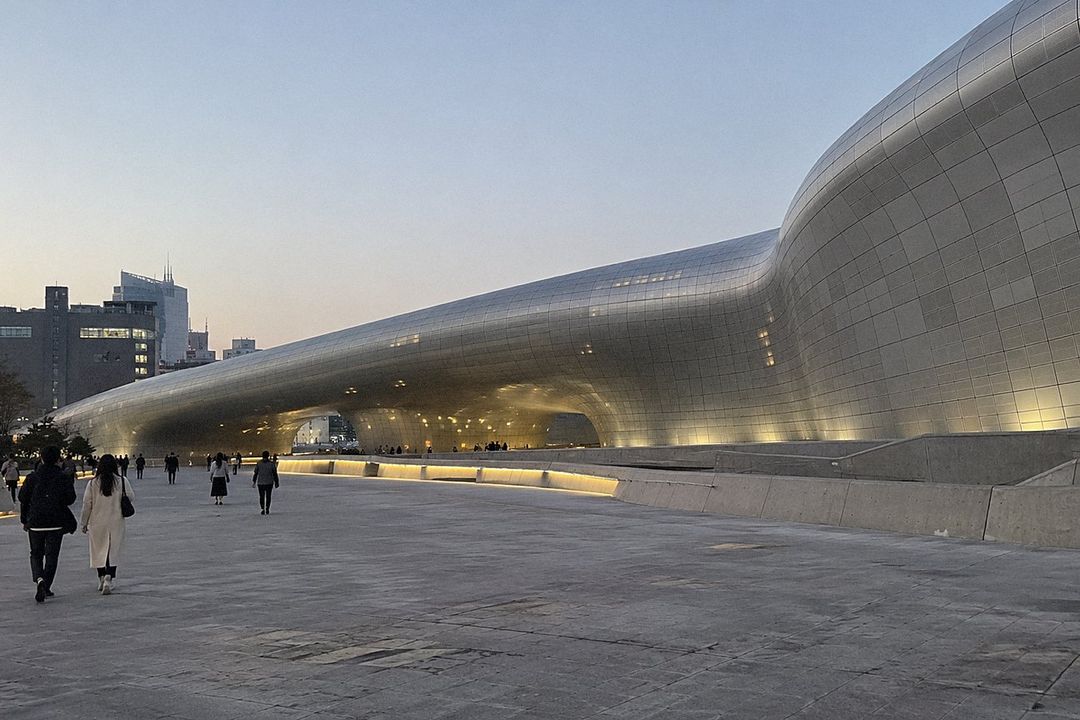
Dongdaemun Design Plaza (DDP)
Zaha Hadid's curving silver landmark hosting exhibitions and events, surrounded by Dongdaemun's late-night fashion malls.
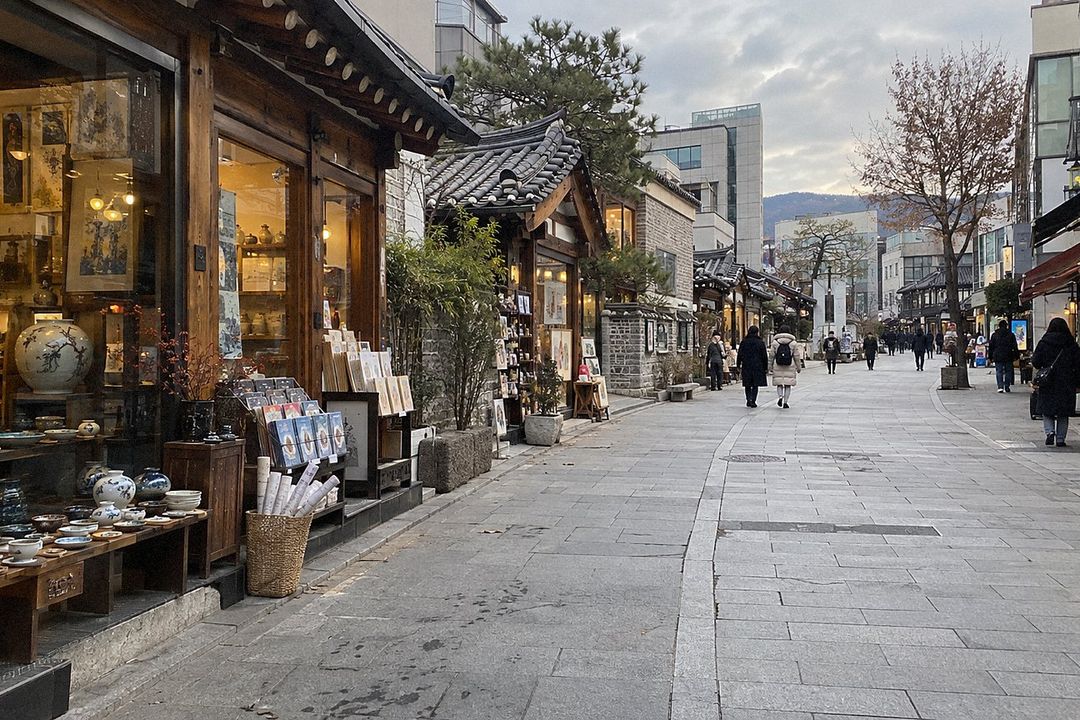
Insadong
A pedestrian-friendly street of craft and antique shops, tea houses and galleries, good for souvenirs such as hanji paper and ceramics.
Frequently asked questions
What should I eat at Gwangjang Market?
The classics are bindae-tteok (crisp mung bean pancakes fried to order), small bite-sized gimbap rolls served with a dipping sauce, and yukhoe, seasoned raw beef. Sundae (Korean blood sausage), assorted jeon and meat-patty pancakes are also widely sold.
Is Gwangjang Market open on Sundays?
The food alley operates every day until about 23:00, but the general market and the vintage clothing arcade close on Sundays. Hours vary by stall.
What else is sold besides food?
The market began as, and still largely is, a textile market. Its arcades and side lanes hold fabric, bedding and hanbok shops, and a large vintage and second-hand clothing arcade is popular with younger shoppers.
Sources
Facts on this page were checked against these sources on 2 October 2026. Prices, hours and rules change — confirm with the operator before you go.
- Gwangjang Market – Official site: market history (광장시장 연혁) (Korean) · official
- Gwangjang Market – Business hours notice (광장시장 영업시간 안내) (Korean) · official
- Gwangjang Market – Directions (오시는길) (Korean) · official
- Visit Seoul – Gwangjang Market · official
- Seoul Mediahub – MZ세대까지 사로잡은 광장시장! (2025) (Korean) · official
- OpenStreetMap – Gwangjang Market (coordinates)