Seoul · Yongsan and Itaewon
National Museum of Korea 국립중앙박물관
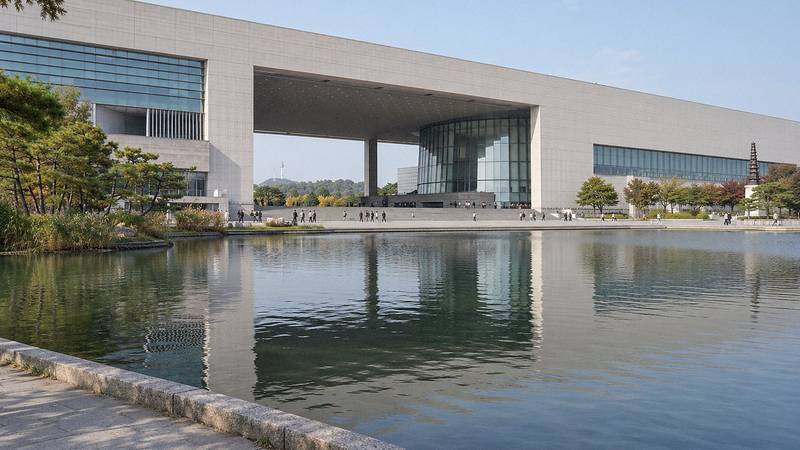
The country's flagship museum, tracing Korean history from prehistory to Joseon through outstanding ceramics, Buddhist art and gold crowns.
Updated
Essentials
- Hours
- Monday, Tuesday, Thursday, Friday and Sunday: 09:30–17:30 (last entry 17:00)
- Wednesday and Saturday: 09:30–21:00 (last entry 20:30)
- Outdoor exhibition area and gardens: 07:00–22:00 every day, no ticket needed
- Closed
- 1 January, Lunar New Year's Day and Chuseok day. The permanent and special galleries also close on the first Monday of March, June, September and December (the remaining 2026 date is Monday 7 December); the outdoor gardens stay open.
- Admission
- Free: permanent galleries, the Children's Museum and free special exhibitions
- Paid: ticketed special exhibitions in Special Exhibition Galleries 1 and 2 (tickets on sale until 30 minutes before closing)
- Getting there
- Subway Line 4 or Gyeongui–Jungang Line, Ichon Station, Exit 2, then about 150 m on foot toward Yongsan Family Park (lifts are on the Exit 1 and Exit 2 side)
- From Line 1 change at Yongsan, from Line 6 at Samgakji and from Line 9 at Dongjak to reach Ichon
- Address
- 137 Seobinggo-ro, Yongsan-gu, Seoul 04383
서울 용산구 서빙고로 137 - Website
- museum.go.kr/ENG/contents/E0101010000.do
Book your trip
The National Museum of Korea is free, needs no booking, and is open 09:30–17:30 (until 21:00 on Wednesdays and Saturdays), a short walk from Ichon Station Exit 2. Allow two to three hours for the highlights. Until 28 January 2027 some 2nd- and 3rd-floor galleries, including Buddhist sculpture and metal crafts, are closed for renovation.
It is the country’s flagship museum, covering Korean history from Paleolithic hand axes to the Korean Empire in one long building on the edge of Yongsan Family Park. Around 6.5 million people visited in 2025, and the first half of 2026 was busier still. It is the best single place in Seoul to get the background that makes the palaces and temples easier to read.
What to see, floor by floor
The permanent galleries fill three floors of the main building. Entry is free for everyone, and there is no ticket for these galleries.
| Floor | Sections | Don’t miss |
|---|---|---|
| 1F | Prehistory and Ancient History; Medieval and Early Modern History (Goryeo, Joseon, Korean Empire) | Baekje gold diadem ornaments, Gaya iron armour |
| 2F | Calligraphy and Painting; Donated Collection; Room of Quiet Contemplation | The two pensive bodhisattvas |
| 3F | Sculpture and Crafts (celadon, buncheong and white porcelain); World Art | Goryeo celadon |
Floor plan from the museum’s English and Korean floor guides, checked 7 October 2026. If you only have an hour, go straight to the 2nd floor for the Room of Quiet Contemplation, then up one floor to the celadon gallery.
- Room of Quiet Contemplation (2F) – a dark, sloping gallery that holds just two pensive bodhisattva statues, both National Treasures, displayed side by side. Give it ten quiet minutes; it is the museum’s best-known room.
- Ten-story Stone Pagoda from Gyeongcheonsa Temple Site – a towering Goryeo-dynasty pagoda that stands in the museum’s central Path to History hall. It is one of the museum’s 30 official masterpieces.
- Prehistory and Ancient History (1F) – a timeline from Paleolithic tools and comb-pattern pottery through the Three Kingdoms, including gold diadem ornaments from the tomb of Baekje’s King Muryeong.
- Celadon Gallery (3F, Room 303) – Goryeo-era green-glazed ceramics, one of Korea’s great contributions to world art. The neighbouring buncheong and white porcelain gallery (Room 304) is also open.
Hours, closed days and admission
| Hours | Last entry | |
|---|---|---|
| Mon, Tue, Thu, Fri, Sun | 09:30–17:30 | 17:00 |
| Wed, Sat | 09:30–21:00 | 20:30 |
| Outdoor gardens | 07:00–22:00 daily | No ticket |
Hours from the museum’s English and Korean visitor pages, checked 7 October 2026. Wednesday and Saturday evenings are the easiest way to fit the museum around a day of palaces and markets.
The museum closes on 1 January, Lunar New Year’s Day and Chuseok day. The galleries also close on the first Monday of March, June, September and December; in 2026 the last of these is Monday 7 December. The outdoor gardens stay open on those Mondays.
The museum moved opening time 30 minutes earlier, to 09:30, on 16 March 2026 to spread out the crowds; earlier guides still show 10:00–18:00. There is no reservation system for the permanent galleries yet. The museum plans to test online booking in 2027.
Paid special exhibitions run in Special Exhibition Galleries 1 and 2. Tickets are sold at the counter in front of Gallery 1 until 30 minutes before closing, and some exhibitions also sell online. Marie Antoinette Style, organised with London’s Victoria and Albert Museum, runs from 18 December 2026 to 31 March 2027. Check the current exhibitions page for prices before you go.
Galleries closed until January 2027
From 6 July 2026 to 28 January 2027, several galleries are closed while the Buddhist painting and sculpture displays are rebuilt. They reopen on 29 January 2027.
- 3F: Buddhist Sculpture (Room 301), Metal Crafts (Room 302) and the Room of Sense.
- 2F: Buddhist Painting (Room 203) and Wood and Lacquer Crafts (Room 204). Calligraphy and Painting Rooms 202-3 and 202-4 also closed from 10 August.
Some headline pieces, such as the Silla gold crown and gold belt that the museum lists among its masterpieces, may be off view or moved during this period. The Room of Quiet Contemplation, the 1st-floor history galleries, the celadon and porcelain galleries and the World Art section stay open.
Getting there
Take Line 4 or the Gyeongui–Jungang Line to Ichon Station and leave by Exit 2. An underground walkway leads about 150 m toward Yongsan Family Park and the museum’s west gate. Lifts are on the Exit 1 and Exit 2 side. The walkway does not open on days the museum is closed.
From other lines, change at Yongsan (Line 1), Samgakji (Line 6), Dongjak (Line 9), Oksu (Line 3) or Chongshin Univ. (Line 7). A tap with a T-money card pays the basic adult fare of ₩1,550 (about US$1.10); see the Seoul subway guide for how to ride. The address for taxis is 서울 용산구 서빙고로 137.
Tips for visiting
- Go early or late. The museum was so busy in early 2026 that queues formed before opening. Arrive at 09:30 or come on a Wednesday or Saturday evening.
- Backpacks go in the lockers. Backpacks and school bags must be left in the 1st-floor lockers, and everyone passes a security bag check at the entrance. A free coat check is by the west side of the main gate.
- Photos are allowed, without extras. You can take photos in the galleries, but not with flash, a tripod, a selfie stick or a gimbal.
- No food or drink in the museum. Eat before you go in, or picnic in Yongsan Family Park next door.
- Wheelchairs and strollers are free to borrow in the Great Hall on the 1st floor (strollers for children up to 15 kg).
- With children, the separate Children’s Museum is free but runs in five timed sessions each day that you reserve online.
Around the museum
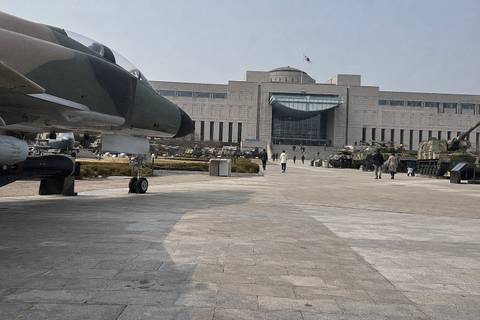
The museum sits in the Yongsan district. The free War Memorial of Korea, with aircraft and tanks displayed outside, is near Samgakji Station (Lines 4 and 6); it closes on Mondays. The restaurants and bars of Itaewon are a short taxi ride away. For other Seoul museums, with their fees and closing days side by side, see museums in Korea. If you are building a museum day into a short trip, the Seoul 3-day itinerary shows how to pair it with the palaces, and the Seoul region page covers day trips out of the city.
Nearby
War Memorial of Korea
A large museum on Korea's wars, especially the Korean War, with aircraft, tanks and ships displayed in the grounds outside.
Itaewon
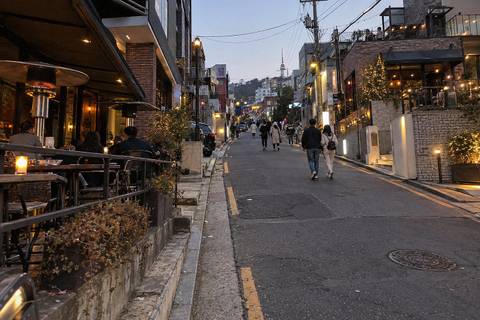
Seoul's most international neighborhood, with restaurants from around the world, rooftop bars and nightlife on the slopes below Namsan.
Frequently asked questions
Is the National Museum of Korea free?
Yes. The permanent galleries, including the Room of Quiet Contemplation, are free for everyone with no ticket or booking. Only ticketed special exhibitions in Special Exhibition Galleries 1 and 2 charge admission.
What time does the National Museum of Korea close?
It closes at 17:30 on Monday, Tuesday, Thursday, Friday and Sunday, and at 21:00 on Wednesday and Saturday. Last entry is 30 minutes before closing, and staff start guiding visitors out 10 minutes before.
Do I need to book the National Museum of Korea in advance?
Not for the permanent galleries: as of October 2026 you just walk in. The museum plans to test an online reservation system in 2027. The Children's Museum uses timed online reservations, and some paid special exhibitions sell tickets online.
Which station is closest to the National Museum of Korea?
Ichon Station on Line 4 and the Gyeongui–Jungang Line. Leave by Exit 2 and walk about 150 m along the passage toward Yongsan Family Park to the museum's west gate.
Is the National Museum of Korea open on Mondays?
Yes, except on the first Monday of March, June, September and December, when the galleries close. The last such closure in 2026 is Monday 7 December; the outdoor gardens stay open that day.
Sources
Facts on this page were checked against these sources on 7 October 2026. Prices, hours and rules change — confirm with the operator before you go.
- National Museum of Korea – Viewing hours and admission · official
- 국립중앙박물관 – 관람 안내 (관람시간, 휴관일, 관람료) (Korean) · official
- National Museum of Korea – Directions: Subway · official
- 국립중앙박물관 – 오시는 길: 지하철 (Korean) · official
- National Museum of Korea – Permanent Exhibitions (floor guide and gallery closures) · official
- 국립중앙박물관 – 상설전시실 층별 안내 (휴실 안내) (Korean) · official
- National Museum of Korea – Visitor Trails: 30 Masterpieces · official
- 국립중앙박물관 – 현재 전시 (특별전·테마전) (Korean) · official
- Korea JoongAng Daily – National Museum of Korea to open, close 30 minutes earlier from March (3 Feb 2026)
- 서울신문 – '관람객 650만' 국립중앙박물관 30분 일찍 문 연다 (2026-02-03) (Korean)
- The Korea Times – National Museum of Korea logs record first-half attendance (15 Jul 2026)
- OpenStreetMap – National Museum of Korea (coordinates)