Seoul · Palace Quarter (Jongno)
Insadong 인사동
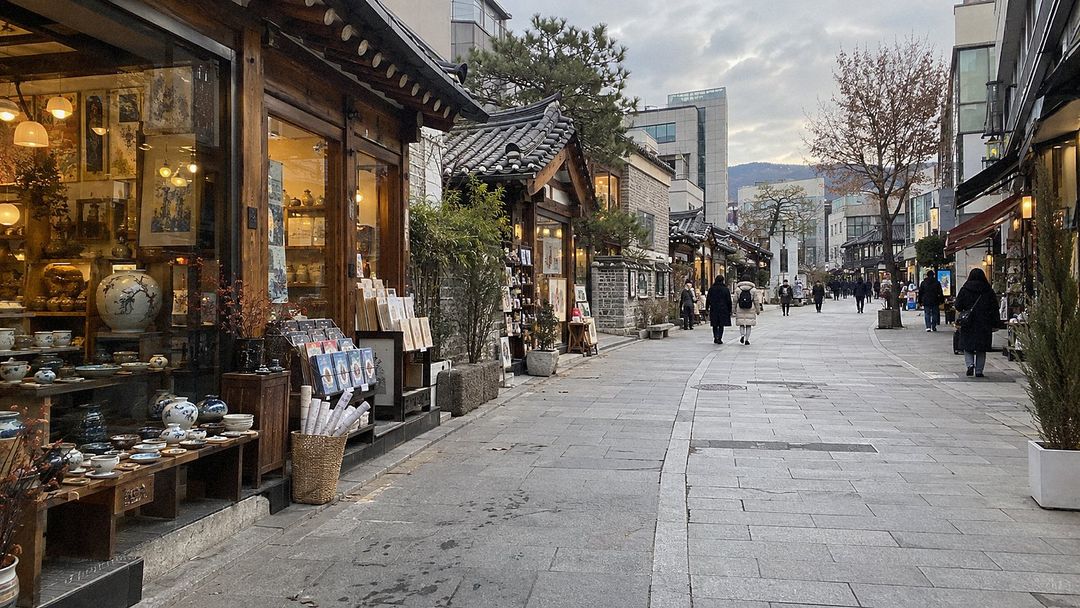
A pedestrian-friendly street of craft and antique shops, tea houses and galleries, good for souvenirs such as hanji paper and ceramics.
Updated
Essentials
- Getting there
- Subway Line 3, Anguk Station, Exit 6 (north end of Insadong-gil)
- Subway Line 1, Jonggak Station, Exit 3 (south end)
- Subway Line 5, Jongno 3-ga Station, Exit 5
- Address
- Insadong Promotion Center, 19 Insadong 11-gil, Jongno-gu, Seoul 03145
서울 종로구 인사동11길 19 (인사동홍보관) - Website
- hiinsa.com
Book your trip
Insadong is central Seoul’s street of traditional arts and crafts. A single main road, Insadong-gil, runs for several hundred metres between Anguk and Jonggak stations, and the narrow alleys on either side hide galleries, antique dealers, framers, brush and paper shops, tea houses and restaurants serving Korean set meals. It is more commercial than it once was, with plenty of souvenir stalls, but it remains the best single place in Seoul to browse Korean crafts and to sit down over traditional tea.
Highlights
- Insadong-gil – the car-free main street, lined with shops selling ceramics, hanji paper, calligraphy brushes, lacquerware and antiques.
- Ssamziegil – a multi-level complex near the middle of the street, filled with small craft, design and souvenir shops.
- Galleries – commercial galleries on the main street and in the alleys, many changing their exhibitions every week, typically between Tuesday and Wednesday.
- Tea houses – traditional tea rooms tucked into alleys and upper floors, some in converted hanok, serving herbal and fruit teas with Korean sweets.
- Namin-sa Madang – the small plaza at the southern end of the street, used for performances and events, with a tourist information booth.
Tips for visiting
- Start at Anguk Station Exit 6 and walk south, exploring the side alleys as you go rather than staying on the main street.
- Look for shops run by artisans and established dealers if you want quality pieces; prices for antiques and fine crafts can be high, and the cheaper souvenirs are often mass-produced.
- The Insadong Promotion Center on Insadong 11-gil offers tourist information and interpretation and hosts a hanbok experience.
- Jogyesa, one of central Seoul’s major Buddhist temples, is a few minutes’ walk to the west, and the hanok cafés of Ikseon-dong lie just to the east. The lanes of Bukchon Hanok Village start north of Anguk Station.
- Insadong pairs well with a palace in the morning. See Gyeongbokgung or browse our guide to Seoul’s palaces.
History in brief
In the Goryeo period a large temple, Heungboksa, stood here, and the area was known as Jeolgol, “temple valley”. During the Joseon dynasty it lay between the two main palaces, was home to government offices and officials, and housed the Dohwaseo, the royal painting bureau, which made it a centre of artistic life. The district was also an important base of the March 1st independence movement in 1919. In the modern era the street became known for its antique dealers, framers and art galleries. Today the Insa Traditional Culture Preservation Society, founded in 1987, works to protect the district’s character and promotes five traditional trades: antiques, galleries, crafts, picture framing, and brush and paper shops.
Nearby
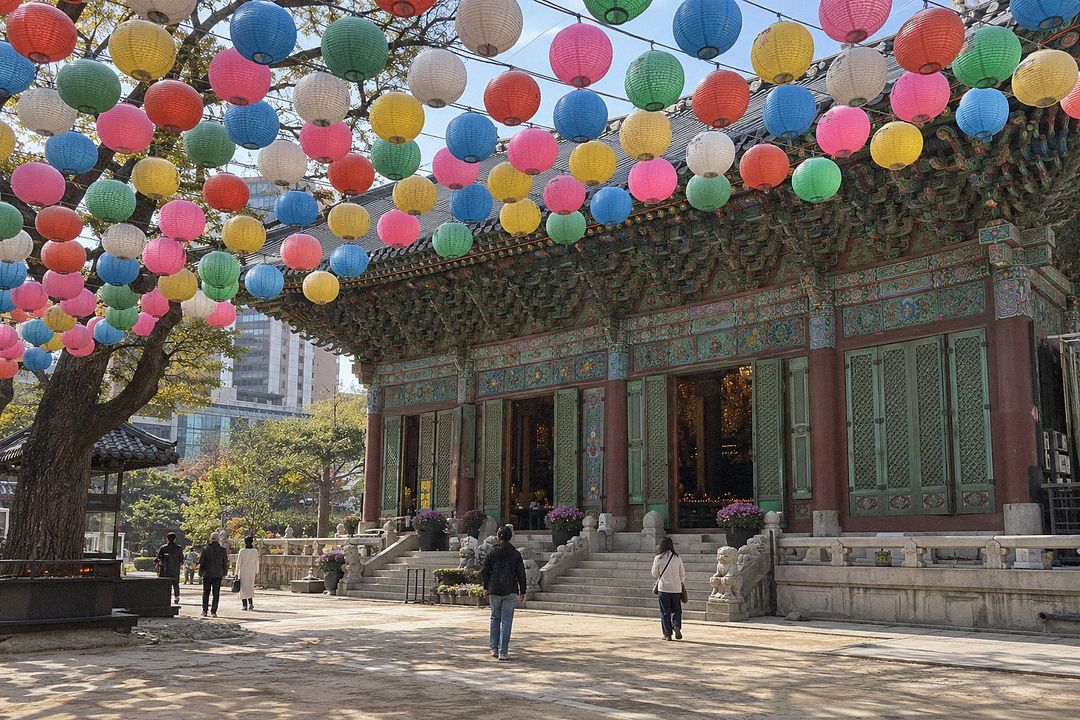
Jogyesa Temple
The head temple of Korea's largest Buddhist order, right in the city center and decked with thousands of lanterns before Buddha's Birthday.
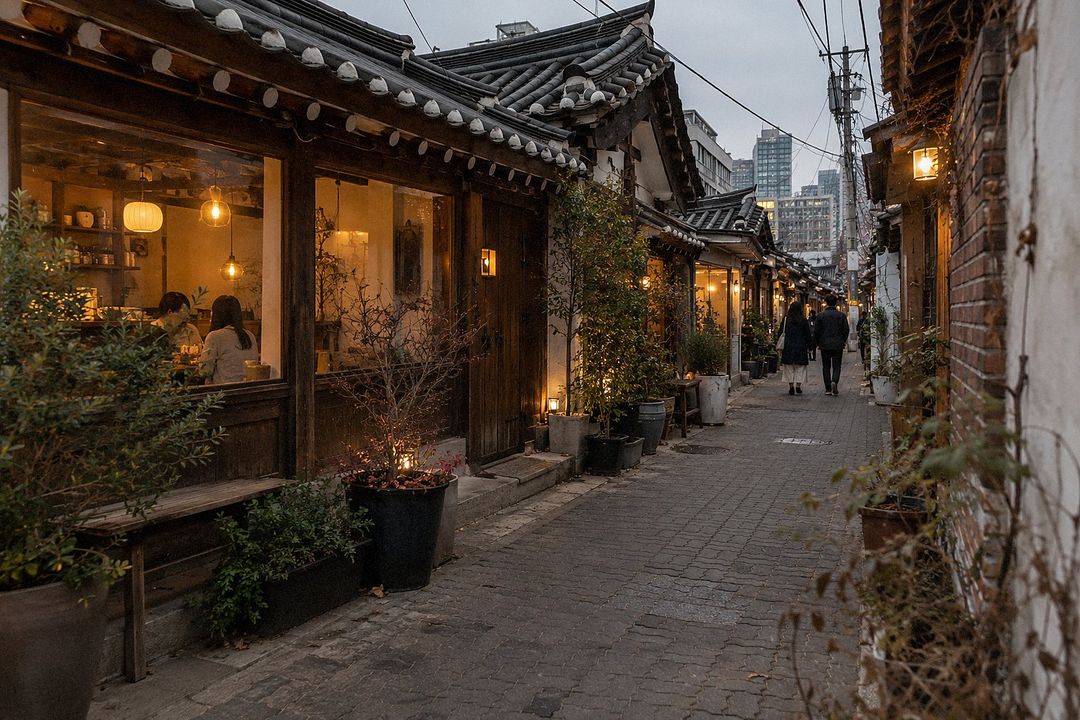
Ikseon-dong
A tight cluster of 1920s urban hanok turned into cafes, bakeries and small restaurants, busiest on weekend evenings.
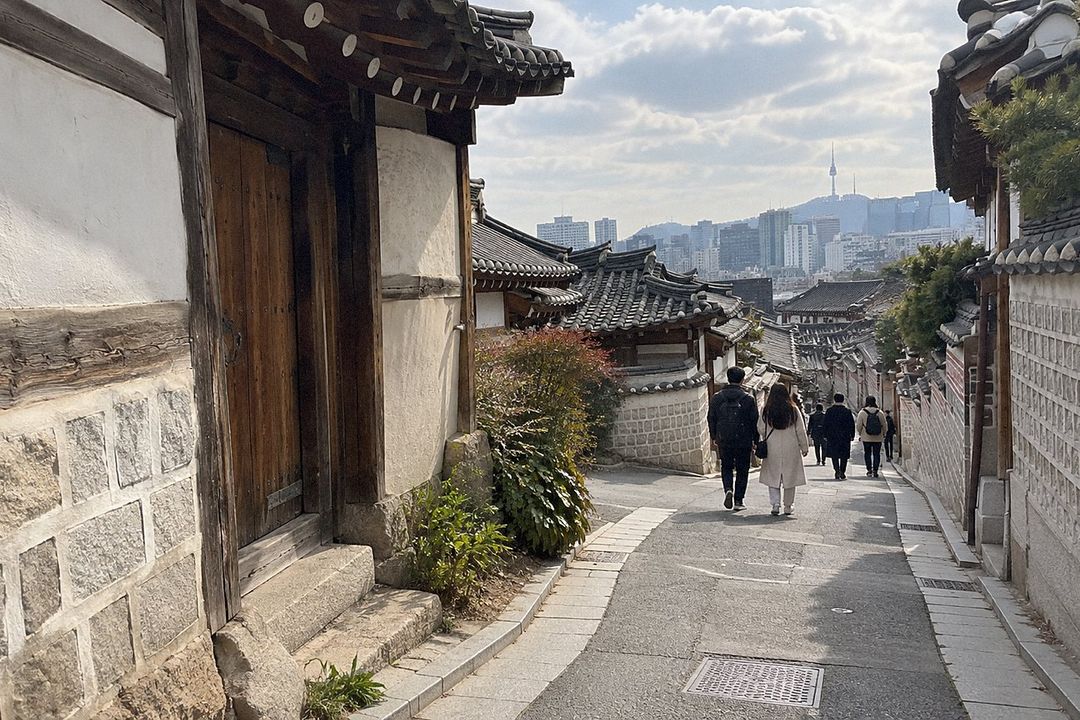
Bukchon Hanok Village
Hillside lanes of traditional tiled-roof houses between two palaces; a lived-in residential area with visiting hours in the busiest part.
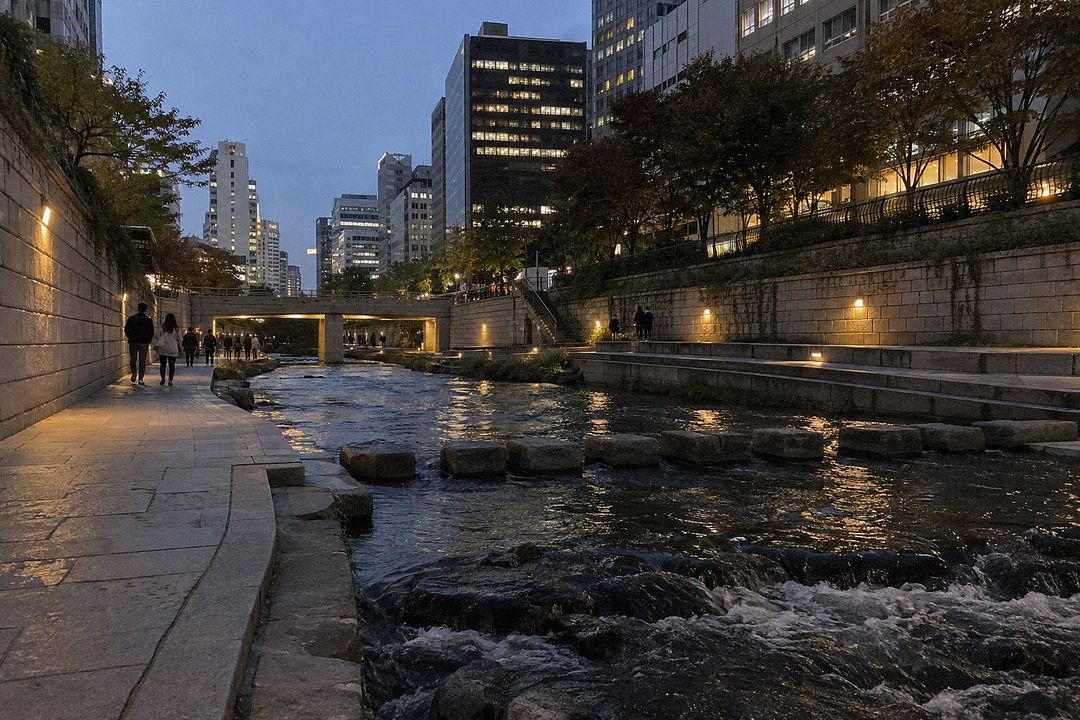
Cheonggyecheon Stream
A restored urban stream with walking paths below street level, running east from Gwanghwamun; pleasant on summer evenings.
Frequently asked questions
Is Insadong-gil closed to cars?
Yes. Insadong-gil is run as a pedestrian street where general traffic is barred, and delivery vehicles for local shops may only enter at set times with a permit, so it is pleasant to walk at any time of day.
What should I buy in Insadong?
The street is known for traditional goods: calligraphy brushes, hanji paper, ceramics, lacquerware, antiques and framed artworks, along with tea and souvenirs. Ssamziegil gathers dozens of small craft and design shops in one building.
How far is Insadong from Bukchon and the palaces?
Insadong's northern end at Anguk Station is a short walk from Bukchon Hanok Village and Changdeokgung, and Gyeongbokgung is also within walking distance, so all four are easy to combine in one day.
Sources
Facts on this page were checked against these sources on 2 October 2026. Prices, hours and rules change — confirm with the operator before you go.
- Insa Traditional Culture Preservation Society – Directions (찾아오시는 길) (Korean)
- Insa Traditional Culture Preservation Society – Car-free street (차없는거리) (Korean)
- Insa Traditional Culture Preservation Society – History of Insadong (인사동 역사) (Korean)
- Visit Seoul – Ssamzie-gil · official
- Visit Seoul (Korean) – 쌈지길 (Korean) · official
- Jongno-gu Office – Insadong traditional culture street (인사동 전통문화 거리) (Korean) · official
- OpenStreetMap – Insa-dong (coordinates)