Food & Entertainment
Markets
Updated
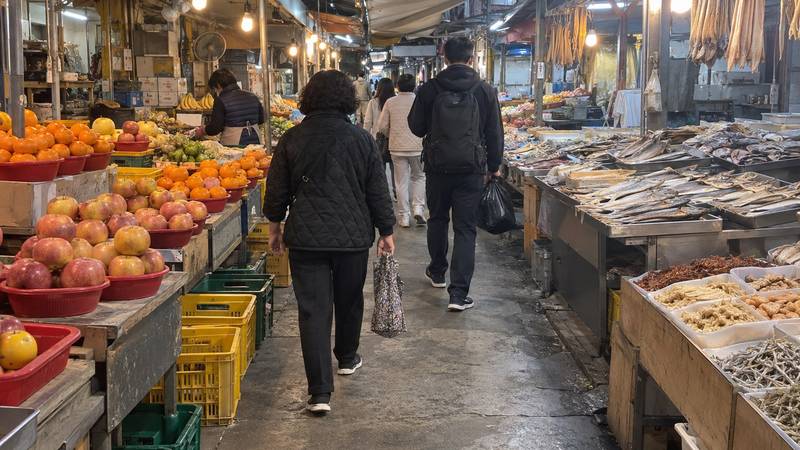
For eating, go to Gwangjang Market in Seoul and Jagalchi in Busan; for shopping, Namdaemun and Gukje; after dark, the Kkangtong (Busan) and Dongmun (Jeju) night markets, which run every evening. Check the day first: Namdaemun, Gukje and Gwangjang’s shops are closed or mostly closed on Sundays, and Jagalchi closes on the 1st, 3rd and 5th Tuesday of the month.
Markets are where Korean street food is cheapest and easiest to order: you point at what you want at a counter stall, and the posted price is the price. For what to eat once you are there, see the Korean food guide.
When each market is open
| Market | City | Best for | Open | Closed |
|---|---|---|---|---|
| Gwangjang | Seoul | Eating: mung bean pancakes, mini gimbap | Food alley daily about 09:00–23:00; shops 09:00–18:00 | Shops on Sundays |
| Namdaemun | Seoul | Shopping: clothes, kitchenware, ginseng | Hours vary by building, from early morning | Most shops on Sundays |
| Noryangjin | Seoul | Live seafood, eaten upstairs | Live-fish floor 01:30–22:00 | Retail open all year |
| Jagalchi | Busan | Live seafood, eaten upstairs | About 05:00–21:00 | 1st, 3rd and 5th Tuesday |
| Gukje | Busan | Shopping and snacks | 09:00–20:00 | Sundays (district office: 1st and 3rd) |
| Kkangtong night market | Busan | Street food at night | Daily 19:30–24:00 | Seollal and Chuseok |
| Dongmun | Jeju City | Tangerines, seafood, night market | Market about 07:00–21:00; night market from 19:00 (May–Oct) or 18:00 (Nov–Apr) to 24:00 | Open all year |
| Seomun night market | Daegu | Street food at night | Fri–Sat 19:00–23:30, Sun 19:00–22:30 | Mon–Thu; season ends in December |
Market-wide hours from each market’s operator or city tourism site, checked 15 October 2026. Individual shops and stalls set their own hours. If your dates are fixed, the trap days are Sunday in Seoul and Busan’s shopping markets and the odd-numbered Tuesdays at Jagalchi; the food alleys and night markets are the safe choice on any day.
Getting there: Gwangjang is at Jongno 5-ga Station (Line 1, Exit 8); Namdaemun at Hoehyeon Station (Line 4, Exits 5–7); Noryangjin at Noryangjin Station (Lines 1 and 9). In Busan, Jagalchi Station (Line 1) serves Jagalchi (Exit 10), Gukje (Exit 7) and Kkangtong (Exit 3), all within about ten minutes’ walk of each other. Daegu’s Seomun Market has its own station on Line 3.
Which market in each city
In Seoul, Gwangjang is the one to prioritise: its food alley is open every day and late, and it sits between the palaces and Dongdaemun. Namdaemun, near Seoul Station and Myeongdong, is the bigger shopping market, with more than 10,000 shops and alleys for hairtail stew and knife-cut noodles. Noryangjin is the choice for a seafood meal, and Tongin Market, west of Gyeongbokgung, suits a light lunch after the palace.
In Busan, Jagalchi, Gukje and Kkangtong are next to each other in the Nampo area, so one afternoon and evening covers all three: shop Gukje, eat seafood at Jagalchi, then walk to the Kkangtong night market. See the Busan guide for the rest of the Nampo district.
On Jeju, Dongmun Market in Jeju City is the easy first or last stop near the airport side of the island; in the south, Seogwipo’s Maeil Olle Market does the same job. Outside the big three cities, Daegu’s Seomun Market (in Gyeongsang) and Jeonju’s Nambu Market (in Jeolla) are the markets worth planning an evening around.
How buying and eating works
- Point and pay. Stalls show prices on boards or cards; you order at the counter and usually pay when the food comes or when you leave. Food Sanitation Act rules require restaurants to post the full price, and under rules promulgated on 1 September 2026 a first offence of charging above the posted price, or posting no prices, brings a five-day suspension (Ministry of Food and Drug Safety).
- Gwangjang is being watched. After overcharging complaints, Seoul and Jongno-gu agreed with merchants in 2023 to show portion sizes beside prices and to stop pushing customers to pay cash. In 2026 a joint inspection began on 20 May, a mystery-shopper team that includes foreign residents continued, and a real-name system for street stalls started on 1 June.
- Fish markets have two bills. At Jagalchi and Noryangjin you buy live seafood at a stall, then a restaurant upstairs prepares it and charges a per-person table fee plus extra for stew or grilling. Ask both prices first; they differ by shop.
- Carry some cash. Market buildings generally take cards, but small outdoor stalls and night-market carts may prefer cash. Keep ₩1,000 and ₩5,000 notes; see money in Korea.
- Tongin’s coin lunch. At Tongin Market you buy brass coins (₩500 each; Seoul city’s 2025 guide gives 10 for ₩5,000, about US$3.70) at the customer centre, fill a lunchbox tray at participating stalls, and eat in the cafe upstairs. It serves lunch into mid-afternoon only and closes one weekday plus some Sundays, so arrive by early afternoon.
Night markets: where they run in 2026
| Night market | Days | Hours | Season |
|---|---|---|---|
| Kkangtong (Busan) | Every day | 19:30–24:00 | All year except Seollal and Chuseok |
| Dongmun (Jeju City) | Every day, holidays included | 18:00–24:00 Nov–Apr; 19:00–24:00 May–Oct | All year |
| Seomun (Daegu) | Fri–Sun | 19:00–23:30 (Sun to 22:30) | 27 March to December 2026 |
| Nambu (Jeonju) | Fri–Sat | 17:00–23:00 | Reopened 1 March 2026 after the winter break |
From the Visit Busan, Visit Jeju, Seomun night market and Jeonju city sites, checked 15 October 2026. Stalls close early when they sell out, and rain can cancel outdoor stalls, so aim to arrive in the first two hours.
Avoid closed days and holidays
- Sundays: Gwangjang’s shops, Namdaemun and Gukje are closed or mostly closed.
- Tuesdays in Busan: Jagalchi closes on the 1st, 3rd and 5th Tuesday of the month.
- Seollal and Chuseok: the lunar new year and harvest holidays close Jagalchi and the Kkangtong night market, and many smaller stalls everywhere. Jeju’s Dongmun night market stays open.
- Seafood is best early. Fish markets are busiest and freshest in the morning; sit down to eat at Jagalchi by about 20:00, because the restaurants close around 21:00.
Book your trip
Best markets in Korea
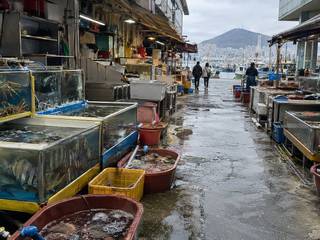
Jagalchi Market 자갈치시장
Korea's best-known seafood market, with live tanks downstairs and restaurants upstairs that cook what you pick.
Busan · Busan ·
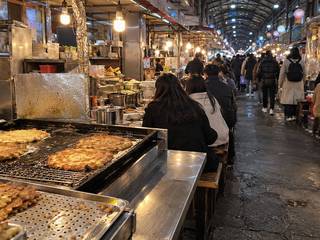
Gwangjang Market 광장시장
One of Seoul's oldest covered markets, best known for its food alleys serving mung bean pancakes, gimbap and raw beef dishes.
Seoul · Seoul ·
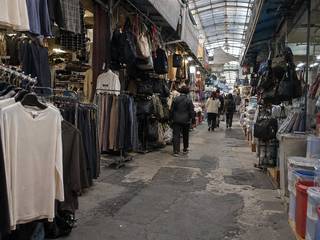
Gukje Market 국제시장
A sprawling postwar market of covered alleys selling clothes, kitchenware and street snacks.
Busan · Busan ·
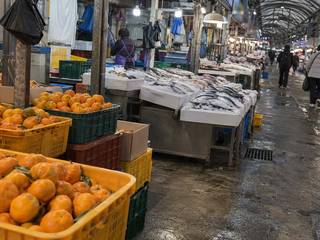
Dongmun Market 동문시장
Jeju City's main traditional market, packed with tangerines, seafood and an evening street-food night market.
Jeju Island · Jeju ·
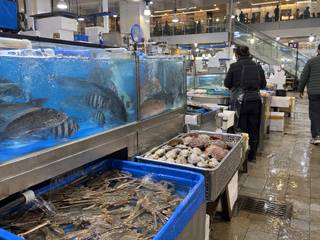
Noryangjin Fisheries Wholesale Market 노량진수산물도매시장
Seoul's big seafood market by the Han River: buy live fish, crab or shellfish on the sales floors and have it prepared at a restaurant upstairs. The retail floors open all year; the wholesale auction closes on Sundays.
Seoul · Seoul ·
Sinpo International Market 신포국제시장
A covered market a short walk from Incheon Station, known for dakgangjeong, sticky sweet-and-spicy fried chicken.
Incheon · Gyeonggi & Incheon ·
Sorae Pogu Fish Market 소래포구 종합어시장
A busy seafood market by a small fishing harbour, five minutes from Sorae Pogu Station; buy fish below and eat it upstairs.
Incheon · Gyeonggi & Incheon ·
Paldalmun Market and Chicken Street 팔달문시장 통닭거리
Markets around the south gate, Paldalmun, with Suwon's fried-chicken street and, next door in Jidong Market, a sundae (blood sausage) alley.
Suwon · Gyeonggi & Incheon ·
Jungang Market and Wolhwa Street 강릉중앙시장 월화거리
The central market for seafood and snacks, next to Wolhwa Street, a 2.6 km linear park on an old railway line with a weekend night market.
Gangneung · Gangwon ·
Jumunjin Port and Fish Market 주문진수산시장
A large fish market by the harbour, with tanks of crab, squid and fish; buy at the stalls and eat at the restaurants around it.
Gangneung · Gangwon ·
Sokcho Tourist & Fishery Market 속초관광수산시장
The central market, with alleys for seafood, sundae and dakgangjeong fried chicken; the raw-fish basement closes every 2nd Wednesday.
Sokcho · Gangwon ·
Nambu Market and Youth Mall 전주남부시장 청년몰
The old market by Pungnammun, known for kongnamul gukbap; a youth mall of small shops upstairs and a Friday–Saturday night market.
Jeonju · Jeolla ·
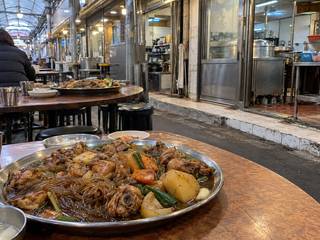
Andong Gu-sijang and Jjimdak Alley 안동구시장 찜닭골목
The old market's covered alley of about 30 restaurants serving Andong jjimdak, braised chicken with glass noodles, for sharing.
Andong · Gyeongsang ·
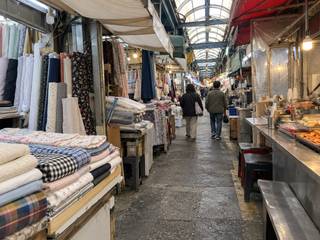
Seomun Market 서문시장
Daegu's biggest market, with over 5,000 shops in eight sections and a noodle alley; the night market runs Fri–Sun, March to December.
Daegu · Gyeongsang ·
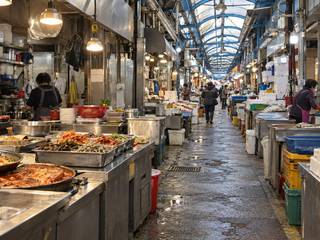
Bupyeong Kkangtong Market 부평깡통시장
A covered market near Jagalchi whose night market fills the main aisle with food stalls every evening from 19:30 to midnight, closing only over the big holidays.
Busan · Busan ·
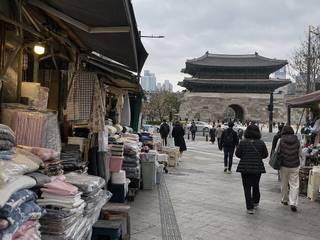
Namdaemun Market 남대문시장
A sprawling traditional market of hundreds of stalls selling clothing, kitchenware and ginseng, with a famous hairtail-stew alley.
Seoul · Seoul ·
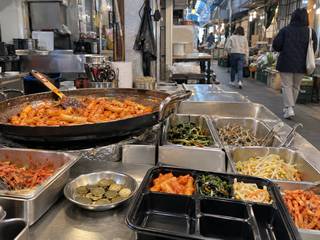
Tongin Market 통인시장
A small neighbourhood market west of Gyeongbokgung, known for its lunchbox cafe: buy brass coins (₩500 each) and swap them at stalls for side dishes and oil-fried tteokbokki.
Seoul · Seoul ·
Daepo Port 대포항
A small fishing port south of the beach, lined with raw-fish restaurants.
Sokcho · Gangwon ·
Yeosu Fish Market and Seosi Market 여수수산시장 · 서시장
The harbour fish market in Gyodong, open 07:00–21:00 every day, next to the old Seosi market area.
Yeosu · Jeolla ·
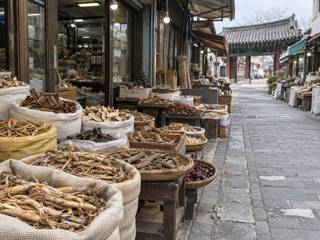
Yangnyeongsi Herbal Medicine Market and Museum 약령시 · 약령시한의약박물관
A 650 m street of about 350 herbal medicine shops, with a free museum of Korean medicine; the museum is closed on Mondays.
Daegu · Gyeongsang ·
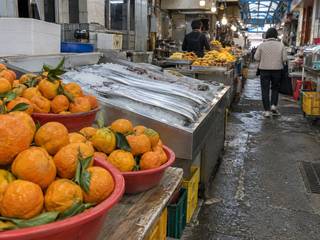
Seogwipo Maeil Olle Market 서귀포매일올레시장
Seogwipo's everyday market, open all year (07:00–21:00 in summer, to 20:00 in winter), with tangerines, hairtail and Jeju snacks, and a small evening food-stall market.
Seogwipo · Jeju ·
Frequently asked questions
Is Gwangjang Market open on Sundays?
The food alley is: it serves daily from about 09:00 to 23:00. The general market and its fabric, bedding and vintage-clothing shops close on Sundays, so come Monday to Saturday if you also want to shop.
What day is Jagalchi Market closed?
The 1st, 3rd and 5th Tuesday of each month, plus the Seollal and Chuseok holidays. On the 2nd and 4th Tuesdays it opens as usual. Nearby Gukje Market is closed or mostly closed on Sundays, so a Sunday or a 2nd/4th Tuesday is the day to combine Jagalchi with the Kkangtong night market.
What is the best night market in Korea?
For a short trip, Busan's Kkangtong night market (daily 19:30–24:00 except holidays) and Jeju's Dongmun night market (daily, 18:00–24:00 from November to April, 19:00–24:00 from May to October) are the easiest, because they run every night. Daegu's Seomun night market runs Friday to Sunday.
Can I pay by card at Korean markets?
In the market buildings, usually yes, and Gwangjang's merchants agreed in 2023 not to push customers to pay cash. Small outdoor stalls and night-market carts may prefer cash, so carry some ₩1,000 and ₩5,000 notes.
How does eating at a Korean fish market work?
At Jagalchi in Busan and Noryangjin in Seoul you choose live seafood at a stall and agree the price. The seller sends it, sliced or cleaned, to a restaurant upstairs, which adds a per-person table charge and extra for stew or grilling. Ask both prices before you buy.
Sources
Facts on this page were checked against these sources on 20 October 2026. Prices, hours and rules change — confirm with the operator before you go.
- 부산 중구청 – 중구명소: 국제시장 (09:00~20:00, 1·3주 일요일 휴무) (Korean) · official
- Visit Busan – Gukje Market (hours 09:00–20:00, closed Sundays) · official
- 비짓부산 – 골목골목 와글와글 국제시장 (Korean) · official
- 비짓부산 – 대한민국 최초 야간 먹방 테마파크, 부평깡통야시장 (Korean) · official
- 비짓부산 – 부산 먹방의 성지 부평깡통시장 (Korean) · official
- 비짓제주 – 동문재래시장 (동문야시장 운영시간) (Korean) · official
- 비짓제주 – 서귀포매일올레시장 (Korean) · official
- 서문야시장 (대구전통시장진흥재단) – 운영시간 (Korean) · official
- 뉴시스 – 대구 야간 명소 서문·칠성야시장 27일 개장 (2026-03-26) (Korean)
- 전주시 문화관광 – 남부시장 야시장 운영 안내 (Korean) · official
- 투데이안 – 전주 남부시장 야시장 3월 재개장 (2026) (Korean)
- 노량진수산시장 (수협노량진수산) – 시장소개·영업시간 (Korean) · official
- VisitKorea – Noryangjin Fisheries Wholesale Market · official
- 남대문시장 – 시장 소개 (점포 수, 회현역 5·6·7번 출구) (Korean) · official
- VisitKorea – Namdaemun Market · official
- 서울시 내 손안에 서울 – 엽전 들고 통인시장으로! 내 취향 도시락 만들어봤어요 (2025) (Korean) · official
- 서울시 내 손안에 서울 – 광장시장 '정량표기제' 도입…바가지요금 근절 나선다! (2023) (Korean) · official
- 서울신문 – 서울시·종로구, 광장시장 '바가지 요금·비위생' 노점 잡는다 (2026-05-20) (Korean)
- 식품의약품안전처 보도자료 – 음식점 바가지요금 처분 강화, 가격표 미게시·초과 수수 1차 영업정지 5일 (2026-09-01) (Korean) · official