Accommodation
Where to Stay in Korea: Accommodation Types
Updated
Book your trip
For a first trip, book a registered hotel or a hostel in a central district, then add one night in a hanok or a temple for the experience. Hotels are graded one to five stars, foreign tourists can reclaim VAT at hotels on the culture ministry’s quarterly list, and Airbnb has blocked Korean listings without a business registration since 1 January 2026. Rules checked against Korean law and official notices on 16 October 2026.
| Your situation | What to book |
|---|---|
| First trip, short stay, want no surprises | A graded hotel near a subway line; see where to stay in Seoul and Busan |
| Travelling alone on a budget | A registered hostel: dorms or small private rooms, a shared kitchen and a lounge |
| Family or group wanting a kitchen | A family hotel or a resort condo, both built with cooking facilities |
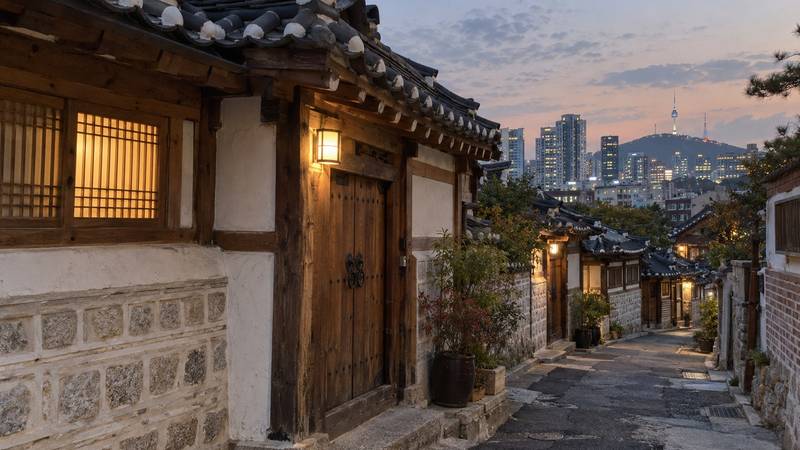
| Want one night of traditional Korea | A hanok stay in Seoul, Gyeongju or Jeonju |
| Want to stay in a local home | A registered foreign-tourist homestay (most city Airbnb rooms) with the host living in |
| Interested in Buddhism or a quiet retreat | A templestay, booked on the official Templestay site |
Accommodation types at a glance
Korea sorts places to stay into legal categories, and the category tells you a lot about what you get. The table uses the categories in the Tourism Promotion Act and two other laws, current as of the 4 August 2026 revision.
| Type | What you get | Best for | Graded or checked |
|---|---|---|---|
| Tourist hotel | Rooms plus restaurants, gym or other facilities | First-timers, business, short stays | 1–5 stars |
| Small hotel | A smaller hotel with at least some guest facilities | Mid-range city stays | 1–5 stars |
| Family hotel / resort condo | Rooms with cooking equipment | Families, groups, longer stays | Family hotels 1–5 stars |
| Hostel | Shared showers and kitchen, a common area | Solo travellers, budget | Registered, not starred |
| Hanok stay | Rooms in a traditional wooden house | One special night | Registered; must post rates |
| Foreign-tourist homestay | A room in a home where the host lives | Meeting locals, longer stays | Registered; foreigners only |
| Motel / inn | A private room | Late arrivals, road trips | Registered with the local district |
| Rural homestay / pension | A room or cottage in the countryside | Jeju, the east coast, mountains | Registered with the county |
| Templestay | A simple room inside a Buddhist temple | Culture, a quiet break | Booked through one official site |
Hotels are the only type with stars. A hostel, homestay or hanok without stars can be fully legal; what matters is that it is registered with the local government.
Hotels and star grades
Tourist hotels, small hotels, family hotels, traditional Korean hotels, floating hotels and medical-tourism hotels registered under the Tourism Promotion Act are graded 1 to 5 stars. The grade is set through the culture ministry’s rating system, not by the hotel itself, and is valid for a fixed period. Hotels in Korea explains what each grade must offer and how to check a hotel’s real grade.
A family hotel must provide cooking equipment, which makes it a good fit for families with young children. A traditional Korean hotel (한국전통호텔업) is a hotel built in traditional architecture with full hotel services, a step up from a small hanok guesthouse.
Hotels cluster around the main stations and shopping districts. The city guides list the best areas for a first stay: Seoul (Myeongdong, Jongno, Hongdae, Gangnam, Seoul Station), Busan (Haeundae, Seomyeon, Nampo), Jeju and Gyeongju.
The hotel VAT refund for foreign tourists
Foreign tourists can claim back the VAT on hotel stays of 30 days or less, under a special tax rule that runs until 31 December 2028. It only applies at hotels and resort condos the culture ministry designates each quarter; the list for October–December 2026 is already out.
- Ask at booking or check-in whether the hotel is on the current list.
- Get the confirmation: the hotel gives you a stay confirmation slip, or sends it electronically to a tax refund operator.
- Claim the refund through that operator, the same way as a shopping tax refund. Breakfast included in the room rate counts; extras billed separately do not, according to press reports on the 2026 scheme.
Shopping refunds, which work in a similar way, are covered on the money page.
Hostels and guesthouses
A registered hostel (호스텔업) is designed for backpackers and independent travellers. By law it has shared showers and a kitchen, plus a common space for cultural exchange between foreign and Korean guests. Check whether you are booking a dorm bed or a private room.
“Guesthouse” is not a legal category. A place sold as a guesthouse may be registered as a hostel, a homestay, a hanok stay or a small inn, so look at the details: who else stays there, whether the bathroom is shared and whether there is a host on site.
The guesthouses and hostels guide explains each legal category, who may stay and how to check that a place is registered.
Hanok stays
A hanok stay (한옥체험업) offers rooms in a traditional Korean house. It is a registered tourism business open to every visitor. Under the August 2026 rules it must post its room rates at the front desk and on any website or app it sells through, and charge those rates.
The space used for guests must generally stay under 230 m², so a hanok stay is a small place with few rooms. Before booking, check whether the bathroom is private and whether the room has a bed or floor bedding.
Hanok stays are concentrated in Seoul’s Bukchon Hanok Village and Seochon, Jeonju Hanok Village and Gyeongju’s old centre. Bukchon is a residential area, so keep noise down in the lanes; the etiquette guide explains the local rules.
The hanok stays guide covers where to book, what the rooms are like and Bukchon’s evening red zone.
Airbnb and homestays: what is legal
Renting a room in a city home to tourists is a specific licence in Korea: the foreign-tourist urban homestay (외국인관광 도시민박업). Airbnb-style rooms in city homes need this licence, and the law sets clear limits:
- Foreign guests only. It exists to show foreign visitors Korean home life; Korean guests are allowed only in a narrow exception for community enterprises.
- The host must live there. The home must be a house or an apartment where the host actually lives, with a floor area under 230 m².
- Basic safety and service. Each home needs a fire extinguisher and a smoke alarm in every guest room, and must be able to offer help in a foreign language.
- Posted prices. Since August 2026 rates must be posted on site and online, and honoured.
Airbnb itself started requiring a business registration for new Korean listings on 2 October 2024. Existing listings had until 16 October 2025 to submit one; those that did not can no longer be booked for stays from 1 January 2026. If a listing is a whole flat with no host and no registration shown, look elsewhere.
Rural homestays and pensions
Outside cities, homestays fall under a separate law. A rural homestay (농어촌민박) is run by a local resident in a house they own and live in, and Korean and foreign guests can both stay. Countryside “pensions” on Jeju, the east coast and near national parks are registered either this way or as tourist pensions (관광펜션업).
Motels
Motels and inns are registered with the local district under the Public Health Control Act as lodging businesses. They are useful for a late arrival or a road trip, but they are not graded, so read recent reviews and check the photos before you book.
Templestays
A templestay lets you sleep inside a working Buddhist temple and follow part of its daily routine. The official site, run by the Cultural Corps of Korean Buddhism, lists programs at temples around the country, sorted into day, experience and relaxation types. Program content listed on the English site includes temple tours, Seon meditation, tea ceremony, the formal monastic meal (baru gongyang) and chanting services.
- Book only on the official site (templestay.com, English version eng.templestay.com). Each temple sets its own price, schedule and capacity.
- Check the language: not every temple runs its program in English; the English site shows which ones do.
- Read the program details for the schedule and what is included. The templestay guide compares 2026 prices, refund rules and a typical night, and the temples guide covers the main temples.
Common mistakes
- Booking a whole apartment with no host. In cities a homestay host must live in the home, and Airbnb has blocked unregistered Korean listings.
- Assuming “no stars” means low quality. Only hotels are graded; hostels and hanok stays are registered differently.
- Missing the hotel VAT refund. If your hotel is on the quarterly list, ask for the confirmation slip at check-out.
- Choosing a hotel far from the subway. A cheaper room an hour from the sights rarely saves money once you count time and taxis.
Where to next
Choose a base in Seoul, Busan, Gyeongju or Jeju, then plan the journeys between them with getting around Korea. For a ready-made route, see Korea in 7 days. Entry rules, money and data are in before you go.
Accommodation: all guides
City guides
Busan
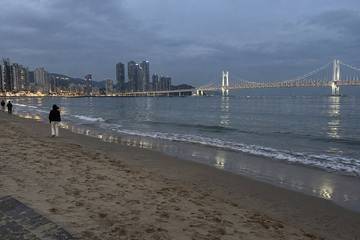
Korea's second city and busiest port, wrapped around beaches, hillside villages, fish markets and a temple on the rocks.
Gyeongju
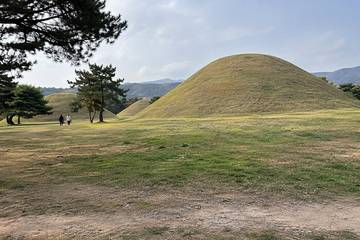
The former Silla capital, an open-air museum of grassy royal tombs, ancient temples and stone Buddhas in the southeast.

Jeju Island
Korea's volcanic holiday island, with the country's highest peak, UNESCO-listed craters and lava tubes, black-sand coves and waterfalls.
Seoul
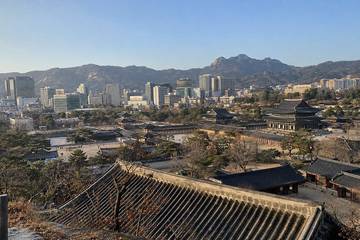
Korea's capital: Joseon palaces and hanok lanes beside skyscrapers, night markets, Han River parks and granite peaks inside the city limits.
Frequently asked questions
Is Airbnb legal in Korea?
Renting a room in a city home to a foreign tourist is legal when the host lives there and has registered the home as a foreign-tourist homestay. Since 1 January 2026 Airbnb no longer accepts bookings at Korean listings that have not submitted a business registration, so check that the listing shows one.
Can tourists get a VAT refund on hotel bills in Korea?
Yes, at hotels the culture ministry designates each quarter. Foreign tourists staying up to 30 days can reclaim the VAT on the room. The hotel issues a confirmation, and you claim through a tax refund operator, as with shopping refunds. The scheme runs until 31 December 2028.
What do hotel stars mean in Korea?
Registered tourist hotels are graded from one star to five stars under the Tourism Promotion Act. Hostels, guesthouses, motels and homestays are not part of this grading, so a missing star does not mean a place is unregistered.
Can foreigners stay in a hanok?
Yes. Hanok stays are registered as a tourism business open to all visitors, Korean or foreign. Since August 2026 they must post their room rates at the front desk and on any website they sell through, and charge those rates.
How do I book a templestay?
Book on the official Templestay site run by the Cultural Corps of Korean Buddhism. It lists day, experience and relaxation programs at temples around the country; each temple sets its own fee and schedule, and the English site shows which programs run in English.
Sources
Facts on this page were checked against these sources on 16 October 2026. Prices, hours and rules change — confirm with the operator before you go.
- 국가법령정보센터 – 관광진흥법 시행령 (대통령령 제36554호, 2026-08-04 시행): 제2조, 제22조, 별표 1 (Korean) · official
- 국가법령정보센터 – 관광진흥법 제3조, 제19조 (휴양 콘도미니엄업, 등급결정) (Korean) · official
- 국가법령정보센터 – 조세특례제한법 제107조의2 (외국인관광객 등에 대한 부가가치세의 특례) (Korean) · official
- 국가법령정보센터 – 조세특례제한법 시행령 제109조의2 (숙박용역공급확인서, 환급창구운영사업자) (Korean) · official
- 문화체육관광부 – '26.4분기 외국인 관광객 숙박용역 부가세 환급 특례적용관광숙박시설 지정 공고 (Korean) · official
- 국가법령정보센터 – 농어촌정비법 제2조, 제86조 (농어촌민박사업) (Korean) · official
- 국가법령정보센터 – 공중위생관리법 제2조 (숙박업) (Korean) · official
- 에어비앤비 뉴스룸 – 10월 16일부터 영업신고 의무화 조치 전면 시행 (Korean) · official
- 템플스테이 (한국불교문화사업단) – 공식 예약 사이트 (Korean) · official
- Templestay – Official English site (Cultural Corps of Korean Buddhism) · official
- SBS Biz – 'K관광 숙박비 돌려받으세요' (2026-10-07, hotel VAT refund 2026 Q4) (Korean)