Culture & Tradition
Hanok villages
Updated
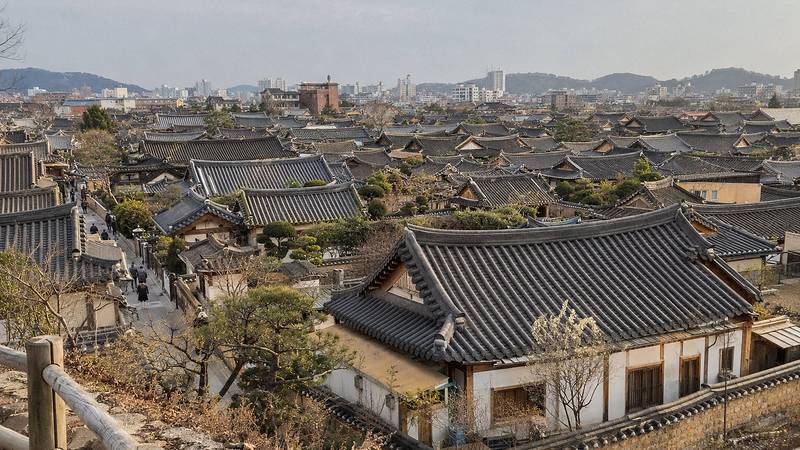
For one hanok village on a first trip, walk Bukchon in Seoul between 10:00 and 17:00 and pair it with Gyeongbokgung or Changdeokgung; it is free and next to Anguk Station. To sleep in one, go to Jeonju (735 houses, about 1 h 40 min from Yongsan by KTX); for a lived-in clan village, go to Hahoe near Andong (₩5,000) or Yangdong near Gyeongju (₩4,000). Tourists outside those hours in Bukchon’s red zone can be fined ₩100,000.
A hanok is a traditional Korean house: a timber frame on a stone base, walls of earth and paper-screen doors, rooms around a courtyard, and heated ondol floors. Upper-class homes have grey tiled roofs with curved eaves; farmhouses have thatch, and on Jeju, rope-tied thatch over black basalt walls. Hanok villages come in three kinds: city neighbourhoods where hanok are still homes, cafés and guesthouses (Bukchon, Jeonju), clan villages where the families of one lineage have lived for centuries (Hahoe, Yangdong), and open-air museums of houses moved or rebuilt (Namsangol, the Korean Folk Village).
Which hanok village fits your trip
| Your situation | Do this |
|---|---|
| Seoul only, two or three hours | Bukchon mid-morning, then Changdeokgung or Gyeongbokgung next door |
| You want to go inside the houses | Namsangol Hanok Village (free, closed Mondays) or Unhyeongung, both in central Seoul |
| An evening of food and cafés in old houses | Ikseon-dong in Seoul, or Hwangnidan-gil in Gyeongju |
| One night in a hanok town | Jeonju: stay in the Hanok Village, eat bibimbap and street food |
| A real centuries-old village | Andong for Hahoe, or Yangdong from Gyeongju |
| Travelling with children | Korean Folk Village in Yongin, with shows and craft demonstrations, often paired with Suwon |
If you only see one, make it Bukchon: it is the easiest to reach and sits between two palaces. Jeonju is the one to add if you want to sleep in a hanok and spend an evening in it.
Hanok sites in Seoul: fees and hours in 2026
| Place | Fee | Open | Getting there |
|---|---|---|---|
| Bukchon | Free | Red zone (Bukchon-ro 11-gil) 10:00–17:00 for tourists; other lanes no set hours | Anguk Station (Line 3), Exit 3 |
| Ikseon-dong | Free | Street; shops keep their own hours | Jongno 3-ga Station, Exit 4 or 6 |
| Namsangol Hanok Village | Free | Houses 09:00–21:00 Apr–Oct, 09:00–20:00 Nov–Mar, closed Mondays; garden 24 h | Chungmuro Station (Lines 3 and 4), Exit 3 or 4 |
| Unhyeongung | Free | 09:00–19:00 Apr–Oct, 09:00–18:00 Nov–Mar; closed Mondays (open on public-holiday Mondays) | Anguk Station Exit 4, 3 min |
| Eunpyeong Hanok Village | Village free; museum ₩1,000 | Museum 09:00–18:00, last entry 17:00, closed Mondays | Yeonsinnae Station (Lines 3 and 6) Exit 3, bus 701, 709 or 7211, about 15 min |
Adult fees and hours from Jongno-gu, the Seoul city culture site, Unhyeongung and the Eunpyeong History Hanok Museum, checked 25 October 2026. All the Seoul hanok areas are free; you pay only for museums, workshops, tea houses and hanbok rental. Mondays are the day to avoid if you want to go inside the houses.
Bukchon and the palace quarter
Bukchon (“north village”) is the hillside between Gyeongbokgung and Changdeokgung, a dense quarter of tiled-roof houses that are still homes. The famous view down Bukchon-ro 11-gil, over tiled roofs towards downtown, is inside the red zone: Jongno-gu allows tourist visits there only from 10:00 to 17:00, enforced with fines since March 2025, and chartered tour buses have been banned from the main roads since January 2026.
Come mid-morning on a weekday, walk uphill from Anguk Station and finish downhill at a palace or in Samcheong-dong. Ten minutes south, Ikseon-dong packs 1920s hanok into narrow alleys of cafés and small restaurants, and it stays lively after Bukchon’s red zone closes. Unhyeongung, across the road from Anguk Station, is a royal town house with free entry and few crowds.
Namsangol Hanok Village
Namsangol, at the north foot of Namsan, opened in 1998 with five Joseon-era houses, protected as folk heritage, that the city moved here from other parts of Seoul. Unlike Bukchon, you can step into the rooms, courtyards and kitchens. Behind the houses is a traditional garden with a pond and pavilion, open around the clock, and a time capsule buried in 1994 for Seoul’s 600th year as capital, due to be opened in 2394.
Entry is free; the houses close on Mondays. Seasonal folk events and hands-on programmes run here, and some must be booked ahead. It is a short walk from Chungmuro Station, and the path continues uphill to N Seoul Tower.
Jeonju Hanok Village
Jeonju Hanok Village is Korea’s largest urban hanok quarter: 735 houses over about 298,000 m², free and open at all hours. It is less a museum than a living neighbourhood of guesthouses, cafés, craft shops and street-food stands around Gyeonggijeon, the shrine to the founder of the Joseon dynasty (₩3,000). The city counts about 160 hanok stays here, which makes Jeonju the easiest place in Korea to sleep in a traditional house.
Plan one night: day-trippers miss the quiet early morning lanes and the evening food. KTX trains from Yongsan take about 1 h 40 min. The Jeonju guide covers trains, buses, hanbok rental and where to eat.
Clan villages: Hahoe and Yangdong
Hahoe and Yangdong were inscribed together by UNESCO in 2010 as the Historic Villages of Korea. Both are still home to families of the clans that founded them, with yangban mansions on the higher ground and thatched houses below. See World Heritage sites for the full list.
- Hahoe Folk Village, Andong. The Pungsan Ryu clan village in a loop of the Nakdonggang River. ₩5,000 for adults includes the shuttle bus from the ticket office, the car park and the Hahoe World Mask Museum; last entry is 17:30 from April to September and 16:30 from October to March. Allow 2–4 hours, longer with the Hahoe mask-dance performance. Pair it with Byeongsanseowon, a Confucian academy by the river.
- Yangdong Village, Gyeongju. Larger and hillier, the village of the Gyeongju Son and Yeogang Yi clans, with houses scattered over several ridges. ₩4,000 for adults. It lies outside central Gyeongju, a bus or taxi ride away; combine it with the tomb parks in town.
Families live in many of the houses in both villages. Stay out of closed gates and courtyards, and don’t photograph people through doors and windows.
More hanok beyond Seoul
- Gyeongju’s centre. Gyochon Hanok Village surrounds the historic Choi family house beside the rebuilt Woljeonggyo bridge, and Hwangnidan-gil next to the tomb park is a street of hanok cafés and bakeries.
- Gangneung. Seongyojang is a 300-year-old noble estate still owned by the family (₩5,000), and Ojukheon is the house where the scholar Yulgok was born in 1536. Gangneung is about two hours from Seoul by KTX-Eum.
- Andong’s other houses. Dosanseowon and the Andong Folk Village, of houses moved from land flooded by the dam, fill a second day.
- Jeju. Seongeup Folk Village keeps the island’s own style: thatched houses with roofs tied down by rope behind black lava-stone walls. Entry is free and there are no set hours, but arrive before dark.
- Naganeupseong (Suncheon, Jeolla). A walled Joseon town where about 230 people live in some 290 thatched houses; ₩4,000. See fortresses.
- Oeam Folk Village (Asan, Chungcheong). A quieter lived-in clan village, ₩2,000 and open every day. Buses 100 and 101 from Onyangoncheon Station take about 30 minutes, and trains from Yongsan to Onyangoncheon about 1 h 30 min.
- Korean Folk Village (Yongin, Gyeonggi). A theme-park version with rebuilt traditional houses, craft workshops and shows. Foreign visitors pay ₩22,000 with a passport through 2026 (standard adult ₩37,000 weekdays, ₩39,000 weekends). Buses 37 and 10-5 run from Suwon Station Exit 4, and bus 1560 from Gangnam; see day trips from Seoul.
Sleeping in a hanok
A night on a heated ondol floor is the best way to understand a hanok. Expect floor bedding on a mattress (yo), small rooms, thin paper doors and, in smaller places, a shared bathroom across the courtyard. Seoul’s hanok stays cluster in Bukchon, Seochon and Ikseon-dong; Jeonju has the most; Hahoe and Oeam have homestays inside the village itself.
The hanok stays guide explains registration, posted rates, what to check before booking, and how Bukchon’s evening rule affects guests. For Buddhist temples with overnight programmes, see temple stays.
Tips for visiting hanok villages
- People live here. In Bukchon, Hahoe, Yangdong, Oeam and Naganeupseong, keep quiet, stay out of private gates and courtyards and take your rubbish with you.
- Shoes off on wooden floors. Take off your shoes before stepping onto a maru (wooden veranda) or into a room, as in any Korean home.
- Mornings are best. Bukchon is calmest just after 10:00 on weekdays; Jeonju and Ikseon-dong are busiest on weekend afternoons and evenings.
- Hanbok. Rental shops cluster around Bukchon, Gyeongbokgung and Jeonju, and wearing hanbok gets you into Seoul’s royal palaces free. See palaces.
- Autumn and spring. Ginkgo and maple around the tiled roofs make late October to mid-November the most photogenic time; see the autumn leaves report.
Book your trip
Best hanok villages in Korea
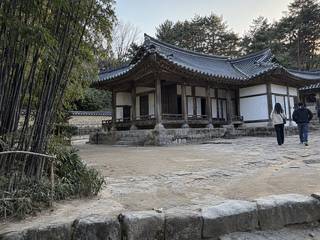
Ojukheon and the Gangneung City Museum 오죽헌
The Joseon house where the scholar Yulgok Yi I was born in 1536, among black bamboo; ₩3,000 includes the city museum.
Gangneung · Gangwon ·
Jeonju Hanok Village 전주한옥마을
Korea's largest urban hanok quarter: 735 traditional houses, now guesthouses, cafés, workshops and food stalls; free and open at all hours.
Jeonju · Jeolla ·
Gyeonggijeon and the Royal Portrait Museum 경기전 어진박물관
The 1410 shrine to the portrait of Joseon's founder, King Taejo, in a walled garden of bamboo and old trees; ₩3,000 includes the museum.
Jeonju · Jeolla ·
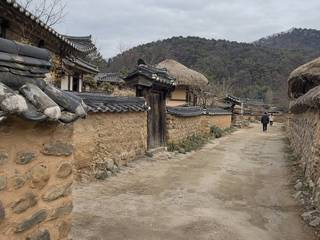
Hahoe Folk Village 안동하회마을
A Pungsan Ryu clan village of tiled and thatched houses in a river bend, still lived in; UNESCO-listed with Yangdong in 2010.
Andong · Gyeongsang ·
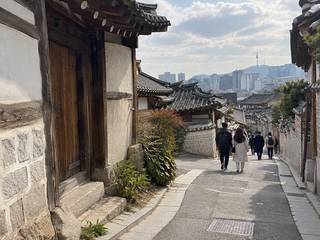
Bukchon Hanok Village 북촌한옥마을
Hillside lanes of traditional tiled-roof houses between two palaces; a lived-in residential area with visiting hours in the busiest part.
Seoul · Seoul ·
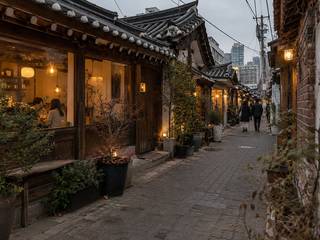
Ikseon-dong 익선동
A tight cluster of 1920s urban hanok turned into cafes, bakeries and small restaurants, busiest on weekend evenings.
Seoul · Seoul ·
Namsangol Hanok Village 남산골한옥마을
Five Joseon-era houses moved from around Seoul to the foot of Namsan, with a traditional garden and Seoul's 1994 time capsule; free, houses closed Mondays, near Chungmuro Station.
Seoul · Seoul ·
Korean Folk Village 한국민속촌
An open-air museum of rebuilt Joseon houses, from farm cottages to a magistrate's office, with craft demonstrations and shows; foreign visitors pay ₩22,000 with a passport through 2026.
Yongin · Gyeonggi & Incheon ·
Seongyojang House 선교장
A 300-year-old 99-kan noble estate, still in the family and open to visitors; ₩5,000, with hanok rooms for overnight stays.
Gangneung · Gangwon ·
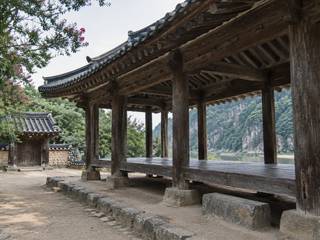
Byeongsanseowon 병산서원
A Confucian academy facing a cliff and river, its open Mandaeru pavilion framing the view; UNESCO 2019, free.
Andong · Gyeongsang ·
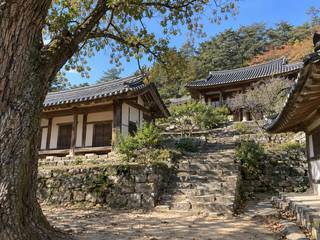
Dosanseowon 도산서원
The academy built around the study of Toegye Yi Hwang, the scholar on the ₩1,000 note, above the Andong Lake; UNESCO 2019.
Andong · Gyeongsang ·
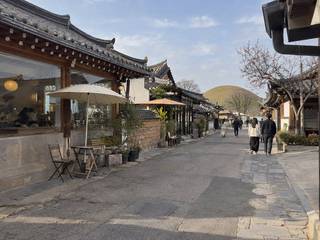
Hwangnidan-gil 황리단길
A street of hanok cafes, bakeries and small shops beside the tomb park, the liveliest part of town in the evening.
Gyeongju · Gyeongsang ·
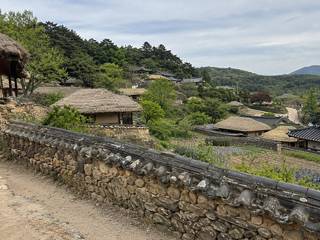
Yangdong Village 양동마을
A UNESCO-listed Joseon clan village of tiled and thatched houses spread over hillsides, still home to residents.
Gyeongju · Gyeongsang ·
Unhyeongung 운현궁
The town house where King Gojong grew up and his father, the Heungseon Daewongun, held power; tiled halls around quiet courtyards, free, closed Mondays, 3 minutes from Anguk Station exit 4.
Seoul · Seoul ·
Eunpyeong Hanok Village 은평한옥마을
A new-built hanok neighbourhood of 156 lots below the granite peaks of Bukhansan, with the small Eunpyeong History Hanok Museum (₩1,000, closed Mondays); bus from Yeonsinnae Station.
Seoul · Seoul ·
Heo Gyun and Heo Nanseolheon Memorial Park 허균·허난설헌 기념공원
A park around the birthplace site of the poet Heo Nanseolheon and her brother Heo Gyun, author of Hong Gil-dong; free, hall closed Mondays.
Gangneung · Gangwon ·
Daedohobu Government Office and Imyeonggwan Gate 강릉대도호부관아 임영관 삼문
Rebuilt halls of the old provincial office in the city centre, with the Goryeo-era Imyeonggwan gate, a National Treasure; free.
Gangneung · Gangwon ·
Oeam Folk Village 외암민속마을
A lived-in clan village of tiled and thatched houses behind stone walls, near the Onyang hot springs; ₩2,000, open every day.
Asan · Chungcheong ·
Jeonju Hyanggyo 전주향교
The old Confucian school and shrine, said to date from the Goryeo era, with halls rebuilt in the late 1500s; free, 10:00–18:00.
Jeonju · Jeolla ·
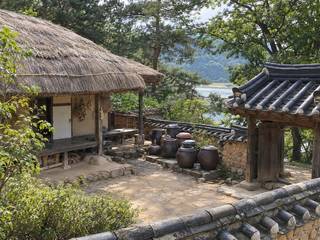
Andong Folk Village 안동민속촌
Old houses moved here from land flooded by the Andong Dam, laid out on a hillside by the river; free and open at all hours.
Andong · Gyeongsang ·
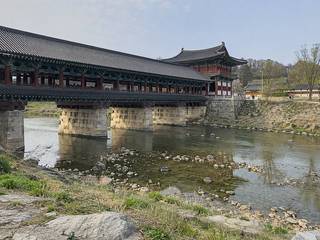
Gyochon Hanok Village 교촌한옥마을
A small hanok village around the historic Choi family house, next to the rebuilt covered bridge of Woljeonggyo.
Gyeongju · Gyeongsang ·
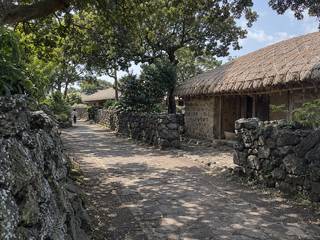
Seongeup Folk Village 성읍민속마을
A lived-in village of thatched stone houses and black lava walls, preserving Jeju's traditional architecture.
Jeju Island · Jeju ·
Frequently asked questions
Which hanok village is best for a first trip to Korea?
In Seoul, Bukchon: its lanes sit between Gyeongbokgung and Changdeokgung, so a palace and the village fit in one morning. Outside Seoul, Jeonju Hanok Village is the best one to stay in overnight, with 735 houses, food stalls and hanok guesthouses, about 1 h 40 min from Yongsan by KTX.
What are the visiting hours in Bukchon Hanok Village?
In the red zone around Bukchon-ro 11-gil, the best-known photo lanes, tourists may visit only from 10:00 to 17:00, and a breach can bring a 100,000-won fine. The rest of Bukchon is an ordinary neighbourhood without set hours, but people live there, so keep your voice down at any time.
Are hanok villages free to visit?
Most urban ones are: Bukchon, Ikseon-dong, Namsangol, Unhyeongung and Jeonju Hanok Village cost nothing. The clan villages charge a small fee: Hahoe ₩5,000 (including the shuttle and mask museum), Yangdong ₩4,000 and Oeam ₩2,000. The Korean Folk Village is a ticketed theme park.
What is the difference between Bukchon and Namsangol?
Bukchon is a real residential district where people live, with rules on visiting hours. Namsangol is a park with five historic houses moved there from other parts of Seoul, where you can walk into the rooms and courtyards; the houses are closed on Mondays.
Can I sleep in a hanok village?
Yes. Jeonju has about 160 hanok stays, Bukchon and Gyeongju have many too, and Hahoe and Oeam have family-run homestays inside the village. See the hanok stays guide for floor beds, shared bathrooms and the Bukchon evening rule.
Sources
Facts on this page were checked against these sources on 25 October 2026. Prices, hours and rules change — confirm with the operator before you go.
- 종로구청 – 특별관리지역 (북촌 레드존 관광객 방문시간 제한) (Korean) · official
- 서울특별시 – 북촌 특별관리지역 관광객 방문시간 제한 안내 (Korean) · official
- 서울특별시 문화분야 – 남산골한옥마을 (관람시간·휴관·입장료, 2026-08-20 수정) (Korean) · official
- 운현궁 – 관람안내 (관람시간·휴관일·입장료) (Korean) · official
- 은평구 문화관광 – 은평한옥마을 (156필지) (Korean) · official
- 은평역사한옥박물관 – 관람안내 (관람시간·휴관·관람요금) (Korean) · official
- 은평역사한옥박물관 – 오시는 길 (Korean) · official
- 전주한옥마을 (전주시) – 한옥마을 소개·현황 (한옥 735동) (Korean) · official
- 전주한옥마을 (전주시) – 한옥숙박체험 (Korean) · official
- 안동하회마을 – 관람안내 (관람료·관람시간) (Korean) · official
- 안동하회마을 – 마을 현황 (Korean) · official
- 경주 양동마을 – 관람안내 (관람료·시간) (Korean) · official
- 선교장 – 관람안내 (관람료) (Korean) · official
- 제주특별자치도 – 성읍민속마을 (관람시간·입장료) (Korean) · official
- 순천 낙안읍성 – 관람요금·관람시간 (Korean) · official
- 외암민속마을 보존회 – 관람안내 (관람료·관람시간) (Korean) · official
- 외암민속마을 보존회 – 찾아오시는 길 (온양온천역 100·101번) (Korean) · official
- 한국민속촌 – 입장요금 (외국인 22,000원, 2026년까지) (Korean) · official
- 한국민속촌 – 오시는 길 (Korean) · official
- 서울시 미디어허브 – 운현궁·우리소리박물관 (2026-08-31) (Korean)