Seoul · Palace Quarter (Jongno)
Ikseon-dong 익선동
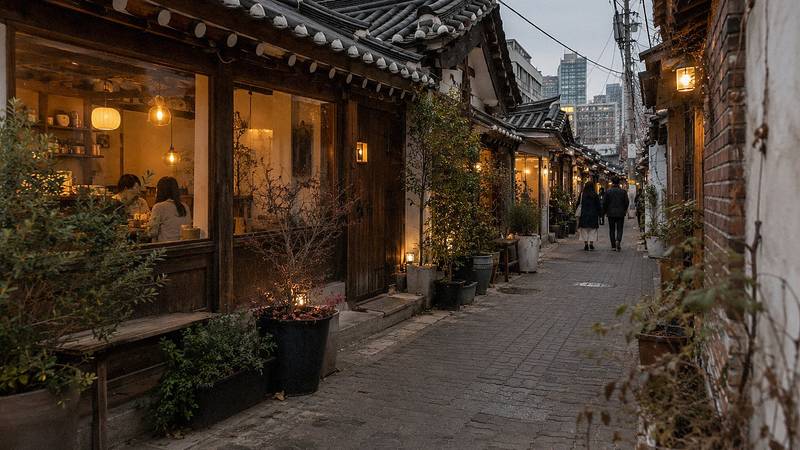
A tight cluster of 1920s urban hanok turned into cafes, bakeries and small restaurants, busiest on weekend evenings.
Updated
Essentials
- Admission
- Free: the lanes are public streets with no ticket or gate. Cafes, restaurants and shops charge as usual
- Getting there
- Subway Lines 1, 3 and 5, Jongno 3-ga Station, Exit 4 (about 120 m to the lanes)
- Jongno 3-ga Station, Exit 6, also leads to the southern end of Ikseon-dong Hanok Street
- Address
- 17 Donhwamun-ro 11ga-gil, Jongno-gu, Seoul 03133
서울 종로구 돈화문로11가길 17 - Website
- english.visitseoul.net/attractions/IkseongdongHanokVillage/ENP037008
Book your trip
Ikseon-dong is free, with no gate or ticket: a pocket of 1920s hanok lanes full of cafes, bakeries and small restaurants, about 120 m from Jongno 3-ga Station Exit 4 (Lines 1, 3, 5). Allow an hour to walk the lanes, longer with a meal. Come on a weekday afternoon to avoid queues, or after dark when the lanes are lit.
Ikseon-dong is one of the oldest surviving clusters of small urban hanok in Seoul, squeezed between Insadong, Jongmyo Shrine and the road up to Changdeokgung. Almost every tiled-roof house now holds a cafe, restaurant or shop, so this is the hanok area you visit to sit down, eat and drink, rather than to look at residential streets. It is small, crowded at weekends and easy to combine with the palace quarter.
Is Ikseon-dong worth it?
| You want… | Ikseon-dong? | Better choice |
|---|---|---|
| A cafe, dessert or dinner inside a hanok | Yes, this is what the area is for | – |
| Quiet residential hanok lanes and palace views | Partly; the lanes are commercial | Bukchon Hanok Village |
| Traditional crafts, tea and souvenirs | No | Insadong, next door to the west |
| Royal history | No | Jongmyo or Changdeokgung, both a short walk away |
| Street food and drinks in the evening | Yes, at the edges of the area | Gwangjang Market for a bigger food market |
Based on Visit Seoul and VISITKOREA descriptions, checked 17 October 2026. If you only have time for one hanok area and want photos of houses, choose Bukchon. If you want a meal or coffee in a hanok, choose Ikseon-dong, or do both in one day.
When to go
- Weekday afternoons are the calmest time to walk the lanes and get a table without a long wait.
- Weekend afternoons and evenings are the busiest. Expect queues outside the best-known cafes and slow progress through lanes that are often barely wider than two people.
- After dark the lanes are lit by shop windows. Visit Seoul singles out night-time and winter visits as the most atmospheric.
- Early mornings are quiet but many businesses have not opened yet, so there is little to do apart from looking at the rooftops.
There is no visiting-hours zone in Ikseon-dong like the one in Bukchon. The lanes are public streets. Some houses are still homes, so keep your voice down late in the evening.
Getting there
Take Line 1, 3 or 5 to Jongno 3-ga Station and use Exit 4. The lanes begin about 120 m away. Exit 6 of the same station leads to the southern end of what VISITKOREA calls Ikseon-dong Hanok Street, which runs north to the Ibis Ambassador Insadong hotel on Samil-daero.
From Seoul Station, Line 1 runs direct to Jongno 3-ga. From Myeongdong, take Line 4 one stop to Chungmuro and change to Line 3 for two stops to Jongno 3-ga. A T-money card pays all subway fares; see the Seoul subway guide for how to transfer. For a taxi, show the address 서울 종로구 돈화문로11가길 17.
What you find there
- The lanes themselves. A tight grid of alleys lined with single-storey hanok with tiled roofs, wooden gates and small courtyards, many with their courtyards now roofed over to make extra seating. Visit Seoul puts the hanok street at about 800 m, running between the Ibis hotel, Insadong and Nakwon Arcade.
- Hanok cafes and bakeries. Dessert cafes, bakeries and coffee shops fill many of the houses, often with seats on low floors or around a covered courtyard.
- Restaurants. Korean, Western and fusion restaurants sit side by side, along with small bars. Menus and prices change often, so check a map app for current places.
- Small shops. Accessory, stationery, perfume and vintage shops, plus a few hanbok rental and fortune-telling shops, a legacy of the area’s past (see history below).
- Evening street-food tents. After dark the streets at the edges of Ikseon-dong fill with red pojangmacha tents selling grilled food, soups and soju, one of the few places in central Seoul where such tents still gather in numbers.
- Nakwon Arcade. At the western edge, the Nakwon Sanga building is a long-running market of musical instrument shops.
Tips for visiting
- Use a map app. VISITKOREA warns that the alleys branch like a spider’s web and are easy to get lost in. Naver Map or KakaoMap shows business names in English and Korean.
- Expect waits at popular cafes, especially at weekends. If a queue is long, the next lane usually has a quieter place.
- Mind your bags. Lanes are narrow and many houses have steps or raised floors, so big suitcases and pushchairs are a struggle. Leave luggage at your hotel or in a station locker.
- Watch for raised floors. Some seating is on a raised hanok floor; if there is a step with shoes left at it, take yours off too. See Korean etiquette for more.
- Do the area in one walk. A common loop is Jongmyo in the morning, lunch in Ikseon-dong, then Insadong and Changdeokgung in the afternoon.
- Stay the night. There are hanok guesthouses in and around Ikseon-dong. The hanok stays guide explains how to pick a licensed one from Seoul’s official list.
History in brief
In the 1920s, during Japanese colonial rule, the developer Jeong Se-gwon bought up a large estate here, split it into small plots and built compact hanok for Korean buyers. The houses kept a traditional layout but were reorganised for city life, and Seoul’s official Media Hub describes the result as the first urban hanok housing estate of its kind. Before then the area, close to the Joseon palaces, had been home to high officials with large tiled-roof houses.
After the Korean War, a large yojeong (a high-class restaurant with gisaeng entertainers) called Ojinam stood at the northern end, where the Ibis hotel is today. It drew hanbok and fortune-teller shops to the area, and some remain. By the 2000s the neighbourhood was earmarked for redevelopment. Seoul’s planning committee turned the redevelopment plan down in 2010 to protect the hanok, and the redevelopment committee broke up around 2014. Young business owners then began converting the houses into cafes and restaurants, and the area became one of Seoul’s busiest hangouts within a few years. In 2018 Seoul released the area from redevelopment and placed it under a district plan as a designated hanok area, so the houses cannot be replaced with high-rise buildings.
Nearby
Jongmyo Shrine
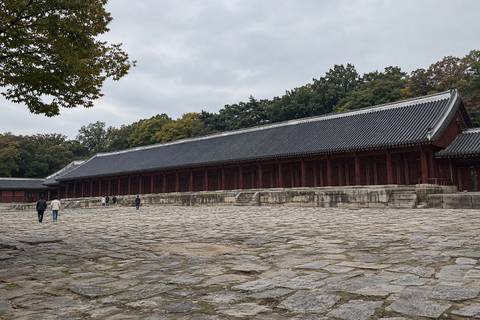
The austere royal ancestral shrine of the Joseon kings, a UNESCO site whose long main hall is one of Korea's finest wooden buildings.
Insadong
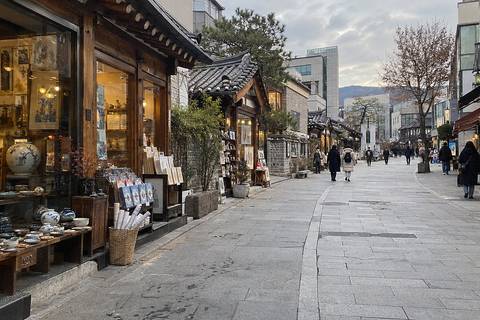
A pedestrian-friendly street of craft and antique shops, tea houses and galleries, good for souvenirs such as hanji paper and ceramics.
Changdeokgung Palace
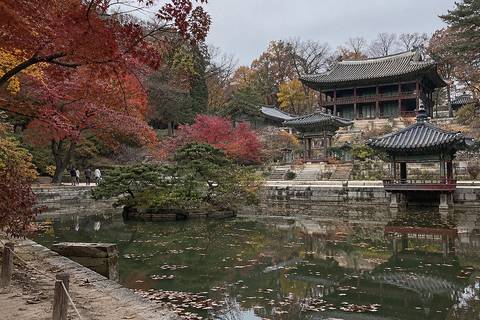
A UNESCO-listed palace laid out to follow the hills, famous for its Secret Garden of ponds and pavilions visited on guided tours.
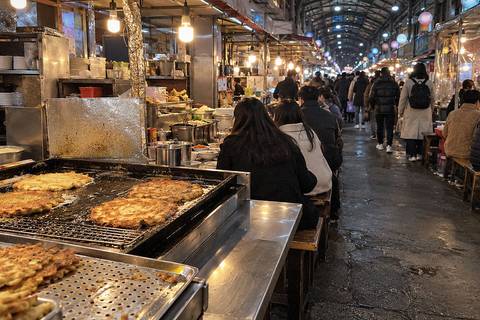
Gwangjang Market
One of Seoul's oldest covered markets, best known for its food alleys serving mung bean pancakes, gimbap and raw beef dishes.
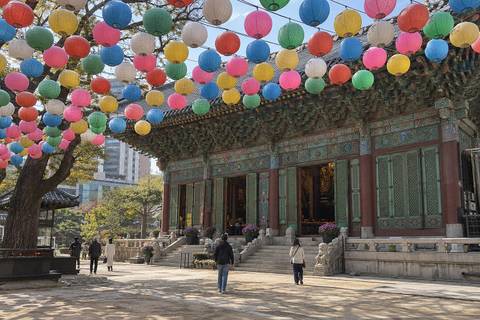
Jogyesa Temple
The head temple of Korea's largest Buddhist order, right in the city center and decked with thousands of lanterns before Buddha's Birthday.
Frequently asked questions
Is Ikseon-dong free to visit?
Yes. Ikseon-dong is a public neighbourhood of lanes with no ticket, gate or entry fee. You only pay for what you eat, drink or buy in the cafes, restaurants and shops, and each business sets its own hours.
Which subway exit is closest to Ikseon-dong?
Jongno 3-ga Station Exit 4 on Lines 1, 3 and 5 is the closest, about 120 m from the lanes. Exit 6 of the same station leads to the southern end of the hanok street.
Should I visit Ikseon-dong or Bukchon Hanok Village?
Go to Bukchon for hillside lanes of large residential hanok and palace views, and to Ikseon-dong to sit down in a hanok cafe or restaurant. Bukchon is a lived-in area with a visiting-hours zone; Ikseon-dong's lanes are almost entirely shops. Both fit in one day.
What is the best time to visit Ikseon-dong?
Weekday afternoons are the calmest. Weekend afternoons and evenings are the busiest, with queues outside popular cafes. The lit-up lanes look best after dark, and in the evening the streets at the edges of the area fill with red street-food tents.
Can I stay overnight in Ikseon-dong?
Yes, there are hanok guesthouses in and around Ikseon-dong. Book one that appears on Seoul's official Seoul Stay list, and expect evening noise from the cafe lanes. The hanok stays guide explains how to check a listing.
Sources
Facts on this page were checked against these sources on 17 October 2026. Prices, hours and rules change — confirm with the operator before you go.
- Visit Seoul (Seoul Tourism Organization) – Ikseon-dong Hanok Village (edited 8 Oct 2026) · official
- Visit Seoul (Korean) – 익선동 한옥거리 (수정 2026.10.07) (Korean) · official
- VISITKOREA (Korea Tourism Organization) – Ikseon-dong Hanok Street · official
- Visit Seoul – Ikseon-dong: Where Tradition Meets Trend in the Heart of Seoul · official
- Seoul Media Hub – 익선동 골목길: Jeong Se-gwon and the 1920s urban hanok (Korean) · official
- Seoul Hanok Portal – 익선 지구단위계획구역 및 계획 결정(안) (Korean) · official
- Bizhankook – Seoul to release Ikseon-dong from redevelopment and designate a hanok district (10 Jan 2018) (Korean)