Seoul · Palace Quarter (Jongno)
Jogyesa Temple 조계사
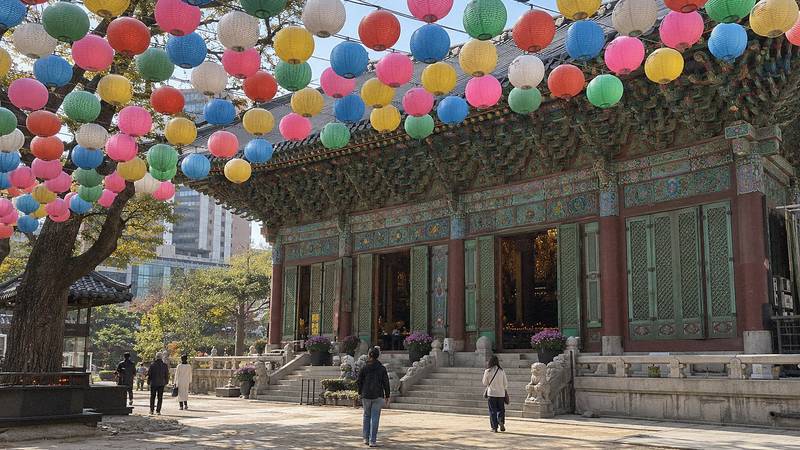
The head temple of Korea's largest Buddhist order, right in the city center and decked with thousands of lanterns before Buddha's Birthday.
Updated
Essentials
- Hours
- Temple grounds open 24 hours, every day
- Dawn service 04:00–05:50; morning service 10:00 (about an hour); evening prayer from 18:00
- Sunday Dharma service: 10:00
- Getting there
- Subway Line 3, Anguk Station, Exit 6 (about 5 minutes on foot)
- Subway Line 1, Jonggak Station, Exit 2 (about 5 minutes on foot)
- Subway Line 5, Gwanghwamun Station, Exit 2 (about 300 m)
- Bus: Jogyesa stop on Ujeongguk-ro
- Address
- 55 Ujeongguk-ro, Jongno-gu, Seoul 03144
서울 종로구 우정국로 55 - Website
- jogyesa.kr/eng/index.php
Book your trip
Jogyesa is open around the clock and you can walk in at any hour. It is about five minutes from Anguk Station (Exit 6) or Jonggak Station (Exit 2), between Insadong and Gyeongbokgung. Allow 20–30 minutes. Come in spring for the lantern canopy, or in October and November for the chrysanthemums.
Jogyesa is the head temple of the Jogye Order, the order that represents Korean Buddhism with around 3,000 temples nationwide, and the only traditional temple inside the old city centre of Seoul. Unlike the mountain monasteries on our temples page, it is a busy working temple in the middle of office streets. Worshippers come and go all day, chanting carries out of the main hall, and the courtyard is hung with lanterns or flowers for much of the year. It is an easy stop on a day around the palace quarter.
When to go
The season decides what the courtyard looks like, and the time of day decides what you hear.
| When | What you see | Notes |
|---|---|---|
| March–June | Paper lanterns hung over the courtyard | Busiest around Buddha’s Birthday (13 May in 2027) |
| July–August | Lotus festival, lotus flowers around the halls | Hot; go early or after dark |
| October–November | Chrysanthemum festival, the courtyard filled with chrysanthemums | The 2026 festival opened on 13 October |
| Any evening | Evening prayer from 18:00, with the four instruments | Grounds stay open all night |
Seasons from Jogyesa’s events pages and the 2026 chrysanthemum festival notice; 2027 holiday date from the official KASI calendar. Checked 18 October 2026.
Buddha’s Birthday falls on the eighth day of the fourth lunar month, so the date moves each year. In 2027 it is Thursday 13 May, a public holiday in Korea.
Opening hours and service times
The temple grounds never close, and there is no ticket office. The main hall is open to everyone, Buddhist or not, but services are worship, not performances. Daily times from the official schedule:
| Service | Time |
|---|---|
| Dawn service (with the four instruments) | 04:00–05:50 |
| Morning service (weekdays) | 10:00–11:10 |
| Afternoon prayer | 14:00–15:30 |
| Evening prayer (with the four instruments) | 18:00–19:30 on the 1st–21st of the month, 18:00–19:00 from the 22nd |
| Sunday Dharma service | 10:00 |
From Jogyesa’s 사찰일정 page and English events page, checked 18 October 2026. The temple notes that times can change for special services. The four instruments are the dharma drum, the wooden fish, the cloud-shaped gong and the big bell. They are struck at the dawn service and at evening prayer, and are the most striking thing you can hear here. Extra services are held on set days of the lunar month, so the hall can be fuller than usual on some mornings.
What you see
- Iljumun – the one-pillar gate, the formal entrance to the temple.
- Daeungjeon – the main hall, rebuilt here in 1938 from a hall moved from Jeongeup in the southwest. Services take place here; step in quietly through a side door.
- The old trees – a pagoda tree in front of the main hall and a white-barked lacebark pine (baeksong), both centuries old according to the temple.
- Ten-storey stupa – an octagonal stone pagoda holding relics of the Buddha.
- Geungnakjeon and Gwaneumjeon – smaller halls for the Amitabha Buddha and the Bodhisattva of Compassion.
- Central Buddhist Museum – in the Korean Buddhist History and Culture Center inside the temple complex, along with the order’s headquarters.
Getting there
Take Line 3 to Anguk Station and use Exit 6, or Line 1 to Jonggak Station and use Exit 2. Both are about five minutes’ walk. From Line 5, Gwanghwamun Station Exit 2 is about 300 m. Several buses stop at the Jogyesa stop on Ujeongguk-ro. A T-money card pays the fare; see the Seoul subway guide for how to ride. Parking is tight and costs ₩1,000 per 10 minutes, so come by subway. The address for taxis is 서울 종로구 우정국로 55.
Tips for visiting
- Pair it with Insadong. Insadong is a short walk east, and the hanok lanes of Ikseon-dong and Bukchon are also within walking distance.
- Use the side doors. Enter the main hall by the left or right door, take your shoes off at the step, and don’t walk in front of people who are bowing. See Korean etiquette for temple manners.
- Ask before photographing people. Photograph the halls and lanterns freely from outside, but not worshippers at prayer.
- Come back after dark. The grounds stay open at night, and the lanterns are lit in spring.
- Want to stay longer? Jogyesa runs an English templestay: a short day program from ₩10,000 or one night from ₩80,000. See the templestay guide for booking and refunds.
History in brief
Monks founded the temple in 1910, under Japanese rule, as Gakhwangsa. It was the first temple inside the four main gates of old Seoul and a centre for an independent Korean Buddhism. Work to move it to the present site began in 1937. The main hall was built from Sipiljeon, the main hall of the Bocheongyo religious movement in Jeongeup, and dedicated on 25 October 1938, when the temple took the name Taegosa. It became Jogyesa in 1954, after the Buddhist purification movement, and remains the head temple of the Jogye Order.
Nearby
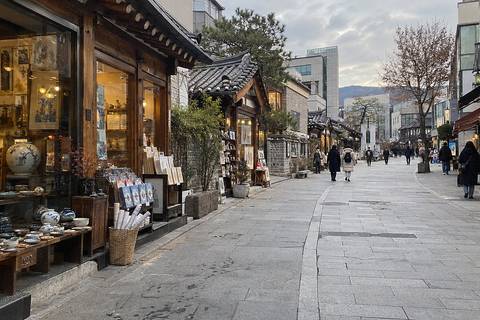
Insadong
A pedestrian-friendly street of craft and antique shops, tea houses and galleries, good for souvenirs such as hanji paper and ceramics.
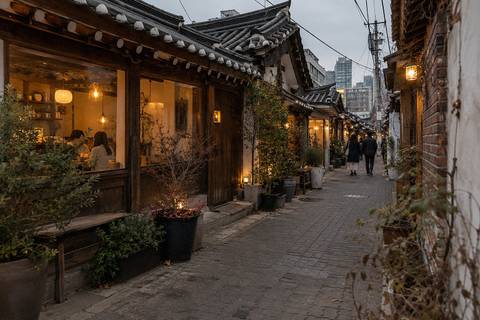
Ikseon-dong
A tight cluster of 1920s urban hanok turned into cafes, bakeries and small restaurants, busiest on weekend evenings.
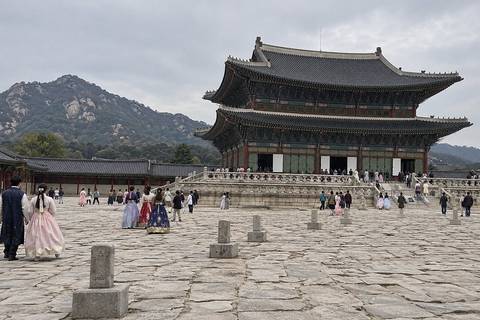
Gyeongbokgung Palace
The largest and grandest of Seoul's five Joseon palaces, with the throne hall, a lotus-pond pavilion and the changing of the guard.
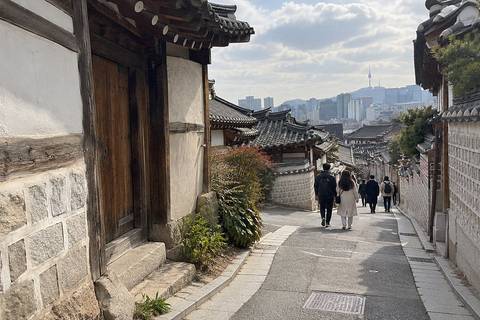
Bukchon Hanok Village
Hillside lanes of traditional tiled-roof houses between two palaces; a lived-in residential area with visiting hours in the busiest part.
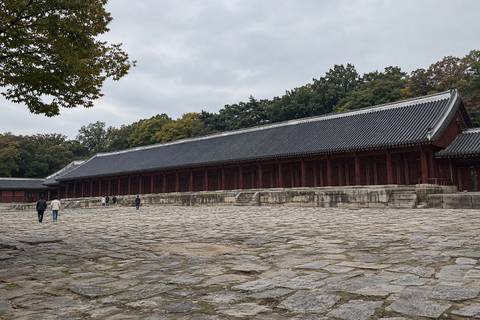
Jongmyo Shrine
The austere royal ancestral shrine of the Joseon kings, a UNESCO site whose long main hall is one of Korea's finest wooden buildings.
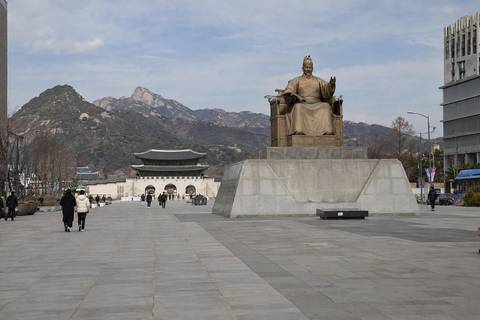
Gwanghwamun Square
The broad plaza in front of Gyeongbokgung's main gate, with statues of King Sejong and Admiral Yi Sun-sin and the mountains beyond.
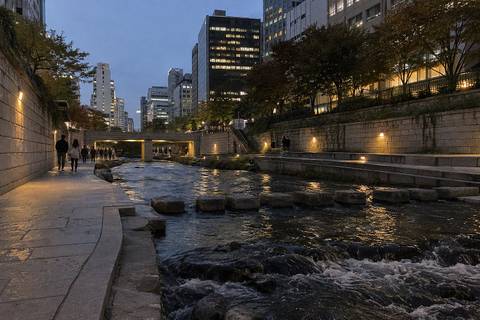
Cheonggyecheon Stream
A restored urban stream with walking paths below street level, running east from Gwanghwamun; pleasant on summer evenings.
Frequently asked questions
What are Jogyesa's opening hours?
The temple grounds are open 24 hours a day, every day, so you can visit at any time. The dawn service runs 04:00–05:50, the weekday morning service starts at 10:00 and evening prayer starts at 18:00. The Sunday Dharma service is at 10:00.
When are the lanterns up at Jogyesa?
Lanterns hang over the courtyard from about March to June, in the run-up to Buddha's Birthday on the eighth day of the fourth lunar month. In 2027 Buddha's Birthday is Thursday 13 May, a public holiday.
How do I get to Jogyesa by subway?
Take Line 3 to Anguk Station, Exit 6, or Line 1 to Jonggak Station, Exit 2. Each is about a five-minute walk. From Line 5, Gwanghwamun Station Exit 2 is about 300 m away.
Can I do a templestay at Jogyesa?
Yes. Jogyesa runs templestay programs in English: a short day program from 10,000 won and a one-night stay from 80,000 won, booked on the official Templestay site. One-night bookings close three days ahead.
Sources
Facts on this page were checked against these sources on 18 October 2026. Prices, hours and rules change — confirm with the operator before you go.
- Jogyesa – History and features (English) · official
- Jogyesa – Access (English) · official
- Jogyesa – Map of the temple (English) · official
- Jogyesa – Events and monthly services (English) · official
- Jogyesa – History, 24-hour opening (조계사 역사) (Korean) · official
- Jogyesa – Directions, station exits and parking (오시는 길) (Korean) · official
- Jogyesa – Daily service times (사찰일정) (Korean) · official
- Jogyesa – Annual events (주요행사) (Korean) · official
- Jogyesa – 16th Chrysanthemum Festival, October–November 2026 (notice, 28 Sep 2026) (Korean) · official
- Korea Astronomy and Space Science Institute – 2027 calendar data, public holidays (2027년 월력요항) (Korean) · official
- Templestay – Jogyesa: Always Templestay (Daily) · official
- Templestay – Jogyesa: Regular Templestay program (1 night 2 days) · official
- OpenStreetMap – Jogyesa (coordinates)