Sokcho 속초
Sokcho is the base for Seoraksan National Park, so give it one night: express buses from Seoul take about 2 h 20 min, and city buses 7 and 7-1 run to the park entrance. Ride the Seorak cable car (₩16,000 return) or hike to Ulsanbawi, then eat at the fish market and cross to Abai Village on the ₩500 hand-pulled ferry.
Updated
Is Sokcho worth it?
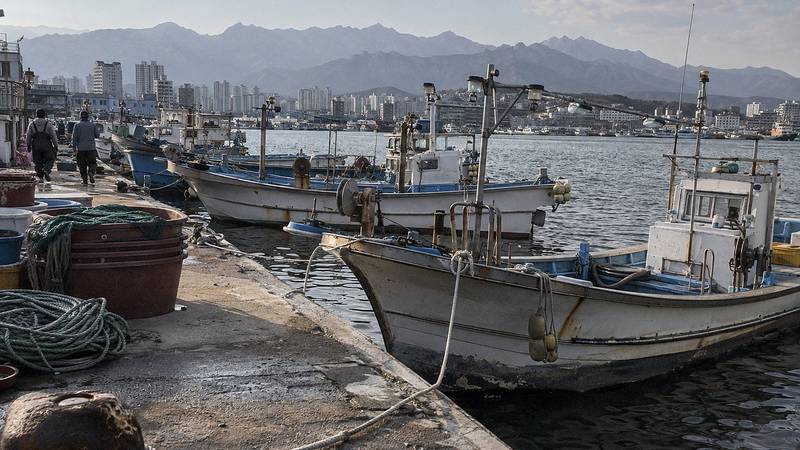
Sokcho is a fishing port on the East Sea at the foot of Seoraksan, and the place to stay if you want to see Korea’s most famous mountain park. The town itself is small and easy: a big food market, a refugee village reached by a hand-pulled ferry, sea rocks and a beach. Most first-time visitors spend one or two nights here, on a trip from Seoul or as part of an east-coast loop.
| Your situation | Do this |
|---|---|
| One night, first time | Stay downtown; cable car or Biseondae in the afternoon, the market and Abai Village in the evening |
| Want a real hike | Two nights; start early at Sogongwon for Ulsanbawi (3.8 km each way) |
| Not a hiker, or short on time | The Seorak cable car (₩16,000 return), plus the flat walk to Sinheungsa |
| Only a day from Seoul | Possible, but long: first bus out, cable car or one easy trail, last bus back |
| Here in October | Go on a weekday; the colour peaks in mid-October and roads and the cable car are busiest then |
| Here for food | The market’s chicken alley, Abai sundae, raw fish at Daepo Port |
Facts checked 24 October 2026. If you are choosing between Sokcho and Gangneung, Gangneung has the KTX and more to see in town; Sokcho is closer to Seoraksan and is reached by bus. With two nights on the coast, you can see both. See the Gangwon region guide for the rest of the province.
Seoraksan from Seorak-dong
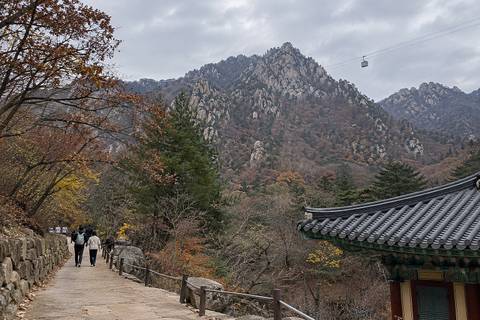
Seoraksan became Korea’s fifth national park in 1970 and a UNESCO biosphere reserve in 1982. Its highest peak, Daecheongbong, is 1,708 m, but you do not need to climb it to see the granite scenery. The Sogongwon entrance at Seorak-dong, the end of city buses 7 and 7-1, is the start of the cable car and all the easy and moderate trails. Like all Korean national parks, there is no park admission fee.
Just inside the entrance is Sinheungsa, a temple on the path to Ulsanbawi and Biseondae. From there, choose by time and fitness:
| From Sogongwon | One way | Time (KNPS) | Level |
|---|---|---|---|
| Seorak cable car to Gwongeumseong | 1,128 m | About 5 min | Easy, short walk at the top |
| Biryong Falls and Towangseong Falls viewpoint | 2.8 km | 1 h 30 min | Easy, steep at the end |
| Biseondae | 3.0 km | 1 h 20 min | Easy |
| Geumganggul cave (via Biseondae) | 3.6 km | 2 h | Easy to Biseondae, then steep |
| Ulsanbawi | 3.8 km | About 4 h there and back | Moderate, long stairs |
From the Korea National Park Service and the cable car operator, checked 24 October 2026. The cable car costs ₩16,000 return for adults and ₩12,000 for children, with no one-way tickets. Tickets are only sold on the day at the lower station, and the operator posts each day’s hours on its website because they change with the season and the weather. It stops in strong wind.
The trails from Sogongwon close from sunset to two hours before sunrise, and the path beyond Biseondae to Geumganggul opens 03:00–14:00 from April to October and 04:00–14:00 from November to March. Daecheongbong is a long, hard day from any side; the shortest route starts at Osaek, on the Yangyang side of the park; see national parks for entry hours and hiking in Korea for gear. The Osaek cable car, under construction on that side, had not opened by October 2026.
Autumn: the Korea Meteorological Administration recorded the first autumn colour at Seoraksan on 28 September 2026, its long-term average, and the average peak is 17 October. See autumn leaves, including the booking-only Heullimgol valley trail. Korean parks close high trails for fire prevention in late autumn: in 2025 Seoraksan closed its ridge routes from 15 November to 15 December while the lowland trails from Sogongwon stayed open. The 2026 dates had not been announced on 24 October.
The town: market, Abai Village and the sea
The Sokcho Tourist & Fishery Market is the heart of the centre, a covered market of alleys for seafood, sundae and fried chicken. Entry is free and it is open daily, though each stall keeps its own hours; the basement raw-fish centre closes on the second Wednesday of the month.
A few minutes’ walk away, the gaetbae is a flat ferry pulled by hand along a cable across the harbour channel to Abai Village. The village was settled by refugees from Hamgyeong Province during the Korean War; its name comes from the Hamgyeong word for an old man. It was also a filming site for the drama Autumn in My Heart.
| Sight | Adult fee | Hours |
|---|---|---|
| Gaetbae ferry to Abai Village | ₩500 each way | 05:00–23:00 May–Oct, 05:30–22:30 Nov–Apr; stops in bad weather |
| Sokcho Lighthouse Observatory | Free | 09:00–17:00, every day |
| Yeonggeumjeong, Cheongchoho and Yeongnangho paths | Free | Open at all times |
| Sokcho Museum and Displaced People Culture Village | ₩2,000 | 09:00–18:00 Mar–Oct, 09:00–17:00 Nov–Feb, last ticket 1 h before; closed Mon and 1 Jan |
From Sokcho City’s tourism and museum pages, checked 24 October 2026. Children pay ₩300 on the ferry. The museum is free on the last Wednesday of the month.
North of the market, Yeonggeumjeong is a pavilion on a footbridge over dark sea rocks, a popular sunrise spot, with the lighthouse observatory on the hill just above. Cheongchoho, the lagoon behind the harbour, has a 5 km path around it. Yeongnangho, further north, has a 7.8 km path; the floating bridge across it is due to be removed after a court ruling, with removal funds approved in August 2026.
To the south, Sokcho Beach has 940 m of sand and the Sokcho Eye Ferris wheel; its 2026 swimming season ran from 3 July to 23 August. Daepo Port beyond it is a small harbour of raw-fish restaurants. The Oeongchi Badahyanggi-ro coastal boardwalk between them has been closed since December 2025 for safety repairs, with no reopening date announced.
Eating in Sokcho
Start at the market: dakgangjeong, fried chicken in a sweet, sticky glaze, is sold by the box in the chicken alley and travels well on the bus home. In Abai Village, try Abai sundae, a large Hamgyeong-style stuffed sausage, in one of the restaurants by the ferry landing.
For raw fish, pick from the tanks at Daepo Port or in the market’s basement and have it sliced; a spicy stew made from what is left usually follows. For dishes across the country, see the Korean food guide.
When to go
October is the most popular month, for Seoraksan’s autumn colour, and also the most crowded: express buses fill up and weekend traffic on the roads into Seorak-dong is heavy. Spring brings fresh green to the mountains. July and August are beach season, when the town is busiest with Korean families. Winter is cold, with snow on the peaks; trail entry hours are shorter from November to March, and high routes can close for snow or fire prevention.
Getting there and around
Sokcho has no railway yet, so take an express bus: about 2 h 20 min from Seoul Express Bus Terminal or 2 h 30 min from Dong Seoul. Book the return in advance for Sundays and October weekends. Coming from the south, ride the KTX-Eum to Gangneung and take an intercity bus north along the coast.
In town, city buses 7 and 7-1 run to the Seoraksan entrance for ₩1,700. Tourist information centres at the express bus terminal, the intercity bus terminal, the fish market and the Haemaji park are open 09:00–18:00 (closed 12:00–13:00), with brochures in English. The 1330 Korea Travel Hotline also answers in English. For the wider region, see the Gangwon guide and transportation in Korea.
Book your trip
Top attractions in Sokcho
Seorak-dong and Seoraksan
The Seorak-dong park entrance (Sogongwon) west of town, with the cable car, Sinheungsa and the lowland trails, plus the resorts, hot springs and the city museum on the road in. Stay here for an early start on the trails.
Seoraksan National Park
Granite peaks topped by Daecheongbong (1,708 m), a UNESCO biosphere reserve since 1982; easy trails start at Seorak-dong.
Seorak Cable Car
A 1,128 m, 5-minute ride from Sogongwon up to the cliffs below Gwongeumseong; ₩16,000 return, tickets on the day only.
Ulsanbawi Rock
Granite pinnacles at the end of a 3.8 km trail from Sogongwon, the last part on long stairs; allow about 4 hours there and back.
Biseondae and Geumganggul
An easy 3 km valley walk from Sogongwon to the smooth rock pools of Biseondae, with a steep 0.6 km climb on to the Geumganggul cave.
Biryong Falls and Towangseong Falls viewpoint
An easy 2.4 km trail past Yukdam Falls to Biryong Falls, then up to a viewpoint for Towangseong Falls on the far cliff.
Sinheungsa Temple
The temple just inside the Sogongwon entrance, on the way to Ulsanbawi and Biseondae; a flat walk for anyone not hiking.
Sokcho Museum and Displaced People Culture Village
The city museum and a village of rebuilt houses on the refugees from the North who settled Sokcho; ₩2,000, closed Mondays.
Seorak Waterpia and Cheoksan hot springs
A Hanwha water park using natural hot-spring water, and the older Cheoksan hot-spring area on the road to Seorak-dong; good after a hike.
Downtown, the port and the lakes
The town centre between two lagoons: the Tourist & Fishery Market, Abai Village and its ferry, the Yeonggeumjeong rocks and lighthouse, and the paths around Cheongchoho and Yeongnangho. The intercity bus terminal is here.
Sokcho Tourist & Fishery Market
The central market, with alleys for seafood, sundae and dakgangjeong fried chicken; the raw-fish basement closes every 2nd Wednesday.
Abai Village and the gaetbae ferry
A village settled by Korean War refugees from Hamgyeong, reached by a hand-pulled ferry (₩500); a filming site of Autumn in My Heart.
Yeonggeumjeong and Sokcho Lighthouse Observatory
Sea rocks with a pavilion on a footbridge, named for waves said to sound like a geomungo zither, and a free lighthouse viewpoint above.
Cheongchoho Lake and Expo Tower
The lagoon behind the harbour, with a 5 km path around it and the Expo Tower viewpoint on its south shore; Abai Village sits at its mouth.
Yeongnangho Lake
A quieter lagoon north of the centre with a 7.8 km path around it, good for a walk or a bike ride.
Sokcho Beach and Daepo
The town beach with its Ferris wheel and beach hotels, and Daepo Port to the south with its raw-fish restaurants; a short bus or taxi ride from the centre.
Sokcho Beach
A 940 m town beach with the Sokcho Eye Ferris wheel at its north end; lifeguards and facilities from early July to late August.
Daepo Port
A small fishing port south of the beach, lined with raw-fish restaurants.
Sokcho by interest
Getting to Sokcho
| From | How | Time | Notes |
|---|---|---|---|
| Seoul Express Bus Terminal | Express bus to Sokcho | about 2 h 20 min | ₩18,700 regular, ₩24,300 deluxe (Kobus, October 2026). Arrives at Sokcho Express Bus Terminal. Traffic on Friday evenings, weekends and in peak foliage season can add a lot; see long-distance buses. |
| Dong Seoul Bus Terminal | Express bus to Sokcho | about 2 h 30 min | ₩17,500 regular, ₩22,800 deluxe (Kobus, October 2026). Dong Seoul is at Gangbyeon station on subway Line 2. |
Sokcho has no railway station. Two lines to the town are under construction: from Chuncheon, and along the coast from Gangneung, both with project periods running to 2029. Until then, the bus is the way in. Kobus express buses (from Seoul Express Bus Terminal, Dong Seoul, Incheon and Gwangmyeong) arrive at Sokcho Express Bus Terminal on Donghae-daero; intercity buses, including those along the coast from Gangneung, use the Intercity Bus Terminal at 16 Jangan-ro in Dongmyeong-dong. If you are coming by KTX, ride to Gangneung and change to an intercity bus there.
Getting around
City buses 7 and 7-1 run from Jangsa-dong in the north of town through the centre to the Seoraksan terminus at Sogongwon; 7 goes via Yeongnang-dong and 7-1 via the medical centre. The adult fare is ₩1,700, with one free transfer to another city bus within 90 minutes if you tap out when you leave (not for routes 1, 1-1, 9 and 9-1, or the same route). Check live times in Naver Map or KakaoMap. Within the centre, the market, Abai Village and Yeonggeumjeong are close enough to walk; taxis are the quick way to the beach and Daepo. See T-money.
Long-distance trains: see KORAIL PASS and transportation in Korea.
Itineraries
Sokcho in one night
Arrive by bus around midday and go straight to Seorak-dong for the cable car, or the easy valley walk to Biseondae. Back in town, eat at the Tourist & Fishery Market, then cross to Abai Village on the gaetbae. Next morning, walk to Yeonggeumjeong and the lighthouse viewpoint for the sunrise before the bus back.
Two nights with a proper hike
Add a full day in the park: start early at Sogongwon for Ulsanbawi (about 4 hours there and back), or combine Biseondae and Biryong Falls, then soak at Seorak Waterpia or Cheoksan. Spend the evening at Sokcho Beach or Daepo Port.
The east coast by bus
Pair Sokcho with Gangneung for a coast trip: take the KTX-Eum from Seoul to Gangneung for one night, then an intercity bus north to Sokcho, and return to Seoul by express bus.
Where to stay in Sokcho
Downtown and the market
Hotels and motels near the Tourist & Fishery Market, Abai Village and the intercity terminal, with buses 7 and 7-1 to the park.
Best for: First-timers, food, short stays
See hotels in Downtown and the marketSokcho Beach
Newer beachfront hotels and residence hotels by the Ferris wheel, a short taxi ride from the market and Daepo Port.
Best for: Sea views, couples, families
See hotels in Sokcho BeachSeorak-dong
Resorts, condos and older hotels on the road to the park entrance, close to the trails, Waterpia and Cheoksan, but quiet at night.
Best for: Hikers, early starts, hot springs
See hotels in Seorak-dongDaepo and Oeongchi
Resort hotels and pensions on the coast south of Sokcho Beach, next to the Daepo Port fish restaurants.
Best for: Seafood, resort stays
See hotels in Daepo and Oeongchi
Some links on this page are affiliate links: if you book through them we may earn a commission at no extra cost to you. It never decides what we recommend. Affiliate disclosure.
Food and restaurants in Sokcho
Sokcho eats from the sea and from the North. Fishing boats land squid, crab and fish at the port, and the refugees from Hamgyeong who settled Abai Village during the Korean War brought their own dishes, such as stuffed sundae. The fried-chicken alley in the market made dakgangjeong a Sokcho souvenir.
What to eat
| Dakgangjeong 닭강정 | Crisp fried chicken in a sticky sweet, garlicky glaze, sold by the box in the market's chicken alley; it keeps well enough for the bus home. |
|---|---|
| Abai sundae 아바이순대 | A large Hamgyeong-style sundae (stuffed sausage), served sliced in the restaurants of Abai Village. |
| Raw fish 회 | Choose from the tanks at Daepo Port or the market's basement raw-fish centre and have it sliced; spicy fish stew from the leftovers usually follows. |
Where to eat
- Sokcho Tourist & Fishery Market — Chicken, sundae and seafood alleys in the town centre; individual shop hours vary. See markets in Korea.
- Abai Village — Sundae restaurants a short ferry ride across the harbour from the market.
- Daepo Port — Raw-fish restaurants around the harbour south of Sokcho Beach.
Experiences and tours in Sokcho
Seoraksan day tour from Seoul
A guided day trip with return transport, useful if you have only one day and want to avoid booking buses.
Check on KlookSeoraksan and Naksansa Temple tour
Day tours often add Naksansa, a seaside temple in neighbouring Yangyang, to the Seorak-dong trails.
Check on KlookSeoraksan autumn foliage tour
Seasonal tours in October, when buses and the cable car are busiest and a guide handles the logistics.
Check on KlookSeorak Waterpia tickets
Discounted entry to the hot-spring water park in Seorak-dong; check which pools are open in the low season.
Check on Klook
Some links on this page are affiliate links: if you book through them we may earn a commission at no extra cost to you. It never decides what we recommend. Affiliate disclosure.
Frequently asked questions
Is Sokcho worth visiting?
Yes, if you want Korea's best-known mountain scenery and an easy seafood town in one stop. Sokcho is the base for Seoraksan National Park, about 2 h 20 min from Seoul by express bus, with a fish market, Abai Village and a beach in town. One night covers the cable car or an easy trail; two nights let you hike Ulsanbawi.
Can you visit Seoraksan as a day trip from Seoul?
It is possible but long: the bus takes about 2 h 20 min each way, plus a city bus to the park, and traffic is heavy at weekends and in October. A day covers the cable car or one easy trail. For Ulsanbawi or a less rushed visit, stay a night in Sokcho or Seorak-dong.
Is there a train to Sokcho?
Not yet. Sokcho has no railway station; lines from Chuncheon and from Gangneung are under construction, with project periods running to 2029. Take an express bus from Seoul, or the KTX-Eum to Gangneung and an intercity bus north.
How much is the Seorak cable car?
₩16,000 return for adults and ₩12,000 for children, with no one-way tickets. Tickets are sold on the day at the station only, so arrive early in October. Hours change daily and the cable car stops in strong wind; the operator posts the day's hours on its website.
How do you get from Sokcho to Seoraksan?
Take city bus 7 or 7-1 to the last stop, Seoraksan (Sogongwon), for ₩1,700, or a taxi. The bus stops at the park entrance, where the cable car, Sinheungsa and the lowland trails to Ulsanbawi, Biseondae and Biryong Falls all start.
Sources
Facts on this page were checked against these sources on 24 October 2026. Prices, hours and rules change — confirm with the operator before you go.
- 국립공원공단 – 설악산국립공원 소개 (Korean) · official
- 국립공원공단 – 설악산 탐방로 (울산바위·비룡폭포·금강굴·비선대) (Korean) · official
- 국립공원공단 – 입산시간지정제 (설악산) (Korean) · official
- 기상청 보도자료 – 설악산 첫 단풍 (2026-09-28) (Korean) · official
- MTN – 오색케이블카 공사 지연 (2026-07-08) (Korean)
- 설악케이블카 – 이용안내 (요금·운행) (Korean) · official
- 속초시 – 시내버스 노선 및 요금 (Korean) · official
- 속초시 – 고속/시외버스 (터미널) (Korean) · official
- 국가철도공단 – 춘천~속초, 강릉~제진 철도건설 사업 현황 (Korean) · official
- 속초시 관광 – 갯배 (Korean) · official
- 속초시 관광 – 아바이마을 (Korean) · official
- 속초시 관광 – 속초관광수산시장 (Korean) · official
- 속초시 관광 – 영금정 (Korean) · official
- 속초시 관광 – 속초등대전망대 (Korean) · official
- 속초시 관광 – 청초호 (Korean) · official
- 속초시 관광 – 영랑호 (Korean) · official
- 속초시 관광 – 대포항 (Korean) · official
- 속초시 관광 – 2026 해수욕장 운영 안내 (Korean) · official
- 속초시립박물관 – 관람안내 (Korean) · official
- 속초시 관광 – 관광안내소 (Korean) · official
- 고속버스통합예매 (Kobus) – 서울·동서울 → 속초 요금·소요시간 (Korean) · official
- 경향신문 – 설악산 등 가을철 산불조심기간 탐방로 통제 (2025-11-06) (Korean)
- 경향신문 – 속초 외옹치 바다향기로 전면 통제 (2025-11-27) (Korean)
- YTN – 속초 영랑호 부교 철거 예산 통과 (2026-09-04) (Korean)