Region of South Korea
Chungcheong 충청
Korea's central heartland, with the Baekje kingdom's old capitals, quiet mountain temples and Yellow Sea beaches.
Updated
Chungcheong is the band of central South Korea between the capital region and the south. It covers two provinces, North Chungcheong (Chungcheongbuk-do), the country’s only landlocked province, and South Chungcheong (Chungcheongnam-do) on the Yellow Sea coast, together with two independent cities: Daejeon, a metropolitan city and research hub, and Sejong, the planned special self-governing city where many national ministries have moved. The region has a reputation inside Korea for being unhurried, and for foreign visitors it remains one of the least crowded parts of the country.
History is the strongest draw. Gongju and Buyeo were successive capitals of Baekje, one of the Three Kingdoms, from the late 5th century until its fall in 660. Their fortresses, royal tombs and temple sites now form most of the UNESCO-listed Baekje Historic Areas, which also include sites in Iksan in neighbouring Jeolla. Both towns are small and walkable, and their museums explain a kingdom that is often overshadowed by Silla and Gyeongju.
The mountains hold some of Korea’s most atmospheric temples. Magoksa near Gongju and Beopjusa in Songnisan National Park are both among the seven Sansa mountain monasteries inscribed by UNESCO in 2018; the temples guide explains what makes these sites distinctive. In the north-east of the region, Danyang offers limestone river scenery, caves and paragliding over the Namhangang River.
The west coast is flatter, with tidal flats, fishing harbours and sandy beaches. Daecheon Beach at Boryeong is the best known, especially in high summer, when the Boryeong Mud Festival takes over the seafront.
Spring and autumn are the most pleasant times to visit, with autumn especially good for temple grounds and the fortress walks. Getting in is straightforward: Daejeon is under an hour from Seoul by KTX, and Gongju has its own station on the Honam high-speed line, though local buses are the main way to reach Buyeo, which has no railway. The Korail Pass guide covers rail options for longer trips through the region.
Book your trip
Cities in Chungcheong
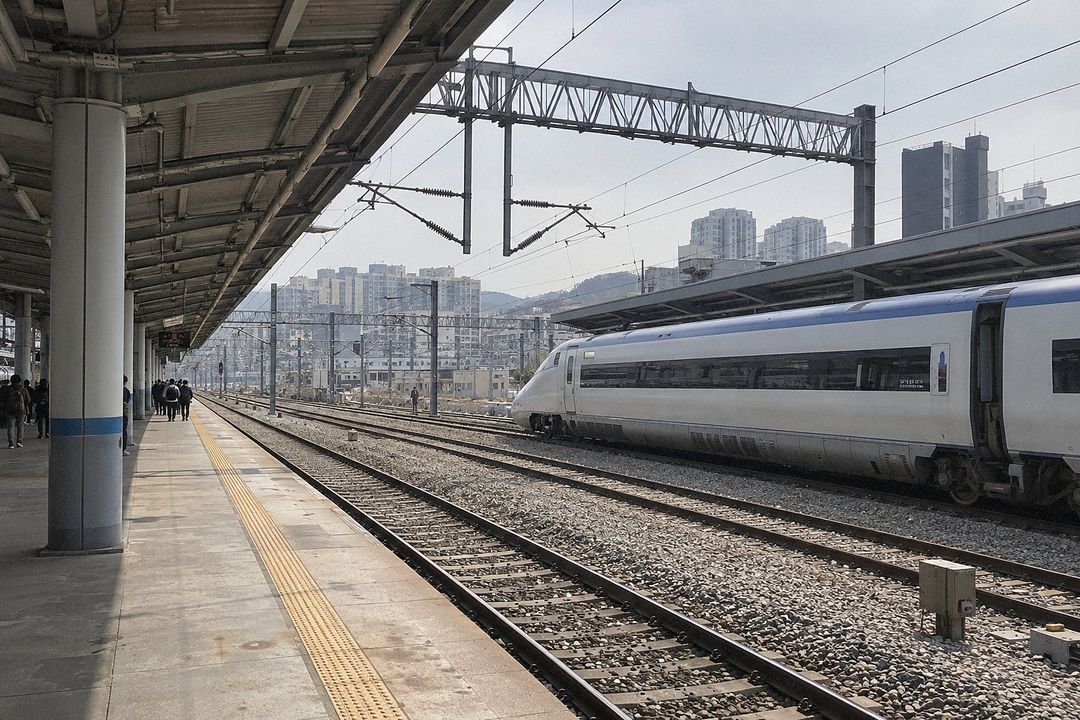
Daejeon
Science city and rail hub where the main KTX lines to Busan and the south-west divide.
Full guide coming soon
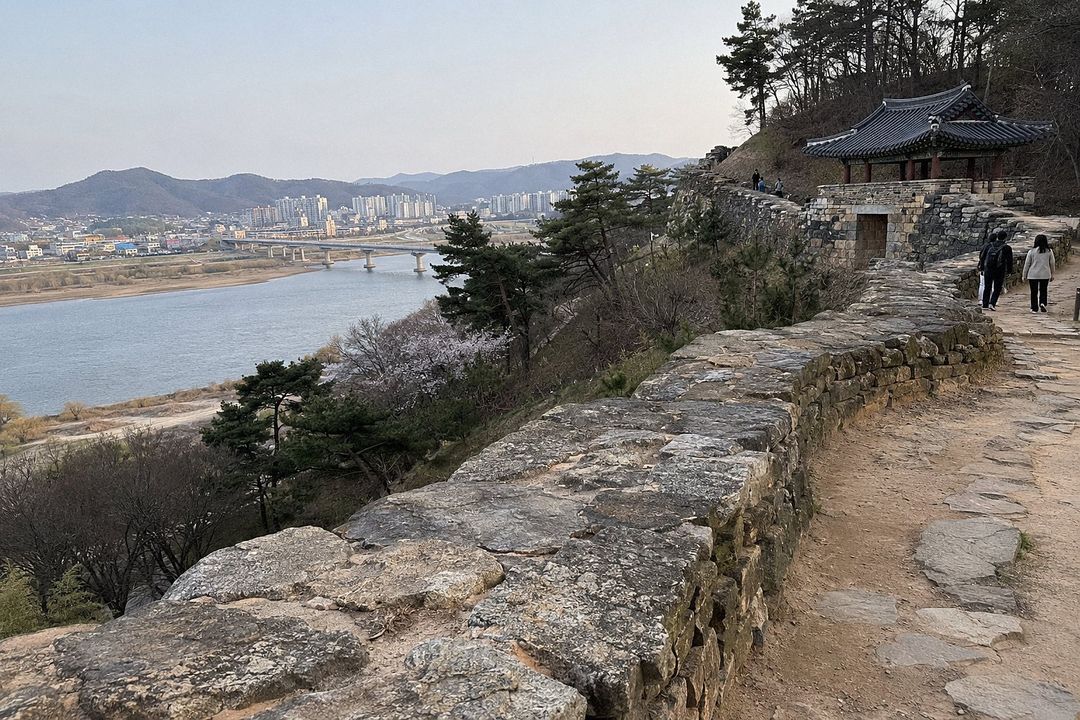
Gongju
Second Baekje capital, with a riverside fortress, royal tombs and the temple of Magoksa nearby.
Full guide coming soon
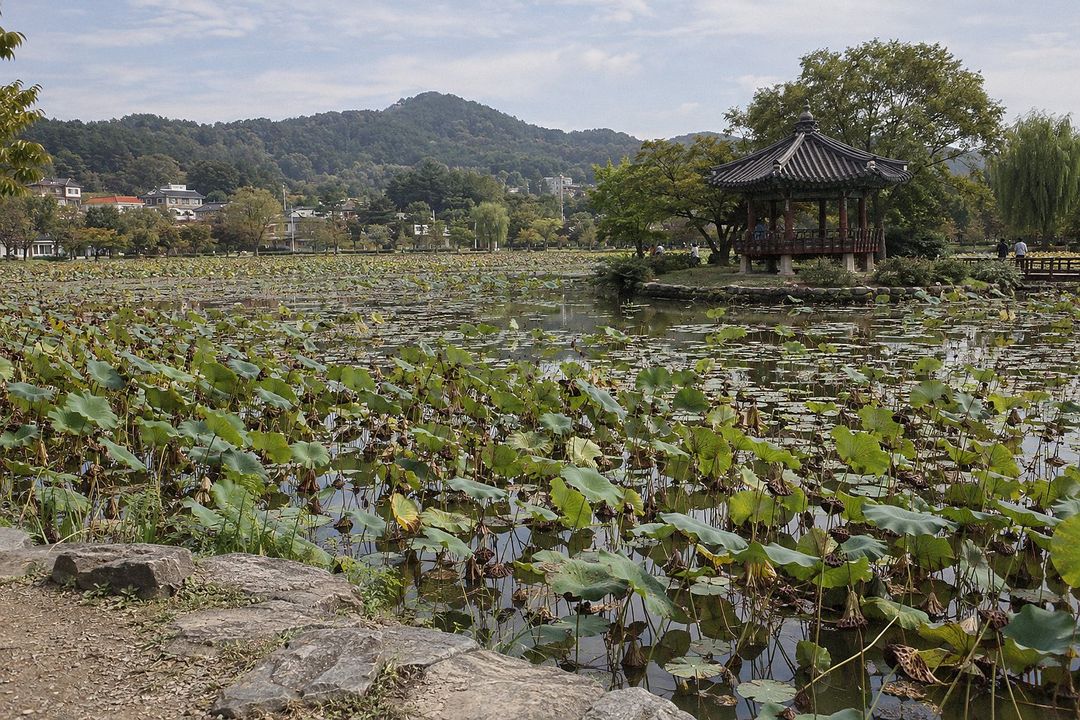
Buyeo
Last Baekje capital, a small town of fortress woods, pagodas and a lotus-pond park.
Full guide coming soon
Highlights of Chungcheong
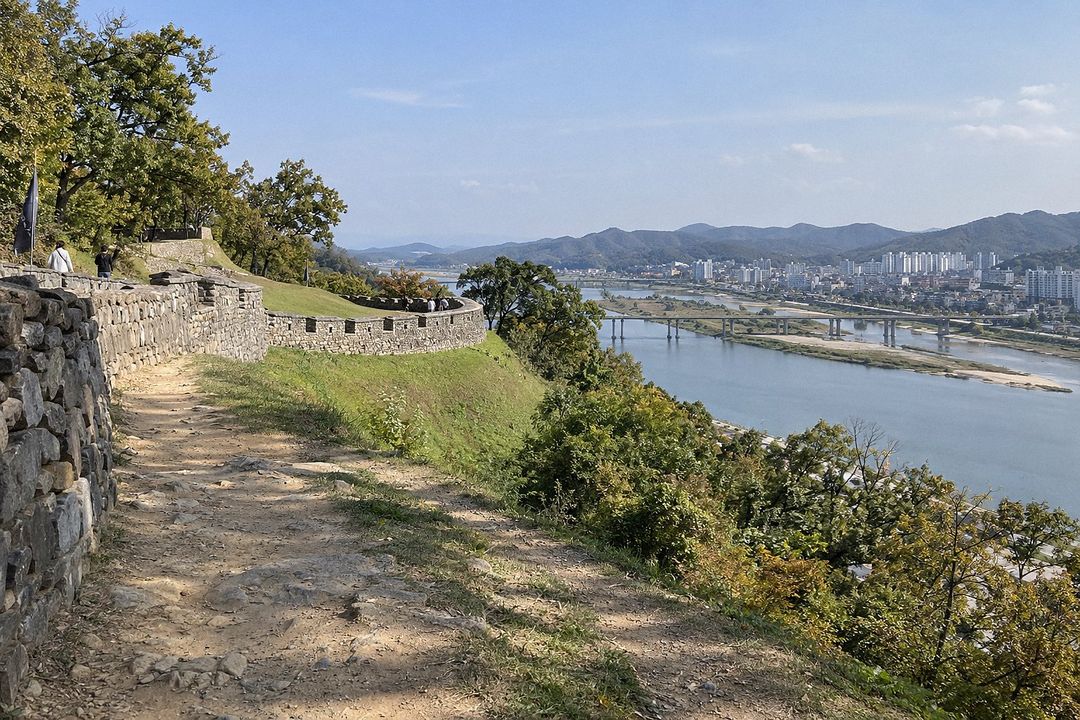
Gongsanseong Fortress
Baekje-era hilltop wall above the Geumgang River in Gongju, part of the UNESCO Baekje Historic Areas.
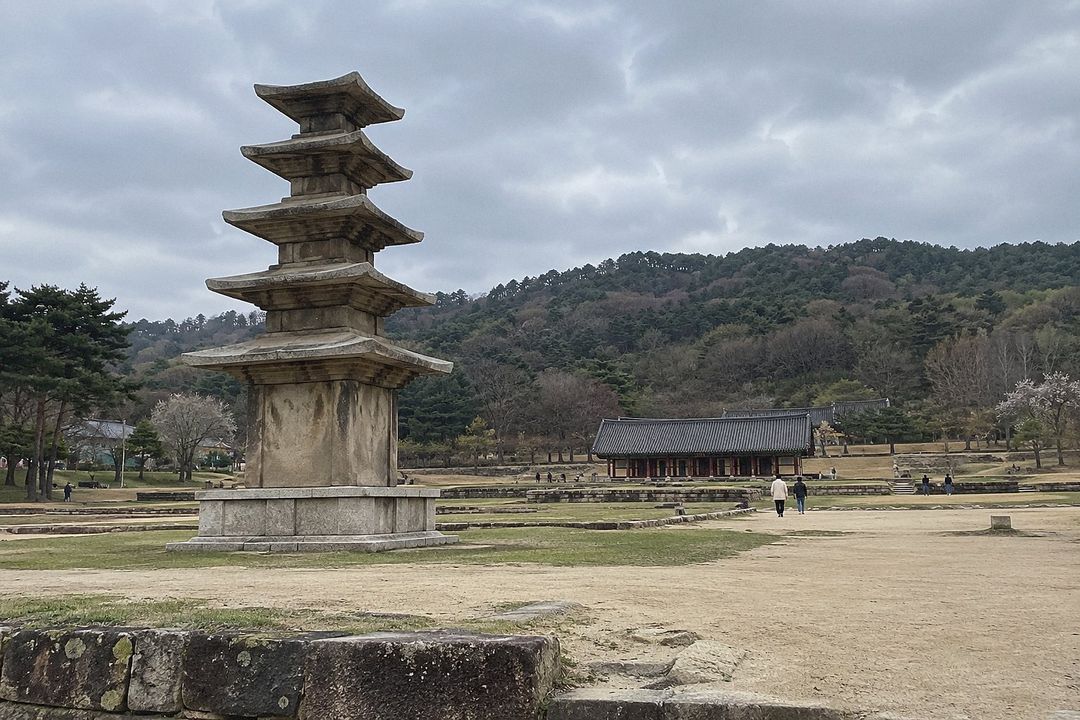
Busosanseong and Jeongnimsa site
Buyeo's wooded fortress hill and a lone five-storey stone pagoda from the Baekje period.
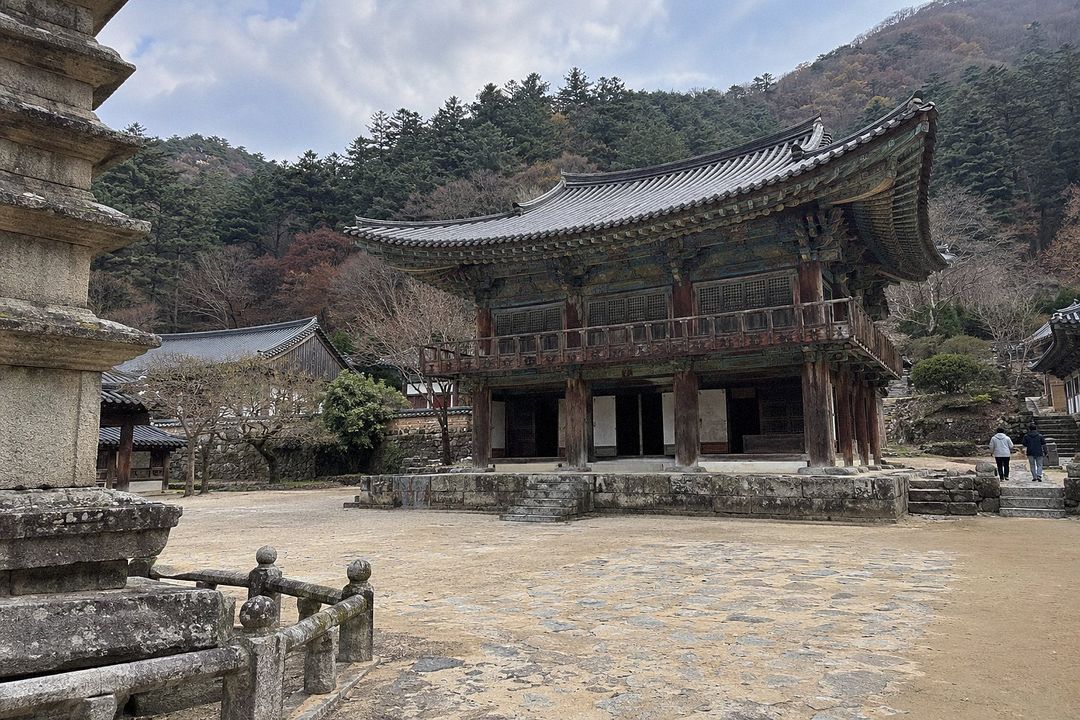
Magoksa
Valley temple outside Gongju, one of the seven UNESCO-listed Sansa mountain monasteries.
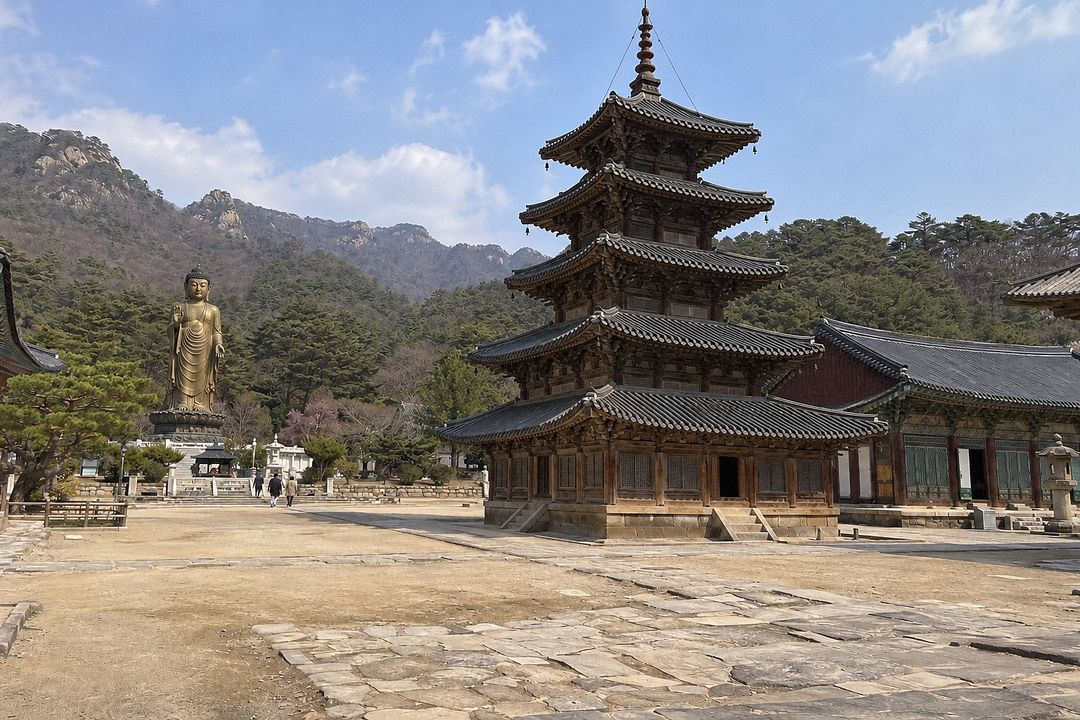
Beopjusa
Large Songnisan temple known for its giant bronze Buddha and Korea's only surviving wooden five-storey pagoda.
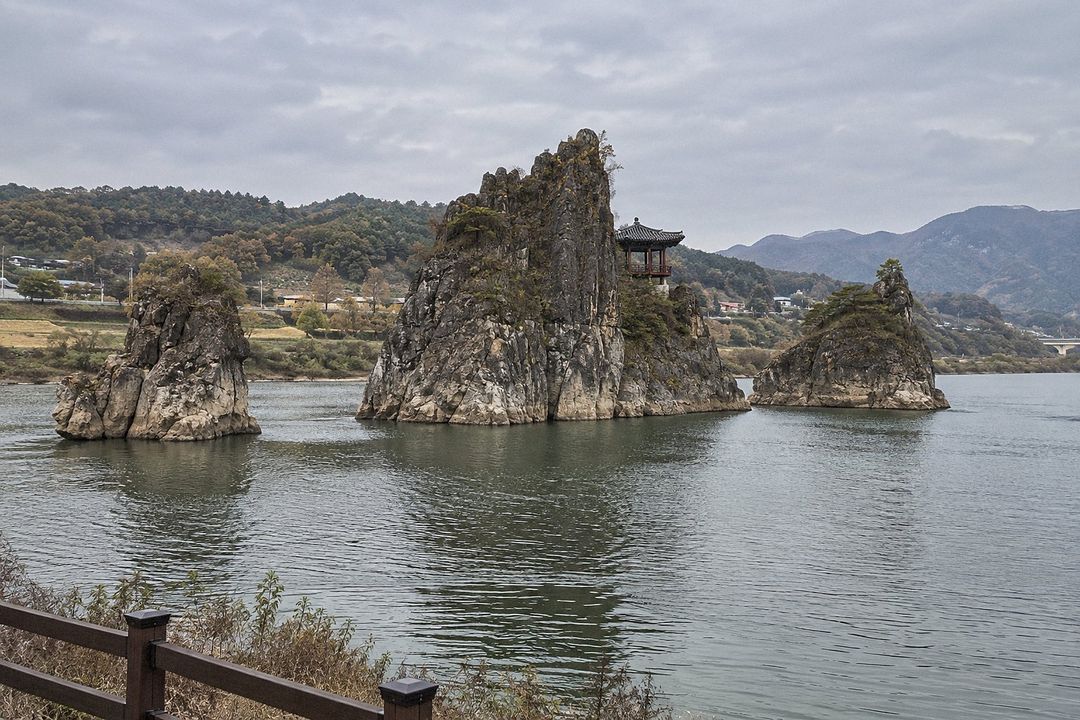
Dodamsambong
Three rocky peaks rising from the Namhangang River in Danyang, a classic Korean landscape view.
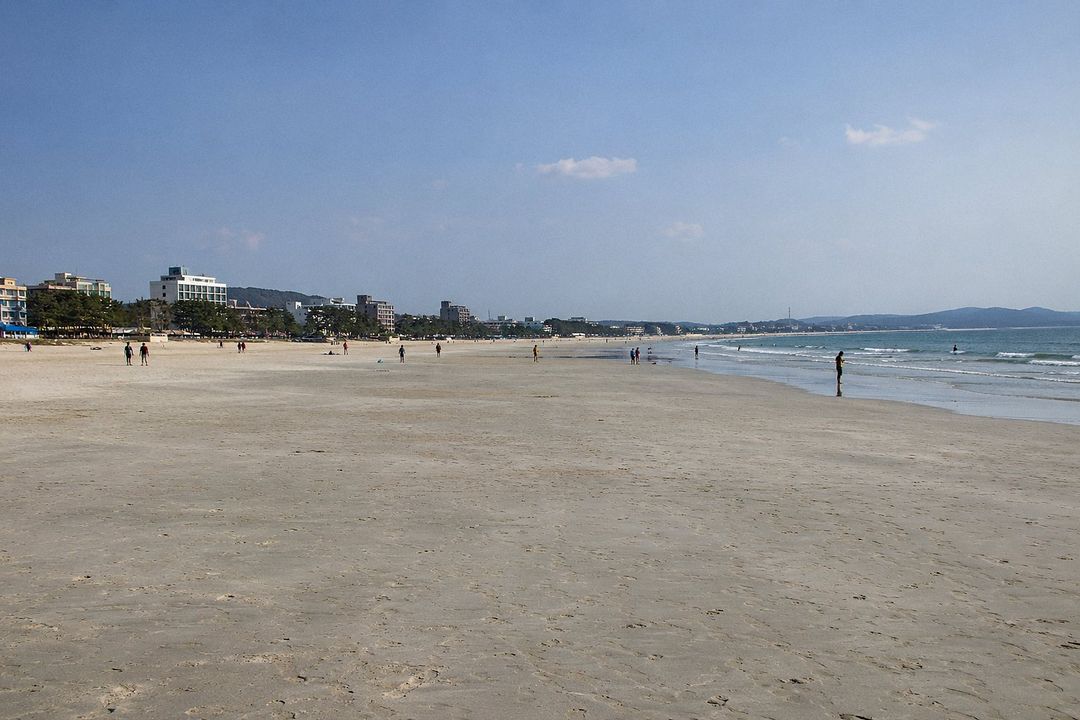
Daecheon Beach
Long west-coast beach at Boryeong, home of the summer Boryeong Mud Festival.
Getting there
| From → to | How | Time | Notes |
|---|---|---|---|
| Seoul Station → Daejeon | KTX | about 55 min – 1 h 10 min | Slower ITX and Mugunghwa trains take roughly 1 h 45 min – 2 h 20 min. |
| Yongsan (Seoul) → Gongju Station | KTX (Honam line) | about 1 h | Gongju KTX station stands in farmland well outside the town centre; continue by local bus or taxi. |
Times are typical fastest scheduled journeys. For rail passes see KORAIL PASS; for an overview see getting around Korea.
Sources
Facts on this page were checked against these sources on 2 October 2026. Prices, hours and rules change — confirm with the operator before you go.
- UNESCO World Heritage List: Baekje Historic Areas · official
- UNESCO World Heritage List: Sansa, Buddhist Mountain Monasteries in Korea · official
- 충남문화관광 (Chungcheongnam-do tourism) (Korean) · official
- 충북나드리 (Chungcheongbuk-do tourism) (Korean) · official
- 코레일 승차권 예매 (Korail ticketing and timetables) (Korean) · official
- 용산역 → 공주역 KTX 시간표 (timetable aggregator) (Korean)