Daejeon 대전
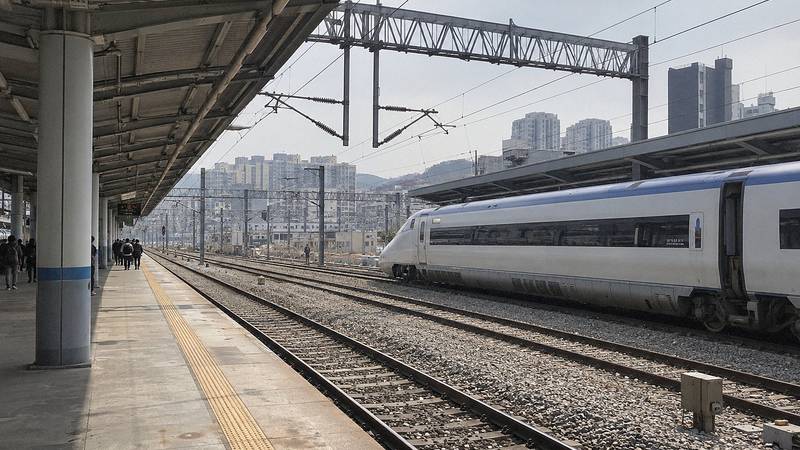
Daejeon is worth a 2–3 hour KTX stopover or one night: trains from Seoul Station take about an hour, and Sungsimdang bakery has a branch inside Daejeon Station. Most museums close on Mondays, and Jangtaesan forest's skyway is shut for repairs until 2027.
Updated
Is Daejeon worth a stop?
Daejeon, a city of about 1.44 million in the middle of the country, is where the KTX lines to Busan and to the south-west divide. It is a modern science and government city with no palace or famous temple, so few visitors spend long here. What it does well is the short stop: a famous bakery, a food street and a hot-spring footbath, all close to the subway.
| Your situation | Do this |
|---|---|
| On a KTX between Seoul and Busan, 2–3 hours spare | Get off at Daejeon Station, leave bags at the Travel Lounge, walk to Sungsimdang and the Jungang Market |
| One night, want to relax | Stay in a Yuseong spa hotel; the free footbath is 600 m from Yuseong Oncheon Station |
| Travelling with children | National Science Museum (free main halls) and Hanbat Arboretum, both from Government Complex Station |
| Visiting on a Monday | Most museums and Expo Park are closed; do Sungsimdang, the markets, Soje-dong and Yuseong |
| Here for autumn leaves | Jangtaesan’s metasequoias peak in late autumn, but its Skyway and Skytower are closed until 2027 |
| Heading to Gongju and Buyeo | Daejeon is the nearest big city; buses to Buyeo leave from Seonambu Terminal |
Facts checked 2 November 2026. Daejeon Station (Gyeongbu line, from Seoul Station and Busan) and Seodaejeon (Honam line, from Yongsan) are different stations; only Daejeon Station is on the subway.
A stopover from Daejeon Station
Daejeon Station sits at the east end of the old centre, so a short break between trains works well. The Daejeon Travel Lounge, about 5 minutes’ walk from the station, stores luggage free until 20:40 against a ₩3,000 deposit and is open 09:00–21:00 (closed on the Seollal and Chuseok holidays). The tourist information centre on the station’s 3rd floor opens 09:00–21:00.
Sungsimdang started in 1956 and is now Daejeon’s best-known name in Korea. The main store in Eunhaeng-dong, a walk from Jungangno Station (one stop from Daejeon Station), opens 08:00–22:00 every day; the branch inside Daejeon Station opens 07:00–22:30. The signature is the twigim soboro, a fried crumble-topped red-bean bun. The main store’s queues can be long at weekends, so the station branch is the safer choice when a train is waiting.
Next to the station, the Jungang Market is a large traditional market with a sundae alley and snack stalls. Behind the station, Soje-dong keeps lanes of railway workers’ houses from the 1920s and 1930s, now filled with cafés. After dark, the Sky Road LED canopy in Eunhaeng-dong, 214 m long and 13.3 m high, runs four light shows each evening between 18:00 and 22:00 from October to March (19:00–23:00 from April to September). For a city view, Daedong Sky Park is a windmill-topped hill above a mural village, about 16 minutes on foot from Daedong Station exit 7.
Dunsan: science museum, Expo Park and the arboretum
Government Complex Station (정부청사) on the subway is the gateway to Daejeon’s museum district. From exit 3 it is a 15–20 minute walk to the arboretum and the art museums; buses such as 1001, 301 and 604 run on to the Science Museum, or take a taxi of about 2 km.
| Sight | Adult | Hours now (Nov–Feb) | Closed |
|---|---|---|---|
| National Science Museum | Free (planetarium ₩2,000) | 09:30–17:30 | Mondays, Seollal, Chuseok |
| Expo Science Park / Hanbit Tower | See below | 09:30–17:40 | Mondays, 1 Jan, Seollal, Chuseok |
| Hanbat Arboretum | Free | 07:00–19:00 (glasshouse 09:00–18:00) | East Garden and glasshouse Mon, West Garden Tue |
| Daejeon Museum of Art | ₩500 | 10:00–18:00 | Mondays, 1 Jan, Seollal, Chuseok |
| Lee Ungno Museum | ₩500 (special shows ₩1,000) | 10:00–18:00 | Mondays, 1 Jan, Seollal, Chuseok |
From the museums’ and Daejeon Tourism Organization’s pages, checked 2 November 2026. The arboretum’s gardens open 05:00–21:00 from April to October; both art museums stay open an hour later from March to October.
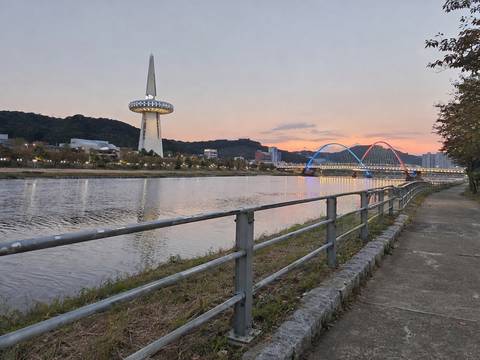
The National Science Museum is the pick for families: its main halls are free, and the 23 m dome planetarium shows about six 30-minute programmes a day (₩2,000 adults, booking recommended). Across the Gapcheon stream, Expo Science Park is the site of the 1993 World Expo. Its 93 m Hanbit Tower has a ring-shaped observation deck reached by lift; the tourism organization’s page and travel sites disagree on whether the deck is free, so check at the gate. A musical fountain plaza runs from the tower towards Expo Bridge.
Hanbat Arboretum, beside the art museums, calls itself Korea’s largest man-made urban arboretum. Its East and West Gardens close on different days (East Mondays, West Tuesdays), so at least one of them is open every day; see the Hanbat Arboretum page for which is which. The Lee Ungno Museum next door is devoted to the modern painter Lee Ungno; its 2026 permanent show runs until 25 December.
Yuseong: hot springs and the Currency Museum
Yuseong, at Yuseong Oncheon Station on the subway (12 stops from Daejeon Station), is Daejeon’s spa-hotel quarter. Its free outdoor footbath holds about 170 people in four sections and is open 07:00–22:00 every day; Yuseong-gu gives the water temperature as about 39–43 °C. Walk about 600 m from exit 7 or 8. Bring a small towel. See hot springs in Korea for full bathhouses elsewhere.
The Currency Museum, run by the Korea Minting and Security Printing Corporation in the research district, covers Korean coins and banknotes and how they are printed. Entry and parking are free; it opens 10:00–17:00 and closes on Mondays, 1 January and the Seollal and Chuseok holidays.
Gyejoksan, Jangtaesan and Daecheong Lake
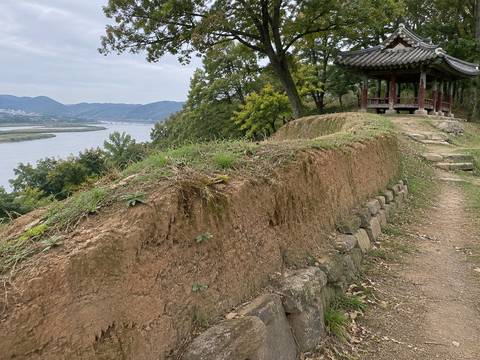
The Gyejoksan red-clay trail in Daedeok-gu, in the east of the city, is about 14 km of smooth clay path at 200–300 m above sea level, made for walking barefoot. In 2026 free outdoor classical concerts were held in the forest on weekends from 11 April to 25 October, according to local press. The west gate section of Gyejoksanseong fortress on the same ridge has been closed for restoration since 2022.
Jangtaesan Recreational Forest, in the far west, is known for its stands of tall metasequoias, which turn rust-red in late autumn. Entry and parking are free.
North-east of the city, Daecheong Lake is a large reservoir behind Daecheong Dam, 72 m high and 495 m long, completed in 1980. The roughly 200 km Daecheongho Obaek-ri trail circles the lake in sections. The dam’s Water Culture Center is closed for remodelling from 10 June 2025 to March 2027, according to K-water. The lake is best with a car.
In the south of the city, Ppuri Park is a free riverside park of stone monuments for Korea’s family clans, open 06:00–22:00 from November to February (05:00–23:00 from March to October), with a genealogy museum open 10:00–17:00 except Mondays.
Getting there and around
The KTX from Seoul Station to Daejeon Station takes about 55 minutes to 1 hour 10 minutes, with more than 100 trains a day; from Busan it takes about 1 hour 30 minutes. Honam-line trains from Yongsan stop at Seodaejeon instead. See KTX and rail passes.
By bus, Seoul Express Bus Terminal has 61 buses a day to Daejeon Bokhap Terminal (about 2 hours, ₩12,400 standard, ₩18,100 premium). Dong Seoul has 28 a day to Yuseong (₩18,700), and Incheon Airport has 62 a day from each terminal to Daejeon Bokhap (about 3 hours, ₩30,100). See long-distance buses.
In the city, the subway costs ₩1,550 by card and buses ₩1,500 by card; a T-money card works on both. Tram line 2 is under construction, so expect roadworks and slower buses in the centre. Tashu public bikes are free for the first hour, then ₩500 per extra 30 minutes.
When to go
Spring and autumn are the most comfortable seasons. October and November bring the autumn colour at Jangtaesan and on Gyejoksan. The Daejeon 0 o’clock Festival closes Jungang-ro to traffic each August (7–17 August in 2026), and the Daejeon Bread Festival ran on 17–18 October 2026 at Expo Science Park, according to local press; 2027 dates had not been announced. Yuseong’s hot-spring festival is held in May. For Gongju, Buyeo and the rest of the region, see the Chungcheong guide and Buyeo.
Book your trip
Top attractions in Daejeon
Daejeon Station and the old centre
The old downtown around Daejeon Station and Jungangno: Sungsimdang's main bakery in Eunhaeng-dong, the Jungang Market, the LED Sky Road canopy, the 1920s railway houses of Soje-dong and the hilltop Daedong Sky Park.
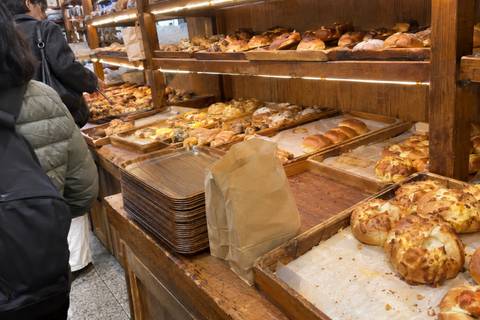
Sungsimdang Bakery
Daejeon's famous bakery, founded 1956: main store 08:00–22:00, branch inside Daejeon Station 07:00–22:30, open every day.
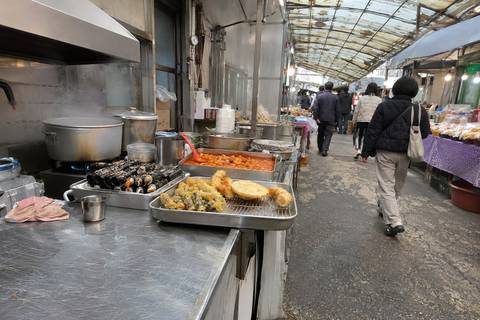
Daejeon Jungang Market
The big traditional market beside Daejeon Station, with a sundae (blood sausage) alley and street snacks; hours vary by shop.
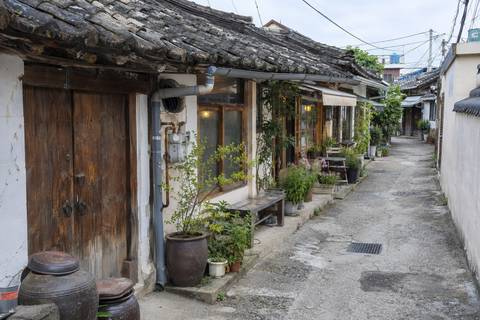
Soje-dong Railway Village
Narrow lanes of 1920s–30s railway staff houses behind the station, now cafés and small restaurants; an open street, free.
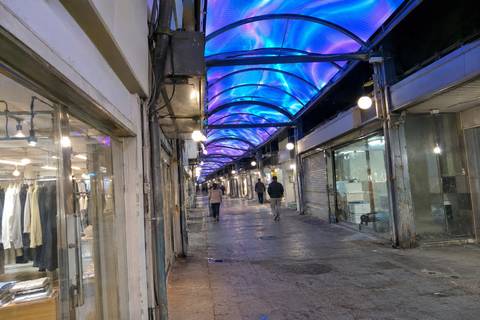
Eunhaengjeong Sky Road
A 214 m LED canopy over a shopping street near Jungangno Station, with four light shows each evening (18:00–22:00 October to March).
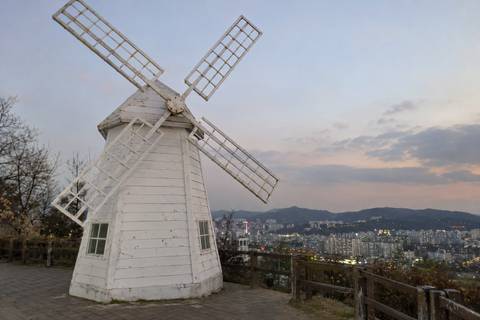
Daedong Sky Park
A windmill-topped hill above a mural village, lit at night, with a wide city view; about 16 minutes' walk from Daedong Station.
Dunsan and Expo Park
The newer city-hall district west of the Gapcheon stream, on subway Line 1 at Government Complex: the National Science Museum, Expo Science Park and Hanbit Tower, Hanbat Arboretum and two art museums.
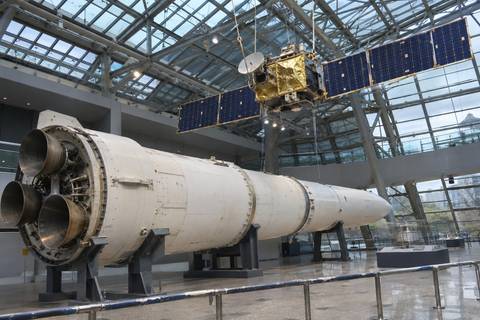
National Science Museum
A large national science museum with free main halls and a 23 m dome planetarium (₩2,000); 09:30–17:30, closed Mondays.
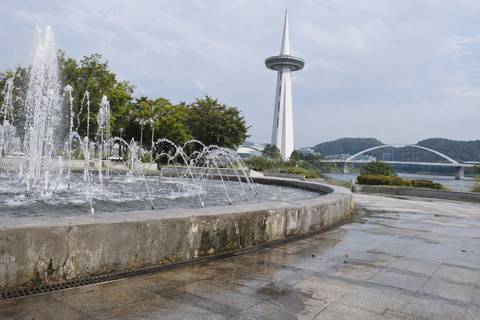
Expo Science Park and Hanbit Tower
The 1993 Expo grounds by the Gapcheon stream, with the 93 m Hanbit Tower observatory and a musical fountain; closed Mondays.
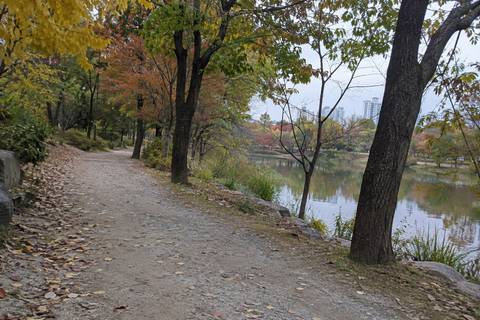
Hanbat Arboretum
Korea's largest man-made urban arboretum, free, with east and west gardens and a tropical glasshouse; winter hours 07:00–19:00.
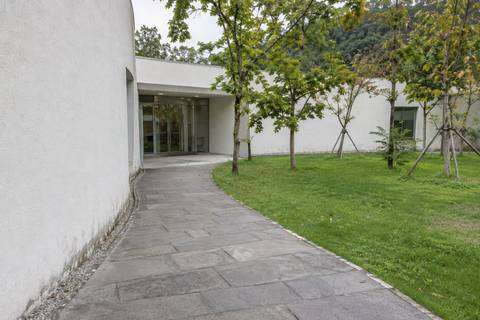
Lee Ungno Museum
Museum of the modern painter Lee Ungno in Dunsan Grand Park, beside the Museum of Art; ₩500, special shows ₩1,000, closed Mondays.
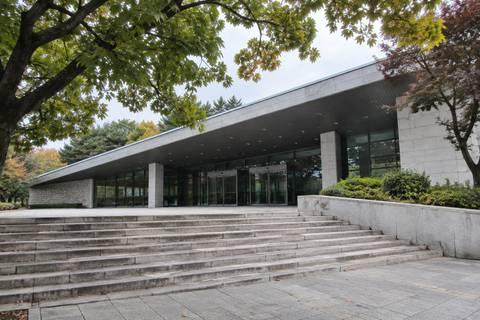
Daejeon Museum of Art
The city's art museum, with changing exhibitions of Korean and regional art; ₩500, closed Mondays.
Yuseong
The hot-spring quarter and science-research district in the north-west, with spa hotels, the free outdoor footbath near Yuseong Oncheon Station and the Currency Museum.
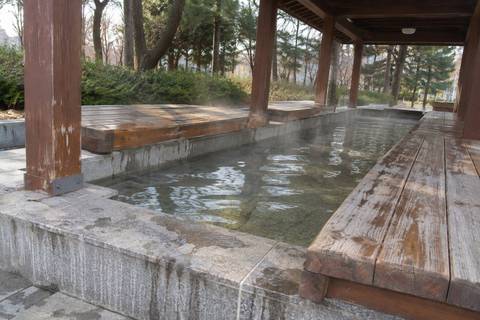
Yuseong Oncheon Footbath
Free outdoor hot-spring footbaths for about 170 people, open 07:00–22:00 every day, about 600 m from Yuseong Oncheon Station exit 7 or 8.
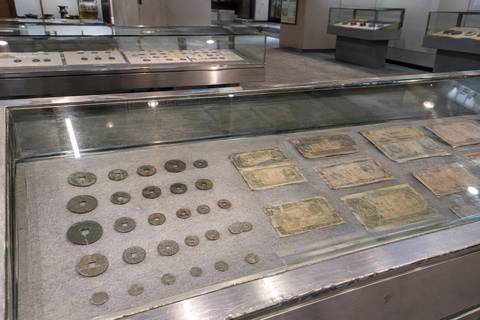
Currency Museum (KOMSCO)
The minting corporation's museum of Korean coins and banknotes and how they are made; free, 10:00–17:00, closed Mondays.
Hills and lake
Green edges of the city reached by bus or taxi: the red-clay barefoot trail on Gyejoksan, the metasequoia forest of Jangtaesan, Daecheong Lake and dam to the north-east, and Ppuri Park in the south.
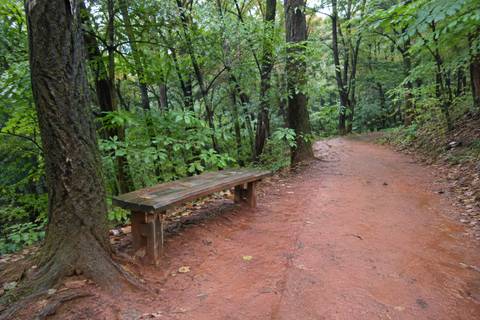
Gyejoksan Red Clay Trail
About 14 km of soft red-clay forest path at 200–300 m, walked barefoot; free weekend concerts April to October.
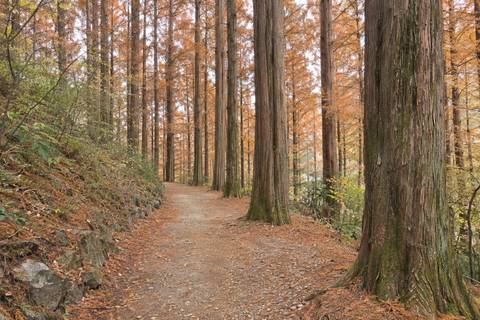
Jangtaesan Recreational Forest
A metasequoia forest that turns rust-red in autumn; free entry and parking. The Skyway and Skytower are closed for repairs until 2027.
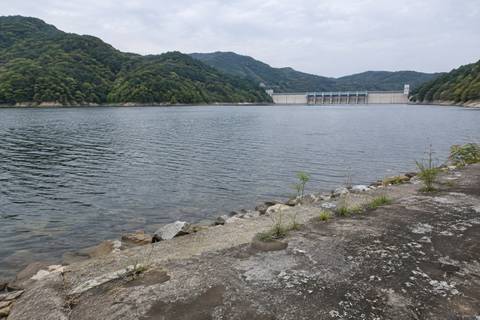
Daecheong Lake and Dam
A large reservoir behind a 72 m dam built in 1980, ringed by the roughly 200 km Daecheongho Obaek-ri walking trail; best by car.
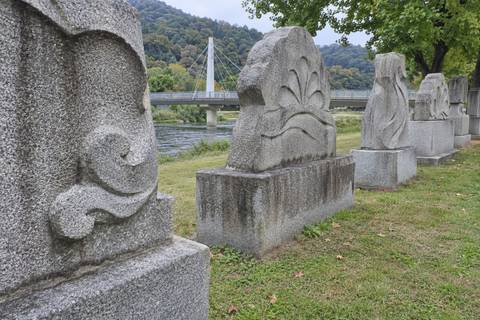
Ppuri Park
A free riverside park of carved stone monuments to Korean family clans, with a genealogy museum (closed Mondays).
Daejeon by interest
Getting to Daejeon
| From | How | Time | Notes |
|---|---|---|---|
| Seoul Station | KTX to Daejeon Station | about 55 min – 1 h 10 min | The fastest link: more than 100 KTX trains a day on the Gyeongbu line, from about 05:00 to 23:30 (timetable listing for 5 November 2026). Book on Korail's app or website. |
| Busan Station | KTX to Daejeon Station | about 1 h 30 min – 2 h | About 65 KTX trains a day northbound; slower ITX-Saemaeul and Mugunghwa trains take about 3 hours or more. |
| Yongsan (Seoul) | KTX to Seodaejeon (Honam line) | about 1 h – 1 h 10 min | About ten departures a day. Seodaejeon is a different station in the west of the city and is not on the subway; Gyeongbu-line trains from Seoul Station stop at Daejeon Station. |
| Seoul Express Bus Terminal (Gyeongbu) | Express bus to Daejeon Bokhap Terminal | about 2 h | 61 buses a day from 06:00 to midnight. Standard ₩12,400, premium (우등) ₩18,100, top premium ₩23,500; late-night buses cost more. Book on Kobus. |
| Dong Seoul Terminal | Intercity bus to Yuseong Terminal | about 2 h 30 min | 28 buses a day from 06:10 to 21:30, premium seats ₩18,700. Yuseong Terminal is in the hot-spring district, handy if you stay there. |
| Incheon Airport | Airport bus to Daejeon Bokhap Terminal | about 3 h (T1) / 3 h 20 min (T2) | 62 buses a day from each terminal, almost round the clock; premium ₩30,100, top premium ₩39,200, more after 22:00. Book on T-money Bus. |
Train times and counts are from a timetable listing for Thursday 5 November 2026 and vary on weekends; Korail's own fare pages could not be checked, so no train fares are given here. Bus timetables and fares are from Kobus and T-money Bus for the same day.
Getting around
Daejeon's single subway line runs from Panam through Daejeon Station, Jungangno, City Hall and Government Complex to Yuseong Oncheon and Banseok. Adults pay ₩1,550 by transport card (₩1,700 for a single-journey ticket) and ₩1,500 by card on city buses, the fares since January 2024; T-money works on both. Seodaejeon Station is not on the subway (the nearest stop is Seodaejeon Negeori). A second line, a tram, is under construction, and the bus booking site warns of delays on routes through the centre. Tashu public bikes are free for the first hour.
Long-distance trains: see KORAIL PASS and transportation in Korea.
Itineraries
A stopover between trains
Leave your bags at the Daejeon Travel Lounge, 5 minutes from Daejeon Station (deposit ₩3,000, until 20:40). Walk to Sungsimdang's main store in Eunhaeng-dong, eat kalguksu or duruchigi, then browse the Jungang Market or the cafés of Soje-dong before picking up a box of bread at the station branch on the way back. Three hours is enough.
One day in Daejeon
Start at Government Complex Station: the National Science Museum in the morning (not on a Monday), Hanbat Arboretum and the Lee Ungno Museum after lunch, then Expo Bridge and Hanbit Tower in the late afternoon. In the evening ride the subway to Yuseong Oncheon for the free footbath and stay in a spa hotel.
Green day out
Walk a stretch of the Gyejoksan red-clay trail barefoot in the morning, or head west to Jangtaesan for the metasequoia forest, at its best in late October and November. Both are easiest by taxi from the centre.
Where to stay in Daejeon
Daejeon Station and Eunhaeng-dong
Business hotels near the station, with Sungsimdang, the Jungang Market and the Sky Road on foot and KTX trains at the door.
Best for: Stopovers, early trains, food
See hotels in Daejeon Station and Eunhaeng-dongYuseong hot-spring district
The city's hotel quarter, with spa hotels, the free footbath and Yuseong Oncheon subway station; Yuseong bus terminal is nearby.
Best for: Spa hotels, one relaxing night
See hotels in Yuseong hot-spring districtDunsan and Government Complex
Modern hotels near City Hall and the Government Complex station, a short ride from the Science Museum, Expo Park and the arboretum.
Best for: Museums, families, business trips
See hotels in Dunsan and Government Complex
Some links on this page are affiliate links: if you book through them we may earn a commission at no extra cost to you. It never decides what we recommend. Affiliate disclosure.
Food and restaurants in Daejeon
In April 2026 the city named bread, kalguksu and duruchigi as Daejeon's three signature foods. Bread means Sungsimdang, which began in 1956 with two sacks of flour and is now a reason in itself for many Koreans to stop in Daejeon. The city counted more than 700 kalguksu restaurants at the end of 2023, the most per head of any of Korea's large cities.
What to eat
| Twigim soboro 튀김소보로 | Sungsimdang's signature: a deep-fried crumble-topped bun filled with sweet red-bean paste. |
|---|---|
| Kalguksu 칼국수 | Hand-cut wheat noodles in broth; Daejeon restaurants serve spicy, clam and plain versions. |
| Duruchigi 두부두루치기 | Tofu stir-braised in a spicy red sauce with a little broth, often finished with noodles; spicy but not fierce. |
| Sundae soup 순댓국 | Pork broth with blood sausage, a staple of the sundae alley in the Jungang Market. |
Where to eat
- Around Daejeon Station and Eunhaeng-dong — Sungsimdang, old kalguksu and duruchigi restaurants and the Jungang Market's food alleys, all within a short walk of the station.
- Yuseong — Restaurants around the spa hotels near Yuseong Oncheon Station; see Korean food.
Experiences and tours in Daejeon
Baekje capitals day trip
Daejeon is the nearest city to Gongju and Buyeo; a guided trip covers both Baekje capitals without rural buses.
Check on GetYourGuide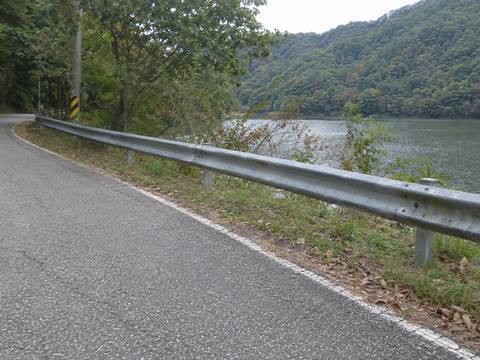
Private car for Daecheong Lake and Jangtaesan
The lake, the dam and the forest are slow by bus; a car with driver links them in a day.
Check on Klook
KTX and rail passes
Daejeon sits where the KTX lines to Busan and the south-west divide, so it fits most rail-pass trips.
Check on Klook
Some links on this page are affiliate links: if you book through them we may earn a commission at no extra cost to you. It never decides what we recommend. Affiliate disclosure.
Frequently asked questions
Is Daejeon worth visiting?
As a stopover or one night, yes. It is about an hour from Seoul by KTX, Sungsimdang bakery is in the station, and Yuseong has a free hot-spring footbath and spa hotels. It has no single must-see sight, so most visitors combine it with a train journey or with Gongju and Buyeo.
How do I get from Seoul to Daejeon?
The KTX from Seoul Station to Daejeon Station takes about 55 minutes to 1 hour 10 minutes, with more than 100 trains a day. Express buses from Seoul Express Bus Terminal take about 2 hours and cost ₩12,400 standard or ₩18,100 premium.
Daejeon Station or Seodaejeon?
Trains from Seoul Station and Busan on the Gyeongbu line use Daejeon Station, which is on the subway and next to Sungsimdang's branch. Honam-line trains from Yongsan towards Gwangju and Mokpo use Seodaejeon in the west of the city, which has no subway stop. Check your ticket.
What are Sungsimdang's opening hours?
The main store in Eunhaeng-dong opens 08:00–22:00 and the Daejeon Station branch 07:00–22:30, both every day of the year. Queues at the main store can be long at weekends; the station branch is the quick option between trains.
What is closed on Mondays in Daejeon?
The National Science Museum, Expo Science Park and Hanbit Tower, the Museum of Art, the Lee Ungno Museum, the Currency Museum and the arboretum's East Garden and glasshouse. On a Monday, spend the day on Sungsimdang, the markets, Soje-dong, Yuseong's footbath or a walk on Gyejoksan.
Sources
Facts on this page were checked against these sources on 17 November 2026. Prices, hours and rules change — confirm with the operator before you go.
- 대전광역시 – 인구 통계 (2026년 9월) (Korean) · official
- 대전광역시 – 대전의 맛 3선 (빵·칼국수·두루치기, 2026.4) (Korean) · official
- 대전광역시 – 대전의 맛 (칼국수·두루치기) (Korean) · official
- 성심당 – 본점 영업시간 (Korean) · official
- 성심당 – 대전역점 영업시간 (Korean) · official
- 대전관광 – 대전여행라운지 (짐 보관) (Korean) · official
- 대전관광 – 대전역 관광안내소 (Korean) · official
- 대전광역시 – 으능정이 스카이로드 운영시간 (Korean) · official
- 대전 동구 – 소제동 철도관사촌 (Korean) · official
- 대한민국 구석구석 – 대동하늘공원 (Korean) · official
- 국립중앙과학관 – 관람안내·관람료 (Korean) · official
- 국립중앙과학관 – 천체관 (Korean) · official
- 국립중앙과학관 – 오시는 길 (Korean) · official
- 대전관광공사 – 한빛탑 (Korean) · official
- 대전관광공사 – 엑스포과학공원 이용안내 (Korean) · official
- 한밭수목원 – 관람시간·휴원일 (Korean) · official
- 대전시립미술관 – 관람안내 (Korean) · official
- 이응노미술관 – 관람안내 (Korean) · official
- 한국조폐공사 화폐박물관 – 관람안내 (Korean) · official
- 유성구 – 유성온천 족욕체험장 (Korean) · official
- 대덕구 – 계족산 황톳길 (Korean) · official
- 숲나들e – 장태산자연휴양림 (스카이웨이·스카이타워 보수 휴장, 2027년 재개장 예정) (Korean) · official
- 숲나들e – 장태산자연휴양림 소개 (입장료·주차 무료) (Korean) · official
- K-water – 대청댐 물문화관 (2025.6.10~2027.3 임시 휴관) (Korean) · official
- VisitKorea – Daecheongdam Dam · official
- 대전 중구 – 뿌리공원 (Korean) · official
- 대전교통공사 – 도시철도 운임 (Korean) · official
- 대전광역시 – 시내버스·도시철도 요금 조정 (2024.1.1 시행) (Korean) · official
- 타슈 – 대전 공영자전거 이용요금 (Korean) · official
- 고속버스통합예매 – 서울경부·동서울→대전복합 배차조회 (2026.11.05) (Korean) · official
- 시외버스 통합예매 – 동서울→유성, 인천공항→대전복합 배차조회 (2026.11.05) (Korean) · official
- 코리아차트 – 서울·부산·용산→대전/서대전 열차시간표 (2026.11.05) (Korean)
- 뉴스핌 – 계족산 뻔뻔한 클래식 2026 (4.11~10.25) (Korean)
- 더팩트 – 2026 대전 빵축제 (10.17~18, 엑스포과학공원) (Korean)