Transportation
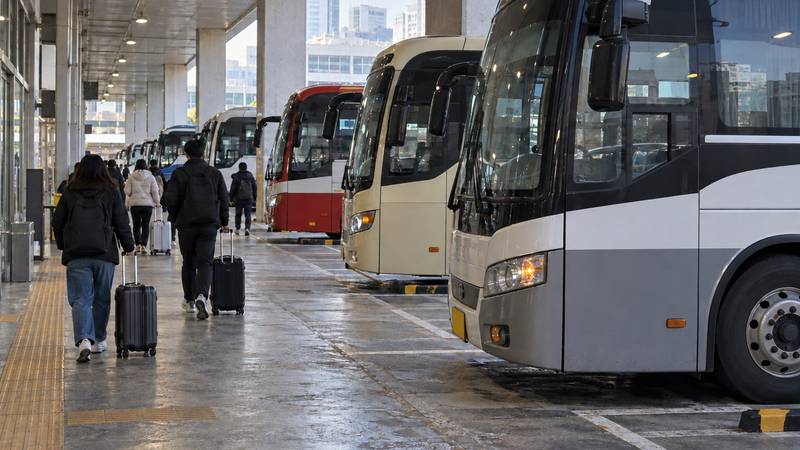
Express and Intercity Buses in Korea
Updated
Book your trip
Long-distance buses are the cheap alternative to the KTX: Seoul to Busan costs ₩43,300 in a deluxe express bus (about 4 hours) against ₩54,400 by KTX (from about 2 h 20 min). For Sokcho, buses are the main option, and for Gangneung, Jeonju and Gwangju they are competitive with the train. Express and intercity fares rose 9% on 1 October 2026; all prices here are the new ones, checked on Kobus, the official express bus booking site, on 16 October 2026.
| Your situation | What to do |
|---|---|
| Going Seoul → Busan or Gyeongju and time matters | Take the KTX; the bus is cheaper but takes 1.5–2 hours longer |
| Going to Sokcho, or travelling on a tight budget | Take an express bus; deluxe class costs ₩22,800–43,300 from Seoul |
| Booking from home with a foreign card | Use Klook (express) or GO Hanpass (express and intercity), which the tourism ministry promotes for visitors |
| Already at the terminal without a ticket | Buy at the counter or a kiosk, or tap a T-money card at the bus door if seats are free |
| Big suitcase | Fine: one bag under 30 kg goes in the hold free |
Express or intercity bus: what’s the difference?
Express buses (고속버스, gosok beoseu) run non-stop between major cities on expressways, usually with one break at a motorway service area. All of them are sold through one system, Kobus, so one search shows every operator on a route.
Intercity buses (시외버스, si-oe beoseu) make stops in towns along the way and reach many places express buses do not. They are sold through a separate T-money system with its own English site, and the Bustago app.
For a first trip, express buses cover the classic routes from Seoul: Busan, Gyeongju, Daegu, Jeonju, Gwangju, Gangneung and Sokcho. Intercity buses matter more once you head to smaller towns, temples and national parks.
Three classes of express bus
Kobus sells each departure in one of three grades. The bus you get depends on the departure time, so compare times before you pick a grade.
- Regular (일반, shown on Kobus as 고속): the cheapest fare.
- Deluxe (우등, udeung): fewer, roomier reclining seats for about 30–50% more.
- Premium (프리미엄): the fewest and largest seats, about 30% above deluxe.
Late-night departures, roughly from 22:00, are sold as separate night fares (심야) about 20% higher than the day fare. Seoul–Busan deluxe costs ₩51,900 at night instead of ₩43,300.
Express bus fares and journey times from Seoul
Adult fares after the 1 October 2026 rise, read from Kobus for a weekday departure on 20 October 2026. Journey times are the scheduled times Kobus lists; traffic can add to them, especially on Friday evenings and holiday weekends.
| Route | Seoul terminal | Regular | Deluxe | Premium | Time |
|---|---|---|---|---|---|
| Busan | Express Bus Terminal | ₩29,100 | ₩43,300 | ₩56,200 | 4 h |
| Gyeongju | Express Bus Terminal | ₩24,700 | ₩36,700 | ₩47,700 | 3 h 30 min |
| Daegu (Dongdaegu) | Express Bus Terminal | ₩22,100 | ₩32,700 | ₩42,500 | 3 h 30 min |
| Jeonju | Central City | ₩16,400 | ₩23,900 | ₩31,000 | 2 h 40 min |
| Gwangju | Central City | ₩22,700 | ₩33,500 | ₩43,500 | 3 h 20 min |
| Gangneung | Express Bus Terminal | ₩18,200 | ₩26,800 | ₩34,800 | 2 h 50 min |
| Gangneung | Dong Seoul | ₩21,900 | ₩28,500 | ₩37,000 | 2 h 30 min |
| Sokcho | Express Bus Terminal | ₩18,700 | ₩24,300 | ₩31,500 | 2 h 20 min |
| Sokcho | Dong Seoul | ₩17,500 | ₩22,800 | ₩29,600 | 2 h 30 min |
On the long southern routes the bus saves money but costs time: Seoul–Busan by KTX is ₩54,400 and from about 2 h 20 min, so the deluxe bus saves ₩11,100 for roughly 1.5 extra hours. On the routes to the east coast and Jeonju the gap in time is smaller, and the bus often leaves from a more convenient terminal.
- Children: one child under 6 travelling with a ticket-holding adult rides free on a lap; a second child, or a child who needs a seat, needs a ticket. Kobus says child and student fares are offered on many routes; where they exist they appear as ticket types when you choose seats, and ID may be checked.
- Kobus free pass: Kobus sells unlimited-ride passes for 3 days (₩88,000), 4 weekdays (₩81,000), 5 days (₩110,000) and 7 days (₩132,000). They need a Kobus member account, cover regular and deluxe buses of eight operators only (not premium), cannot be used over Seollal and Chuseok, and allow each route once per direction. At these prices the pass only pays off with a long journey almost every day.
How to book an express or intercity bus
Tickets for both kinds of bus go on sale online and at terminals, and on popular routes Friday evening, Sunday afternoon and holiday buses sell out. Book a few days ahead for those; on weekdays you can usually buy on the day.
Online with a foreign card
- Pick a booking channel. In June 2026 the Ministry of Culture, Sports and Tourism named Klook for express buses and GO Hanpass for express and intercity buses as the booking platforms it promotes to international visitors.
- For intercity buses, the Bustago and InterCity Bus apps have accepted overseas cards since 2024, according to the Ministry of Land, Infrastructure and Transport, and both can search every intercity route. T-money’s intercity site also has an English version.
- Search by terminal, not city. Seoul has several terminals and many cities have both an express and an intercity terminal; pick the one in the table above or below.
- Choose the departure, grade and seat, then pay. Keep the confirmation and the mobile ticket or QR code on your phone.
Kobus’s own website has a language menu with English, but its payment guide does not mention overseas cards as of 16 October 2026, and same-day online sales close 1 hour before departure (later than that, Kobus points to its app). If a foreign card is refused there, use one of the channels above or the terminal counter.
At the terminal
Ticket counters and kiosks sell tickets for departures from that terminal. Under a 2024 government measure, every intercity bus terminal has accepted overseas cards at the counter since 31 July 2024. Carry some cash as a backup at small rural terminals.
If you booked online and want a paper ticket, collect it at the departure terminal before the bus leaves; Kobus asks you to bring the card you paid with.
Boarding
Express buses with an E-Pass reader at the door let you scan the QR code on your paper, printed or mobile ticket as you board. The same reader lets you board without a ticket if the bus has empty seats: tap a transport card such as T-money on the reader to pay the fare.
Find your bay (the platform number on the ticket) 10–15 minutes before departure. Buses leave on the minute, and the ticket cannot be used on a later bus.
Cancelling or changing a ticket
Kobus’s cancellation fees (in force since 1 May 2025, checked 16 October 2026) depend on how close to departure you cancel and on the day of travel:
| When you cancel | Mon–Thu | Fri–Sun and public holidays | Seollal and Chuseok |
|---|---|---|---|
| 2 days or more before | Free | Free | Free |
| From 1 day before to 3 hours before | 5% | 7.5% | 10% |
| Less than 3 hours before departure | 10% | 15% | 20% |
| After departure, before scheduled arrival | 60% | 60% | 60% |
| After scheduled arrival | 100% | 100% | 100% |
The after-departure fee rises to 70% from 1 May 2027. The holiday column applies on the two days before Seollal or Chuseok, the day itself and the day after.
- Changes are free once per ticket, up to 1 hour before departure: you can change the time, the number of seats or the grade, but not the date. To move to another day, cancel and rebook.
- Refunds to cards go back to the card used, on the card company’s billing cycle, so a refund to a foreign card can take a statement or two to appear.
Seoul’s bus terminals: which one you need
Read the terminal name on your ticket the day before. Seoul’s main terminals are on different subway lines, and the two halves of the biggest one are separate buildings.
| Terminal | Subway | Main destinations |
|---|---|---|
| Seoul Express Bus Terminal (Gyeongbu/Yeongdong building) | Express Bus Terminal, lines 3, 7, 9 | Busan, Daegu, Gyeongju and the south-east; Gangneung, Sokcho and the east |
| Central City (Honam line) | Express Bus Terminal, lines 3, 7, 9 | Jeonju, Gwangju and the south-west |
| Dong Seoul Terminal | Gangbyeon, Line 2 | Gangwon (Gangneung, Sokcho) and the north-east; also some express buses south |
| Seoul Nambu Terminal | Nambu Bus Terminal, Line 3 | Mostly intercity buses to towns south of Seoul |
The Gyeongbu/Yeongdong building lies on the east side of Express Bus Terminal station and Central City on the west side; follow the signs for your line before you surface.
Other cities can have more than one terminal too, often an express and an intercity terminal, so check the arrival terminal as well. In Gyeongju both bus terminals are in the centre of town, within walking distance of the tomb park.
On board: luggage, breaks and what to bring
- Luggage: one item per person goes in the hold free, under 30 kg or 40,000 cm³; hand luggage on board is limited to 10 kg or 40,000 cm³ (Kobus carriage terms). Put the bag in yourself and keep valuables with you.
- Rest stops: buses on longer routes break the journey at a motorway service area. Note the bus number and where it is parked before you get off, and be back on time.
- No toilet on board: use the terminal toilets before you leave.
- Seat belts: wear the belt for the whole journey.
What can go wrong
Where to next
For the faster option on the same routes, see KTX and trains in Korea; for the big picture, the transportation overview. Buses are a direct way to reach Gyeongju from Busan and the east coast from Seoul, and a T-money card covers the city buses and subways at both ends.
City guides
Busan
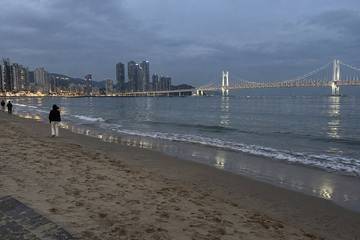
Korea's second city and busiest port, wrapped around beaches, hillside villages, fish markets and a temple on the rocks.
Gyeongju
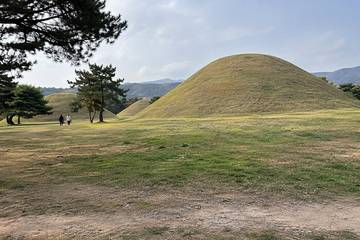
The former Silla capital, an open-air museum of grassy royal tombs, ancient temples and stone Buddhas in the southeast.
Seoul
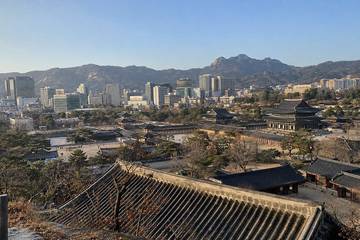
Korea's capital: Joseon palaces and hanok lanes beside skyscrapers, night markets, Han River parks and granite peaks inside the city limits.
Frequently asked questions
Is the bus or the KTX better from Seoul to Busan?
The KTX is faster: about 2 h 20 min on the fastest trains for ₩54,400. A deluxe express bus takes about 4 hours for ₩43,300, or ₩29,100 in regular class. Take the train if time matters and the bus if you are on a budget or the trains are sold out.
Can foreigners book Korean express bus tickets online?
Yes. The Ministry of Culture, Sports and Tourism points international visitors to Klook (express buses) and GO Hanpass (express and intercity buses). For intercity buses, the Bustago and InterCity Bus apps have taken overseas cards since 2024. You can also buy at the terminal counter.
How much did Korean bus fares go up in 2026?
Express and intercity bus fares rose 9% from the first bus on 1 October 2026. Tickets booked before then keep the old fare, but if you change such a ticket after 1 October it is re-priced at the new fare.
How much does it cost to cancel an express bus ticket?
Nothing up to two days before departure. From the day before until 3 hours before, the fee is 5% Monday to Thursday, 7.5% Friday to Sunday and on public holidays, and 10% over Seollal and Chuseok. In the last 3 hours it doubles, and after departure 60% is kept.
How much luggage can I take on a Korean express bus?
Under the express bus carriage terms, each passenger may put one bag in the hold, under 30 kg or 40,000 cm³, and carry hand luggage of up to 10 kg on board. A standard large suitcase fits in the hold.
Which Seoul bus terminal do I need?
Most express buses leave from Express Bus Terminal subway station (lines 3, 7 and 9). The Gyeongbu/Yeongdong building serves Busan, Daegu, Gyeongju and Gangneung; Central City, next door, serves Jeonju, Gwangju and the south-west. Dong Seoul Terminal at Gangbyeon (Line 2) is the other main hub for Gangwon.
Sources
Facts on this page were checked against these sources on 16 October 2026. Prices, hours and rules change — confirm with the operator before you go.
- Ministry of Culture, Sports and Tourism – International tourists to receive discounts on nationwide express and intercity bus ticket bookings (15 Jun 2026) · official
- T-money – InterCity Bus (English booking site) · official
- 고속버스통합예매 KOBUS – 공지사항: 고속·시외버스 요금 조정 안내 (2026-09-22) (Korean) · official
- 고속버스통합예매 KOBUS – 고속버스 예매 (노선별 요금·소요시간) (Korean) · official
- 고속버스통합예매 KOBUS – 예매 안내 (취소수수료, 변경, E-PASS) (Korean) · official
- 고속버스통합예매 KOBUS – 결제수단 안내 (카드결제, 모바일티켓, 홈티켓) (Korean) · official
- 고속버스통합예매 KOBUS – 고속버스 운송약관 (무임운송, 휴대품·휴대화물) (Korean) · official
- 고속버스통합예매 KOBUS – 고속버스 프리패스 여행권 (Korean) · official
- 대한민국 정책브리핑 (국토교통부) – 시외버스 온라인 예매 노선 2배 확대…해외카드 결제도 허용 (2024-07-15) (Korean) · official
- 대한민국 정책브리핑 (문화체육관광부) – 외국인 관광객 고속·시외버스 예매 할인 지원 (2026-06-15) (Korean) · official
- 내 손안에 서울 – 서울의 버스터미널 (서울고속버스터미널, 센트럴시티, 남부, 동서울) (Korean) · official
- 서울특별시 – 동서울터미널 현대화 (임시터미널 테크노마트, 2031년 완공 목표, 2025-12-15) (Korean) · official
- 머니투데이 – 고속·시외버스 요금 9% 인상 (2026-08-29) (Korean)