Culture & Tradition
Museums
Updated
For one museum on a first trip, go to the National Museum of Korea in Seoul: free, open every day of the week, and until 21:00 on Wednesday and Saturday. Pair it with the War Memorial of Korea (free, closed Mondays) in the same district, or see the National Palace Museum next to Gyeongbokgung. Outside Seoul, Gyeongju National Museum is the one worth planning a day around.
Korea’s big public museums are run by the national government or the city, and most charge nothing for their permanent galleries, so a museum is the cheapest rainy-day plan in Seoul. What you do need to check is the closing day: several museums close every Monday, the palaces close on Mondays or Tuesdays, and a few national museums shut their galleries on one Monday a quarter. The tables below sort that out.
Which museum fits your trip
| Your situation | Do this |
|---|---|
| One museum, Korean history and art | National Museum of Korea: prehistory to Joseon, celadon and the two pensive bodhisattvas in one building, free |
| Visiting a palace the same day | National Palace Museum beside Gyeongbokgung, or the National Folk Museum inside its grounds |
| It is a Monday | National Museum of Korea, National Palace Museum, National Folk Museum or MMCA Seoul, all open (check the closures in the table) |
| Interested in the Korean War | War Memorial of Korea, with free English tours at 10:30 and 14:30, Tuesday to Sunday |
| Modern Korean history and independence | Seodaemun Prison History Hall (₩3,000) and the Seoul Museum of History (free) |
| Art and architecture | Leeum Museum of Art in Hannam-dong, then MMCA Seoul near Bukchon |
| An evening plan | National Museum of Korea or MMCA on Wednesday and Saturday until 21:00 |
| Travelling beyond Seoul | Gyeongju National Museum for the Silla kingdom, free |
If you only have a morning, take the National Museum of Korea. The palace museums suit a palace day better than a special trip.
Seoul museums: fees and hours in 2026
| Museum | Fee | Open | Closed | Getting there |
|---|---|---|---|---|
| National Museum of Korea | Free (paid special exhibitions) | 09:30–17:30; Wed and Sat to 21:00 | 1 Jan, Seollal, Chuseok; galleries also close on the first Monday of Mar, Jun, Sep, Dec (next: 7 Dec 2026) | Ichon Station (Line 4, Gyeongui–Jungang), Exit 2 |
| National Palace Museum | Free | 09:30–17:30; Sat to 21:00 | Last Monday of each month (26 Oct, 30 Nov, 28 Dec 2026), 1 Jan, Seollal, Chuseok | Gyeongbokgung Station (Line 3), Exit 5 |
| National Folk Museum of Korea | Free (palace ticket separate) | 09:00–18:00 Mar–Oct, 09:00–17:00 Nov–Feb; Wed to 20:00 Mar–Oct; last entry 1 h before closing | 1 Jan, Seollal, Chuseok | Anguk Station (Line 3), Exit 1 |
| War Memorial of Korea | Free | 09:30–18:00, last entry 17:00 | Mondays, 1 Jan, Seollal and Chuseok days | Samgakji Station (Line 6), Exit 12 |
| MMCA Seoul | By exhibition; combined ticket ₩10,000 when 3+ paid shows run; free Wed and Sat 18:00–21:00 | 10:00–18:00; Wed and Sat to 21:00 | 1 Jan, Seollal, Chuseok; also Tue 1 Dec 2026 | Anguk Station (Line 3), Exit 1 |
| Leeum Museum of Art | Traditional-art galleries free; other exhibitions paid | Tue–Sun 10:00–18:00, tickets until 17:30 | Mondays, 1 Jan, Seollal, Chuseok | Hangangjin Station (Line 6), Exit 1, then about 5 min uphill |
| Seoul Museum of History | Free | 09:00–18:00; to 21:00 except Thu until 30 Nov 2026 | Mondays (open on public-holiday Mondays), 1 Jan | Gwanghwamun Station (Line 5), Exit 7 |
| Seodaemun Prison History Hall | ₩3,000 | 09:30–18:00 Mar–Oct, 09:30–17:00 Nov–Feb; last entry 30 min before closing | Mondays (Tuesday if Monday is a holiday), 1 Jan, Seollal, Chuseok | Dongnimmun Station (Line 3), Exit 5 |
Adult fees and hours from each museum’s official website, checked 25 October 2026. Six of these eight have free permanent galleries, and four stay open on Mondays. Leave the War Memorial, Leeum, Seodaemun Prison and the Seoul Museum of History for Tuesday to Sunday.
National Museum of Korea and the War Memorial
The National Museum of Korea in Yongsan is the country’s main museum and the best single introduction to Korean history and art. Its permanent galleries run from prehistoric tools through the Three Kingdoms to Goryeo celadon and the Joseon dynasty, and two pensive bodhisattva statues, both National Treasures, sit in a dark room of their own on the 2nd floor, the Room of Quiet Contemplation. Entry is free with no booking. Parts of the 2nd- and 3rd-floor Buddhist sculpture, metalwork, painting and calligraphy galleries are closed for renovation until 28 January 2027, so some headline pieces may be off view.
It gets very busy on weekends and school holidays; weekday mornings and the Wednesday and Saturday evenings are quieter. The National Hangeul Museum on the same grounds is closed until the second half of 2028 for fire-damage repairs and an extension.
The War Memorial of Korea is two subway stops away at Samgakji. Its galleries tell the story of the Korean War from the 1945 division to the 1953 armistice, the last room is given to the UN forces, and a monument outside honours the 22 countries that sent forces, among them the US, UK, Canada, Australia, the Philippines and India. Around 70 aircraft, tanks and boats stand in the grounds. Free English tours start at 10:30 and 14:30, Tuesday to Sunday. Together the two museums fill a day in Yongsan, with dinner in Itaewon.
Palace quarter: Palace Museum, Folk Museum and MMCA
Three national museums sit on the edges of Gyeongbokgung, so they combine well with a palace visit or with Bukchon.
- National Palace Museum. Thrones, royal seals, court paintings, scientific instruments and the cars of the Korean Empire, at the palace’s south-west corner. Free, and open on Tuesdays when Gyeongbokgung is closed. Free English tours run on weekdays between 13:00 and 15:00; the day’s time is on the museum calendar.
- National Folk Museum of Korea. In the north-east of the palace grounds, about everyday life: the farming year, food, homes, weddings and ancestral rites. Entry is free (the palace ticket is separate), and it has no weekly closing day. Permanent Exhibition Hall 1 is closed for renovation from 30 September to about 21 December 2026; the other halls stay open. English tours: Monday and Friday at 10:30 and 14:30, Wednesday at 14:30, Thursday and Sunday at 10:30.
- MMCA Seoul. The national museum of modern and contemporary art, a low modern building across Samcheong-ro from the palace’s east wall. Exhibitions change through the year and each is priced separately; Wednesday and Saturday evenings from 18:00 to 21:00 are free.
For more on the palaces themselves, see palaces.
Modern history: Seodaemun Prison and the Seoul Museum of History
Seodaemun Prison History Hall is a red-brick prison opened by the Japanese in October 1908, where many Korean independence activists were held under colonial rule and, after liberation, opponents of the military governments. It closed as a prison in November 1987; the administration building, cell blocks 9 to 12, the leprosy ward and the execution building were kept, and it opened as a museum in 1998. It is a sombre visit that may upset young children. Entry is ₩3,000 for adults, and the hall closes at 17:00 from November to February. The prison is within 50 m of Exit 5 of Dongnimmun Station, in Seodaemun Independence Park.
The Seoul Museum of History near Gwanghwamun traces the city from Joseon capital to today. It is free, closed on Mondays, and lends audio guides in English, Chinese and Japanese free of charge at the 1st-floor desk (leave an ID). It is about 5 minutes on foot from Gwanghwamun Station Exit 7, so it fits with a walk around Gwanghwamun Square.
Art museums: Leeum and more
Leeum Museum of Art, the Samsung Foundation’s museum on a hillside in Hannam-dong, holds one of Seoul’s finest private collections, with ceramics, Buddhist art and paintings in the traditional-art galleries and modern and contemporary art in separate buildings. The traditional-art galleries are free; other exhibitions are paid. Tickets can be booked online from 14 days ahead (up to 4 per person), and walk-up tickets are sold at the desk, though you may wait on busy days. It closes on Mondays.
MMCA Seoul (above) shows Korean and international contemporary art, and MMCA also runs a smaller gallery inside Deoksugung. Combine Leeum with lunch in Itaewon or Hannam-dong.
Museums beyond Seoul
- Gyeongju National Museum. The finest collection from the Silla kingdom, with gold crowns, Buddhist sculpture and the great Divine Bell of King Seongdeok in the garden. Free; 10:00–18:00, to 20:00 on Saturdays from March to October. The galleries close on the second Monday of March, June, September and December (next: 14 December 2026), but the garden stays open. See Gyeongju and UNESCO sites.
- Busan Museum. The city’s free history museum in Nam-gu, 09:00–18:00 Tuesday to Sunday (last entry 17:00), closed Mondays. From Daeyeon Station (Line 2), Exit 3, walk towards the UN Rotary. It sits near the UN Memorial Cemetery; see Busan.
- Other national museums. Jeonju National Museum opens on Mondays; Daegu National Museum closes on Mondays. Both are free.
- Small museums worth the stop. The Haenyeo Museum on Jeju, about the island’s women divers; the Hahoe World Mask Museum at the Hahoe village ticket office in Andong; and the Suwon Hwaseong Museum for the fortress.
Tips for visiting museums in Korea
- Check the closing day first. Mondays are the usual closing day, but the National Museum of Korea, the Palace Museum, the Folk Museum and MMCA stay open. Gyeongbokgung closes on Tuesdays, so Tuesday is a good day for the palace-quarter museums.
- Free does not mean ticketed. Walk in at the free national museums; only paid special exhibitions sell tickets, often online.
- Bring your passport. Audio guides are often lent against an ID, and the War Memorial’s English tours ask foreign visitors to show a passport or residence card.
- Use the evenings. On Wednesday and Saturday the National Museum of Korea and MMCA stay open until 21:00, and MMCA charges nothing from 18:00.
- Holiday closures. Nearly every museum closes on 1 January and on the main day of Seollal and Chuseok; around those dates, check the museum’s website before you go.
For a full Seoul plan that includes the palaces and the National Museum, see Seoul in 3 days.
Book your trip
Best museums in Korea
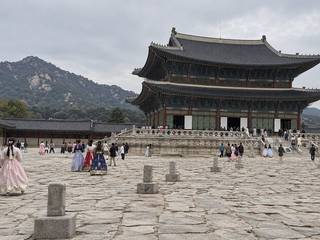
Gyeongbokgung Palace 경복궁
The largest and grandest of Seoul's five Joseon palaces, with the throne hall, a lotus-pond pavilion and the changing of the guard.
Seoul · Seoul ·
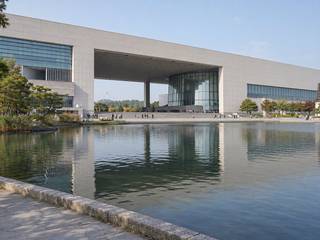
National Museum of Korea 국립중앙박물관
The country's flagship museum, tracing Korean history from prehistory to Joseon through outstanding ceramics, Buddhist art and gold crowns.
Seoul · Seoul ·
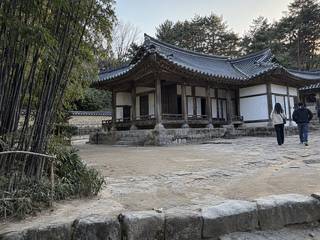
Ojukheon and the Gangneung City Museum 오죽헌
The Joseon house where the scholar Yulgok Yi I was born in 1536, among black bamboo; ₩3,000 includes the city museum.
Gangneung · Gangwon ·
Gyeonggijeon and the Royal Portrait Museum 경기전 어진박물관
The 1410 shrine to the portrait of Joseon's founder, King Taejo, in a walled garden of bamboo and old trees; ₩3,000 includes the museum.
Jeonju · Jeolla ·
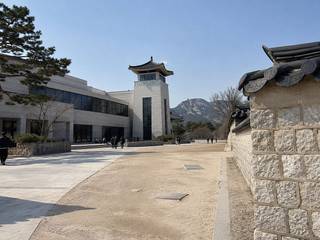
National Palace Museum of Korea 국립고궁박물관
Royal artifacts of the Joseon court and Korean Empire, from thrones and seals to carriages, right beside Gyeongbokgung.
Seoul · Seoul ·
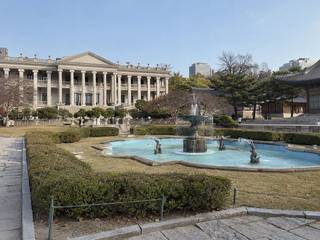
Deoksugung Palace 덕수궁
A compact palace by City Hall mixing Korean halls with early 1900s Western-style stone buildings; its stone-wall road is a classic stroll.
Seoul · Seoul ·
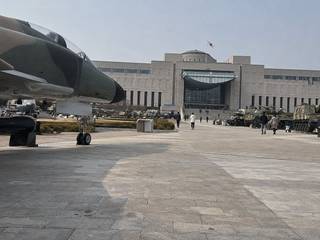
War Memorial of Korea 전쟁기념관
A large museum on Korea's wars, especially the Korean War, with aircraft, tanks and ships displayed in the grounds outside.
Seoul · Seoul ·
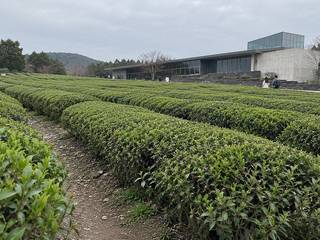
O'sulloc Tea Museum 오설록 티뮤지엄
A modern tea museum and cafe beside rolling green tea fields, known for green tea desserts.
Jeju Island · Jeju ·
National Folk Museum of Korea 국립민속박물관
Everyday life in old Korea, from farming tools to wedding customs, inside the Gyeongbokgung grounds; free, open every day except 1 January, Seollal and Chuseok.
Seoul · Seoul ·
MMCA Seoul 국립현대미술관 서울관
The national museum of modern and contemporary art, between Gyeongbokgung and Bukchon; fees vary by exhibition, and Wednesday and Saturday evenings from 18:00 to 21:00 are free.
Seoul · Seoul ·
Leeum Museum of Art 리움미술관
Samsung's art museum in Hannam-dong: celadon, Joseon paintings and contemporary art in landmark buildings; the traditional-art galleries are free, closed Mondays.
Seoul · Seoul ·
Seodaemun Prison History Hall 서대문형무소역사관
The 1908 red-brick prison where independence activists were held under Japanese rule, with its cell blocks and execution building kept; ₩3,000, closed Mondays.
Seoul · Seoul ·
Open Port street and Jemulpo Club 개항장 거리 제물포구락부
Former Japanese bank buildings, now small museums, and a 1901 club house built for the foreign residents of the treaty port.
Incheon · Gyeonggi & Incheon ·
Ganghwa Dolmen Sites 강화 고인돌 유적
Prehistoric stone tombs in the north of the island, UNESCO-listed in 2000; the big Bugeun-ri dolmen stands by the history museum.
Incheon · Gyeonggi & Incheon ·
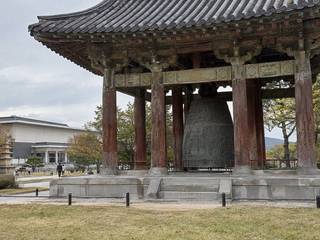
Gyeongju National Museum 국립경주박물관
Silla gold crowns, Buddhist sculpture and the great bronze Divine Bell of King Seongdeok; the best introduction to the city.
Gyeongju · Gyeongsang ·
Seoul Museum of History 서울역사박물관
Seoul's own story from Joseon capital to modern megacity, with a large model of the city; free, closed Mondays, a short walk from Gwanghwamun Station.
Seoul · Seoul ·
Jajangmyeon Museum 짜장면박물관
A small museum in a former Chinese restaurant building in Chinatown, telling the story of Korea's favourite noodle dish.
Incheon · Gyeonggi & Incheon ·
Suwon Hwaseong Museum 수원화성박물관
Exhibits on how the fortress was built and on King Jeongjo's Suwon, near the palace; ₩2,000, closed Mondays.
Suwon · Gyeonggi & Incheon ·
Suwon Museum of Art 수원시립미술관
The city's contemporary art museum on the square in front of the palace; ₩4,000, closed Mondays.
Suwon · Gyeonggi & Incheon ·
Samsung Innovation Museum 삼성이노베이션뮤지엄
Samsung's free museum of electronics history at its Suwon campus; weekday visits are booked guided tours, Saturdays are open entry.
Suwon · Gyeonggi & Incheon ·
Chamsori Gramophone and Edison Museum 참소리축음기·에디슨과학박물관
A private museum by Gyeongpo Lake with more than 5,000 gramophones, music boxes and Edison inventions from over 60 countries.
Gangneung · Gangwon ·
ARTE MUSEUM Gangneung 아르떼뮤지엄 강릉
Immersive digital-art halls near the Heo memorial park, a rainy-day option; ₩19,000, daily 10:00–20:00.
Gangneung · Gangwon ·
Haslla Art World 하슬라아트월드
A sculpture park and art museum on the hills above Jeongdongjin, with sea views from its paths; ₩17,000 for adults.
Gangneung · Gangwon ·
Sokcho Museum and Displaced People Culture Village 속초시립박물관 실향민문화촌
The city museum and a village of rebuilt houses on the refugees from the North who settled Sokcho; ₩2,000, closed Mondays.
Sokcho · Gangwon ·
Jeonju National Museum 국립전주박물관
The national museum in Jeonju, outside the old town; free, 10:00–18:00 (last entry 17:30), and open on Mondays.
Jeonju · Jeolla ·
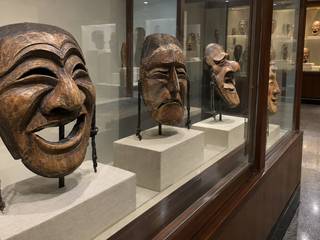
Hahoe World Mask Museum 하회세계탈박물관
Masks from Korea and around the world beside the Hahoe ticket office; free, 09:30–18:00.
Andong · Gyeongsang ·
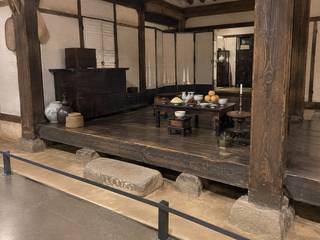
Andong Folk Museum 안동민속박물관
The city museum of local customs, from ancestral rites to farming life, next to the folk village; free, open Mondays.
Andong · Gyeongsang ·
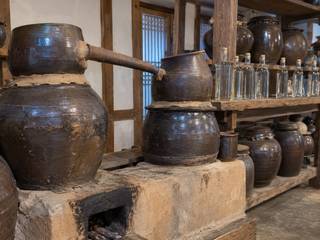
Andong Soju and Traditional Food Museum 안동소주·전통음식박물관
A small free museum about Andong's distilled soju and local food, with tastings; the city lists it as closed on Mondays.
Andong · Gyeongsang ·
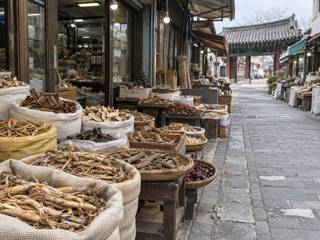
Yangnyeongsi Herbal Medicine Market and Museum 약령시 · 약령시한의약박물관
A 650 m street of about 350 herbal medicine shops, with a free museum of Korean medicine; the museum is closed on Mondays.
Daegu · Gyeongsang ·
Daegu National Museum 국립대구박물관
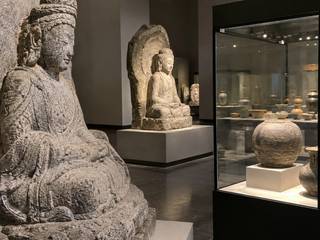
The national museum for the Daegu and North Gyeongsang area, from prehistoric finds to Buddhist art; free, closed on Mondays.
Daegu · Gyeongsang ·
Busan Museum 부산박물관
Busan's city history museum in Nam-gu, near the UN Memorial Cemetery; free, Tuesday to Sunday 09:00–18:00, a walk from Daeyeon Station Exit 3.
Busan · Busan ·
Haenyeo Museum 해녀박물관
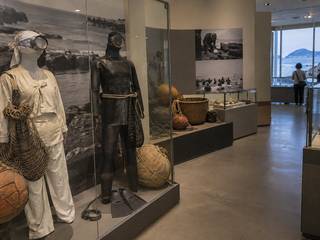
Explains the life of Jeju's female free divers, whose culture is recognised by UNESCO as intangible heritage.
Jeju Island · Jeju ·
Haewoojae toilet culture museum 해우재
A free, light-hearted museum of toilet history and hygiene in north Suwon; closed Mondays.
Suwon · Gyeonggi & Incheon ·
Suwon Museum 수원박물관
The city history museum; included in the ₩4,000 combined ticket with the palace, but a bus ride from the walls.
Suwon · Gyeonggi & Incheon ·
Frequently asked questions
Are museums in Korea free?
Most national and city museums are. The National Museum of Korea, the National Palace Museum, the National Folk Museum, the War Memorial, the Seoul Museum of History, Busan Museum and the regional national museums charge nothing for their permanent galleries. Special exhibitions, MMCA shows and Seodaemun Prison (₩3,000) are paid.
Which museums in Seoul are open on Mondays?
The National Museum of Korea, the National Palace Museum, the National Folk Museum and MMCA Seoul open on Mondays. Exceptions: the National Museum's galleries close on the first Monday of March, June, September and December, and the Palace Museum on the last Monday of each month. The War Memorial, Leeum, Seodaemun Prison and the Seoul Museum of History close on Mondays.
What is the best museum in Korea for a first visit?
The National Museum of Korea in Yongsan. It covers Korean history from prehistory to the Joseon dynasty, entry is free, and it is next to Ichon Station on Line 4. Allow at least two hours; on Wednesday and Saturday it stays open until 21:00.
Which Seoul museums are open in the evening?
The National Museum of Korea and MMCA Seoul stay open until 21:00 on Wednesday and Saturday, and MMCA is free from 18:00. The National Palace Museum is open until 21:00 on Saturday. The Seoul Museum of History is open until 21:00 except on Thursdays until 30 November 2026.
Is the National Hangeul Museum open?
No. The museum next to the National Museum of Korea is closed until the second half of 2028 to repair fire damage and finish an extension.
Sources
Facts on this page were checked against these sources on 25 October 2026. Prices, hours and rules change — confirm with the operator before you go.
- 국립중앙박물관 – 관람 안내 (관람시간, 휴관일, 관람료) (Korean) · official
- National Museum of Korea – Viewing hours and admission · official
- 국립고궁박물관 – 관람안내 (무료 관람, 관람시간, 휴관일, 해설) (Korean) · official
- 전쟁기념관 – 관람안내 (관람시간, 휴관일, 관람료) (Korean) · official
- 국립민속박물관 – 관람안내 (관람시간, 야간연장, 휴관일, 상설전시관1 휴관, 전시해설) (Korean) · official
- National Folk Museum of Korea – Directions · official
- 국립현대미술관 – 서울관 관람정보 (관람시간, 휴관일, 관람료, 야간개장) (Korean) · official
- MMCA – Seoul visiting information · official
- 리움미술관 – 방문안내 (관람시간, 휴관일, 관람요금, 예약, 오시는 길) (Korean) · official
- 서울역사박물관 – 관람안내 (관람시간, 야간 개방, 휴관일, 관람료) (Korean) · official
- Seoul Museum of History – Directions by subway · official
- 서대문형무소역사관 – 관람안내 (관람시간, 휴관일, 관람료) (Korean) · official
- 서대문형무소역사관 – 오시는 길 (독립문역 5번 출구) (Korean) · official
- 국립한글박물관 – 새단장을 위한 휴관 안내 (Korean) · official
- 국립경주박물관 – 관람안내 (관람시간, 야간연장, 정기 휴실일, 입장료) (Korean) · official
- 부산박물관 – 관람안내 (관람시간, 휴관일, 관람료) (Korean) · official
- Busan Museum – Information on viewing and directions · official
- 서대문형무소역사관 – 어제와 오늘 (1908년 개관, 1987년 폐쇄, 1998년 역사관 개관) (Korean) · official