By Season
Autumn leaves
Updated
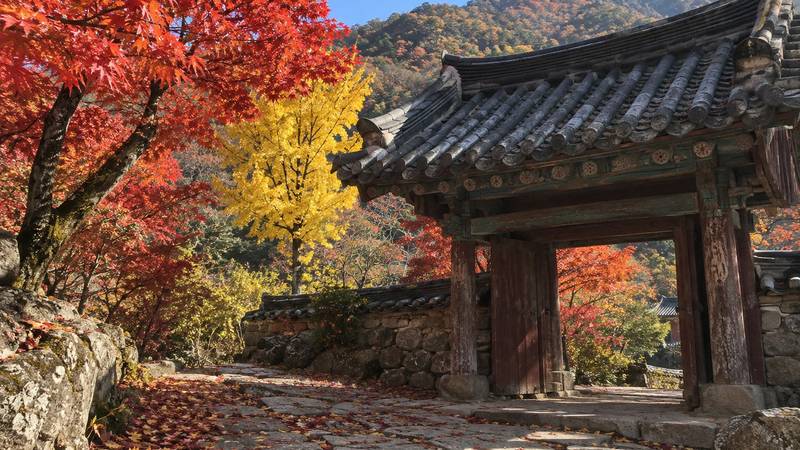
Korea’s autumn leaves peak from mid-October in the Gangwon mountains to early November in Seoul’s parks, Naejangsan and Jeju. As of 14 October 2026, Odaesan has peaked and Seoraksan, Bukhansan, Jirisan and Hallasan show first colour; the Forest Service forecast Seoraksan’s peak for 20 October and Naejangsan’s for 4 November.
Arriving later in the season? Head south: the colour moves from the northern mountains down to the lowlands and the south coast over about three weeks. Arriving early? Go to Gangwon. For a single-base trip, Seoul gets its own colour in late October, with Bukhansan and the palaces inside the city.
When do autumn leaves peak in Korea?
| Place | Long-term average (KMA) | 2026 forecast peak (Forest Service) | 2026 observed (KMA) |
|---|---|---|---|
| Seoraksan (Gangwon) | First colour 28 Sep, peak 17 Oct | 20 October | First colour 28 Sep |
| Odaesan (Gangwon) | — | — | First colour 1 Oct, peak 14 Oct |
| Bukhansan (Seoul) | — | — | First colour 14 Oct |
| Songnisan (Chungcheong) | — | 28 October | Not yet turned (14 Oct) |
| Naejangsan (Jeolla) | — | 4 November | Not yet turned (14 Oct) |
| Hallasan (Jeju) | — | 6 November | First colour 14 Oct |
Forecast from the Korea Forest Service (22 September 2026); averages and observations from the Korea Meteorological Administration (KMA); checked 15 October 2026. A dash means no official figure was found. In short: Gangwon now, central Korea by the end of October, the south and Jeju in the first week of November.
The two agencies measure differently, so their dates can be a week apart. The Forest Service calls a peak when 50% of a tree’s leaves have turned. The KMA judges the whole mountain: first colour when about 20% of the slope has turned from the summit down, peak at about 80%.
Nationally, the Forest Service forecast ginkgo to peak around 30 October and maples and oaks around 31 October, about 0.8 days later than the five-year average. A separate 2026 autumn map from the Korea Tourism Organization and the Korea National Arboretum, released on 8 October, expects the Seoul area and Gangwon to peak in late October and the Gyeongsang and Jeolla regions in early to mid-November. For the full list of 2026 forecast points, see the autumn leaves 2026 report.
How to check the live foliage status
Forecasts move with the weather, so check a few days before you go. All three official tools are in Korean only, but they are easy to use with a browser’s translate function.
- KMA live status (best for mountains): the weather portal weather.go.kr posts status and photos for 21 mountains from 21 September to 27 November 2026. Find it under 현재날씨 → 봄꽃·단풍 → 유명산 단풍현황. Each mountain moves from 단풍 전 (not yet) to 첫 단풍 (first colour) to 절정 (peak).
- Gangwon trails: the KMA’s Gangwon office runs a foliage and weather service for Seoraksan, Odaesan, Chiaksan and Taebaeksan at kma.go.kr/gangwon/maple, with live camera views.
- Any address: the Korea National Arboretum’s search at knpn.nature.go.kr gives the forecast peak date for a place name or address.
Where to see autumn leaves from your base
From Seoul
You do not need to leave the city. Bukhansan is a national park on Seoul’s northern edge, where the KMA recorded first colour on 14 October 2026. Changdeokgung and its Secret Garden combine maples and ginkgo with palace architecture; see Korea’s palaces for timed tours and hours.
Seoul also publishes a list of foliage streets each autumn: the 2025 list had 110 routes totalling 167 km, grouped as downtown streets, waterside paths, parks and walking trails. The 2026 list had not been released as of 15 October.
For golden silver grass rather than leaves, the 25th Seoul Silver Grass Festival runs from 17 to 23 October 2026, 10:00–21:00 daily, at Haneul Park in World Cup Park. From World Cup Stadium (Line 6) or Mapo-gu Office station allow about 40 minutes on foot; an electric shuttle leaves from the Nanjicheon Park car park. Seoul recommends public transport because the area gets congested.
Gangwon: Seoraksan and Odaesan
The earliest and most dramatic colour. Seoraksan’s long-term average peak is 17 October; colour starts at the summit and works down the slopes. Odaesan, inland near Pyeongchang, peaked on 14 October 2026. Base yourself in Sokcho or Gangneung, or take a day trip by bus or KTX from Seoul.
Central Korea and the south-west
Songnisan peaks in late October. Naejangsan in Jeongeup is the classic late-season trip, with its maple tunnel leading to Naejangsa Temple; the nearest KTX station is Jeongeup. Peak weekends are very crowded, so go on a weekday and arrive early.
Gyeongju and Jeju
Gyeongju combines autumn colour with temples and royal tombs; the grounds of Bulguksa Temple are a popular autumn walk. The 2026 regional map expects the Gyeongsang region to peak in early to mid-November. On Jeju, Hallasan is among the last mountains to peak (forecast 6 November); the KMA watches it from Eorimok, where first colour came on 14 October 2026.
Trails that need a booking in autumn
Most parks and temples need no booking (see Korea’s national parks for entry rules). A few popular sections limit numbers and must be booked on the Korea National Park Service reservation site (reservation.knps.or.kr, Korean with an English option):
- Seoraksan: Heullimgol valley and Gombaegol
- Naejangsan: Seoraebong
- Jirisan: Nogodan and Chilseon Valley
- Bukhansan: Uiryeong-gil
Other sections on the same list include Gayasan’s Manmulsang, Chiaksan’s Hyangnobong and Juwangsan’s Jeolgol. Check the reservation page for your date before you set off.
Tips for an autumn foliage trip
- Go on a weekday. Peak weekends bring heavy traffic around Seoraksan and Naejangsan, so book buses and trains early.
- Dress for two seasons. Seoul averages 20.2 °C (68 °F) by day and 10.6 °C (51 °F) at night in October, but only 11.9 °C (53 °F) and 3.5 °C (38 °F) in November, and mountain tops are colder. Visitors from Singapore, Manila, Kuala Lumpur or Mumbai will want a warm jacket. See the best time to visit Korea.
- Southern-hemisphere visitors: October is spring in Australia, so this is a chance to see autumn twice in one year.
- Use public transport. For getting between regions, see Transportation and the KTX guide.
- Plan national park hikes around entry hours. See Korea’s national parks and Hiking in Korea.
Book your trip
Best autumn leaves in Korea
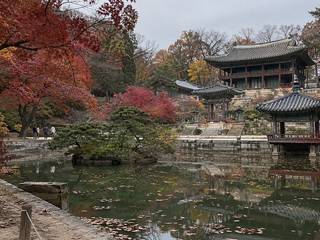
Changdeokgung Palace 창덕궁
A UNESCO-listed palace laid out to follow the hills, famous for its Secret Garden of ponds and pavilions visited on guided tours.
Seoul · Seoul ·
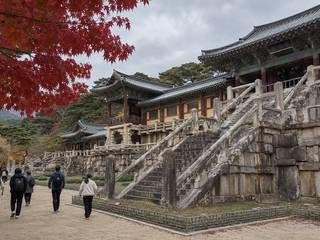
Bulguksa Temple 불국사
Korea's most celebrated temple, with Silla-era stone stairways, bridges and the twin pagodas Dabotap and Seokgatap.
Gyeongju · Gyeongsang ·
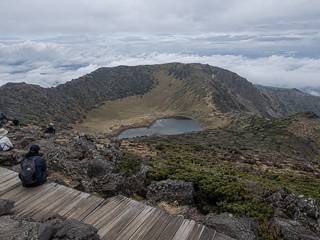
Hallasan 한라산
South Korea's highest peak. A long day hike leads to the Baengnokdam crater; summit trails need advance booking.
Jeju Island · Jeju ·
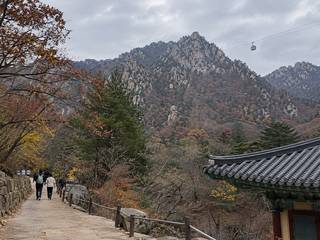
Seoraksan National Park 설악산국립공원
Granite peaks topped by Daecheongbong (1,708 m), a UNESCO biosphere reserve since 1982; easy trails start at Seorak-dong.
Sokcho · Gangwon ·
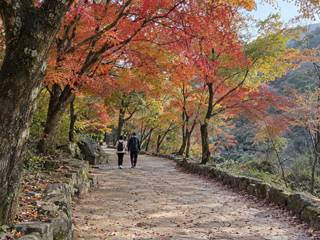
Naejangsan National Park 내장산국립공원
Maple-lined approach to Naejangsa Temple and one of the country's most famous foliage valleys, peaking late; the 2026 forecast is 4 November. The Seoraebong ridge section needs an online booking.
Jeongeup · Jeolla ·
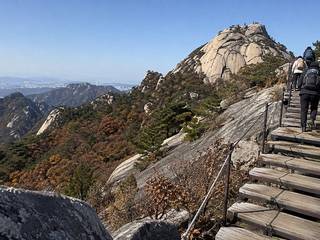
Bukhansan National Park 북한산국립공원
Granite peaks on the northern city edge with trails to Baegundae summit, an old mountain fortress and hillside temples.
Seoul · Seoul ·
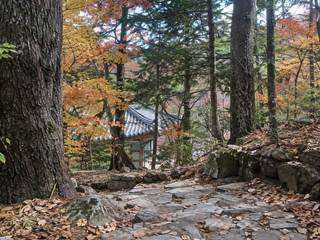
Odaesan National Park 오대산국립공원
Mountain park around Woljeongsa and Sangwonsa temples; in 2026 the KMA recorded first colour on 1 October and peak on 14 October, the first of its 21 observed mountains to peak.
Pyeongchang · Gangwon ·
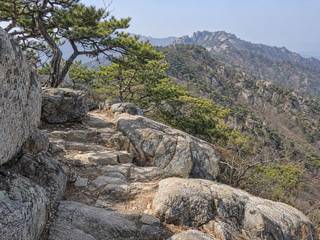
Palgongsan National Park 팔공산국립공원
Granite ridge north-east of Daegu, a national park since December 2023; a cable car climbs to 820 m and leaves peak in late October.
Daegu · Gyeongsang ·
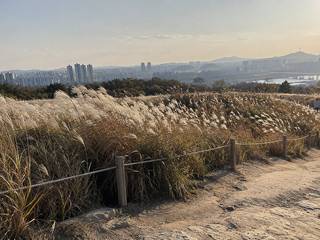
Haneul Park 하늘공원
A hilltop park built on a former landfill, best in autumn when its fields of silver grass turn golden.
Seoul · Seoul ·
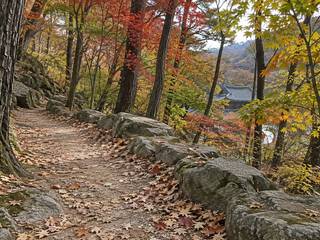
Songnisan National Park 속리산국립공원
Central-Korea park around Beopjusa Temple; the Forest Service forecast its 2026 peak for 28 October, between the Gangwon mountains and the south.
Boeun · Chungcheong ·
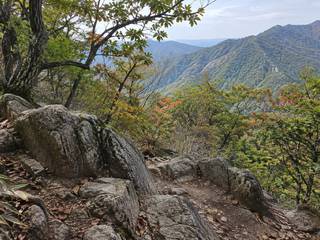
Jirisan National Park 지리산국립공원
Korea's largest mountain park, spread over three provinces; the KMA's observation point at Jeongnyeongchi pass showed first colour on 14 October 2026. The Nogodan summit area is booking-only.
Namwon · Jeolla ·
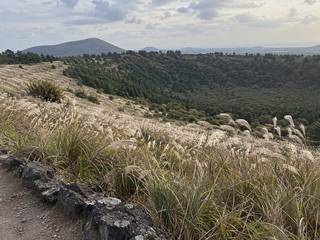
Sangumburi Crater 산굼부리
A broad, deep crater without a cone, rimmed by silver grass that glows in autumn.
Jeju Island · Jeju ·
Frequently asked questions
When is the best time to see autumn leaves in Korea?
Mid-October to early November. Colour peaks first in the Gangwon mountains (Seoraksan's average peak is 17 October), reaches Seoul and central Korea in late October, and the south and Jeju in early November.
When do the leaves peak in Seoul?
Usually in late October to early November. The 2026 autumn map by the Korea Tourism Organization and Korea National Arboretum puts the Seoul area's peak in late October; on 14 October 2026 the KMA recorded first colour at Bukhansan.
Where can I check the live foliage status?
On the KMA weather portal (weather.go.kr), which posts photos and status for 21 mountains from 21 September to 27 November 2026. It is in Korean: look for 유명산 단풍현황 under 봄꽃·단풍.
Do I need to book anything to see the autumn leaves?
Not for most places. A few national park trails are booking-only in autumn, including Seoraksan's Heullimgol valley and Naejangsan's Seoraebong section; book them on the Korea National Park Service reservation site.
Is mid-November too late for autumn colour?
Not in the south. The 2026 forecasts put Naejangsan's peak on 4 November and Hallasan's on 6 November, and the regional map expects Gyeongsang and Jeolla to peak in early to mid-November.
Sources
Facts on this page were checked against these sources on 15 October 2026. Prices, hours and rules change — confirm with the operator before you go.
- 산림청 보도자료 — 2026년 한반도 단풍절정 예측지도 발표 (2026-09-22) (Korean) · official
- 강원지방기상청 보도자료 — 오늘(28일) 설악산 첫 단풍, 평년 첫 단풍·절정일 (2026-09-28) (Korean) · official
- 기상청 날씨누리 — 유명산 단풍현황 (21개 산, 관측일; checked 15 Oct 2026) (Korean) · official
- 국립수목원 보도자료 — 한반도 단풍절정 검색서비스 공개 (2026-09-29) (Korean) · official
- 국립공원공단 예약시스템 — 탐방로 예약 (흘림골, 서래봉, 노고단 등) (Korean) · official
- 서울시 환경분야 — 제25회 서울억새축제 (2026-10-17~23, 하늘공원) (Korean) · official
- 서울 열린데이터광장 — 서울 단풍길 110선 (2025-11-05) (Korean) · official
- 기상자료개방포털 — 우리나라 기후평년값 (1991–2020, 서울) (Korean) · official
- 파이낸셜뉴스 — 한국관광공사·국립수목원 2026 단풍지도, 여행지 36곳 (2026-10-08) (Korean)
- The Korea Times — Crowdsourced data powers Korea's official autumn foliage map (2026-10-08)
- 세계일보 — 설악산·오대산·치악산·덕유산 단풍 현황, 평년 절정 (2026-10-13) (Korean)