Nature & Outdoors
Beaches
Updated
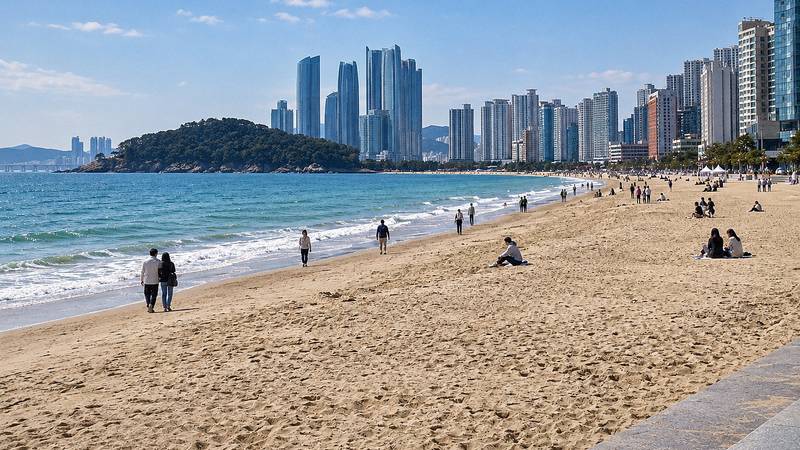
Korea’s beaches are free and open all year, but you can only swim safely in the short summer season, when lifeguards are on duty: in 2026, 24 June–6 September on Jeju, 26 June–15 September at Busan’s Haeundae, and from early July to late August on the east coast. For a first trip, Busan’s Haeundae and Gwangalli are a subway ride from the KTX. Jeju has the clearest water, and Gangneung is two hours from Seoul by train.
If you come from Southeast Asia or Australia, expect a short, crowded beach season rather than year-round swimming: outside it there are no lifeguards, and city governments ask visitors to stay out of the water. The beaches stay worth visiting for walks, sunsets and Busan’s night shows. Dates and prices below come from city and provincial pages, checked on 26 October 2026; the 2027 dates are announced in late spring.
Which beach fits your trip
| Your situation | Do this |
|---|---|
| First trip, any month | Busan: Haeundae and Gwangalli, both on subway Line 2 |
| Summer with young children | Hamdeok on Jeju: shallow, clear water, 10 stops from the airport by express bus |
| You want the turquoise water from the photos | Hyeopjae in west Jeju, facing the islet of Biyangdo |
| Based in Seoul with a day or a night | KTX-Eum to Gangneung for Gyeongpo Beach, or an express bus to Sokcho |
| Long layover at Incheon Airport | Eulwangni or Muuido on Yeongjong Island, next to the terminals |
| Autumn or winter visit | Gwangalli’s Saturday drone show, or a beach walk at Haeundae, which is lit every evening |
The short answer for most visitors: go to Busan. It is the only big city where you can reach a good beach by subway, and its beaches stay lively out of season.
Swimming season dates at a glance
| Beach | 2026 lifeguarded season | Swimming hours | Getting there |
|---|---|---|---|
| Haeundae (Busan) | 26 Jun – 15 Sep | 09:00–18:00 | Line 2, Haeundae Station Exit 5, 8 min walk |
| Gwangalli, Songdo (Busan) | 1 Jul – 31 Aug | 09:00–18:00 | Line 2, Gwangan Exit 3; Songdo by bus from Jagalchi |
| Hamdeok, Hyeopjae and 10 more (Jeju) | 24 Jun – 6 Sep | 10:00–19:00; Hyeopjae and Iho Tewoo to 21:00 from 15 Jul to 15 Aug | Express bus 101 or 102 from Jeju Airport |
| Sokcho Beach | 3 Jul – 23 Aug | 09:00–18:00; to 21:00 from 21 Jul to 12 Aug | Express bus from Seoul, about 2 h 20 min |
| Gyeongpo (Gangneung) | Early Jul – late Aug | Not published | KTX-Eum to Gangneung, then bus 202 |
From Busan city, Haeundae-gu, Jeju province and Sokcho city pages, checked 26 October 2026; Gangneung from Korean press. Lifeguards cover only the marked zone inside the buoys, and only in these hours. Plan any trip that is mainly about swimming for July or August, when every beach in the table is open.
Busan’s city beaches
Busan has eight official beaches, and four of them suit a short visit.
Haeundae is Korea’s most famous beach, a 1.5 km arc of sand backed by hotel towers. The water is shallow, and Busan installs jellyfish nets there each summer. In 2026 it became the first beach in Korea to pass 10 million visitors in one season, so arrive early on summer weekends. In season, a parasol with mat, a tube or a beach bed costs ₩10,000 each.
Gwangalli faces the lit Gwangan Bridge and is lined with cafés and bars. It is the beach to see at night: a free drone light show runs every Saturday, at 19:00 and 21:00 from October to February and at 20:00 and 22:00 from March. The Busan Fireworks Festival fills the beach on 7 November 2026.
Songdo, in the west near Jagalchi Market, was Korea’s first public beach, opened in 1913. A sea cable car (₩19,000 return) and a skywalk over the water make it a good stop out of season. Songjeong, east of Haeundae, is calmer and is where Busan runs its surfing programmes.
From Busan Station, take Line 1 to Seomyeon and change to Line 2 for Gwangalli and Haeundae. The KTX from Seoul to Busan costs ₩54,400 in standard class (see KTX tickets).
Jeju’s beaches
Jeju has 12 official beaches, all with the same season and the same prices. The water is clearer than on the mainland, with pale sand and black volcanic rock. In 2026 a parasol cost ₩20,000 and a raised wooden platform (pyeongsang) ₩30,000, prices the province has held for three seasons.
- Hamdeok, east of Jeju City, is the busiest: about 700,000 visitors in the 2026 season. The water is shallow and calm, which suits families. Take express bus 101 from the airport.
- Hyeopjae, in the west, has bright turquoise water facing Biyangdo. Express bus 102 runs from the airport. From mid-July to mid-August swimming is allowed until 21:00.
- Iho Tewoo is the closest beach to the airport, best known for its two horse-shaped lighthouses at sunset.
- Udo, 15 minutes by ferry from Seongsan Port, has white-sand beaches; see islands.
Without a car, base yourself in Jeju City and use the airport express buses. A rental car makes it easier to combine the beaches with the rest of the island.
East coast beaches from Seoul
The East Sea coast of Gangwon has long, sandy beaches backed by pine trees, and parts of the seabed shelve steeply. Its season is the shortest: most beaches open in early July and close in late August.
Gyeongpo Beach in Gangneung has 1.8 km of sand with a pine grove and a lagoon behind it. Gangneung is about two hours from Seoul by KTX-Eum, and city bus 202 runs to the beach. It is the easiest beach trip from Seoul, and the town adds Joseon houses, a coffee street and Jeongdongjin for sunrise.
Sokcho Beach, further north, has 940 m of sand and a Ferris wheel at one end. Express buses from Seoul take about 2 h 20 min (₩18,700, October 2026). In 2026 the season ran from 3 July to 23 August, with night swimming until 21:00 from 21 July to 12 August. Sokcho warns that the seabed drops steeply, so swim only inside the limit buoys. Combine it with Seoraksan.
West and south coast beaches
The Yellow Sea coast is flatter, with wide tidal flats, so the sea can be far out at low tide. Its best-known beach is Daecheon at Boryeong, home of the summer Boryeong Mud Festival; see Chungcheong.
Near Incheon Airport, Eulwangni is a small cove on Yeongjong Island lined with seafood grills and known for its sunsets, and Muuido is across a bridge. They are good for a layover or the night before an early flight, rather than for a swim.
On the south coast, Yeosu has Manseongri, a beach of dark sand a short ride north of the station. It is quiet outside the summer season.
Beaches out of season
From September to June the beaches are still open and free, but they are for walking, not swimming. These are the best reasons to go:
- Gwangalli drone show, every Saturday evening, all year, from the sand.
- Haeundae is lit from sunset to midnight. Dongbaekseom’s coastal path and the Blueline Park beach train start at either end.
- Songdo’s cable car and skywalk run all year.
- Sunrise on the east coast at Gyeongpo, Jeongdongjin or Sokcho.
Tips for Korean beaches
- Swim only in season and inside the buoys. Lifeguards and 119 rescue crews cover only the marked zone during set hours.
- Check the day’s conditions. High waves can close the water even in season; Jeju’s beach control rooms can tell you whether swimming is allowed that day.
- Rent on the spot. Parasols, tubes and showers are paid for at the beach; prices are fixed by the local government each year.
- No fireworks or camping on the sand. Sokcho bans both, along with pets inside the swimming zone; other beaches have similar rules. Hamdeok on Jeju has a marked dog zone.
- Book summer rooms early. Beachfront hotels in Busan, Gangneung and Jeju fill up and peak in price in July and August.
- Watch the weather. Typhoons are most likely from July to September; see weather.
Where to next
For island beaches, see islands. The city guides for Busan, Jeju and Gangneung cover hotels, food and transport. Pair a coastal trip with national parks or hiking.
Book your trip
Best beaches in Korea
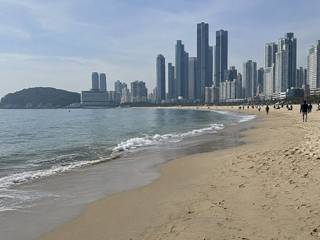
Haeundae Beach 해운대해수욕장
Korea's most famous city beach, a wide arc of sand backed by hotels and towers, packed in midsummer.
Busan · Busan ·
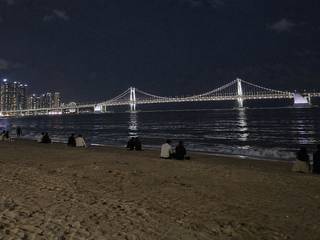
Gwangalli Beach 광안리해수욕장
A city beach facing the illuminated Gwangan Bridge, lined with cafes and bars and home to a weekly drone show.
Busan · Busan ·
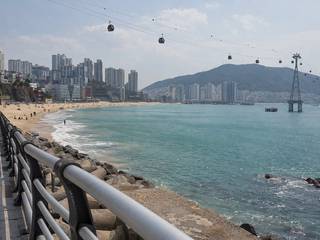
Songdo Beach and Cable Car 송도해수욕장 송도해상케이블카
Busan's first public beach, crossed by a sea cable car and a curving skywalk over the water.
Busan · Busan ·
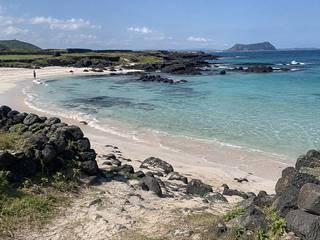
Udo 우도
A small island 15 minutes by ferry from Seongsan, with white beaches and a grassy headland; most rental cars can't go.
Jeju Island · Jeju ·
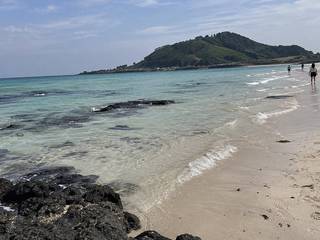
Hamdeok Beach 함덕해수욕장
Shallow, clear water and pale sand east of Jeju City, with a small grassy hill for views over the bay.
Jeju Island · Jeju ·
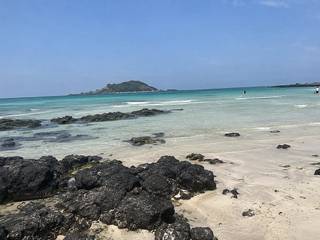
Hyeopjae Beach 협재해수욕장
One of the island's most beautiful beaches, with bright turquoise water facing the small island of Biyangdo.
Jeju Island · Jeju ·
Gyeongpo Beach 경포해변
The city's main beach, 1.8 km of sand backed by pine trees and hotels; free, and busiest in the July–August swimming season.
Gangneung · Gangwon ·
Anmok Beach Coffee Street 안목해변 커피거리
A seafront row of cafés and roasters that has made Gangneung Korea's coffee city; free to walk, with a beach in front.
Gangneung · Gangwon ·
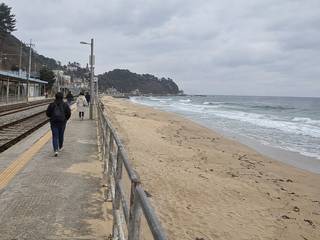
Jeongdongjin 정동진
A sunrise village whose railway station sits right by the beach; the hilltop Sandglass Park is free and open all year.
Gangneung · Gangwon ·
Sokcho Beach 속초해수욕장
A 940 m town beach with the Sokcho Eye Ferris wheel at its north end; lifeguards and facilities from early July to late August.
Sokcho · Gangwon ·
Eulwangni Beach 을왕리해수욕장
A sandy cove on the west side of Yeongjong Island, lined with seafood grills and known for its sunsets.
Incheon · Gyeonggi & Incheon ·
Yeongjin Beach (Goblin filming site) 영진해변 도깨비 촬영지
The short seawall where the 2016 drama Goblin filmed its umbrella scene, a photo stop on the coast road south of Jumunjin.
Gangneung · Gangwon ·
Hyangho Beach BTS bus stop 향호해변 BTS 버스정류장
A rebuilt replica of the beach bus shelter from BTS's 2017 album cover shoot, north of Jumunjin; no buses stop here.
Gangneung · Gangwon ·
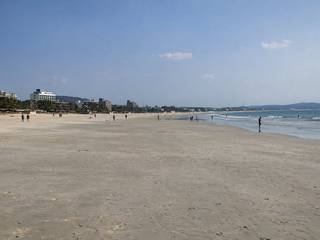
Daecheon Beach 대천해수욕장
The best-known beach on the west coast, a long stretch of sand at Boryeong that hosts the Boryeong Mud Festival every summer.
Boryeong · Chungcheong ·
Manseongri Black Sand Beach 만성리 검은모래해변
A beach of dark volcanic-looking sand north of the station, free and open all year; quiet outside the summer season.
Yeosu · Jeolla ·
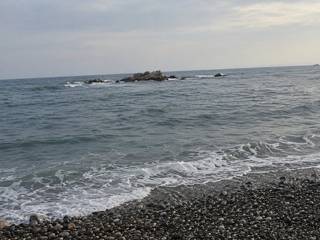
Underwater Tomb of King Munmu 문무대왕릉
A rocky islet just off the east coast, said to hold the remains of the Silla king who united the peninsula's three kingdoms.
Gyeongju · Gyeongsang ·
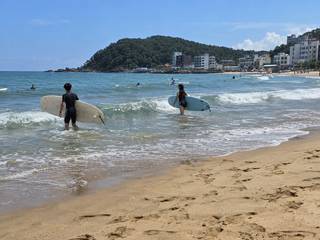
Songjeong Beach 송정해수욕장
A quieter beach east of Haeundae and Busan's surfing beach; in 2026 its lifeguarded season ran from 26 June to 31 August. The Blueline Park beach train ends nearby.
Busan · Busan ·
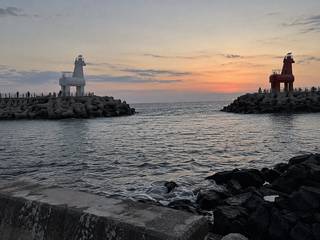
Iho Tewoo Beach 이호테우해수욕장
The beach closest to the airport, best known for its two horse-shaped lighthouses at sunset.
Jeju Island · Jeju ·
Frequently asked questions
When is beach season in Korea?
Roughly late June to late August, a little longer in Busan and Jeju. In 2026 Jeju's 12 official beaches had lifeguards from 24 June to 6 September, Haeundae from 26 June to 15 September, most other Busan beaches 1 July–31 August, and Sokcho 3 July–23 August. Busan announces the next year's dates in late spring; check the city pages for the others.
Can you swim at Korean beaches in September or October?
Not safely, in most places. Once the season closes there are no lifeguards, no marked swimming zones and no rentals, and Busan and Jeju keep safety staff on patrol asking people to stay out of the water. Haeundae, open until 15 September in 2026, is the last big beach to close.
What is the best beach in Korea for a first trip?
Haeundae in Busan, if you want a city beach you can reach by subway: Line 2 to Haeundae Station, Exit 5, then about 8 minutes on foot. On Jeju, Hamdeok has clear, shallow water for families and is 10 stops from the airport on express bus 101; Hyeopjae in the west is the most photogenic.
Do Korean beaches charge an entry fee?
No. The sand is free all year. In season you pay only for extras: in 2026 a parasol was ₩20,000 and a raised platform ₩30,000 at Jeju's official beaches, while at Haeundae a parasol with mat, a tube or a beach bed cost ₩10,000 each and showers ₩1,000 per minute.
Is there a beach near Seoul?
Seoul itself has no sea beach. The nearest are on Yeongjong Island by Incheon Airport, such as Eulwangni, and Muuido across the bridge, but they sit on the tidal Yellow Sea. For a proper beach from Seoul, take the KTX-Eum to Gangneung (about two hours) and go to Gyeongpo Beach.
Sources
Facts on this page were checked against these sources on 26 October 2026. Prices, hours and rules change — confirm with the operator before you go.
- Busan Metropolitan City – 2026 beach schedule (Haeundae and Songjeong from 26 June, Songdo, Gwangalli, Dadaepo, Ilgwang and Imnang from 1 July; jellyfish nets; surfing at Songjeong) · official
- 부산광역시 보도자료 – 부산시 2026년 8개 해수욕장 폐장, 역대 최다방문 기록 경신 (송정 등 7개 8월 31일 폐장, 해운대 9월 15일; 2026-09-17) (Korean) · official
- 해운대구 문화관광 – 해운대해수욕장 이용안내 (2026 개장기간·피서용품·편의시설 가격) (Korean) · official
- 해운대구 문화관광 – 해운대해수욕장 오시는길 (Korean) · official
- 광안리 M 드론라이트쇼 – 공연개요 (공연 시간) (Korean) · official
- 부산불꽃축제 – 행사개요 (2026. 11. 7.) (Korean) · official
- 송도해상케이블카 – 요금/우대혜택 (에어크루즈 왕복 19,000원) (Korean) · official
- Busan Metropolitan City – Songdo Beach (first public beach, 1913; directions) · official
- 제주특별자치도 보도자료 – 24일 도내 12개 해수욕장 동시 개장 (6.24~9.6, 10~19시, 야간 연장, 파라솔 2만 원·평상 3만 원; 2026-06-22) (Korean) · official
- 제주특별자치도 보도자료 – 올여름 제주 해수욕장 160만 6,000명 (함덕 70만여 명; 폐장 후 안전관리; 2026-09-07) (Korean) · official
- 비짓제주 – 협재해수욕장 (2026 개장기간·운영시간, 야간 연장 7.15~8.15 21시) (Korean) · official
- Visit Jeju – Hamdeok Beach · official
- 제주버스정보시스템 – 노선 검색 (101번·102번 급행) (Korean) · official
- 속초시 관광 – 해수욕장 지정 운영 (2026 개장기간 7.3~8.23, 수영시간 09:00~18:00, 야간개장 7.21~8.12, 이용자 준수사항) (Korean) · official
- 비짓강릉 – 경포해변 (백사장 1.8km, 송림) (Korean) · official
- 쿠키뉴스 – 강릉시, 2026년 경포해수욕장 개장식 개최 (7월 4일, 18개 해수욕장) (Korean)
- 파이낸셜뉴스 – 경포해수욕장 개장, 강릉 해수욕장 8월 23일까지 운영 (2026-07-05) (Korean)