Nature & Outdoors
National parks
Updated
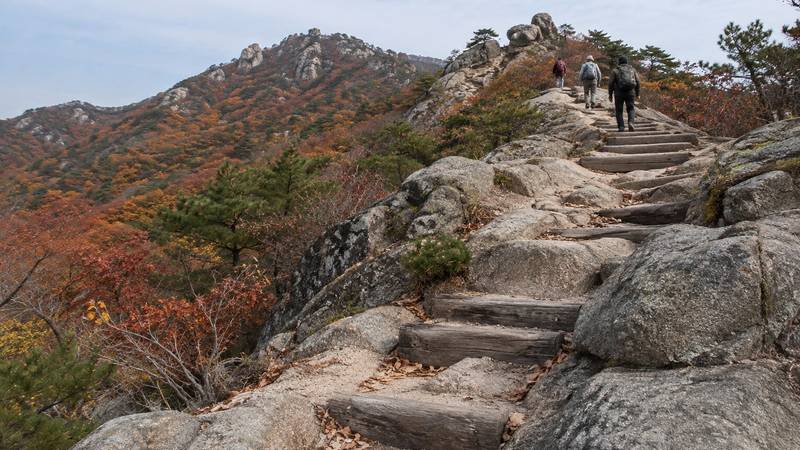
South Korea has 24 national parks, and none charges admission (fees were abolished on 1 January 2007). From Seoul, go to Bukhansan; for the big mountain scenery, Seoraksan or Jirisan; on Jeju, Hallasan needs a free summit booking. Every trail has a last-entry time, and high trails close for wildfire season, in autumn usually from mid-November.
Jirisan became the first national park in 1967. The newest are Palgongsan near Daegu (December 2023) and Geumjeongsan in Busan, designated on 3 March 2026. Of the 24, 19 are mountain parks, four are marine or coastal and one, Gyeongju, is protected for its history. The Korea National Park Service runs 23 of them; Hallasan is run by Jeju Province. The parks counted about 43 million visits in 2025, so popular trails are crowded at autumn weekends.
Which national park fits your trip?
Most first-time visitors do not travel for a park; they add one to a city stay. Start from where you are sleeping.
| Your base | Park | Why go |
|---|---|---|
| Seoul | Bukhansan | Granite peaks and fortress walls inside the city limits; subway plus bus to the trailheads |
| Sokcho, east coast | Seoraksan | The country’s most famous mountain scenery; low trails such as Ulsanbawi |
| Busan | Geumjeongsan | Ridge walks along an old mountain fortress on the city’s northern edge |
| Gyeongju | Gyeongju (Tohamsan with Seokguram, Namsan) | Silla temples and rock-carved Buddhas on easy forest trails |
| Jeju | Hallasan | South Korea’s highest peak; summit by free booking only |
| South coast | Hallyeohaesang | Island seascapes around Tongyeong, Geoje and Yeosu |
| Jeolla, autumn | Naejangsan, Jirisan | Maple valleys at Naejangsa; Korea’s biggest mountain ridge |
Park types and highlights from the Korea National Park Service park pages, checked 8 October 2026. If you have one free day in Seoul, Bukhansan is the easy choice; Seoraksan and Jirisan reward an overnight stay nearby. For the temples inside many parks, see temples. For easier walks such as the Seoul City Wall, gear rental in Seoul and long-distance trails like the Jeju Olle, see hiking in Korea.
Trail opening times and last entry
Since May 2015 the park service has fixed an entry window for each trail in the mountain parks it manages. You may start from the opening time, but you must pass each control point before its last-entry time. The hours change with the season, and the switch date differs by park.
| Trail | Winter window | Summer window |
|---|---|---|
| Bukhansan: Baegun centre → Baegundae | 04:00–16:00 (Dec–Feb) | 04:00–17:00 (Mar–Nov) |
| Seoraksan: Osaek → Daecheongbong | 04:00–11:00 (Nov–Mar) | 03:00–12:00 (Apr–Oct) |
| Jirisan: Seongsamjae → Nogodan | 04:00–16:00 (Nov–Mar) | 03:00–16:30 (Apr–Oct) |
| Jirisan: Jungsanri centre (Cheonwangbong) | 04:00–13:00 (Nov–Mar) | 03:00–14:00 (Apr–Oct) |
Earliest start and last entry, from the park service’s entry-time page, checked 8 October 2026. On most of these routes the window shortens on 1 November, so a hike planned for early November has an hour less than one in October. On Jirisan’s Jungsanri trail, hikers booked into Jangteomok shelter get one extra hour, and those booked into Rotary shelter or visiting Beopgyesa temple get two. Hallasan has its own rules; see the Hallasan hiking guide.
Fire-season trail closures
Twice a year, in the dry seasons, the parks close many high trails to prevent wildfires. Lower valleys and temple paths usually stay open.
- Spring 2026: Seoraksan closed its high trails to Daecheongbong from 4 March to 15 May, keeping lowland routes such as Waseondae, Ulsanbawi, the Towangseong Falls viewpoint and Jujeongol open. Odaesan closed most of its trails from 3 March to 5 May but kept the walks from Haetalgyo to Sangwonsa and on to Jeokmyeol Bogung.
- Autumn: in 2025 the closures ran from 15 November to 15 December at Seoraksan, Odaesan, Gyeryongsan and other parks. On 8 October 2026 the 2026 lists had not yet been published; individual parks usually announce them in early November.
Park rules and fines
Rangers run enforcement drives at peak season; Juwangsan’s runs from 9 October to 8 November 2026 and Palgongsan’s from 12 October to 20 November 2026. Breaking the Natural Parks Act can bring a fine of up to ₩2,000,000.
- Stay on marked trails; entering closed or unmarked paths is an offence.
- No cooking or camping outside designated sites, and no smoking.
- Drinking is targeted too, especially on summits.
- Do not pick plants, mushrooms, acorns or herbs.
- No hiking outside the trail entry hours.
Mountain shelters and campsites
Shelters on the long ridges, such as Jirisan’s, are booked on the park service’s reservation site, which is in Korean. Since 2025, all shelter beds are allocated by lottery: you apply in an even-numbered month for stays in the next two months (for May and June stays, between 1 and 6 April). Beds left over are released from the 1st of each even month. Staff check the booker’s ID and companions at check-in. Campsites are also booked through the same site.
Book your trip
Best national parks in Korea
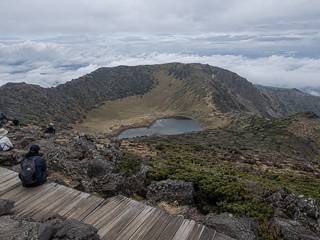
Hallasan 한라산
South Korea's highest peak. A long day hike leads to the Baengnokdam crater; summit trails need advance booking.
Jeju Island · Jeju ·
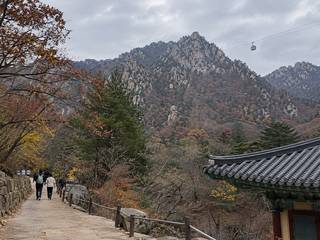
Seoraksan National Park 설악산국립공원
Granite peaks topped by Daecheongbong (1,708 m), a UNESCO biosphere reserve since 1982; easy trails start at Seorak-dong.
Sokcho · Gangwon ·
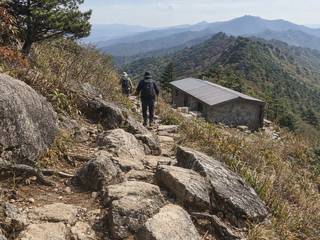
Jirisan National Park 지리산국립공원
Korea's first national park (1967) and its largest mountain park, a long ridge from Nogodan to Cheonwangbong (1,915 m) with staffed mountain shelters.
Gurye / Sancheong · Jeolla ·
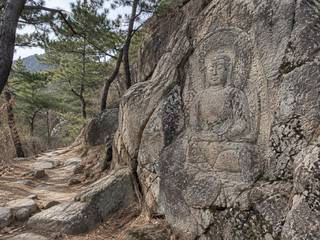
Gyeongju National Park 경주국립공원
Korea's only historic-type national park: Tohamsan with Bulguksa and Seokguram, and Namsan, an open-air museum of Silla Buddhist carvings.
Gyeongju · Gyeongsang ·
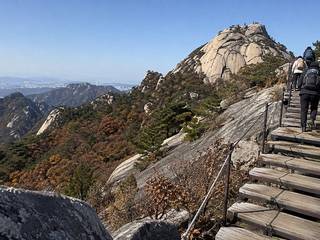
Bukhansan National Park 북한산국립공원
Granite peaks on the northern city edge with trails to Baegundae summit, an old mountain fortress and hillside temples.
Seoul · Seoul ·
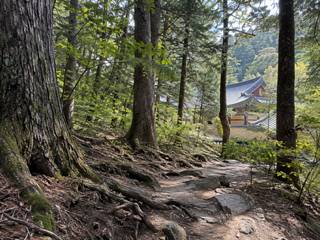
Odaesan National Park 오대산국립공원
Five peaks led by Birobong (1,563 m), old fir forest and the temples of Woljeongsa and Sangwonsa; Sogeumgang valley lies on its eastern side.
Pyeongchang · Gangwon ·
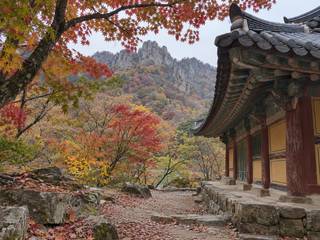
Naejangsan National Park 내장산국립공원
A ring of rocky peaks around Naejangsa temple whose maple valleys draw some of Korea's biggest autumn-colour crowds.
Jeongeup · Jeolla ·
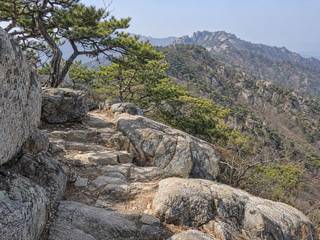
Palgongsan National Park 팔공산국립공원
Granite ridge north-east of Daegu, a national park since December 2023; a cable car climbs to 820 m and leaves peak in late October.
Daegu · Gyeongsang ·
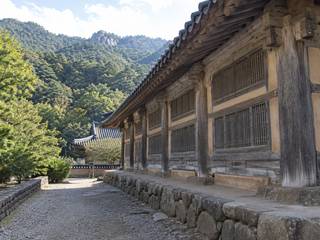
Gayasan National Park 가야산국립공원
Mountain park around Haeinsa temple and its UNESCO-listed Tripitaka Koreana halls, with the Hongnyudong valley and the Manmulsang ridge.
Hapcheon · Gyeongsang ·
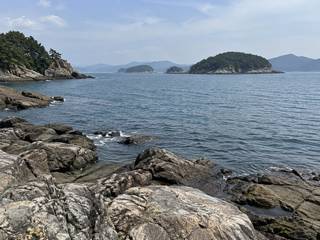
Hallyeohaesang National Park 한려해상국립공원
Korea's first marine national park (1968): islands and sheltered sea lanes stretching from Geoje to Odongdo in Yeosu.
Tongyeong / Geoje · Gyeongsang ·
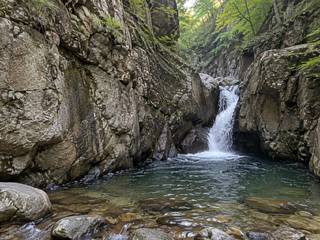
Juwangsan National Park 주왕산국립공원
Volcanic-tuff cliffs and a deep gorge of waterfalls, counted among Korea's three great rock mountains.
Cheongsong · Gyeongsang ·
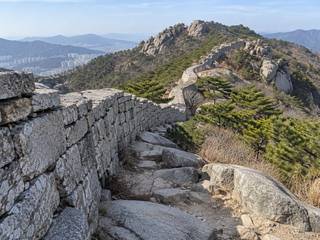
Geumjeongsan National Park 금정산국립공원
Granite ridges and the walls of Geumjeongsanseong fortress on Busan's northern edge; Korea's newest national park, designated on 3 March 2026.
Busan · Busan ·
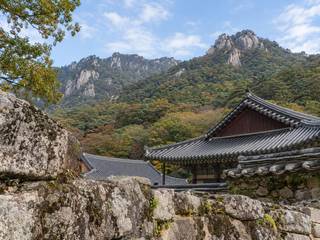
Songnisan National Park 속리산국립공원
Rock peaks on the Baekdudaegan ridge, with Munjangdae and Cheonwangbong (1,058 m) above Beopjusa temple.
Boeun · Chungcheong ·
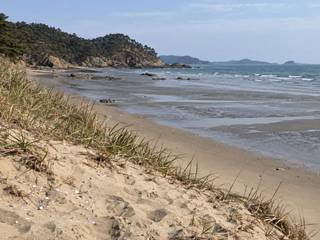
Taeanhaean National Park 태안해안국립공원
Korea's only coastal-type national park: 27 beaches, tidal flats and dunes along the Taean peninsula and Anmyeondo.
Taean · Chungcheong ·
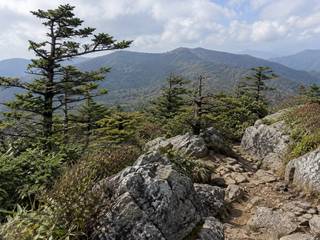
Deogyusan National Park 덕유산국립공원
South Korea's fourth-highest mountain, Hyangjeokbong (1,614 m), in the middle of the Baekdudaegan, valued for its subalpine forest.
Muju · Jeolla ·
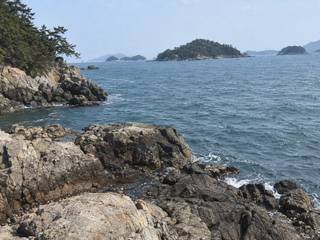
Dadohaehaesang National Park 다도해해상국립공원
Korea's largest national park, mostly sea: scattered south-western islands with evergreen forest and volcanic rock formations.
Wando / Yeosu · Jeolla ·
Frequently asked questions
Do you have to pay to enter national parks in Korea?
No. National park admission fees were abolished on 1 January 2007, so walking in is free. Shelters and campsites are booked and paid for separately on the park service's reservation site.
How many national parks does South Korea have?
24. Jirisan was the first, in 1967; Palgongsan near Daegu became the 23rd on 31 December 2023, and Geumjeongsan in Busan the 24th on 3 March 2026. 19 are mountain parks, 4 marine or coastal and 1, Gyeongju, historic.
Which national park is closest to Seoul?
Bukhansan, on the city's northern edge. Its main trailheads are reached by subway and a short bus ride, and the climb to Baegundae (836 m) is a half-day to full-day hike.
Are Korean national park trails closed in November?
Many high trails close for wildfire prevention in late autumn; in 2025 the closures ran from 15 November to 15 December. Lower trails usually stay open. The 2026 lists had not been published on 8 October 2026; check the park service's closure page before you go.
Can you hike at night in Korean national parks?
No. Each trailhead has an entry window, typically opening between 03:00 and 05:00, and a last-entry time between about 10:00 and 17:00 depending on the trail and season. Hiking outside these hours is not allowed.
Sources
Facts on this page were checked against these sources on 8 October 2026. Prices, hours and rules change — confirm with the operator before you go.
- Korea National Park Service — Korea's national parks (우리나라 국립공원) (Korean) · official
- Korea National Park Service — History (연혁): fees abolished 2007, Palgongsan 2023, Geumjeongsan 2026 (Korean) · official
- Korea National Park Service — Trail entry-time system (입산시간지정제) (Korean) · official
- Korea National Park Service — Trail closure information (통제정보) (Korean) · official
- Korea National Park Service — Seoraksan spring 2026 fire-prevention trail closures (press release, 12 Feb 2026) (Korean) · official
- Korea National Park Service — Odaesan spring 2026 trail closures (press release, 20 Feb 2026) (Korean) · official
- Korea National Park Service — Odaesan autumn 2025 trail closures (press release, 6 Nov 2025) (Korean) · official
- Korea National Park Service — Juwangsan autumn 2026 enforcement, fines up to ₩2 million (press release, 6 Oct 2026) (Korean) · official
- Korea National Park Service — Palgongsan autumn 2026 enforcement (press release, 6 Oct 2026) (Korean) · official
- Korea National Park Service — FAQ: shelter bookings by lottery (27 May 2026) (Korean) · official
- Korea National Park Service — Reservations (shelters, campsites) (Korean) · official
- Korea National Park Service — Geumjeongsan National Park (Korean) · official
- Herald Kyungnam — Geumjeongsan opens as the 24th national park (2 Mar 2026) (Korean)
- Kyunghyang Shinmun — Seoraksan autumn 2025 trail closures, 15 Nov–15 Dec (Korean)
- Dailian — shelter and campsite bookings on Kakao and NH All One Bank (16 Jun 2026) (Korean)