Busan 부산
Korea's second city and busiest port, wrapped around beaches, hillside villages, fish markets and a temple on the rocks.
Updated
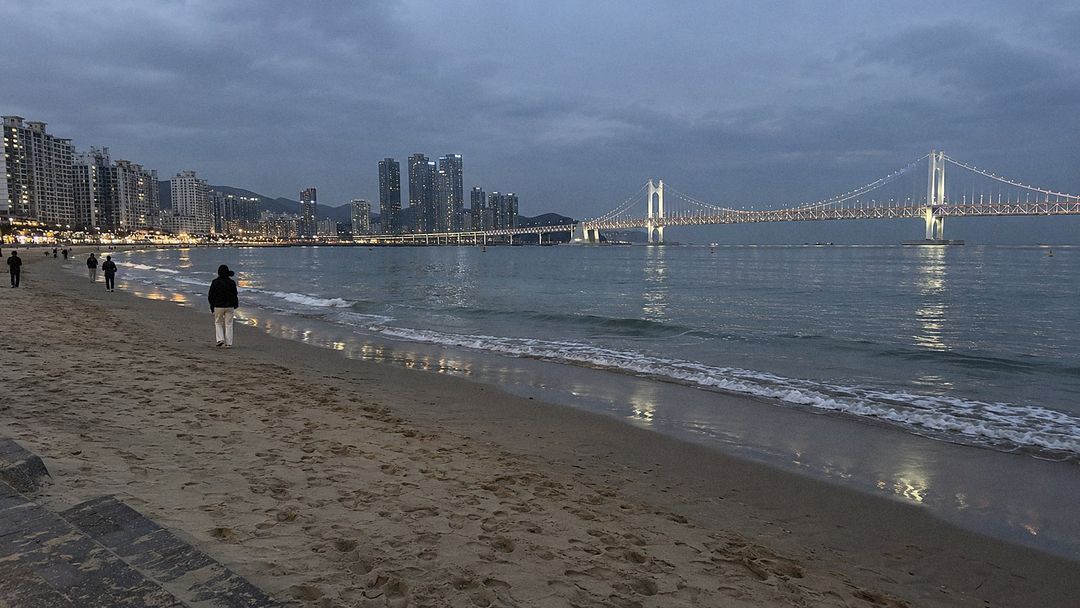
Busan at a glance
Busan is South Korea’s second-largest city, home to roughly 3.2 million people, and the country’s busiest container port, which handled a record of almost 25 million TEU in 2025. It stretches along the southeastern tip of the peninsula, squeezed between steep hills and the sea, so many neighbourhoods are built on slopes and the city runs for long distances along the coast. During the Korean War Busan was one of the few areas never taken, and refugees from across the country settled here; that history still shapes its markets, hillside villages and food.
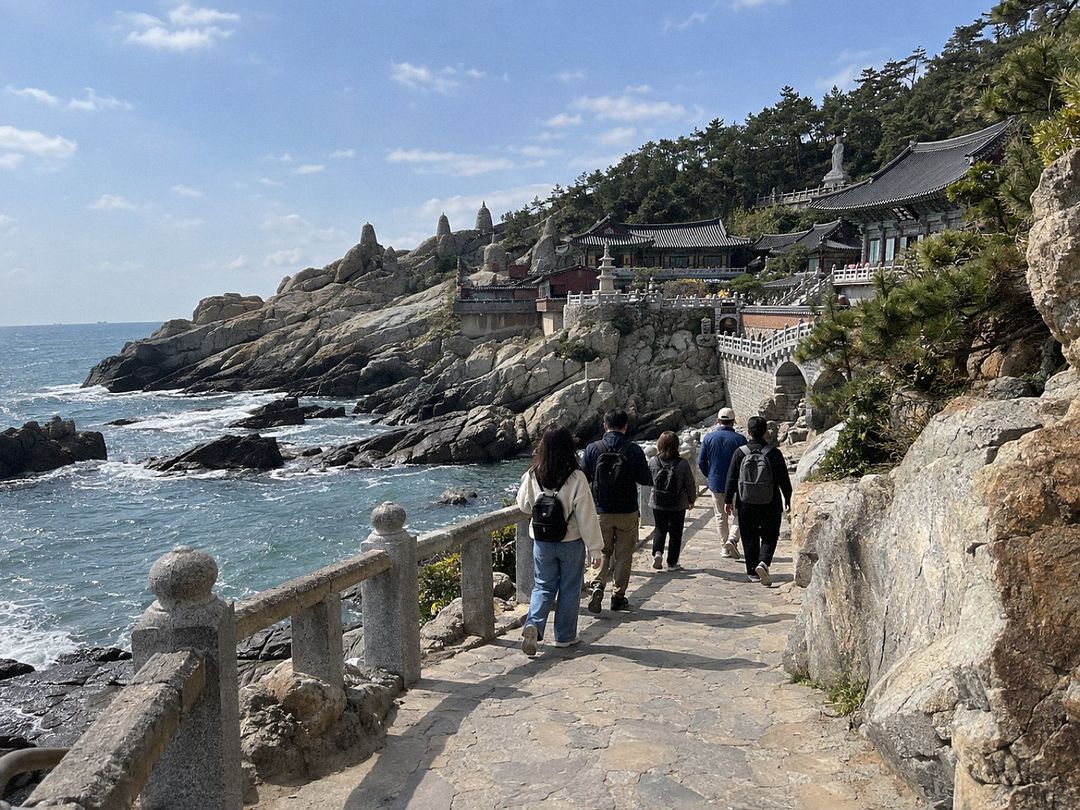
For visitors the city splits neatly into two halves. The old harbour around Nampo and the western coast hold the fish market, traditional shopping streets, Gamcheon Culture Village and the cliffs of Taejongdae. The east is the beach side: Haeundae for the classic resort strip, Gwangalli for bridge views and nightlife, and the Gijang coast for Haedong Yonggungsa, a temple set on rocks above the waves.
Planning a visit
Busan works well as a two- or three-day stop between Seoul and the south. The KTX from Seoul arrives at Busan Station, and Gimhae Airport handles domestic flights plus many international routes in Asia, so it is also a practical entry or exit point for a trip to Korea. See the Busan region page for nearby destinations, and transportation for rail and bus basics.
Because the main sights are spread out, plan each day around one side of the city. The metro is cheap and reliable, but crossing between the two halves of the city takes a good chunk of time.
When to go
Summer (July and August) is beach season, when Haeundae and Gwangalli are at their most crowded and hotel prices peak. Late spring and early autumn bring warm, clear weather that suits coastal walks such as Dongbaekseom and the Oryukdo cliffs. Autumn is also festival season, headlined by the Busan International Film Festival; check the dates for your year. Winters are milder than in Seoul, and the beaches and night views remain worthwhile even when it is too cold to swim.
Tips
- Busan dialect and a brisk local manner can surprise visitors from Seoul; it is simply the city’s style.
- Gwangalli’s drone show runs every Saturday evening; arrive early for a spot on the sand.
- Jagalchi is best around lunchtime, when the restaurants upstairs are in full swing.
Book your trip
Top attractions in Busan
Nampo and Jung-gu
The old harbour core around Nampo-dong, with Jagalchi fish market, BIFF Square, Gukje Market and Yongdusan Park with Busan Tower.
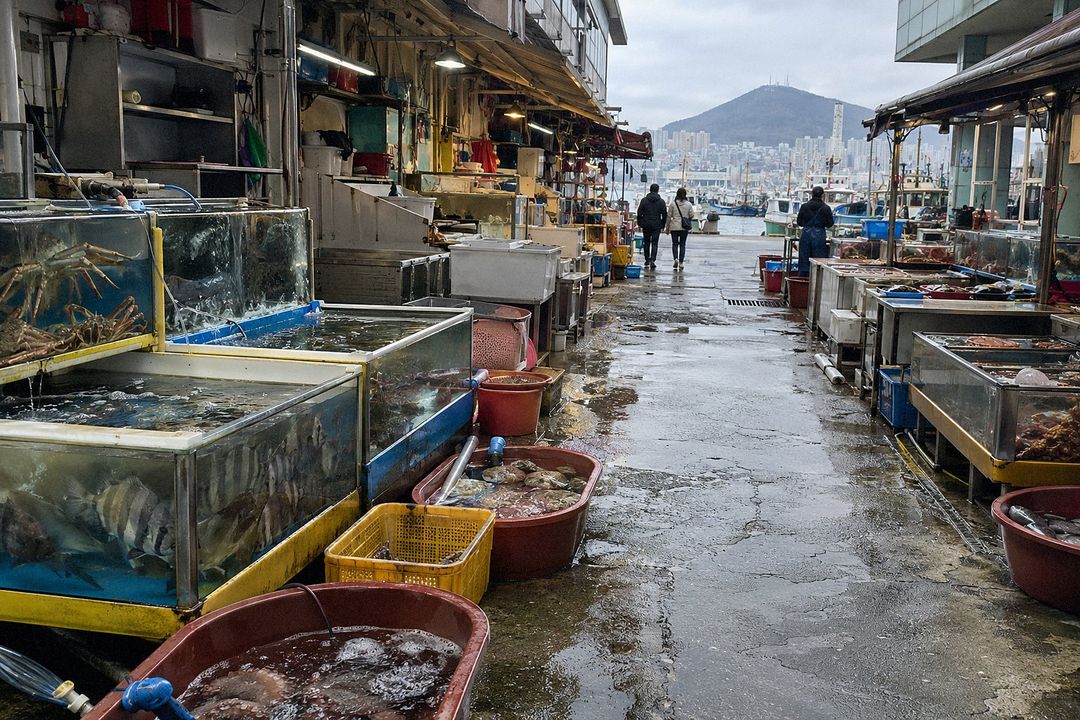
Jagalchi Market
Korea's best-known seafood market, with live tanks downstairs and restaurants upstairs that cook what you pick.
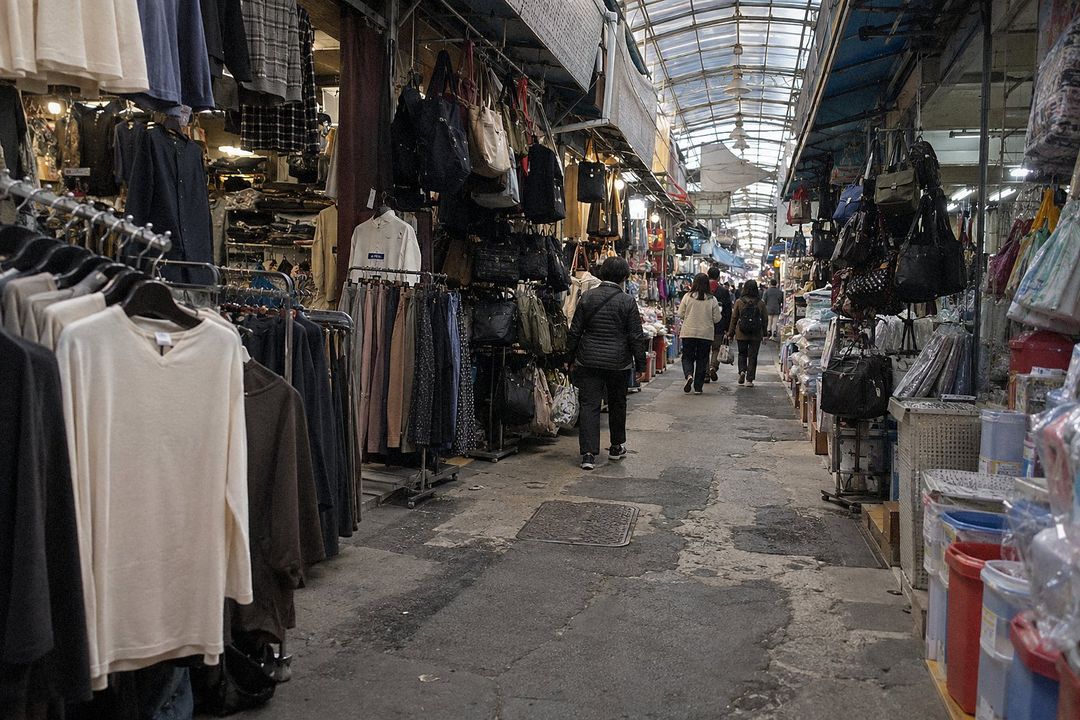
Gukje Market
A sprawling postwar market of covered alleys selling clothes, kitchenware and street snacks.
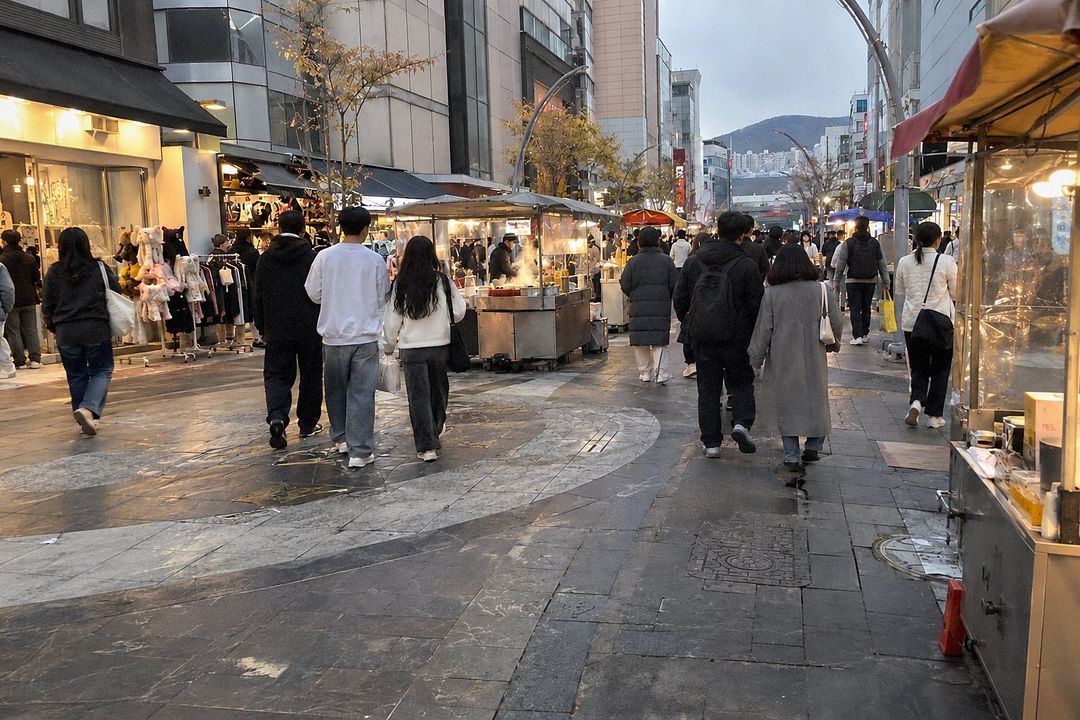
BIFF Square
Pedestrian street tied to the Busan International Film Festival, now best known for its street-food carts.
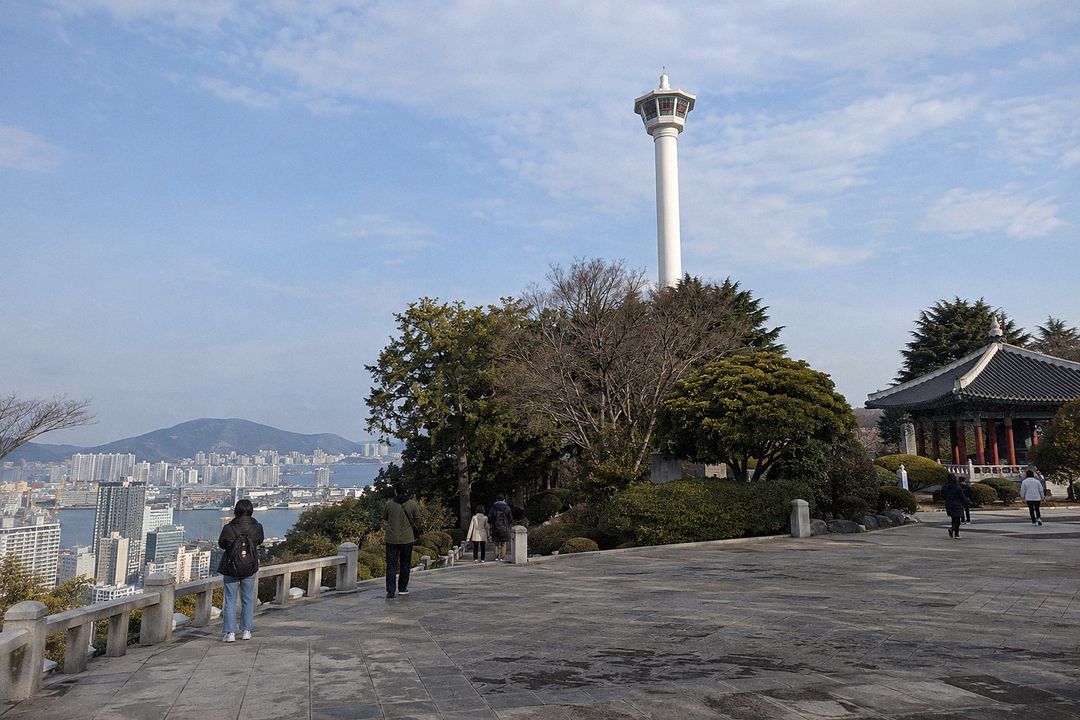
Yongdusan Park and Busan Tower
A hilltop park reached by outdoor escalators, topped by a tower with views over the port and Nampo.
Western coast (Saha, Seo-gu, Yeongdo)
Hillside Gamcheon Culture Village, Songdo Beach with its sea cable car, the cliffside Huinnyeoul village and the Taejongdae headland.
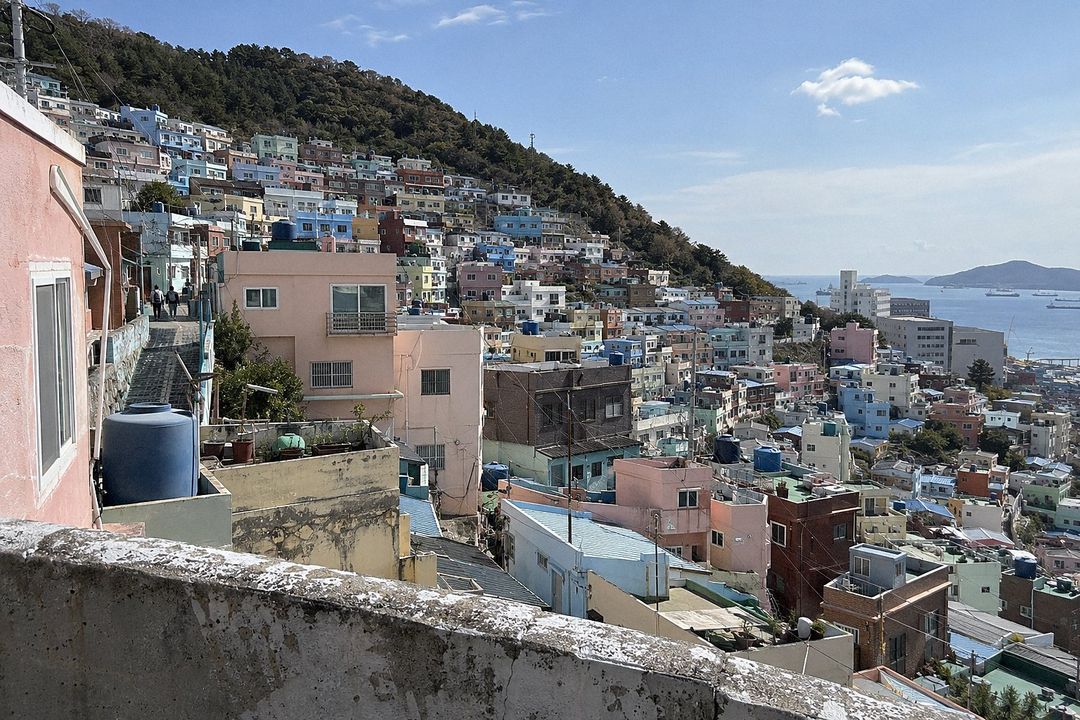
Gamcheon Culture Village
Pastel houses stacked on a steep hillside, linked by stairs and alleys dotted with murals and small galleries.
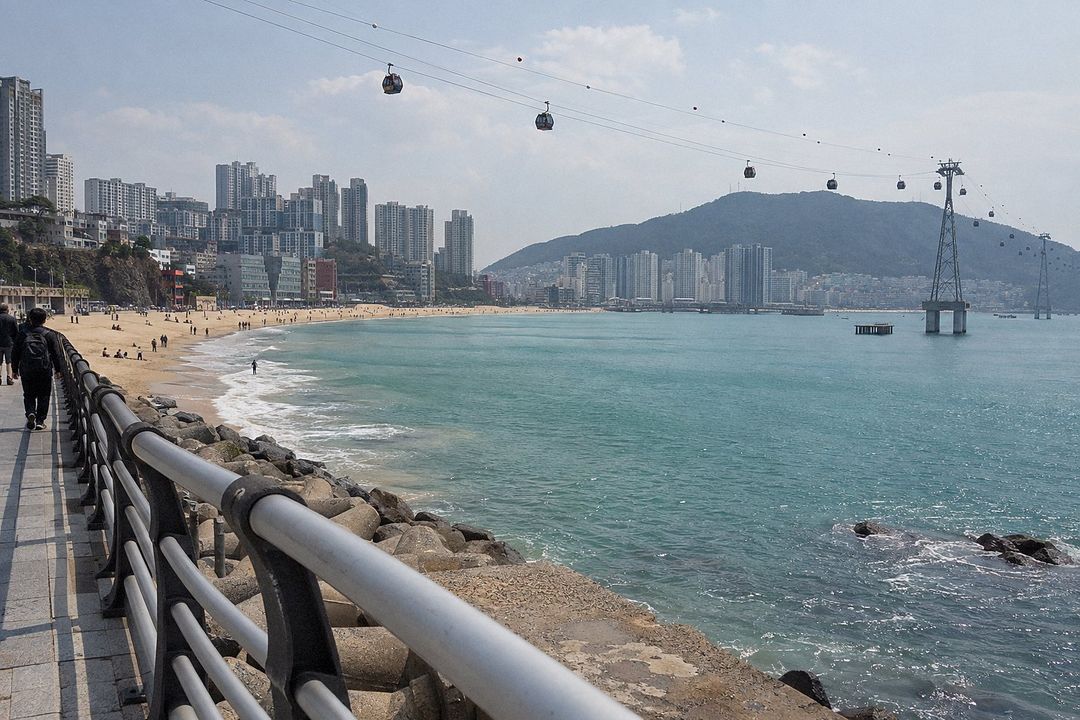
Songdo Beach and Cable Car
Busan's first public beach, crossed by a sea cable car and a curving skywalk over the water.
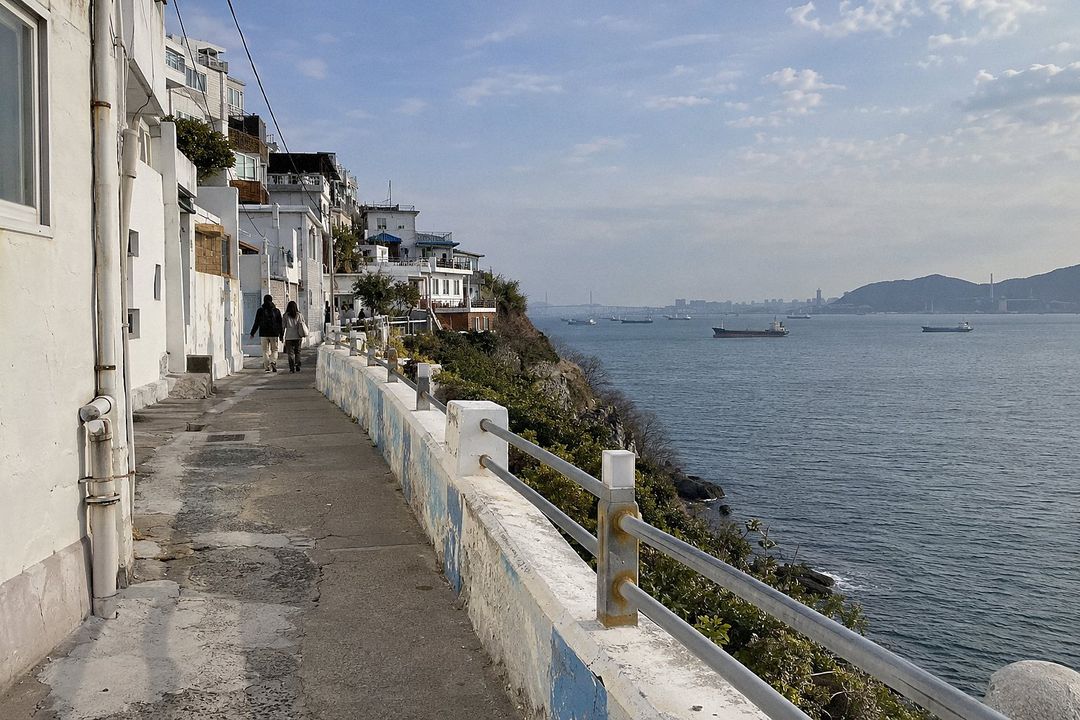
Huinnyeoul Culture Village
A cliffside lane of white houses and cafes on Yeongdo, looking straight out over anchored cargo ships.
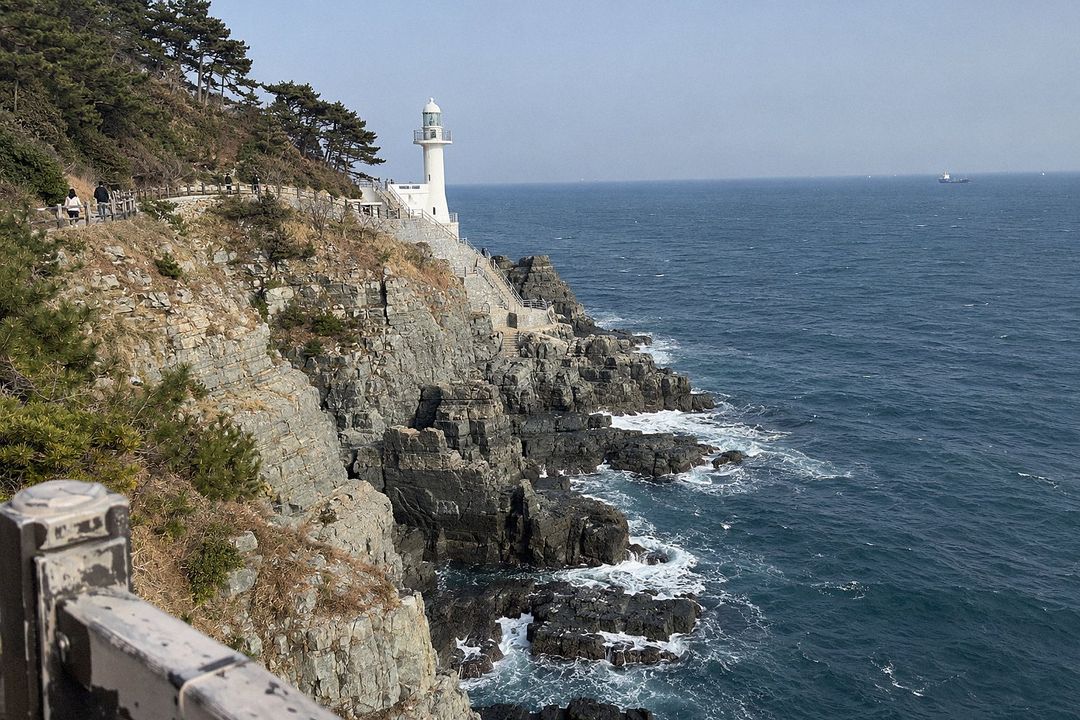
Taejongdae
A wooded headland at the tip of Yeongdo with sheer sea cliffs, a lighthouse and a loop road served by a road train.
Haeundae
Busan's resort district, with its best-known beach, the Dongbaekseom islet walk, the Blueline Park coastal rail and a skyscraper observatory.
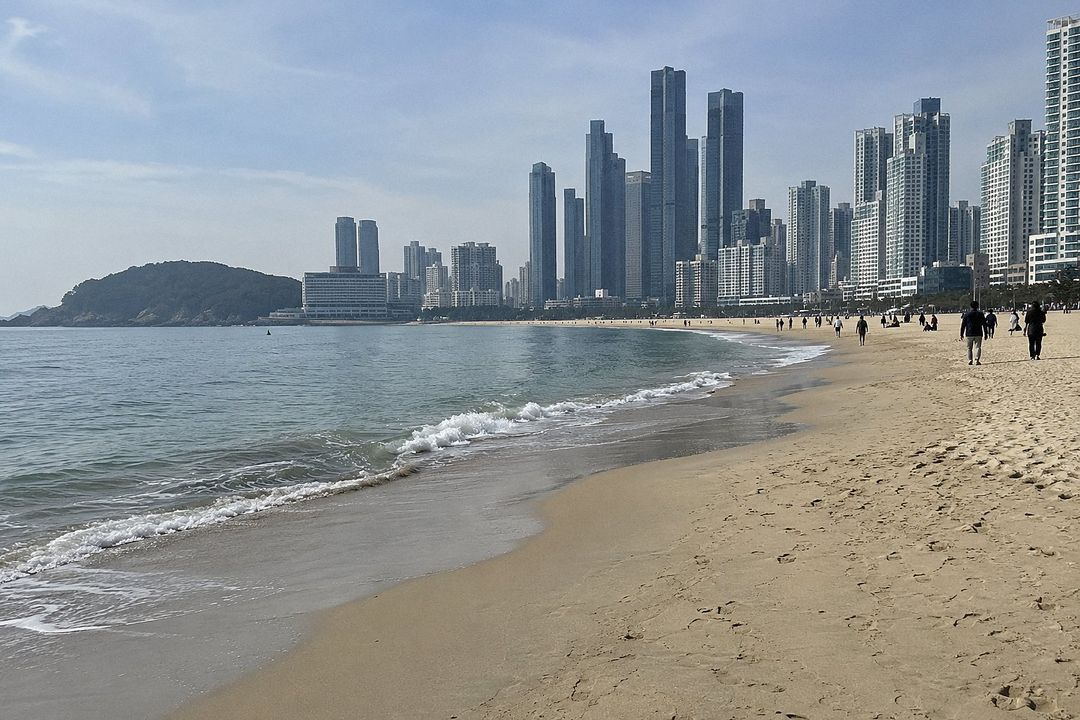
Haeundae Beach
Korea's most famous city beach, a wide arc of sand backed by hotels and towers, packed in midsummer.
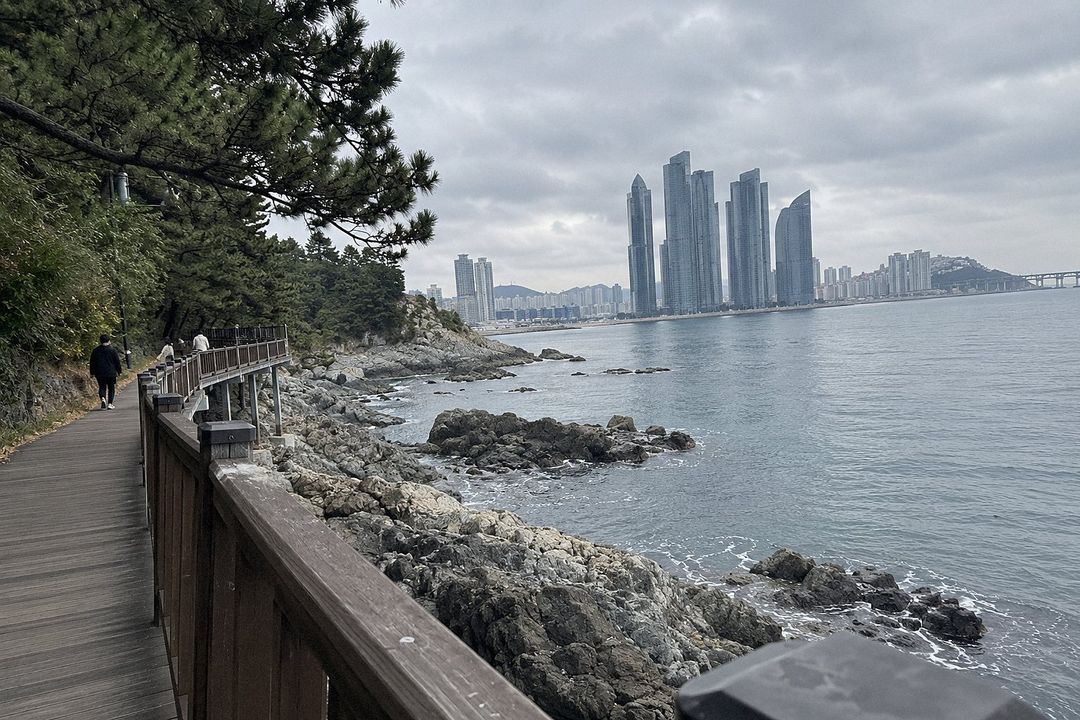
Dongbaekseom
A small wooded islet at the end of Haeundae Beach with a rocky shoreline walk and views back across the bay.
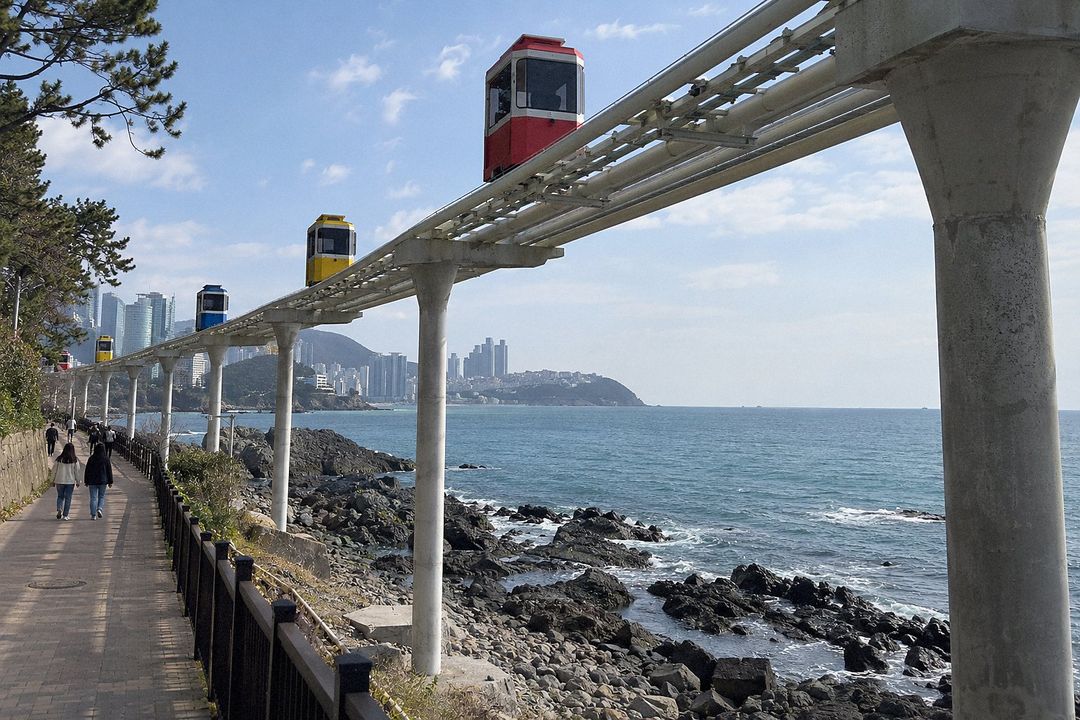
Haeundae Blueline Park
A disused coastal railway reborn as a slow beach train and elevated sky capsules between Mipo, Cheongsapo and Songjeong.
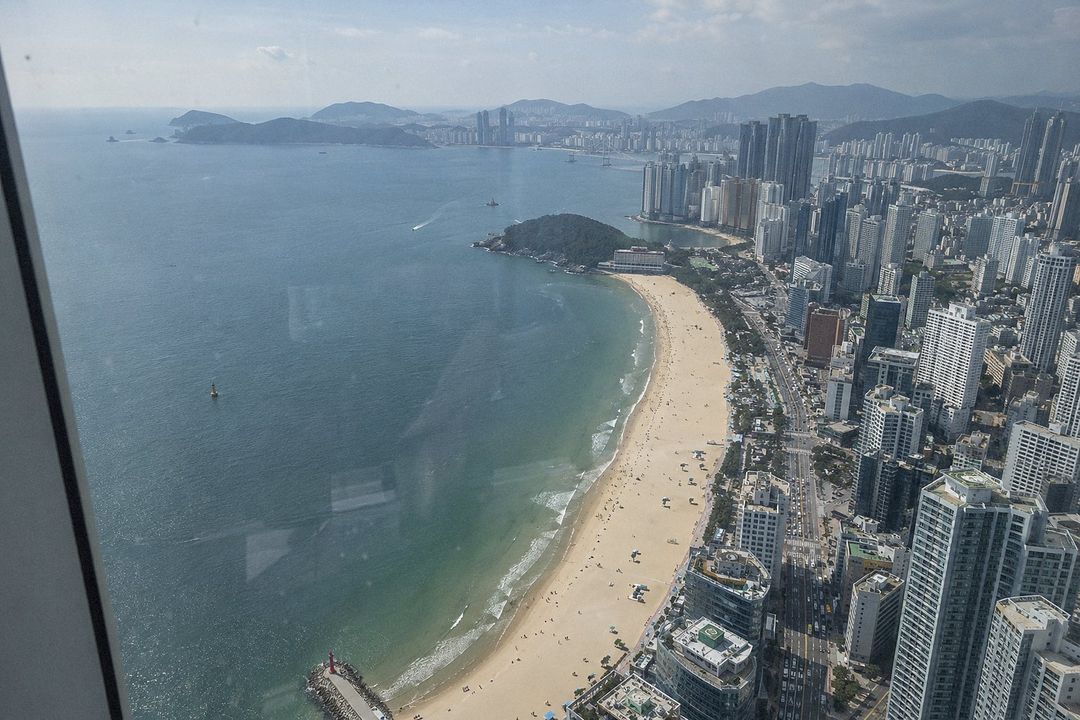
Busan X the Sky
A high observation deck in the Haeundae LCT tower, looking down on the beach and along the coast.
Gwangalli and Suyeong
A livelier, younger beach facing Gwangan Bridge, with cafes, bars, a Saturday drone show and the Oryukdo cliffs to the south.
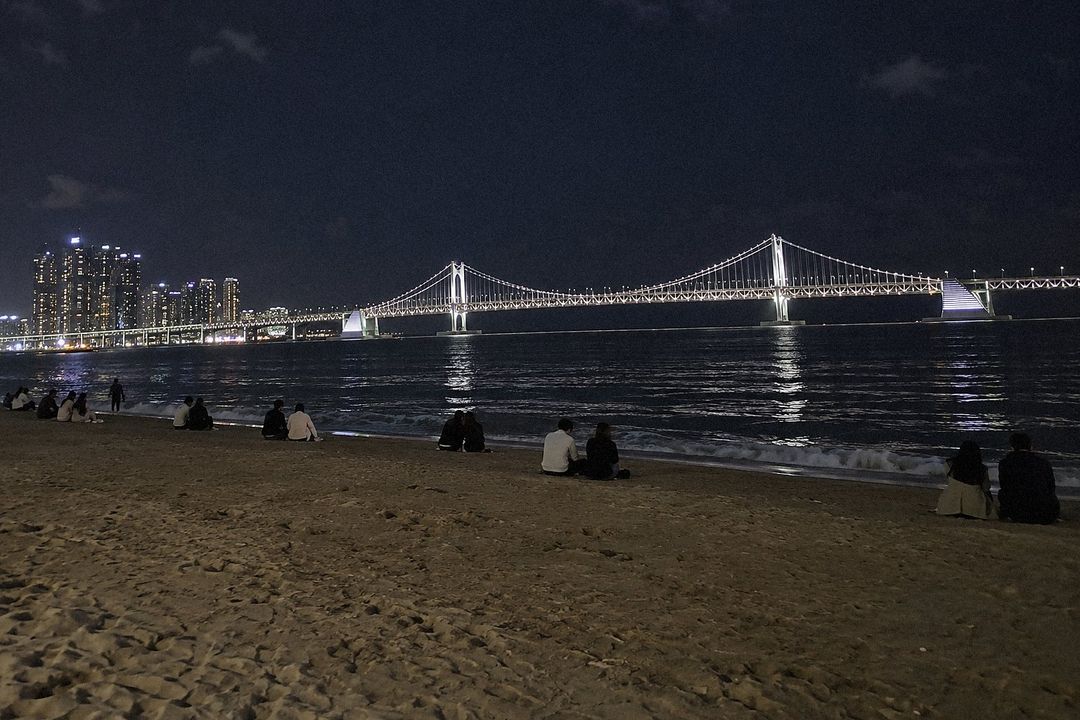
Gwangalli Beach
A city beach facing the illuminated Gwangan Bridge, lined with cafes and bars and home to a weekly drone show.
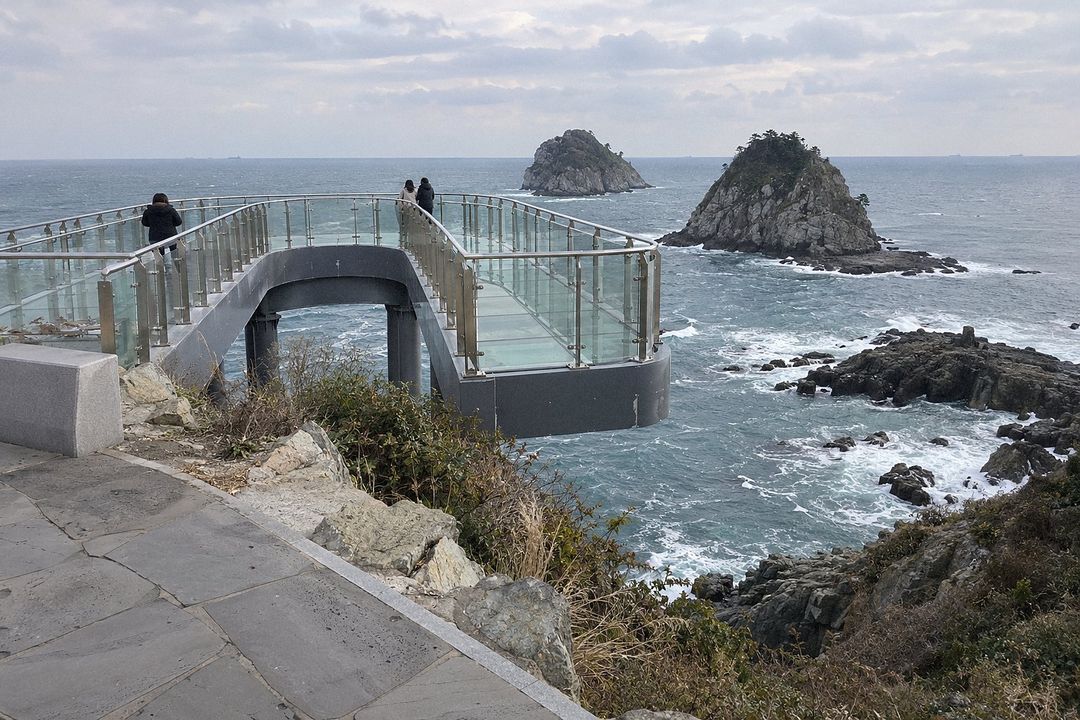
Oryukdo Skywalk
A short glass-floored walkway over sea cliffs facing the rocky Oryukdo islets, where the Haeparang coastal trail begins.
Gijang and the east coast
The rural northeast of the city, home to the seaside Haedong Yonggungsa temple, fishing harbours and the Osiria resort area.
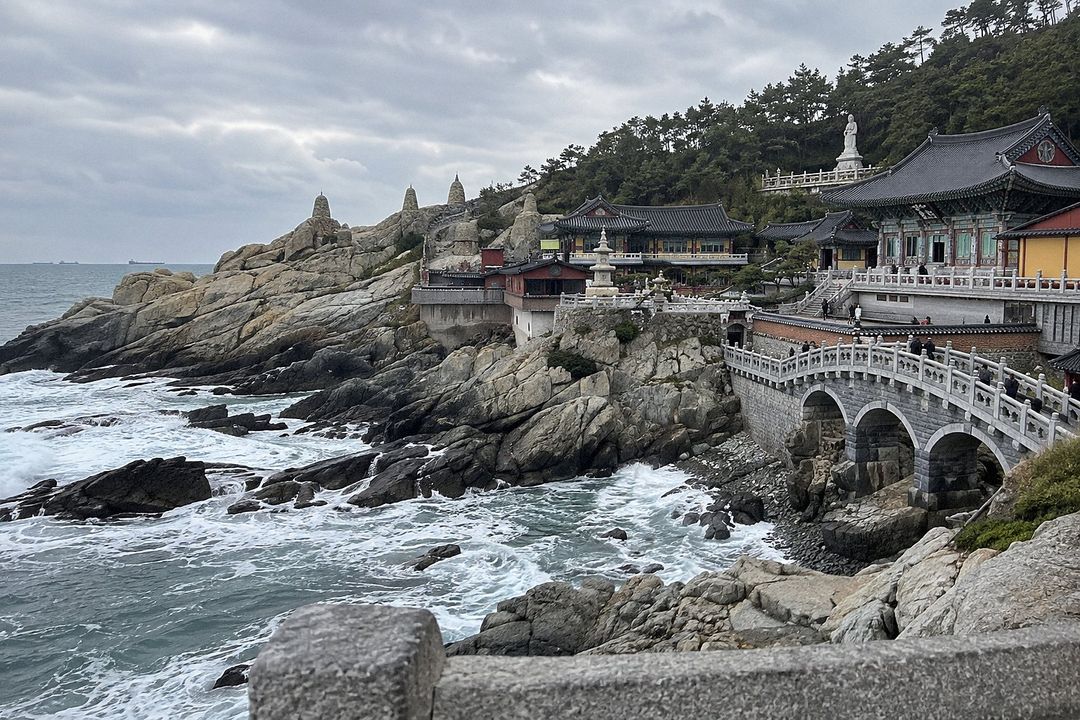
Haedong Yonggungsa
A Buddhist temple built on rocks at the water's edge, unusual in a country where most temples sit in the mountains.
Busan by interest
Getting to Busan
| From | How | Time | Notes |
|---|---|---|---|
| Seoul (Seoul Station) | KTX high-speed train to Busan Station | about 2.5 hours | The fastest services take a little over 2 hours. Frequent departures all day; some trains also leave from Yongsan or Gwangmyeong. |
| Seoul (Suseo Station, Gangnam) | SRT high-speed train to Busan Station | about 2.5 hours | Handy if you are staying south of the river in Seoul. |
| Seoul (Gimpo Airport) | Domestic flight to Gimhae Airport | about 1 hour | Many daily flights; allow extra time for airport transfers on both ends. |
| Jeju | Domestic flight to Gimhae Airport | about 1 hour | |
| Gimhae Airport | Busan-Gimhae Light Rail to Sasang, then metro Line 2 | about 10 minutes to Sasang | Change at Sasang for Seomyeon, Gwangalli and Haeundae, or at Daejeo for Line 3. |
| Gimhae Airport | Airport limousine bus | varies with traffic (allow at least an hour to Haeundae) | Route 1 serves Haeundae and continues to Gijang; route 2 runs to Seomyeon and Bujeon. |
Busan Station is the KTX terminus and sits next to Line 1 of the metro. For rail passes see /plan/transportation/korail-pass/.
Getting around
Busan Metro has four lines: Line 1 links Nampo, Busan Station and Seomyeon; Line 2 runs along the coast to Gwangalli (Geumnyeonsan or Gwangan stations) and Haeundae. The Korail Donghae Line continues northeast toward Gijang, with Osiria Station closest to Haedong Yonggungsa. The light rail runs from the airport to Sasang. City buses fill the gaps, and the same transit card works on metro, buses and light rail. Distances are long, and crossing from Nampo to Haeundae by metro is a long ride with a change, so group sightseeing by area.
Long-distance trains: see KORAIL PASS and transportation in Korea.
Itineraries
One day in Busan
Start at Gamcheon Culture Village, then head down to Nampo for lunch at Jagalchi Market and a walk through Gukje Market and BIFF Square. Take the metro east to Haeundae Beach and Dongbaekseom in the late afternoon, and finish at Gwangalli to see Gwangan Bridge lit up after dark.
Two days in Busan
Day one covers the west: Gamcheon, Huinnyeoul village and Taejongdae, then Jagalchi and Nampo in the evening. Day two goes east: Haedong Yonggungsa in the morning, the Blueline Park beach train back toward Haeundae, an afternoon on the beach, and dinner and a night walk at Gwangalli (on Saturdays, time it for the drone show).
Where to stay in Busan
Haeundae
The widest choice of hotels, from resorts to mid-range chains, steps from the sand and on metro Line 2; convenient for Blueline Park and the east coast.
Best for: Beach holidays, families, first-time visitors
See hotels in HaeundaeSeomyeon
The city's main downtown hub where metro Lines 1 and 2 cross, so every part of Busan is a short ride away; dense with restaurants and late-night streets.
Best for: Budget travellers, nightlife, short stays
See hotels in SeomyeonNampo
Walking distance to Jagalchi, Gukje Market and BIFF Square, and closest to Gamcheon, Songdo and Yeongdo.
Best for: Markets, food and old-town atmosphere
See hotels in NampoBusan Station and Gwangalli
Busan Station hotels suit an early KTX departure; Gwangalli offers bridge-view rooms and a livelier, more local beach scene than Haeundae.
Best for: Train travellers, couples
See hotels in Busan Station and Gwangalli
Some links on this page are affiliate links: if you book through them we may earn a commission at no extra cost to you. It never decides what we recommend. Affiliate disclosure.
Food and restaurants in Busan
As a port city that absorbed huge numbers of refugees during the Korean War, Busan built its food culture on cheap, filling dishes and fresh seafood. Local specialities are easy to find and inexpensive.
What to eat
| Dwaeji-gukbap 돼지국밥 | Rice in a milky pork-bone broth with sliced pork, seasoned at the table with salted shrimp, chives and chilli paste. Busan's signature comfort food. |
|---|---|
| Milmyeon 밀면 | Chewy wheat noodles in an icy broth or spicy sauce, a wartime adaptation of northern cold noodles and a summer staple. |
| Eomuk (fish cake) 어묵 | Busan is famous for fish cake, sold on skewers in hot broth at street stalls and in bakery-style shops near the markets. |
| Raw fish at Jagalchi 회 | Choose live fish downstairs at Jagalchi, then eat it sliced raw upstairs, usually followed by a spicy fish stew made from the bones. |
| Ssiat-hotteok 씨앗호떡 | Fried pancakes filled with brown sugar and stuffed with seeds and nuts, the classic street snack of BIFF Square. |
Where to eat
- Jagalchi and BIFF Square — Seafood restaurants above the fish market and street-food carts a few blocks inland.
- Seomyeon — The densest concentration of restaurants in the city, including a well-known alley of dwaeji-gukbap shops.
- Gwangalli — Raw-fish restaurants and bars facing the bridge, best in the evening.
Experiences and tours in Busan
Busan city highlights day tour
A guided loop of the far-flung sights, such as Gamcheon, Haedong Yonggungsa and the coast, without juggling metro and buses.
Check on Klook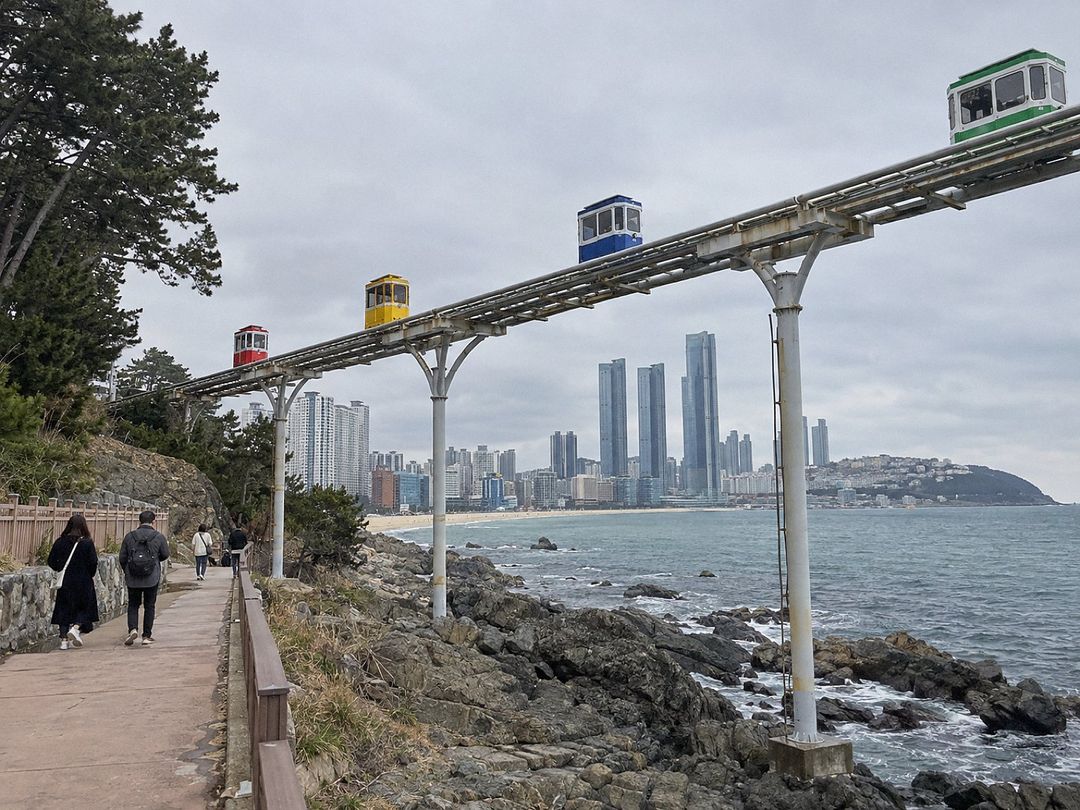
Haeundae Blueline Park tickets
Reserve the popular sky capsule or beach train in advance, as time slots sell out on weekends.
Check on Klook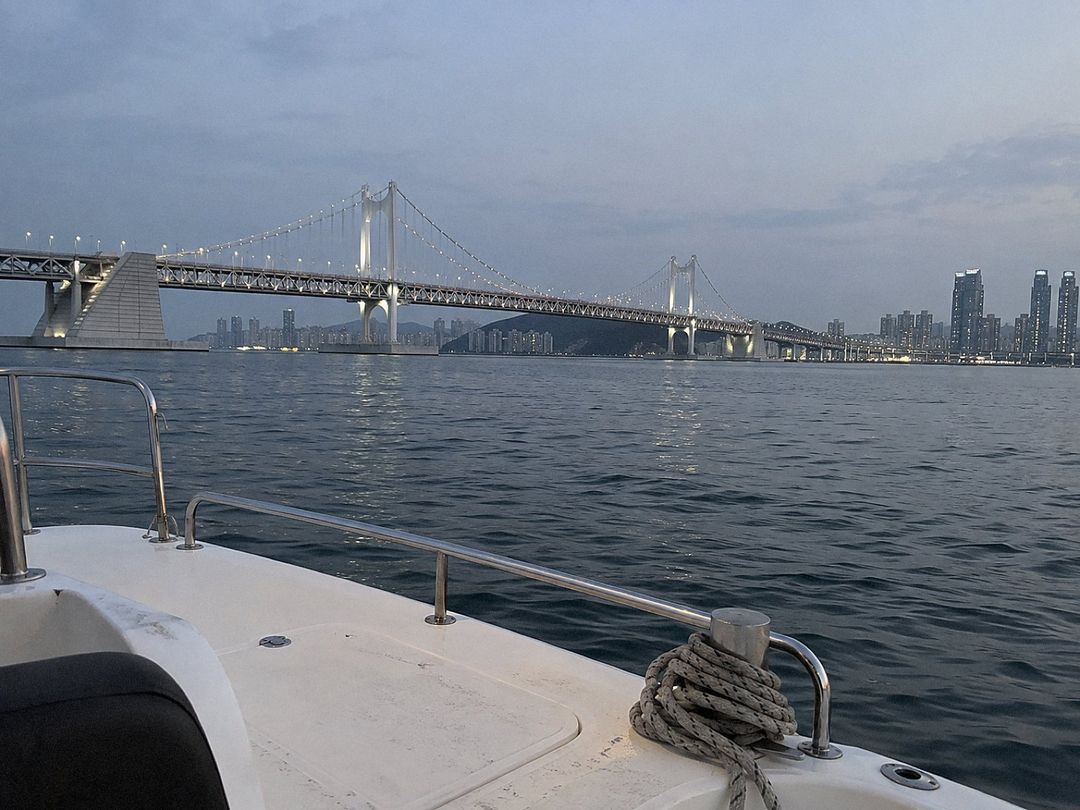
Gwangalli or Haeundae yacht cruise
A short sail along the coast, ideally at sunset or after dark when Gwangan Bridge is lit.
Check on Klook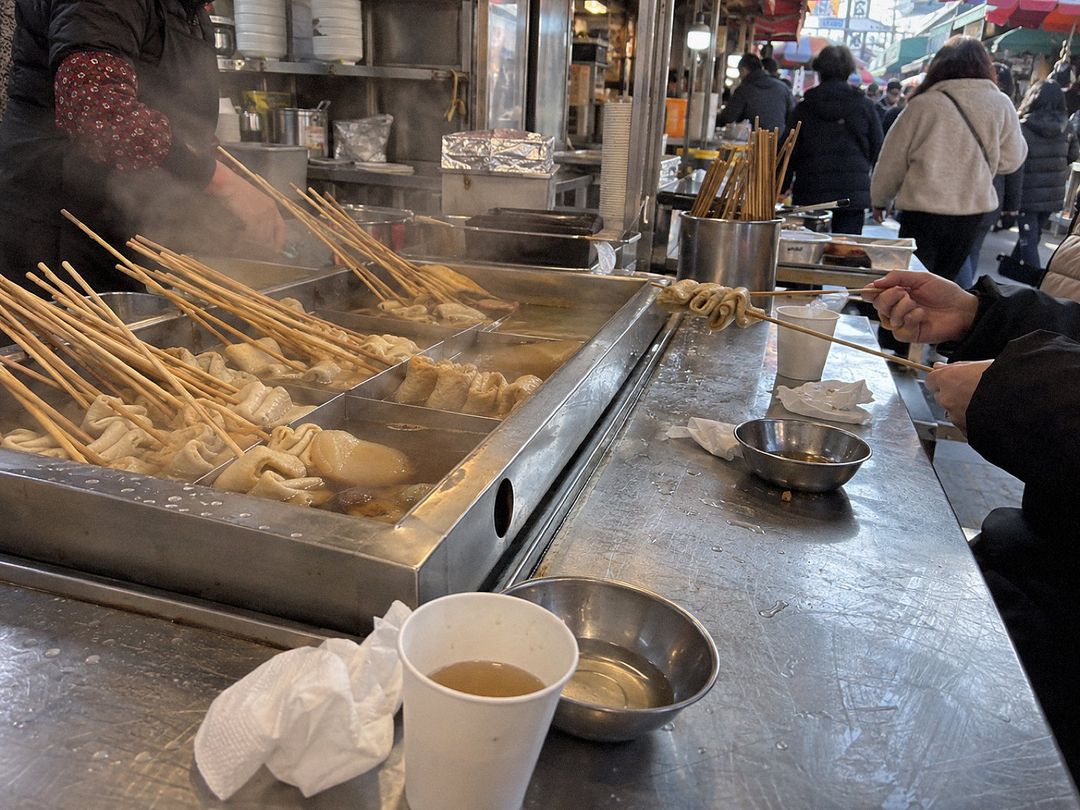
Busan food tour
A guided walk through markets and local restaurants to try fish cake, gukbap and market snacks.
Check on GetYourGuide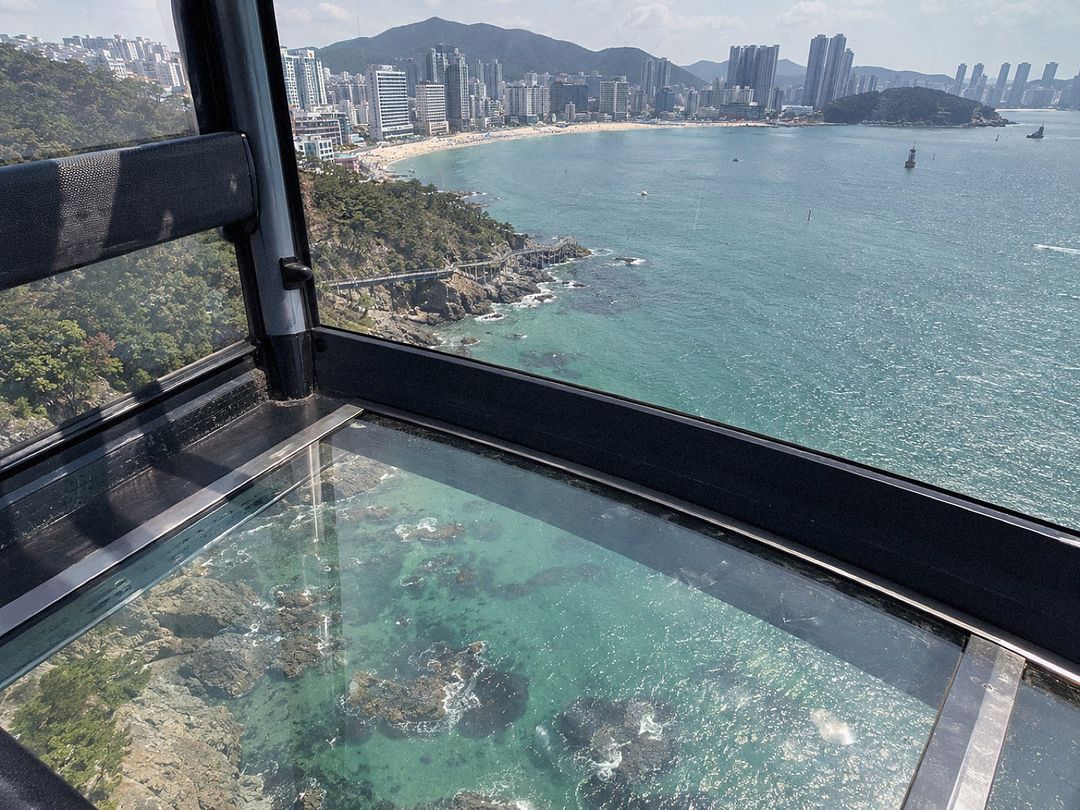
Songdo Marine Cable Car tickets
A cable car ride over Songdo Bay, often combined with the skywalk and beach below.
Check on Klook
Some links on this page are affiliate links: if you book through them we may earn a commission at no extra cost to you. It never decides what we recommend. Affiliate disclosure.
Frequently asked questions
How long does it take to get from Seoul to Busan?
About 2.5 hours by KTX or SRT high-speed train, with the fastest services taking a little over 2 hours. Flights from Gimpo take about an hour in the air, but airport transfers usually make the train just as quick door to door.
How many days do I need in Busan?
Two days covers the main sights in the west (Gamcheon, Nampo, Taejongdae) and the east (Haeundae, Gwangalli, Haedong Yonggungsa). Add a third for a slower pace or a day trip to Gyeongju.
When does the Gwangalli drone show take place?
Every Saturday evening at Gwangalli Beach, free of charge. In 2026 the shows are at 19:00 and 21:00 from October to February and at 20:00 and 22:00 from March to September, each lasting about 12 minutes. Bad weather can cancel or delay them.
Sources
Facts on this page were checked against these sources on 2 October 2026. Prices, hours and rules change — confirm with the operator before you go.
- Busan Metropolitan City - Gwangalli M Drone Light Show (2026) · official
- 작년 부산항 컨테이너 물동량 2488만 TEU, 역대 최대 경신 (2026-01-29) (Korean)
- Busan Metropolitan City - airport limousine route 2 (Bujeon–Gimhae Airport) citizen proposal (Korean) · official
- 김해공항 리무진버스, 동부산관광단지 정류소 신설…운행 개편 (Seoul Shinmun / twig24, 2025-12-31) (Korean)
- 해운대 블루라인파크 해변열차·스카이캡슐 (TellTrip) (Korean)