Buyeo 부여
Buyeo, the last capital of the Baekje kingdom, is worth a full day from Seoul or one night on the way south: buses from Seoul Nambu take about 2 hours (₩20,400) and the main sites cost ₩0–2,000. Until 14 December 2026 the National Museum's main galleries are closed; only its incense burner hall is open.
Updated
Is Buyeo worth it?
Buyeo, a county town of about 58,000 people in South Chungcheong, was Sabi, the last capital of the Baekje kingdom, from 538 until Baekje fell in 660. Four of its sites belong to the UNESCO-listed Baekje Historic Areas (2015), together with Gongju and Iksan. Little stands above ground, so Buyeo is about a riverside fortress walk, a lone stone pagoda, royal tombs and a lotus pond rather than palaces. It suits history fans and travellers who want a quiet small town.
| Your situation | Do this |
|---|---|
| Based in Seoul, one free day | Early bus from Seoul Nambu; Jeongnimsa, Busosanseong and the boat, then the Royal Tombs and Gungnamji |
| Two days for Baekje | Gongju one day, Buyeo the next; the bus between them takes about 55 minutes |
| Here before 15 December 2026 | The National Museum’s main galleries are closed; see the incense burner hall with a free timed ticket |
| Arriving on a Monday | The National Museum, Jeongnimsa’s site museum and Baekje Cultural Land are closed; the outdoor sites are open |
| On a budget | Arrive at Busosanseong or the Royal Tombs between 12:00 and 13:00, when entry is free |
| Short on time and want one Baekje town | Gongju is quicker from Seoul by KTX; Buyeo has the better walk |
Facts checked 2 November 2026. There is no railway, so most visitors come by bus from Seoul, Gongju or Daejeon.
| Sight | Adult | Hours (Mar–Oct / Nov–Feb) | Closed |
|---|---|---|---|
| Busosanseong (incl. Nakhwaam, Goransa) | ₩2,000 | 09:00–18:00 / 09:00–17:00 | 1 Jan, Seollal and Chuseok days |
| Jeongnimsa site museum | Free | 09:00–18:00 / 09:00–17:00 | Mondays, 1 Jan, Seollal and Chuseok days |
| Royal Tombs of Neungsan-ri | ₩1,000 | 09:00–18:00 / 09:00–17:00 | – |
| Gungnamji | Free | Always open | – |
| Buyeo National Museum | Free | 09:00–18:00 | Mondays, 1 Jan, Seollal, Chuseok |
| Baekje Cultural Land | ₩6,000 | 09:00–18:00 / 09:00–17:00 | Mondays |
From Buyeo County’s fee table (July 2026), its opening-hours page, the National Museum and Baekje Cultural Land, checked 2 November 2026. Busosanseong and the Royal Tombs are free from 12:00 to 13:00. Youth and child fares are lower; residents of Buyeo, Gongju and Cheongyang enter free.
Busosanseong, Nakhwaam and the river boat
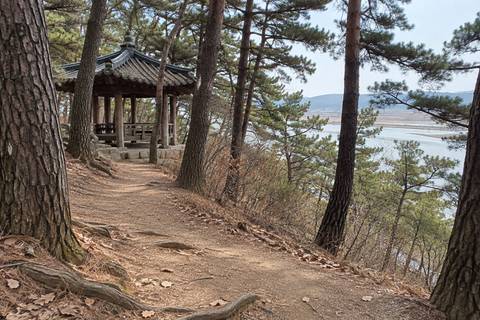
Busosanseong is the low wooded hill, 106 m high, that held the last line of the capital’s defences, with the Baengmagang River (the local name for the Geumgang) curving around its northern side. Earthen walls, pavilions and the sites of Baekje granaries are scattered along paths through pine woods. The county suggests allowing about 2 hours.
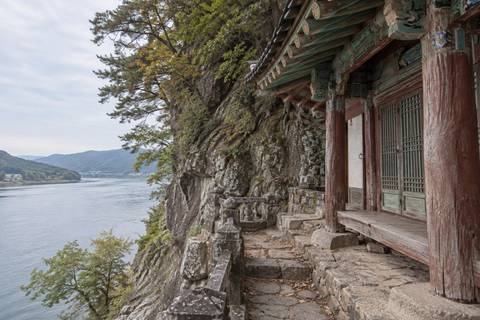
On the river side, steep stone steps lead down to Nakhwaam, the rock where, by tradition, the court women of Baekje threw themselves into the river as the city fell in 660, and to Goransa, a small temple built into the slope below it. Both are included in the Busosanseong ticket. The steps make this section hard going with a wheelchair or stroller.
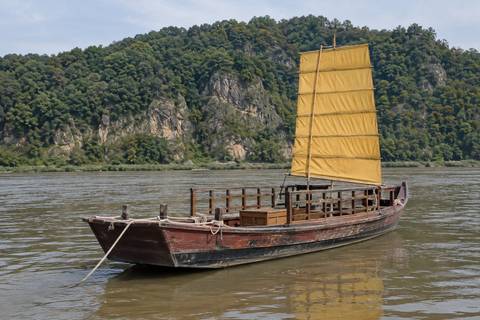
Below Goransa is a boat pier. The Baengmagang River boats, with their decorative sails, run between the Goransa pier and Gudure, a riverside park with a car park and restaurants on the edge of the town centre, in about 10 minutes.
| River boat | One way | Return |
|---|---|---|
| Adult, youth, 65 and over | ₩7,000 | ₩11,000 |
| Child (3 to primary school) | ₩5,000 | ₩7,000 |
Buyeo County fee table, July 2026. The county lists boat hours as 09:00–18:00 from March to October and 09:00–17:00 from November to February, but Korea Tourism’s data gives 09:00–17:00 and 09:00–16:00, and no timetable is published. Ask at the pier (Gudure 041-835-4689) about the last sailing, especially in winter and bad weather. A good one-way route is to walk up from the main gate, through the hill to Goransa, and take the boat down to Gudure.
Jeongnimsa and the National Museum
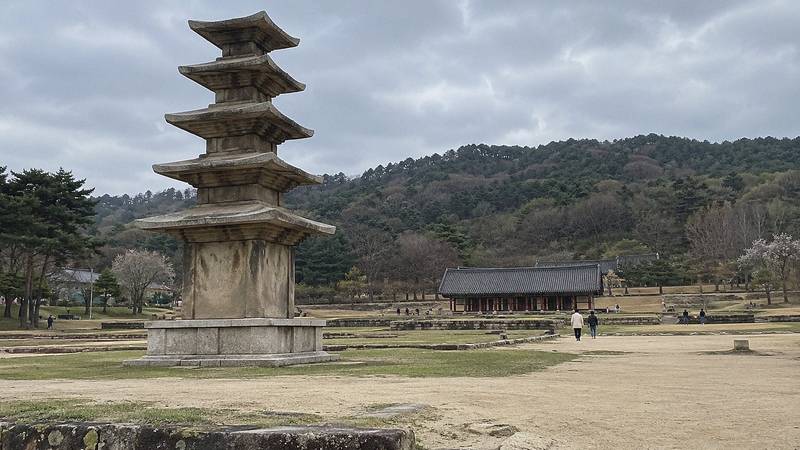
The Jeongnimsa Temple Site, a few minutes’ walk from the bus terminal, was the main temple of the Baekje capital. Its five-storey stone pagoda, 8.33 m tall, is a National Treasure. After Baekje’s fall a Tang general carved a victory inscription on its first storey. The free site museum explains the temple with media rooms and closes on Mondays, though the grounds stay open. Allow about 40 minutes.
The Buyeo National Museum, on the slope south of Busosanseong, holds the Gilt-bronze Incense Burner of Baekje, a National Treasure found at the temple site beside the Royal Tombs. Entry is free; it opens 09:00–18:00 (last entry 17:30) and closes on Mondays, 1 January, Seollal and Chuseok.
Gungnamji and the Royal Tombs
Gungnamji, south of the centre, is a pond built for a Baekje palace and restored in the 1960s, with a pavilion on a small island and wide fields of lotus around it. It is free and open at all times. The lotuses flower in July, when the Seodong Lotus Festival is held (3–5 July in 2026, according to local press); in autumn the park hosts a chrysanthemum show.
The Royal Tombs of Neungsan-ri (부여 왕릉원), about 3 km east of the centre, are a group of grass-covered mounds of Baekje kings on a hillside. Entry costs ₩1,000 and is free between 12:00 and 13:00; allow about 40 minutes. Next to the tombs is the excavated temple site where the incense burner was found, and just beyond runs the Naseong, the earthen outer wall of the capital, free and open at all times. Take a taxi or rural bus from the centre.
Also in the old town, the Gwanbuk-ri site at the foot of Busosanseong is the excavated royal compound of Sabi and part of the UNESCO listing. Digs there are ongoing, and the county gives no fixed hours, so treat it as an outdoor site you pass on the way to the fortress.
Baekje Cultural Land
Across the river in Gyuam-myeon, Baekje Cultural Land is a full-size reconstruction of Sabi Palace, the Neungsa temple, a fortress, a tomb park and a village, with the Baekje History Museum at the entrance. It is new-built rather than original, but it shows what the empty sites in town once looked like. The park suggests about 2 hours.
| Adult | Youth (13–18) | Child (7–12) | |
|---|---|---|---|
| Daytime ticket (includes the museum) | ₩6,000 | ₩4,500 | ₩3,000 |
Baekje Cultural Land and Buyeo County fee table, checked 2 November 2026. It opens 09:00–18:00 from March to October and 09:00–17:00 from November to February, with ticket sales ending 30 minutes before closing. It is closed on Mondays; when a Monday is a public holiday the rules differ between the park’s and the county’s pages, so call 041-408-7290. Free guided walks in Korean leave several times a day; guides in English, Chinese and Japanese must be booked in advance.
Further out, Muryangsa in the western hills is a quiet temple (free, 07:00–19:00), and Seongheungsan fortress near Imcheon is known for a single old tree on its ramparts (free, always open). Both are easiest by car or taxi.
Buyeo or Gongju?
The two Baekje capitals are 55 minutes apart by bus and make a natural pair. Gongju (475–538) is the easier day trip from Seoul, with a KTX station and the tomb of King Muryeong; its fortress, Gongsanseong, is a wall walk above the river. Buyeo (538–660) has more to see on foot: the fortress hill and river boat, the Jeongnimsa pagoda, the lotus pond and the royal tombs. With one day and an interest in walking, choose Buyeo; with two days, see both. See fortresses and UNESCO sites in Korea.
Getting there and around
There is no train to Buyeo. From Seoul, the main route is the intercity bus from Seoul Nambu Terminal on subway Line 3: 18 buses a day from 06:30 to 21:00, about 2 hours, ₩20,400. Seoul Express Bus Terminal (Gyeongbu side) has four express buses, and Dong Seoul three. Buses also run from Gongju (13 a day), Daejeon’s Seonambu Terminal (16 a day) and Incheon Airport Terminal 1 (three a day). Book on T-money Bus or Kobus; see long-distance buses.
The nearest KTX station is Gongju Station, about an hour from Yongsan (Gongju guide), but it is in open country and has only a few buses to Buyeo, so the direct bus is usually simpler.
Everything arrives at the Buyeo Intercity Bus Terminal in the town centre. Jeongnimsa, the National Museum, Gungnamji and Busosanseong are all within walking distance. For the Royal Tombs and Baekje Cultural Land, take a taxi or a rural bus (₩1,400 by card, ₩1,500 cash). The Chungnam tourist information centre at the Busosanseong car park (09:00–18:00, closed 1 January, Seollal and Chuseok) has bus times, maps and interpreters.
Buyeo’s weekend city tour bus ran from 2 May to 18 October in 2026; the 2027 season had not been announced when this page was checked.
When to go
Spring and autumn are the best seasons for the walk over Busosanseong. July brings the lotus flowers at Gungnamji. The Baekje Cultural Festival, held in Buyeo and Gongju each autumn, ran from 3 to 11 October in 2026; the 2027 dates had not been announced. Winter is quiet, and sights close an hour earlier, at 17:00, from November to February. For the rest of the region, see the Chungcheong guide.
Book your trip
Top attractions in Buyeo
Central Buyeo (old Sabi)
The compact town centre inside the old capital: the bus terminal, the Jeongnimsa pagoda, the National Museum, the Gungnamji lotus pond, the Gwanbuk-ri palace site, and Busosanseong hill above the Baengmagang River with the Gudure riverside park and boat pier.
Busosanseong Fortress
Wooded fortress hill above the river with the Nakhwaam cliff and Goransa temple; ₩2,000, free 12:00–13:00, allow about 2 hours.
Nakhwaam and Goransa
A cliff over the river tied to Baekje's fall in 660 and a small temple below it by the pier; in the Busosanseong ticket.
Baengmagang River Boat and Gudure
Sail-shaped boats between Gudure park and the Goransa pier, 10 minutes each way; ₩7,000 one way, ₩11,000 return.
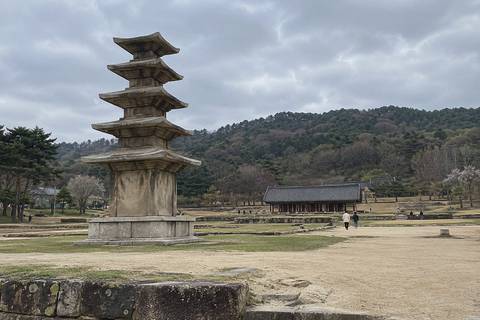
Jeongnimsa Temple Site
A Baekje five-storey stone pagoda, a National Treasure, on a free open temple site, with a free museum that closes on Mondays.
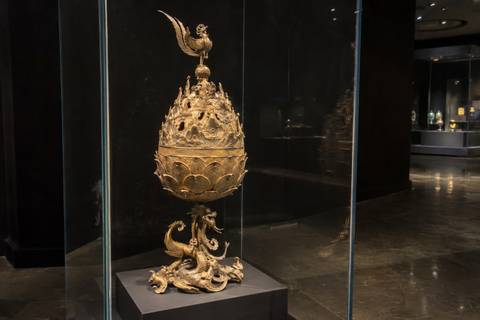
Buyeo National Museum
Home of the Gilt-bronze Incense Burner of Baekje; free, closed Mondays. Main galleries closed until 14 December 2026.
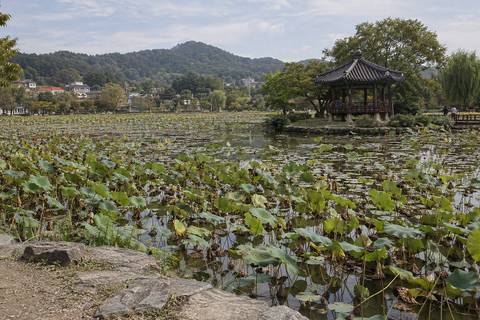
Gungnamji Pond
A Baekje-era palace pond, restored, with a pavilion on an island and wide lotus fields; free and open at all times.
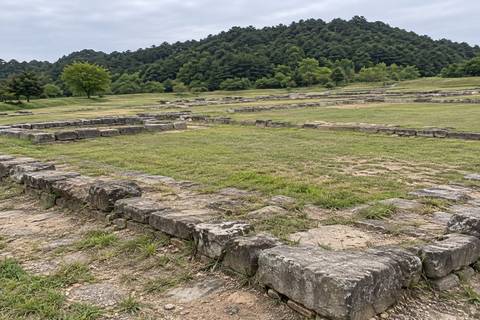
Gwanbuk-ri Royal Palace Site
The excavated site of the Baekje royal compound at the foot of Busosanseong, part of the UNESCO listing; dig areas vary.
Royal Tombs and Naseong
About 3 km east of the centre: the Baekje royal tombs at Neungsan-ri, the temple site where the gilt-bronze incense burner was found, and the long earthen Naseong wall that closed off the capital.
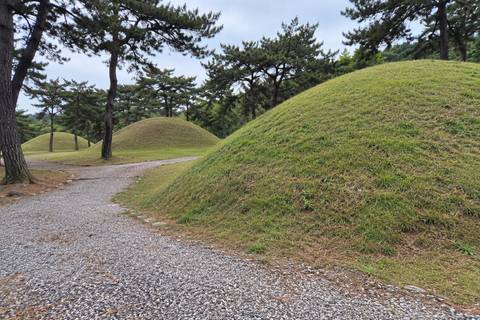
Royal Tombs of Neungsan-ri
Grassy mounds of Baekje kings on a hillside, part of the UNESCO listing; ₩1,000, free 12:00–13:00, about 40 minutes.
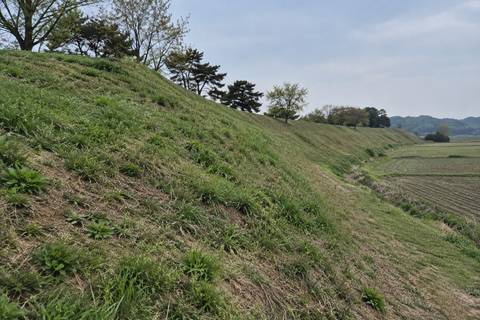
Naseong Wall
The earthen outer wall of the Baekje capital, its eastern line part of the UNESCO listing; free and open at all times.
Across the river and the countryside
Baekje Cultural Land, the large reconstruction of a Baekje palace and temple in Gyuam-myeon across the river, plus Muryangsa temple in the western hills and Seongheungsan fortress to the south.
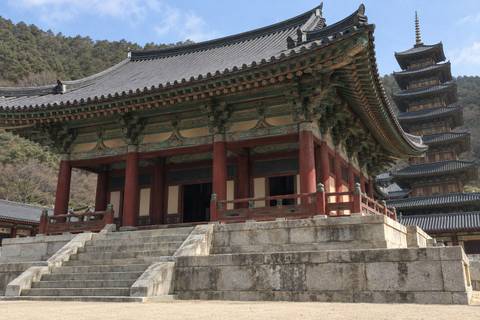
Baekje Cultural Land
Full-size reconstruction of a Baekje palace, temple and village with a history museum; ₩6,000, closed Mondays.
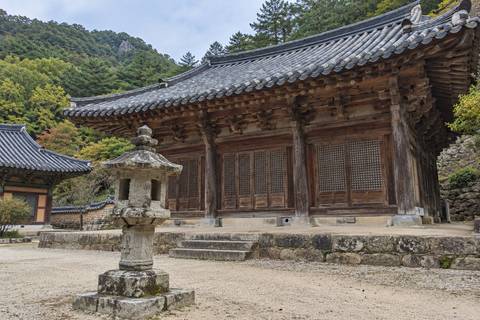
Muryangsa Temple
A quiet mountain temple in the western hills of the county; free, open 07:00–19:00, best reached by car or taxi.
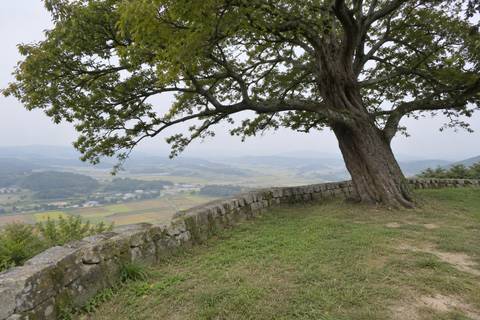
Seongheungsan Fortress
A Baekje hilltop fortress in Imcheon-myeon known for a lone old zelkova tree on the ramparts; free and always open.
Buyeo by interest
Getting to Buyeo
| From | How | Time | Notes |
|---|---|---|---|
| Seoul Nambu Terminal | Intercity bus to Buyeo Intercity Bus Terminal | about 2 h | The main link: 18 buses a day from 06:30 to 21:00, all premium (우등) seats at ₩20,400. Nambu Terminal is on subway Line 3. Book on T-money Bus. |
| Seoul Express Bus Terminal (Gyeongbu) | Express bus to Buyeo | about 2 h | Four buses a day (09:40, 11:50, 16:30, 19:40), premium seats ₩20,400. This is a different terminal from Nambu. Book on Kobus. |
| Dong Seoul Terminal | Intercity bus to Buyeo | about 2 h 50 min | Three buses a day (08:50, 11:10, 17:30), premium seats ₩27,100. |
| Gongju bus terminal | Intercity bus to Buyeo | about 55 min | 13 buses a day from 07:20 to 18:50; ₩5,900 standard or ₩7,700 premium. The easy way to see both Baekje capitals. |
| Daejeon Seonambu Terminal | Intercity bus to Buyeo | about 1 h 30 min | 16 buses a day, roughly hourly from 06:55 to 20:00, ₩9,600; unreserved seats, buy at the counter. Seonambu is in south-west Daejeon, not at Daejeon Station. |
| Incheon Airport Terminal 1 | Intercity bus to Buyeo | about 3 h 10 min | Three buses a day (09:20, 13:50, 19:40), ₩35,100. Not from Terminal 2. |
There is no railway in Buyeo; every bus arrives at the Buyeo Intercity Bus Terminal on Sabi-ro in the town centre, a short walk from Jeongnimsa. Timetables and fares above are from the T-money Bus and Kobus booking systems for 5 November 2026 (weekend timetables were the same) and match Buyeo County's fare table of October 2026.
Getting around
Central Buyeo is small enough to walk: the terminal, Jeongnimsa, the National Museum, Gungnamji, Gwanbuk-ri and Busosanseong are all in the old town. Use a taxi or a rural bus for the Royal Tombs, about 3 km east, and for Baekje Cultural Land across the river. Rural buses cost ₩1,400 by transport card or ₩1,500 in cash for adults (county fares from 1 March 2026), and many routes run only every hour or two. The Chungnam tourist information centre in the Busosanseong car park (09:00–18:00, 041-830-2880) has bus times and maps.
Long-distance trains: see KORAIL PASS and transportation in Korea.
Itineraries
A day from Seoul
Take an early bus from Seoul Nambu. Walk from the terminal to Jeongnimsa, then up through Busosanseong to Nakhwaam and Goransa, and ride the boat from the Goransa pier back to Gudure. After lunch, take a taxi to the Royal Tombs, then finish at Gungnamji before the bus back. Arrive at Busosanseong or the tombs around noon and the entry is free for an hour.
Two Baekje capitals in two days
Spend a day in Gongju for Gongsanseong and the Muryeong royal tomb, then take the 55-minute bus to Buyeo for the day above. Stay the night in Buyeo and add Baekje Cultural Land (closed on Mondays) the next morning.
On the way south
Buyeo sits between Seoul and the south-west. Combine it with Jeonju or continue to Gwangju; there is no direct bus from Buyeo to Jeonju in the T-money system, so plan to change at Nonsan or Daejeon.
Where to stay in Buyeo
Central Buyeo
Small hotels and motels near the bus terminal and Jeongnimsa, with the main sights and restaurants on foot.
Best for: First-timers, no car, one night
See hotels in Central BuyeoGudure and the riverside
Guesthouses and restaurants near Gudure park and the boat pier, at the foot of Busosanseong.
Best for: Evenings by the river, Busosanseong
See hotels in Gudure and the riversideGyuam and Baekje Cultural Land
A large resort complex next to Baekje Cultural Land across the river; you need a car, taxi or bus for the old town.
Best for: Families, drivers, resort stays
See hotels in Gyuam and Baekje Cultural Land
Some links on this page are affiliate links: if you book through them we may earn a commission at no extra cost to you. It never decides what we recommend. Affiliate disclosure.
Food and restaurants in Buyeo
Buyeo's food is plain country cooking. The lotus fields of Gungnamji have made lotus-leaf rice the town's signature, and the restaurant street near Gudure park is known for ssambap, rice with a spread of leaves to wrap it in. The county's tourism site also lists Korean beef and buckwheat noodle restaurants.
What to eat
| Yeonnip-bap (lotus-leaf rice) 연잎밥 | Sticky rice with grains, nuts and jujubes, wrapped and steamed in a lotus leaf, which gives it a faint earthy scent. |
|---|---|
| Ssambap 쌈밥 | Rice served with a basket of lettuce and other leaves, grilled meat and many side dishes, eaten as wraps; a Gudure speciality. |
| Makguksu 막국수 | Cold buckwheat noodles, often served with thin slices of boiled pork. |
| Hanwoo 한우 | Korean beef, grilled at the table; Buyeo's beef restaurants are listed on the county tourism site. |
Where to eat
- Gudure restaurant street — Ssambap and noodle restaurants near the boat pier and Gudure park.
- Around the terminal and Jeongnimsa — Everyday Korean restaurants and cafés in the town centre; see Korean food.
Experiences and tours in Buyeo
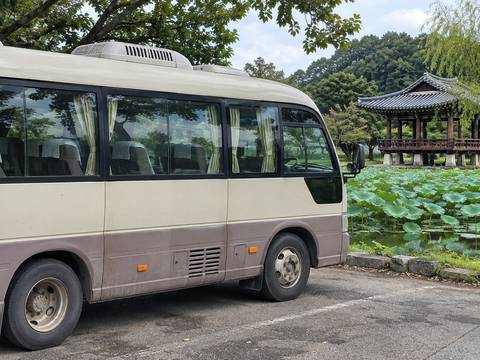
Baekje history day tours from Seoul
Guided day trips to the Baekje capitals, an option if you would rather not handle rural buses between the sites.
Check on Klook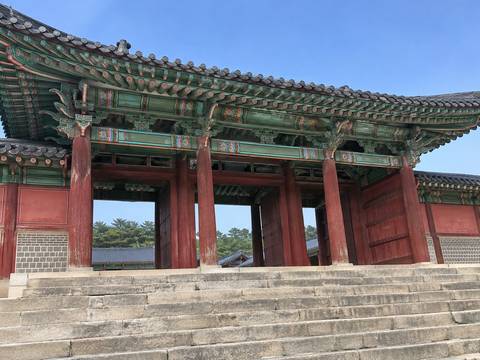
Baekje Cultural Land tickets
Admission to the reconstructed palace and temple across the river; tickets are also sold at the gate.
Check on Klook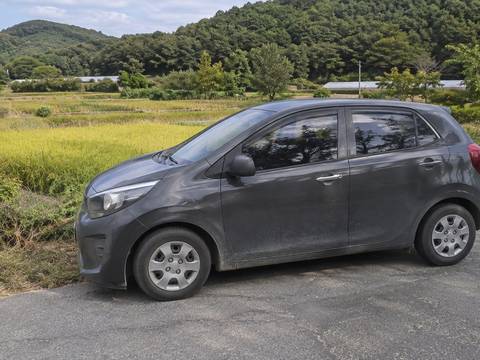
Private car for the Baekje sites
A driver for the day links the Royal Tombs, Baekje Cultural Land and Gongju, which are slow by bus.
Check on Klook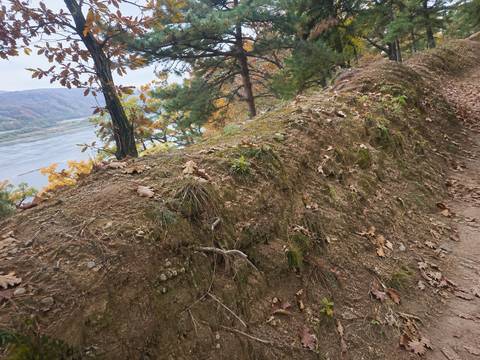
Baekje Historic Areas tours
Guided tours that cover the UNESCO Baekje sites in Gongju and Buyeo in one trip.
Check on GetYourGuide
Some links on this page are affiliate links: if you book through them we may earn a commission at no extra cost to you. It never decides what we recommend. Affiliate disclosure.
Frequently asked questions
Is Buyeo worth visiting?
Yes, if you are interested in Korean history or want a quiet small town between Seoul and the south. Busosanseong, the Jeongnimsa pagoda, Gungnamji and the Royal Tombs fill a day and cost ₩3,000 together. Until 14 December 2026 the National Museum's main galleries are closed, which makes this a lighter visit than usual.
How do I get from Seoul to Buyeo?
By bus. Seoul Nambu Terminal (subway Line 3) has 18 buses a day to Buyeo from 06:30 to 21:00, taking about 2 hours for ₩20,400; Seoul Express Bus Terminal has four. There is no train to Buyeo.
Can I take the KTX to Buyeo?
Not directly. The nearest KTX station is Gongju Station on the Honam line, about an hour from Yongsan, but it stands in the countryside and buses from there to Buyeo are few. For most people the direct bus from Seoul Nambu is simpler.
Is the Buyeo National Museum open?
Partly. The permanent galleries are closed from 28 July to 14 December 2026. The Baekje Incense Burner Hall and the Children's Museum stay open: get a free same-day timed ticket from the kiosks at the Sabi-maru hall, where slots are released at 09:00. The museum is closed on Mondays.
Should I visit Gongju or Buyeo?
With one day, pick Buyeo if you want the riverside fortress walk and the stone pagoda, or Gongju if you want the royal tomb of King Muryeong and a quicker trip from Seoul by KTX. With two days, see both: buses link them in about 55 minutes.
Sources
Facts on this page were checked against these sources on 16 November 2026. Prices, hours and rules change — confirm with the operator before you go.
- 부여군 – 부여군 주요 관광지 입장료 현황 (2026. 7.) (Korean) · official
- 부여군 – 관광지 개방시간 안내 (Korean) · official
- 부여군 – 부소산성 · 낙화암 (휴무: 1.1, 설날·추석 당일) (Korean) · official
- 부여군 – 정림사지 (Korean) · official
- 부여군 – 궁남지 (Korean) · official
- 부여군 – 부여 왕릉원 (백제금동대향로 출토) (Korean) · official
- 부여군 – 백마강 (구드래·고란사·수북정 선착장) (Korean) · official
- 부여군 – 충남종합관광안내소 (Korean) · official
- 부여군 – 문화관광해설사 (Korean) · official
- 부여군 – 시티투어 (2026년 5.2~10.18 주말 운행) (Korean) · official
- 부여군 – 부여 터미널 시간표 (2026. 10. 1 기준) (Korean) · official
- 부여군 – 시외버스 요금표 (2026. 10. 기준) (Korean) · official
- 부여군 – 농어촌버스 시간표·요금 (2026. 3. 1.) (Korean) · official
- 부여군 – 인구 현황 (2026년 1월 말) (Korean) · official
- 국립부여박물관 – 관람안내 (Korean) · official
- 국립부여박물관 – 상설전시실 휴관 안내 (2026.7.28~12.14 예정) (Korean) · official
- 국립부여박물관 – 백제대향로관 (Korean) · official
- 백제문화단지 – 홈페이지 개편 안내 (관람시간·요금·휴관일) (Korean) · official
- 백제문화제 – 제72회 백제문화제 (2026.10.3~10.11, 부여) (Korean) · official
- 백제세계유산센터 – 부여 왕릉원 (Korean) · official
- 백제세계유산센터 – 부여 나성 (Korean) · official
- 한국관광공사 – 부여 나성 (상시 개방) (Korean) · official
- VisitKorea – Royal Tombs of Neungsan-ri (Buyeo Royal Tombs) · official
- UNESCO World Heritage List – Baekje Historic Areas · official
- 대한민국 구석구석 – 부여 여행이 더 즐거워지는 4가지 별미 (Korean) · official
- 시외버스 통합예매 – 서울남부·동서울·공주·대전서남부·인천공항→부여 배차조회 (2026.11.05) (Korean) · official
- 고속버스통합예매 – 서울경부→부여 배차조회 (2026.11.05) (Korean) · official
- 더팩트 – 제24회 부여서동연꽃축제 개막 (2026.7.3) (Korean)