Gwangju 광주
Gwangju is worth a day or one night on a trip through the south-west: the KTX from Yongsan takes about 1 h 40 – 2 h (₩42,000). The May 1980 uprising sites, the reopened former provincial office and the Asia Culture Center sit side by side downtown and are free; the Biennale runs to 15 November 2026.
Updated
Is Gwangju worth it?
Gwangju, the largest city in the south-west, is where the May 18 Democratic Uprising of 1980 took place: ten days in which citizens fought a military crackdown, and which ended with troops storming the provincial office. The sites of those days are now a compact, free set of museums downtown, beside the Asia Culture Center. Add the Biennale, the Yangnim-dong lanes and the food Jeolla is known for, and Gwangju suits a day or one night on a trip between Seoul, Jeonju and the south coast. Since 1 July 2026 Gwangju and South Jeolla Province form one administration, the Jeonnam-Gwangju Integrated Special City (전남광주통합특별시), so new addresses and official sites use that name.
| Your situation | Do this |
|---|---|
| On a KTX trip through Jeolla, a few hours free | Get off at Gwangju Songjeong, take Line 1 to Munhwajeondang and see the former provincial office, the Jeonil Building and the archives |
| One full day | Add the ACC and Yangnim-dong; eat tteokgalbi at Songjeong before your train |
| Here before 15 November 2026 | Add the Biennale in Jungoe Park (₩20,000, closed Mondays) |
| Arriving on a Monday | The provincial office, the archives, the ACC and the Jungoe Park museums are closed; go to the National Cemetery and the Gwangju National Museum instead |
| Want nature | Hike Mudeungsan from Jeungsimsa, or take bus 311 to Juknokwon, Damyang’s bamboo forest |
| Coming by bus from Seoul | Express bus from the Central City side of Seoul Express Bus Terminal, about 3 h 20 |
| Sight | Adult | Hours | Closed |
|---|---|---|---|
| Former Provincial Office | Free | 10:00–18:00 (last entry 17:30) | Mondays (Tuesday if Monday is a holiday) |
| Jeonil Building 245 (memorial floors) | Free | 10:00–19:00 (last entry 18:30) | 1 Jan, Seollal, Chuseok |
| May 18 Democracy Archives | – | 09:00–18:00 | Mondays, 1 Jan, Seollal, Chuseok |
| ACC | Museum free; exhibitions vary | 10:00–18:00, some halls to 20:00 Wed and Sat | Mondays, 1 Jan |
| May 18th National Cemetery | Free | 09:00–18:00 | Open every day |
| Gwangju Biennale (to 15 Nov 2026) | ₩20,000 | 10:00–18:00 (last entry 17:30) | Mondays |
| Gwangju National Museum | Free | 10:00–18:00 (last entry 17:30) | 1 Jan, Seollal, Chuseok, 14 Dec 2026 |
From each site’s official page, checked 3 November 2026. The downtown sites are within a few minutes’ walk of each other, so a half day covers them; the cemetery and the museums are bus rides away.
The May 18 sites downtown
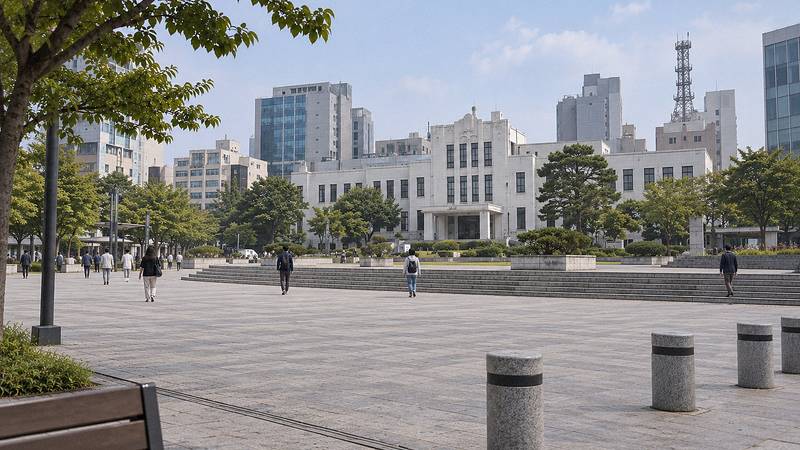
The heart of the story is the 5·18 Democracy Plaza, the open square at the end of Geumnam-ro, by Munhwajeondang subway station. On its far side stands the former South Jeolla Provincial Office, where the citizens’ militia made its last stand on 27 May 1980. After long restoration work it reopened on 18 May 2026. The main building, the police bureau buildings and the Sangmu Hall memorial now hold a free exhibition on the uprising, with bullet marks left visible. It opens Tuesday to Sunday, 10:00–18:00 (last entry 17:30), and closes on Mondays, or Tuesday when Monday is a holiday. Guided tours start at the visitor centre in the annex and are booked on the office’s website; English tours and groups of six or more need three days’ notice, and the form asks for Korean mobile verification, so read the page on the office before you plan on one. A special exhibition marking ten years since the death of Jürgen Hinzpeter, the German cameraman who filmed the uprising, runs from 5 November 2026 to 28 March 2027.
Facing the plaza, the Jeonil Building 245 is an office block whose name refers to the 245 bullet marks found in it by a forensic survey. The 9th and 10th floors hold the free memorial exhibition with the preserved bullet holes (10:00–19:00, last entry 18:30; closed 1 January, Seollal and Chuseok). A short walk up Geumnam-ro, the May 18 Democracy Archives keep the documents, photos and films of the uprising, listed by UNESCO as Memory of the World in 2011. It opens 09:00–18:00 and closes on Mondays (Tuesday when Monday is a holiday), 1 January, Seollal and Chuseok. Guided talks run several times a day.
The May 18th National Cemetery
The May 18th National Cemetery is on the northern edge of the city, in Unjeong-dong. The national cemetery for the victims of the uprising has a tall memorial tower, an exhibition hall and rows of graves. It is open every day from 09:00 to 18:00. City bus 518 runs there from downtown, but the side of the road matters: stop ARS 1131 at Munhwajeondang is 30 stops away, and the stop opposite is 78. Traffic is heavy around Seollal, Hansik, Memorial Day and Chuseok. The May 18th National Cemetery guide has the bus times, what to see and the dress rules.
Asia Culture Center
The Asia Culture Center (ACC) is built around the plaza, partly below street level. Its indoor spaces open 10:00–18:00, with the Culture Information and Culture Creation halls open to 20:00 on Wednesdays and Saturdays; the outdoor gardens and courtyards are open 06:00–22:00. It closes on Mondays and 1 January. The Asian Culture Museum is free; exhibitions in the Culture Creation halls are priced one by one, and shows in the theatres vary. Use exits 5 or 6 of Munhwajeondang station. The Asia Culture Center guide has what is on, the English tours and parking. The ACC is also the starting point for Chungjang-ro, the old shopping street, and a short walk from Daein Market, whose art night market ran on twelve Friday and Saturday evenings between June and October in 2026; the 2027 dates had not been announced.
The Biennale and the museums of Jungoe Park
The Gwangju Biennale, founded in 1995, is held every two years in even-numbered years. The 16th edition, You Must Change Your Life, directed by Ho Tzu Nyen, runs from 5 September to 15 November 2026 at the Biennale Exhibition Hall in Jungoe Park and at pavilions around the city. It opens Tuesday to Sunday 10:00–18:00 (last entry 17:30). Adults pay ₩20,000, teenagers ₩10,000 and children aged 4–12 ₩7,000. A free shuttle runs from the P3 car park to the hall about every 30 minutes.
Next door, the Gwangju Museum of Art is free (10:00–18:00, closed Mondays, 1 January, Seollal and Chuseok), and the Gwangju History and Folk Museum is free as well (09:00–18:00, to 20:00 on Wednesdays; closed Mondays, 1 January and the day after public holidays). A little further north, the Gwangju National Museum covers the region’s history, and its Ceramics Culture Hall (opened December 2025) shows celadon, buncheong and the cargo of the 1323 Sinan shipwreck. It is free, opens 10:00–18:00, and unlike most museums stays open on Mondays; it closes on 1 January, Seollal, Chuseok and the second Monday of September and December (14 December 2026). From Munhwajeondang station, bus 05 runs to the 국립광주박물관입구 stop. See museums in Korea.
Yangnim-dong
Across the Gwangjucheon stream south of the centre, Yangnim-dong grew up around the houses of American missionaries in the early 1900s. Brick missionary houses, among them the Woo Il-sun (Wilson) house, stand among old trees on the hill; they are generally seen from outside. Below them, Penguin Village is a cluster of alleys whose residents decorated the walls with old clocks, signs and scrap art; it has become a craft street. The alleys are free and always open, and the craft shops open Tuesday to Sunday, 10:00–18:00. Bus 55 stops at Yangnimgyo and Hakgang Elementary School. People live here, so keep noise down in the lanes.
Songjeong, food and Mudeungsan
Near Gwangju Songjeong Station, the 1913 Songjeong Station Market is a century-old market that reopened with small snack shops and cafés. It opens Monday to Thursday 11:00–22:00 and Friday to Sunday 11:00–23:00, and closes on the second and fourth Mondays of the month; individual stalls keep their own hours. The street of tteokgalbi restaurants nearby gives Songjeong’s grilled patties of minced beef and pork their name. Downtown, look for yukjeon, beef slices fried in egg, a dish closely tied to Gwangju. More on regional dishes: Korean food.
Mudeungsan, the 1,187 m mountain on the eastern edge of the city, became a national park in 2013 and is part of the Mudeungsan Area UNESCO Global Geopark. Its best-known sights are Seoseokdae and Ipseokdae, rows of tall columnar-jointed rock pillars below the summit, which is a military zone and opens only on rare occasions. Most hikers start from Jeungsimsa temple on the city side (bus 09 from U-Square, 98 from Gwangju Songjeong Station) or from Wonhyosa to the north (bus 1187). Entry is free, and in autumn 2026 Mudeungsan kept its trails open after 15 November, when most parks closed their high routes; routes, buses and closures are on the Mudeungsan guide.
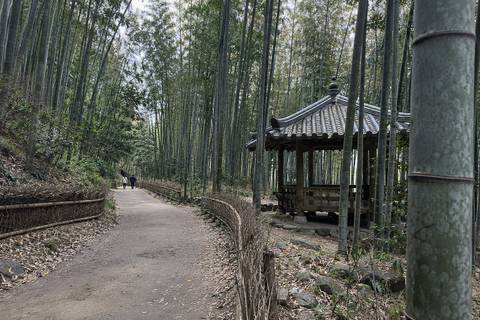
North of the city, Damyang county is known for bamboo. Its bamboo park, Juknokwon (₩3,000, open every day), is the usual half-day trip from Gwangju on city bus 311 from Gwangju Station or the front of U-Square; the Jeolla guide has more on the area.
Getting there and around
From Seoul, the KTX from Yongsan to Gwangju Songjeong takes about 1 h 40 – 2 h, with about 18 trains a day; Korail cut the standard adult fare to ₩42,000 on 1 September 2026. Trains also run from Suseo. All KTX trains use Songjeong, in the far west of the city; the old Gwangju Station nearer the centre has only a few slow trains. A Korail Pass covers the KTX; see KTX and trains for booking.
Express buses leave from the Central City building of Seoul Express Bus Terminal (not the Gyeongbu side): 67 a day on 5 November 2026, about 3 h 20, from ₩22,700. Dong Seoul has seven a day, and Jeonju 26. They arrive at U-Square, the main terminal west of the centre, which has a department store and restaurants. See long-distance buses. Gwangju Airport, also on subway Line 1, has domestic flights only, mainly to Jeju.
In the city, subway Line 1 runs from Gwangju Songjeong through the airport and the Sangmu district to Munhwajeondang and the other downtown stations; Line 2 is still under construction. City buses fill the gaps, and T-money and other transit cards work on both.
When to go
Spring and autumn are the most comfortable seasons for walking the city and hiking Mudeungsan. In even-numbered years the Biennale fills September to November. Around 18 May, the anniversary of the uprising, the city holds memorial events and the national ceremony takes place at the cemetery, so the downtown sites are busy. Summers are hot and humid. For the rest of the region, see the Jeolla guide.
Book your trip
Top attractions in Gwangju
Downtown and Geumnam-ro
The old centre in Dong-gu around Munhwajeondang (Culture Center) subway station: the 5·18 Democracy Plaza, the former South Jeolla Provincial Office, the Asia Culture Center, the Jeonil Building, the May 18 Archives, Chungjang-ro shopping street and Daein Market.
Former South Jeolla Provincial Office
The rebels' last stand of May 1980, restored and reopened in May 2026 as a free exhibition on the uprising; closed Mondays.
Jeonil Building 245
An office block on the plaza whose top floors keep the bullet holes fired into it in 1980, with a free exhibition.
May 18 Democracy Archives
The UNESCO-listed records of the uprising, with exhibitions on its ten days, in a former Catholic centre on Geumnam-ro.
Asia Culture Center (ACC)
A huge sunken arts complex with exhibitions, theatres and a free Asian Culture Museum; closed Mondays.
Chungjang-ro
Gwangju's old main shopping street, a pedestrian-friendly grid of clothes shops, cafés and street food next to the ACC.
Daein Market
A traditional market near the ACC, with food stalls, artists' studios and a seasonal art night market.
Yangnim-dong
A hillside neighbourhood south of the centre, across the Gwangjucheon stream, with early 20th-century missionary houses, old Korean homes and the craft alleys of Penguin Village.
Yangnim-dong Penguin Village
Alleys hung with old clocks, signs and scrap art, now a craft street; free, shops closed Mondays.
Yangnim missionary houses
Western-style brick houses built by American missionaries in the early 1900s, on the wooded hill of Yangnim-dong.
Museums and the National Cemetery
Buk-gu, north of the centre: Jungoe Park with the Biennale Exhibition Hall, the Gwangju Museum of Art and the History and Folk Museum, the Gwangju National Museum, and the May 18th National Cemetery on the city's northern edge.
May 18th National Cemetery
The national cemetery for those killed in the uprising, with a memorial tower and exhibition hall; open daily, bus 518.
Gwangju Biennale Exhibition Hall
Main venue of Korea's international contemporary art biennale; the 2026 edition runs to 15 November.
Gwangju Museum of Art
The city art museum in Jungoe Park, next to the Biennale hall; free, closed Mondays.
Gwangju National Museum
Jeolla's history and the Sinan shipwreck ceramics hall (opened December 2025); free, 10:00–18:00, open on Mondays.
Gwangju History and Folk Museum
Free displays on daily life and customs of the Gwangju area, in Jungoe Park; closed Mondays.
Songjeong, Mudeungsan and Damyang
Songjeong in the far west, around the KTX station and the 1913 Songjeong Station Market; Mudeungsan, the mountain on the eastern edge of the city; and the bamboo groves of Damyang county to the north.
1913 Songjeong Station Market
A market from 1913, revamped with snack stalls and cafés, a short walk from the KTX station; good for a meal between trains.
Mudeungsan National Park
The mountain on the city's edge, with the columnar rock pillars of Seoseokdae and Ipseokdae; a UNESCO Global Geopark.
Juknokwon (Damyang)
Damyang's bamboo forest park, 2.4 km of shaded trails for ₩3,000, open every day; a half-day trip from Gwangju on bus 311.
Gwangju by interest
Getting to Gwangju
| From | How | Time | Notes |
|---|---|---|---|
| Yongsan Station (Seoul) | KTX to Gwangju Songjeong | about 1 h 40 min – 2 h | About 18 KTX trains a day from Yongsan, standard adult fare ₩42,000 since Korail cut fares on 1 September 2026. Trains also run from Suseo in southern Seoul. Book on Korail. |
| Seoul Express Bus Terminal (Central City) | Express bus to Gwangju (U-Square) | about 3 h 20 min | 67 buses a day on 5 November 2026, from 00:45 to 23:50: standard ₩22,700, premium (우등) ₩33,500, Premium class ₩43,500. Leaves from the Central City building, not the Gyeongbu side. Book on Kobus. |
| Dong Seoul Terminal | Express bus to Gwangju (U-Square) | about 3 h 30 min | Seven premium buses a day from 07:00 to 19:30, ₩36,300. |
| Jeonju | Express bus to Gwangju (U-Square) | about 1 h 30 min | 26 buses a day from Jeonju Express Bus Terminal; premium ₩12,500, standard ₩8,600. The KTX between Jeonju and Gwangju Songjeong is quicker but the station is far from the centre. |
Gwangju Songjeong Station, where all KTX trains stop, is in the far west of the city; subway Line 1 runs from there through the airport to Munhwajeondang (Culture Center) station downtown. The old Gwangju Station, nearer the centre, has only a few slow trains. Express buses arrive at U-Square, the main bus terminal west of the centre. Bus times and fares are from the Kobus booking system for 5 November 2026.
Getting around
Subway Line 1 links Gwangju Songjeong, the airport, Sangmu and the downtown stations; Munhwajeondang (Culture Center) station is the stop for the ACC and the May 18 sites (exits 3–6). City bus 518 runs from downtown and the U-Square terminal to the May 18th National Cemetery (board at stop ARS 1131 at Munhwajeondang), bus 55 runs from Munhwajeondang station to the 양림교 stop for Yangnim-dong, and bus 05 runs from there to the 국립광주박물관입구 stop for the Gwangju National Museum. Many routes were renumbered on 31 October 2026, so check a map app. T-money and other Korean transit cards work on the subway and buses. For tourist information, call 1330.
Long-distance trains: see KORAIL PASS and transportation in Korea.
Itineraries
A day between trains
Take the KTX to Gwangju Songjeong and Line 1 to Munhwajeondang. See the former provincial office (closed Mondays), the Jeonil Building and the May 18 Archives, eat lunch in Chungjang-ro, then walk or take bus 55 to Yangnim-dong. Finish with tteokgalbi at Songjeong before an evening train.
Two days in Gwangju
Day one downtown as above, plus the ACC. Day two: bus 518 to the May 18th National Cemetery in the morning, then the museums of Jungoe Park, or a hike from Jeungsimsa on Mudeungsan. Go to Damyang's bamboo forest instead if you prefer an easy walk.
The south-west by rail
Combine Gwangju with Jeonju to the north and Yeosu on the coast. Jeonju is about 1 h 30 by express bus; for Yeosu, change trains or take an intercity bus.
Where to stay in Gwangju
Downtown (Chungjang-ro and Geumnam-ro)
Walking distance to the ACC, the May 18 sites, the shopping streets and Yangnim-dong, with subway Line 1 for the station.
Best for: First-timers, no car
See hotels in Downtown (Chungjang-ro and Geumnam-ro)Sangmu district
The new business district in the west, on Line 1 between downtown and the station, with chain hotels and a dense restaurant and bar area.
Best for: Business hotels, late dinners
See hotels in Sangmu districtU-Square terminal area
Hotels and motels around the main bus terminal, which also has a department store and many restaurants.
Best for: Arriving or leaving by bus
See hotels in U-Square terminal areaGwangju Songjeong Station
Business hotels near the station and the Songjeong market and tteokgalbi street, but far from the downtown sights.
Best for: Early or late KTX
See hotels in Gwangju Songjeong Station
Some links on this page are affiliate links: if you book through them we may earn a commission at no extra cost to you. It never decides what we recommend. Affiliate disclosure.
Food and restaurants in Gwangju
Gwangju sits at the heart of Jeolla, the region Koreans travel to for its cooking, and the city is known for full tables of side dishes. Two dishes are closely tied to the city: tteokgalbi, grilled patties of minced beef and pork, and yukjeon, thin slices of beef fried in egg batter.
What to eat
| Songjeong tteokgalbi 송정떡갈비 | Minced beef and pork shaped into flat patties and grilled; a street of restaurants near Gwangju Songjeong Station is named after it. |
|---|---|
| Yukjeon 육전 | Thin slices of beef dipped in egg and pan-fried at the table or in front of you, eaten with sauce and greens. |
Where to eat
- Songjeong tteokgalbi street and 1913 Songjeong Station Market — A few minutes' walk from the KTX station, the best place for a meal between trains.
- Daein Market and Chungjang-ro — Market stalls and casual restaurants downtown, close to the ACC; see Korean food.
Experiences and tours in Gwangju
Jeolla day tours from Gwangju
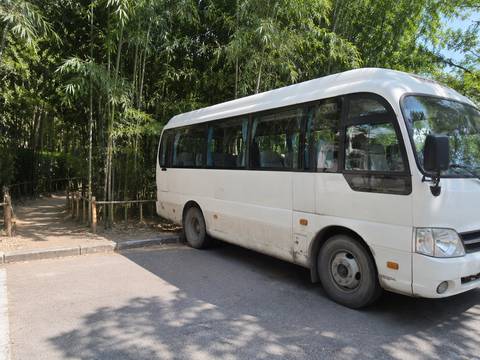
Guided day trips from Gwangju to Damyang's bamboo forest and other Jeolla sights that are slow to reach by bus.
Check on Klook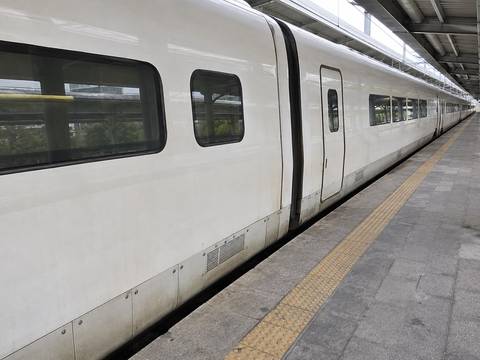
KTX and rail passes
Rail passes for foreign visitors, useful when Gwangju is one stop on a longer trip through Jeolla.
Check on Klook
South-west Korea tours
Guided tours that combine Gwangju with Jeonju, Damyang or the Suncheon coast.
Check on GetYourGuide
Private car with driver
A driver for the day links the May 18 cemetery, Mudeungsan and Damyang, which are spread out by bus.
Check on Klook
Some links on this page are affiliate links: if you book through them we may earn a commission at no extra cost to you. It never decides what we recommend. Affiliate disclosure.
Frequently asked questions
Is Gwangju worth visiting?
Yes, for a day or a night if you are interested in modern Korean history or contemporary art. The May 1980 uprising sites, the reopened former provincial office and the ACC are side by side downtown and free, and the city is under 2 hours from Seoul by KTX. With less time, Jeonju is the better-known Jeolla stop.
How do I get from Seoul to Gwangju?
The KTX from Yongsan to Gwangju Songjeong takes about 1 h 40 – 2 h and costs ₩42,000 in standard class. Express buses from the Central City terminal take about 3 h 20 and start at ₩22,700; 67 run a day.
Which station do I use, Gwangju Songjeong or Gwangju Station?
Gwangju Songjeong. All KTX trains stop there; it is in the far west of the city, linked to downtown by subway Line 1. The old Gwangju Station, nearer the centre, has only a few slow trains a day.
Can I visit the former provincial office where the uprising ended?
Yes. After years of restoration it reopened on 18 May 2026 as a free exhibition, open Tuesday to Sunday 10:00–18:00 (last entry 17:30). You can go in without a tour. English tours need three days' notice, and the online form asks for Korean mobile verification.
When is the Gwangju Biennale?
The 16th Gwangju Biennale runs from 5 September to 15 November 2026, Tuesday to Sunday 10:00–18:00. An adult ticket costs ₩20,000. The Biennale is held every two years, so the next one is due in 2028.
Sources
Facts on this page were checked against these sources on 16 November 2026. Prices, hours and rules change — confirm with the operator before you go.
- 전남광주통합특별시 버스정보 – 노선 검색 (55번, 05번, 518번, 2026년 10월 31일 노선개편) (Korean) · official
- 국립5·18민주묘지 – 찾아오시는 길 (시내버스 518번) (Korean) · official
- 국립5·18민주묘지 – 관람·참배 안내 (09:00–18:00, 연중무휴) (Korean) · official
- 5·18민주화운동기록관 – 관람안내 (Korean) · official
- 옛 전남도청 – 관람 안내 (화–일 10:00–18:00, 무료) (Korean) · official
- 옛 전남도청 – 복원 연혁 (2026.5.18 개관) (Korean) · official
- 전일빌딩245 – 이용 안내 (Korean) · official
- 국립아시아문화전당 – 관람시간·관람료 (Korean) · official
- 국립아시아문화전당 – 오시는 길 (Korean) · official
- 광주비엔날레 – 관람시간 (2026.9.5–11.15) (Korean) · official
- 광주비엔날레 – 입장권 안내 (Korean) · official
- 16th Gwangju Biennale – You Must Change Your Life · official
- 광주미술관 – 관람안내 (Korean) · official
- 국립광주박물관 – 관람안내 (Korean) · official
- 국립광주박물관 – 오시는 길 (Korean) · official
- 광주역사민속박물관 – 관람안내 (Korean) · official
- 광주관광 – 양림동 펭귄마을 공예거리 (Korean) · official
- 동구청 – 대인예술야시장 공지 (2026) (Korean) · official
- VISITKOREA – 1913 Songjeong Station Market · official
- VISITKOREA – Tteokgalbi · official
- VISITKOREA – Yukjeon · official
- 국립공원공단 – 무등산국립공원 (Korean) · official
- 코레일 보도자료 – 9월부터 고속철도 통합 운영, 운임 인하 (2026-08-05) (Korean) · official
- 고속버스통합예매 – 센트럴시티·동서울·전주→광주 배차조회 (2026.11.05) (Korean) · official
- 한국공항공사 – 광주공항 운항 노선 (Korean) · official
- 기차 시간표 – 용산역→광주송정역 (2026.11.02 갱신) (Korean)
- 헤럴드경제 – 전남광주통합특별시 7월 1일 출범 (2026-03-25) (Korean)
- 아시아경제 – Former Jeonnam Provincial Office reopens (2026-05-18)
- 트위그뉴스 – 무등산권 유네스코 세계지질공원 재인증 (2026-04-28) (Korean)