Mokpo 목포
Mokpo is worth an afternoon and an evening at the end of the KTX line, about 2 h 20 – 2 h 45 from Yongsan: walk the 1930s port quarter, ride the 3.23 km marine cable car (₩24,000 return), then see the Gatbawi rocks and the sea fountain show at 20:00. Stay the night if you are sailing to Jeju or the islands. Museums and the fountain close on Mondays.
Updated
Is Mokpo worth it?
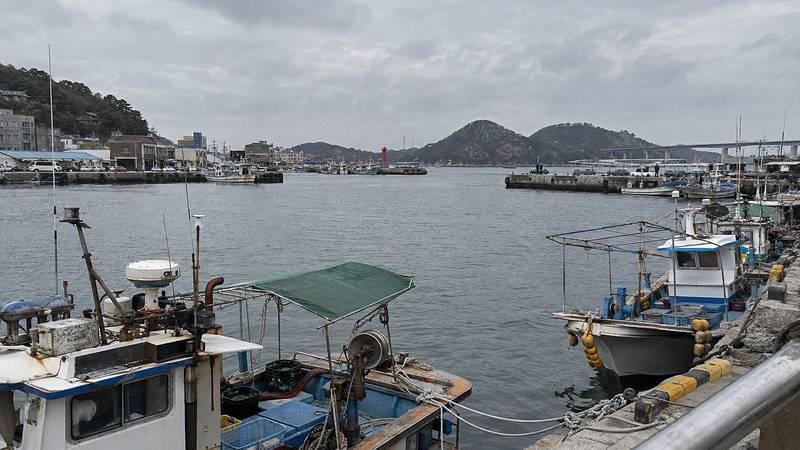
Mokpo sits at the south-western tip of the peninsula, where the Yeongsan river meets a sea crowded with islands. It grew up as a treaty port after 1897, and the streets around the station still hold one of Korea’s largest groups of 1930s buildings. Above them rises Yudalsan, a hill of bare granite peaks, and the marine cable car swings over the hill and out across the sea to Gohado island. On the newer east side, the Gatbawi rocks and a nightly fountain show fill an evening. Most visitors give Mokpo an afternoon and a night, often on the way to a ferry. Since 1 July 2026 the city is part of the Jeonnam-Gwangju Integrated Special City (전남광주통합특별시), and official addresses use that name.
| Your situation | Do this |
|---|---|
| Half a day off the KTX | Walk from the station through the port quarter and up Yudalsan, or take a taxi to Bukhang for the cable car |
| An afternoon and evening | Port quarter, cable car to Gohado and back, seafood dinner, then Gatbawi and the 20:00 fountain show |
| Here on a Monday | The museums, the modern history halls and the fountain are closed; do the cable car, Yudalsan and Gatbawi |
| Taking the Jeju ferry | From 7 November 2026 all Seaworld sailings leave from the International Passenger Terminal; check the day’s departures |
| Heading to Heuksando, Hongdo or other islands | Stay the night and book the boat ahead; island ferries leave from the coastal passenger terminal |
| Coming from Gwangju | About an hour by intercity bus, every 20–30 minutes; easy as a day trip |
| Sight | Adult | Hours (November) | Closed |
|---|---|---|---|
| Marine cable car (return) | ₩24,000; crystal cabin ₩29,000 | Sun–Thu 09:00–20:00, Fri, Sat and holidays 09:00–21:00; tickets stop 1 h before | No weekly closing day; stops in high wind |
| Yudalsan | Free | Open access | — |
| Modern History Museum | Hall 1 ₩2,000; Hall 2 free | 09:00–18:00 | Mondays |
| National Maritime Museum | Free | 09:00–18:00, last entry 17:00 | Mondays, 1 January |
| Kim Dae-jung memorial hall | Free | 09:00–18:00, last entry 17:30 | Mondays, 1 January |
| Gatbawi walkway | Free | 05:00–23:00 | Bad weather |
| Dancing Sea Fountain | Free | 20:00 and 20:30; also 21:00 Fri–Sat | Mondays; season ends in November |
From each site’s official page, checked 3 November 2026. A cable car return trip with a stop on Gohado takes 1–2 hours; the port quarter and Yudalsan together take about half a day on foot.
The marine cable car and Gohado
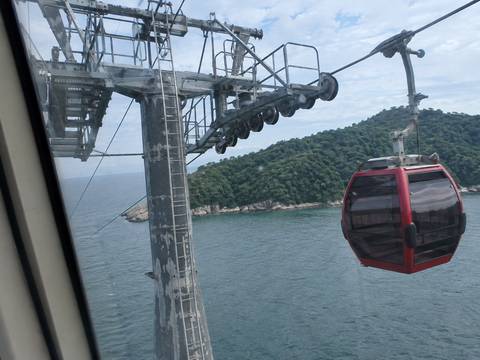
The Mokpo Marine Cable Car is 3.23 km long, which the operator bills as the longest in Korea. It starts at Bukhang station on the north harbour, climbs to a middle station on the shoulder of Yudalsan, then crosses the strait to Gohado on a line held up by a 155 m tower. The full ride takes about 20 minutes each way.
A return ticket costs ₩24,000 for adults and ₩18,000 for children (from 36 months to the end of primary school); in a crystal cabin with a glass floor it is ₩29,000 and ₩23,000. One-way fares are ₩19,000 (crystal ₩22,000). On 6 November 2026 the cable car ran 09:00–20:00 Sunday to Thursday and 09:00–21:00 on Fridays, Saturdays and holidays, and ticket sales stop an hour before closing. Last winter’s shorter hours began on 1 December. It has no weekly closing day but stops in strong wind, and it closed for maintenance on 19–29 January 2026. The late-afternoon ride gives the best light over the islands. The Mokpo Marine Cable Car page covers the stop rules, hours and buses.
Gohado is a long, low island across the strait, which the city describes as the island where Admiral Yi Sun-sin stayed during the Japanese invasions of the 1590s. A 6 km loop trail of about 2 h 40 runs around the island from near the cable car station; even a short walk along the shore gives views back to Yudalsan and the city.
Yudalsan
Yudalsan is only 228 m high, but its bare granite peaks give it the look of a much bigger mountain, and it stands right behind the old town. It is free. The main path climbs past a series of pavilions to Ildeungbawi, the highest rock, in about 40 minutes over 2 km; a shorter 1 km path leads to the second peak, Ideungbawi, in about 20 minutes. Near the bottom stands Nojeokbong, a 60 m rock that, in a local story, Admiral Yi wrapped in straw to make the Japanese fleet think it was a huge store of rice. A 2.7 km road rings the hill, and the slopes hold an open-air sculpture park and the small Nojeokbong Art Park gallery (free, 09:00–18:00, closed Mondays).
The view from the top takes in the harbour, the cable car line, Gohado and the bridges and islands beyond. Go early in the day in summer, as the rock paths are exposed; the stone steps can be slippery after rain. The cable car’s middle station gives a second way onto the hill. For more hill walks, see hiking in Korea.
The old port quarter
Mokpo opened as a treaty port in 1897, and in the Japanese colonial era the streets below Yudalsan became a busy trading town. Much of it survives, and in 2018 the area of Manho-dong and Yudal-dong was registered as a national cultural heritage district, the Mokpo Modern History and Culture Space. Walk its grid of streets for old shops, warehouses and Japanese-style houses, many now cafes and guesthouses.
The Mokpo Modern History Museum has two halls. Hall 1 is the red-brick former Japanese consulate, built at the top of a stairway on the slope of Yudalsan, and now tells the story of the port. Tickets are ₩2,000 (youth ₩1,000, primary school ₩500) and it is open 09:00–18:00, with tickets sold until 17:00. Hall 2, the former Mokpo branch of the Oriental Development Company, a colonial land company, is free and has the same hours. Both close on Mondays.
On the hillside above the harbour, Seosan-dong Sihwa Alley is a small neighbourhood of lanes where residents’ poems and paintings cover the walls; it is free and open at any time, but it is a residential area, so keep quiet. The Kim Dae-jung Nobel Peace Prize Memorial Hall stands on Samhakdo, a former island by the harbour now joined to the land. It tells the life of the president who was born on an island near Mokpo and won the Nobel Peace Prize in 2000. It is free, open 09:00–18:00 (last entry 17:30), and closed on Mondays and 1 January. For more museums across the country, see museums in Korea.
Gatbawi and the museums
East of the centre, on the estuary of the Yeongsan river, Gatbawi is a pair of tuff rocks worn by the sea into the shape of two men wearing traditional hats. The rocks are a Natural Monument, formed from volcanic ash some 80 million years ago. A free 298 m walkway floats on the water past them; it is open 05:00–23:00 in winter (to midnight in summer) and closes in bad weather. It is at its best at dusk.
Behind the rocks lies a cluster of museums. The National Maritime Museum, run by the state maritime heritage institute, tells the story of Korea’s seas through finds raised from shipwrecks, including objects from the Sinan shipwreck, in four permanent halls, with traditional boats displayed outside. It is free, opens 09:00–18:00 with last entry at 17:00, and is closed on Mondays and 1 January.
Next door, the Mokpo Natural History Museum has dinosaur skeletons, fossils and marine life (₩3,000, youth ₩2,000, primary school ₩1,000; 09:00–18:00, closed Mondays). The Mokpo Literature Museum is dedicated to the writers associated with the city (₩2,000; 09:00–18:00, closed Mondays and 1 January). The Namnong Memorial Hall shows the ink paintings of Heo Geon (Namnong) and his family, painters in the Southern School tradition (₩1,000; 09:00–17:00 from November to February, 09:00–18:00 from March to October, open every day).
The Dancing Sea Fountain
Off Pyeonghwa Plaza in Hadang, the Dancing Sea Fountain floats on the water: 150 m long, with jets up to 70 m high, set to music and coloured light. Shows last 20 minutes and are free. In November they start at 20:00 and 20:30 from Tuesday to Thursday and on Sundays, with a third show at 21:00 on Fridays and Saturdays. In summer (June to August) there are three shows every night but Monday. The season runs from April to November, and there are no shows on Mondays or in bad weather, so check the schedule on the city’s fountain page on the day. The plaza’s waterfront is lined with restaurants, cafes and bars. More on evenings out: nightlife in Korea.
Ferries to Jeju and the islands
Mokpo is the main port for the islands of the south-west, a sea of more than a thousand islands, most of them in Shinan county. Island ferries, including fast boats to the distant islands of Heuksando and Hongdo, leave from the coastal passenger terminal in the old town. The city’s ferry page lists the operators, and tickets can be booked on the national island ferry booking site, 가보고싶은 섬. Sailings to the far islands are weather-dependent and fill up in summer and on autumn weekends, so book ahead and keep a spare day. Several closer islands are now linked to the mainland by bridges and are easier by car. See islands in Korea.
Seaworld Express Ferry runs the big car ferries between Mokpo and Jeju, with an overnight departure and others during the day. Its notice of 26 October 2026 says that from 7 November 2026 all Mokpo departures leave from the Mokpo Port International Passenger Terminal. Economy fares start at about ₩32,000 and are higher at weekends. Ships take rest days and change times, so check the operator’s calendar for your date. Compare the routes on ferries in Korea.
Getting there and around
From Seoul, the KTX on the Honam line runs from Yongsan to Mokpo in about 2 h 20 – 2 h 45, about 15 times a day, stopping at Gwangju Songjeong on the way; another seven trains a day run from Suseo in southern Seoul in about 2 h 30. Mokpo is the end of the line, so you cannot miss your stop. Times are from a timetable mirror of Korail data; book on Korail, and see KTX and trains and the Korail Pass.
Express buses run from the Central City side of Seoul Express Bus Terminal: 14 a day on 5 November 2026, about 3 h 50, with standard fares from ₩39,200 for premium (우등) seats. From Gwangju, about 42 intercity buses a day make the hour’s run from U-Square (₩7,800–12,200), and 14 a day come from Suncheon. See long-distance buses.
In town, the old quarter and Yudalsan are a short walk from Mokpo Station. The cable car station at Bukhang, Gatbawi and Pyeonghwa Plaza are a few kilometres away, so most visitors take a taxi or a city bus; Bus 1 runs from the station and bus terminal to the cable car, and Naver Map and KakaoMap show the current routes. T-money and other Korean transit cards work on the buses. The rest of the region is covered in the Jeolla guide.
Book your trip
Top attractions in Mokpo
Old town and Yudalsan
The original port around Mokpo Station: streets of 1930s buildings, the two modern history halls, the rocky hill Yudalsan above them and Samhakdo by the harbour.
Yudalsan
The 228 m granite hill above the old town, with pavilions, rock peaks and a 40-minute path to the top; free.
Mokpo Modern History Museum
Two halls in the 1930s port quarter: the former Japanese consulate (₩2,000) and the former Oriental Development Company (free).
Seosan-dong Sihwa Alley
Lanes of small houses on the slope above the harbour, painted with poems and pictures by local residents; free, open all year.
Kim Dae-jung Nobel Peace Prize Memorial Hall
Free museum on Samhakdo about the former president from the Mokpo area and Korea's only Nobel laureate; closed Mondays.
Bukhang and Gohado
The north harbour west of the old town, where the marine cable car starts, crosses Yudalsan and runs out over the sea to the island of Gohado.
Mokpo Marine Cable Car
A 3.23 km cable car from Bukhang over Yudalsan and the sea to Gohado; about 40 minutes return, ₩24,000 (crystal floor ₩29,000).
Gohado
The island at the end of the cable car, linked to Admiral Yi Sun-sin; a 6 km loop trail of about 2 h 40 runs around it.
Gatbawi and Hadang
The newer east side on the Yeongsan river estuary: the Gatbawi rocks, a cluster of museums, and Pyeonghwa Plaza with its night fountain show.
Gatbawi Rocks
Two eroded tuff rocks shaped like men in hats, a Natural Monument; seen from a free 298 m walkway over the water.
Mokpo National Maritime Museum
Free state museum of finds from shipwrecks off Korea, including the Sinan wreck, with old boats outside; closed Mondays.
Mokpo Natural History Museum
Dinosaur skeletons, fossils and sea life near Gatbawi, good with children; ₩3,000, closed Mondays.
Mokpo Literature Museum
Museum of the writers and playwrights connected to Mokpo, in the Gatbawi museum cluster; ₩2,000, closed Mondays.
Namnong Memorial Hall
Gallery of the Heo family of Southern School ink painters, beside Gatbawi; ₩1,000, open every day.
Mokpo Dancing Sea Fountain
A 150 m floating fountain off Pyeonghwa Plaza with 20-minute music and light shows from 20:00, April to November; not on Mondays.
Mokpo by interest
Getting to Mokpo
| From | How | Time | Notes |
|---|---|---|---|
| Yongsan Station (Seoul) | KTX (Honam line) to Mokpo | about 2 h 20 min – 2 h 45 min | About 15 KTX trains a day, from about 05:00 to 21:20; slower ITX and Mugunghwa trains take 4 h 40 or more. Mokpo is the end of the line. Book on Korail. |
| Suseo Station (southern Seoul) | KTX-Sancheon to Mokpo | about 2 h 30 min | Seven trains a day, about 06:40 to 21:10, handy if you stay in Gangnam. |
| Seoul Express Bus Terminal (Central City) | Express bus to Mokpo | about 3 h 50 min | 14 buses a day on 5 November 2026, 06:00 to a 23:55 night bus. Standard fares: premium (우등) ₩39,200, Premium class ₩50,900; online fares can be lower. Book on Kobus. |
| Gwangju (U-Square terminal) | Intercity bus to Mokpo | about 1 h | About 42 buses a day, 05:40 to 23:50, ₩7,800–12,200 by class. |
| Suncheon | Intercity bus to Mokpo | about 1 h 30 min – 2 h 50 min | 14 buses a day, 08:25 to 20:20, from ₩12,500; the fastest take the motorway. |
| Jeju Port | Seaworld Express car ferry | overnight or a day crossing | Daily sailings in both directions; see ferries in Korea for times and the terminal change on 7 November 2026. |
Mokpo Station (KTX and all trains) is in the old town, within walking distance of the modern history quarter and the foot of Yudalsan. The bus terminal is further east, towards Hadang. Train times and counts are from a timetable mirror of Korail data for 4 November 2026; bus times and fares are from the Kobus and T-money intercity booking systems for 5 November 2026.
Getting around
The old town, Yudalsan and the modern history halls can be done on foot from Mokpo Station. The cable car's Bukhang station, the Gatbawi museums and Pyeonghwa Plaza are a few kilometres away: take a taxi or a city bus (Bus 1 from the station or bus terminal stops near the cable car), and check Naver Map or KakaoMap, which show Mokpo's routes in real time. T-money and other Korean transit cards work on the city buses. Tourist information desks are run by the city (061-270-8598, interpreter line 061-270-8599) and at the bus terminal (061-270-8501); for English help any time, call 1330.
Long-distance trains: see KORAIL PASS and transportation in Korea.
Itineraries
An afternoon and evening off the KTX
Arrive by late-morning KTX and walk from the station through the old port streets to the modern history halls (closed Mondays). Take Bus 1 or a taxi to Bukhang, ride the cable car over Yudalsan to Gohado and back, then eat seafood in the old town. Finish at Gatbawi and the 20:00 fountain show at Pyeonghwa Plaza.
A night in Mokpo before a ferry
Day one as above. Next morning, climb Yudalsan for the view (about 40 minutes up) or visit the free National Maritime Museum, then walk to the coastal terminal for a ferry to Heuksando, Hongdo or the bridge-linked islands of Shinan, or to the international terminal for the Jeju ferry.
The south-west by train and bus
Combine Mokpo with Gwangju, about an hour away by intercity bus, and go on by intercity bus to Suncheon and Yeosu on the south coast.
Where to stay in Mokpo
Mokpo Station and the old town
Older hotels and motels near the station, the port quarter and Yudalsan, with the coastal ferry terminal nearby and seafood restaurants all around.
Best for: Rail travellers, ferry passengers, walking
See hotels in Mokpo Station and the old townHadang and Pyeonghwa Plaza
The newer east side with business hotels, cafes and bars along the waterfront, a walk from the fountain show and Gatbawi.
Best for: Evenings out, newer hotels
See hotels in Hadang and Pyeonghwa PlazaNear Bukhang and the cable car
Hotels and pensions on the north harbour around the cable car station, quieter at night and further from the station.
Best for: Early cable car rides, sea views
See hotels in Near Bukhang and the cable car
Some links on this page are affiliate links: if you book through them we may earn a commission at no extra cost to you. It never decides what we recommend. Affiliate disclosure.
Food and restaurants in Mokpo
Mokpo is one of Korea's great seafood towns, and the city promotes nine signature dishes, the Mokpo 9-mi (목포9미). Most are best in a sit-down restaurant in the old town or around the north harbour.
What to eat
| Sebal nakji 세발낙지 | Small long-legged octopus from the mudflats, eaten raw, wrapped on chopsticks or in a spicy stir-fry; the dish Mokpo is best known for. |
|---|---|
| Hongeo samhap 홍어삼합 | Fermented skate with boiled pork and aged kimchi, a sharp, ammonia-scented Jeolla speciality that divides opinion. |
| Minyeo-hoe 민어회 | Sliced raw croaker, a prized summer fish in Mokpo, also served as a spicy soup. |
| Kkotge muchim 꽃게무침 | Raw blue crab in a red chilli dressing, eaten with rice. |
| Galchi jorim 갈치조림 | Hairtail braised with radish in a spicy sauce, a filling dish for two. |
Where to eat
- Old town seafood restaurants — Around the station, the modern history quarter and the coastal terminal; the easiest place to try the 9-mi dishes. See Korean food.
- Hadang waterfront — Restaurants, cafes and bars near Pyeonghwa Plaza, busy before and after the fountain show.
Experiences and tours in Mokpo
Mokpo Marine Cable Car tickets
Cable car tickets from Bukhang over Yudalsan to Gohado, if you prefer to book ahead.
Check on Klook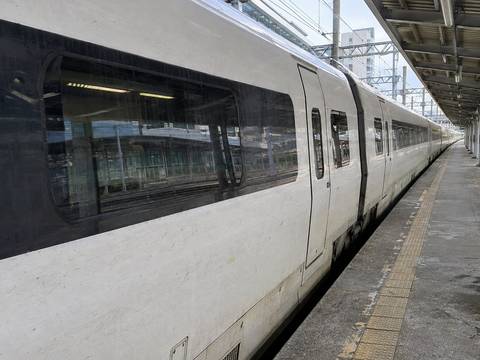
KTX and rail passes
Rail passes for foreign visitors, for a south-west trip from Seoul via Gwangju to Mokpo.
Check on Klook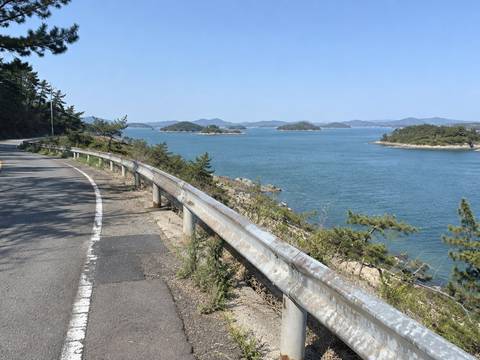
South-west Korea tours
Guided trips around Mokpo and the south-west coast, useful without a car.
Check on GetYourGuide
Private car with driver
A driver for the day links the cable car, Gatbawi and the bridge-linked islands of Shinan, which are slow by country bus.
Check on Klook
Some links on this page are affiliate links: if you book through them we may earn a commission at no extra cost to you. It never decides what we recommend. Affiliate disclosure.
Frequently asked questions
Is Mokpo worth visiting?
Yes, for an afternoon and evening, or one night if you are taking a ferry. The marine cable car, the view from Yudalsan and the 1930s port quarter are the highlights, and the evening fountain show runs until November. It is a working port rather than a resort, so most people do not stay more than a night.
How do I get from Seoul to Mokpo?
Take the KTX from Yongsan: about 2 h 20 – 2 h 45, about 15 trains a day; seven more run from Suseo. Express buses from the Central City terminal take about 3 h 50, 14 a day.
How much is the Mokpo cable car?
A return ride costs ₩24,000 for adults and ₩18,000 for children in a standard cabin, or ₩29,000 and ₩23,000 in a glass-floored crystal cabin. One-way tickets start at ₩19,000. On 6 November 2026 it ran 09:00–20:00 Sunday to Thursday and to 21:00 on Friday, Saturday and holidays; ticket sales stop an hour before. Shorter winter hours began on 1 December last year.
Can I take a ferry from Mokpo to Jeju?
Yes. Seaworld Express runs daily car ferries between Mokpo and Jeju, with an overnight departure from Mokpo and others in the day; economy fares start at about ₩32,000. From 7 November 2026 all its Mokpo sailings use the International Passenger Terminal.
What is closed in Mokpo on Mondays?
The modern history halls, the National Maritime Museum, the Natural History Museum, the Literature Museum, the Kim Dae-jung memorial hall and the fountain show all close on Mondays. The cable car, Yudalsan, Gatbawi and Namnong Memorial Hall stay open.
Sources
Facts on this page were checked against these sources on 6 November 2026. Prices, hours and rules change — confirm with the operator before you go.
- 목포해상케이블카 – 공지 249호, 2026년 3월 운영시간 (일~목 09:00–20:00, 금·토·공휴일 09:00–21:00) (Korean) · official
- 목포해상케이블카 – 공지사항 게시판 (동절기 운영시간, 대정비 휴장) (Korean) · official
- 목포해상케이블카 – 찾아오시는 길 (1번 버스, 도보 6분) (Korean) · official
- 목포해상케이블카 – 이용요금 (Korean) · official
- 목포해상케이블카 – 케이블카 소개 (3.23 km, 북항–유달산–고하도) (Korean) · official
- 목포해상케이블카 – 자주 묻는 질문 (유달산 승하차, 예약, 365일 운행) (Korean) · official
- 목포문화관광 – 유달산 (228.3 m, 노적봉, 일등바위) (Korean) · official
- 목포문화관광 – 유달산 등산로 (Korean) · official
- 목포문화관광 – 고하도 용오름 둘레길 (Korean) · official
- 목포문화관광 – 관광지 관람료 안내 (근대역사관, 자연사박물관, 문학관, 남농기념관, 노적봉예술공원 미술관) (Korean) · official
- 목포시 – 문화유산 현황 (목포 근대역사문화공간 등록 2018) (Korean) · official
- 목포문화관광 – 갓바위 (천연기념물, 해상보행교) (Korean) · official
- National Maritime Museum (Mokpo) – exhibition and visitor information · official
- 김대중노벨평화상기념관 – 관람안내 (Korean) · official
- 목포 춤추는 바다분수 – 공연 일정 (4–11월, 월요일 휴무) (Korean) · official
- 목포문화관광 – 목포9미 (Korean) · official
- 목포문화관광 – 관광안내소 (Korean) · official
- 목포문화관광 – 여객선 안내 (연안여객선터미널, 섬 항로) (Korean) · official
- 목포시 – 교통안내 (전남광주통합특별시 목포시 주소) (Korean) · official
- 씨월드고속훼리 – 목포 출항 국제여객터미널 이전 안내 (2026-10-26) (Korean) · official
- 씨월드고속훼리 – 운임 안내 (Korean) · official
- 고속버스통합예매 – 센트럴시티→목포 배차조회 (2026.11.05) (Korean) · official
- 시외버스 통합예매 – 광주·순천→목포 배차조회 (2026.11.05) (Korean) · official
- 기차 시간표 – 용산역→목포역 (2026.11.04) (Korean)
- 기차 시간표 – 수서역→목포역 (2026.11.04) (Korean)