Busan · Gijang and the east coast
Haedong Yonggungsa 해동용궁사
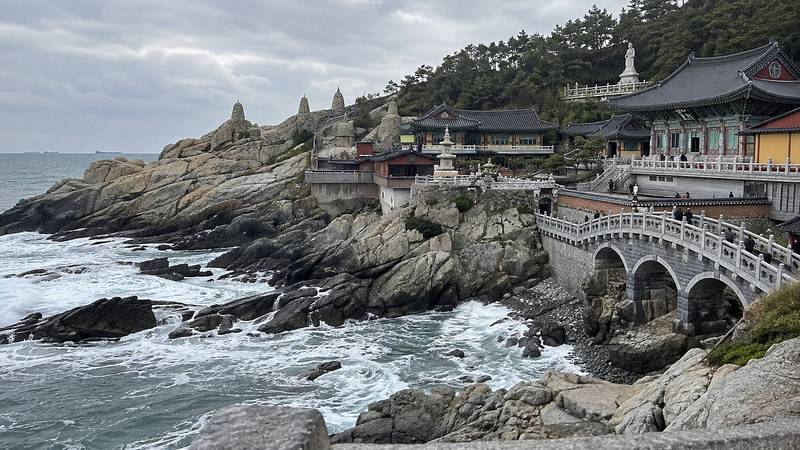
A Buddhist temple built on rocks at the water's edge, unusual in a country where most temples sit in the mountains.
Updated
Essentials
- Hours
- Every day, opening at 04:30
- Visit Busan lists closing at 19:20 with last entry at 18:50; the temple's own site gives 20:30 as the latest exit time
- Closed
- No closing days (open 365 days a year)
- Admission
- Free admission
- The car park next to the temple charges a fee
- Getting there
- Busan Metro Line 2, Haeundae Station Exit 7, then bus 181, 100 or Haeundae 9 to the Haedong Yonggungsa (용궁사·국립수산과학원) stop
- Donghae Line, Osiria Station Exit 1, then bus 139 or express 1001 to the same stop
- From the stop, about 15 minutes on foot to the temple
- Address
- 86 Yonggung-gil, Gijang-eup, Gijang-gun, Busan
부산 기장군 기장읍 용궁길 86 - Website
- yongkungsa.or.kr
Book your trip
Haedong Yonggungsa is a free Buddhist temple on the rocks above the sea, open every day from 04:30, with last entry at 18:50 according to Visit Busan. The easiest route is the Donghae Line to Osiria Station Exit 1, bus 139 or 1001 to the Yonggungsa stop, then a 15-minute walk. Allow about an hour on site.
Most Korean temples sit deep in the mountains; this one sits on the shoreline of Gijang, the northeast corner of Busan. Halls, pagodas and statues are built across the rocks just above the waves, and the whole site looks over the open East Sea. It is the main reason visitors travel this far up the coast, and it combines well with Haeundae on the same day.
What you see, in walking order
From the bus stop, the walk toward the gate passes a row of the twelve zodiac animal statues, where visitors look for the animal of their birth year, and then goes through the Iljumun gate.
Next comes a flight of 108 stone steps down through pine trees, 108 being a sacred number in Korean Buddhism. At the bottom, the small Yongmun Bridge crosses to the temple; people throw coins from it, as the temple is said to grant one wish to anyone who prays sincerely.
Inside, the main hall (Daeungjeon) faces the water. For the widest view, take the steps beside the main hall up to the large white statue of the Seawater Avalokitesvara (Haesu Gwaneum Daebul), which looks down over the complex and the coast. A short coastal path leads on to Sunrise Rock, the temple’s best-known viewpoint, and continues along the shore as part of Route 1 of the Haeparang Trail.
Hours, fees and the best time to go
| Details | Source | |
|---|---|---|
| Opens | 04:30, every day of the year | Temple site, Visit Busan |
| Closes | 19:20 (last entry 18:50) | Visit Busan EN and KO |
| Latest exit | 20:30 | Temple site |
| Admission | Free | Temple site, Visit Busan |
| Parking | Paid car park next to the temple | Visit Busan |
Hours and fees from the temple’s official site and Visit Busan (Busan Metropolitan City), checked 7 October 2026. The two official sources differ on closing time, so plan to be inside by 18:50 rather than counting on the later time.
- Sunrise. The 04:30 opening is unusually early, and Sunrise Rock faces east across open water. Check first-bus times before you rely on public transport at that hour; a taxi is the simpler option.
- Morning. Starting here and then working back south toward Haeundae keeps the day in one direction, with the beach and the evening at the end.
- Late afternoon. Leave enough time to be through the gate before last entry at 18:50.
Getting to Haedong Yonggungsa
The temple is in Gijang, well north of the city centre, so the trip is a train or metro ride plus a bus. Bus 139 stops at the Haedong Yonggungsa stop (signed 용궁사·국립수산과학원, “Yonggungsa · National Institute of Fisheries Science”); from there it is about 15 minutes on foot to the temple.
| From | Route | Bus to the Yonggungsa stop |
|---|---|---|
| Osiria Station (Donghae Line) | Exit 1, then the Osiria Station bus stop | 139 or express 1001 |
| Haeundae Station (Line 2) | Exit 7 | 181, 100 or Haeundae 9 |
| Busan Station (KTX arrivals) | Line 1 to Seomyeon, change to Line 2 for Haeundae | Then as above |
Routes from Visit Busan (English and Korean listings) and the temple site, checked 7 October 2026. Osiria is the closer station; Haeundae makes more sense if you are staying by the beach. A T-money card works on the metro, the Donghae Line and the buses.
Arriving by KTX from Seoul? The trip from Busan Station up to the temple is long, so most visitors base themselves near Haeundae and come here from there. For a taxi, show the address 부산 기장군 기장읍 용궁길 86.
Visitor tips and temple etiquette
- Wear shoes for steps. The 108 steps and the paths over the rocks are uneven, and they are slippery when wet.
- Mind the halls. Enter the halls by the side doors, as the central door is used by monks. Take your shoes off and leave them neatly outside, and keep your voice down.
- Dogs. Pets may enter only in a carrier or wearing a muzzle.
- Limited access. With the steps on the main route, wheelchair and stroller users will find much of the site hard to reach. Visit Busan lists an accessible toilet.
- Expect wind. The temple sits on open rocks at the edge of the sea, so bring a layer outside summer.
A short history
The temple’s own history dates its founding to 1376, late in the Goryeo period, by the monk Naong, who chose a spot backed by hills and facing the sea. It was burned during the Japanese invasions of the 1590s, rebuilt in the early 1930s under the name Bomunsa, and renamed Haedong Yonggungsa (“Dragon Palace Temple of the East Sea”) in the 1970s. The new name came from a dream of the head monk, Jeongam, in which Avalokitesvara rose to the sky on a dragon.
The temple counts itself among Korea’s three great seaside shrines to Avalokitesvara, with Naksansa on the Gangwon coast and Boriam on Namhae island. The temples guide covers Korea’s other major Buddhist sites, including Bulguksa in Gyeongju, an easy day trip from Busan.
Around Haedong Yonggungsa
The temple lies in the Gijang and east coast district, next to the Osiria resort area and the National Institute of Fisheries Science, which is linked to the temple by the coastal path. A good half-day runs south from here: head to Songjeong, ride the Haeundae Blueline Park coastal train along the shore, and finish at Haeundae Beach. On a Saturday evening, continue to Gwangalli Beach for the drone show. For the wider area and day trips, see the Busan region page.
Nearby
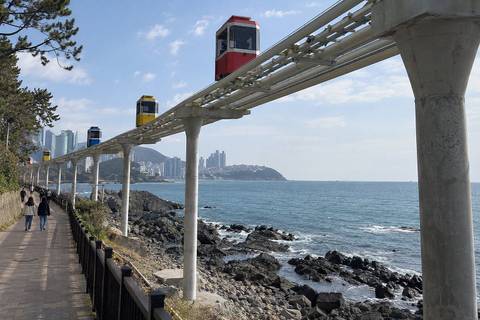
Haeundae Blueline Park
A disused coastal railway reborn as a slow beach train and elevated sky capsules between Mipo, Cheongsapo and Songjeong.
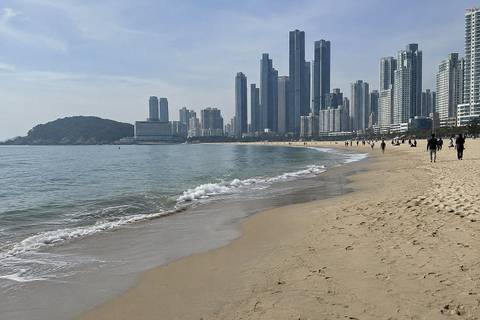
Haeundae Beach
Korea's most famous city beach, a wide arc of sand backed by hotels and towers, packed in midsummer.
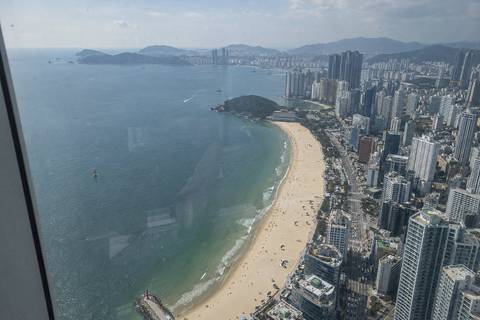
Busan X the Sky
A high observation deck in the Haeundae LCT tower, looking down on the beach and along the coast.
Frequently asked questions
What are Haedong Yonggungsa's opening hours?
The temple is open every day from 04:30. Busan's official tourism site lists closing at 19:20 with last entry at 18:50, while the temple's own site gives 20:30 as the latest exit. Arriving before 18:50 is the safe plan.
Is there an entrance fee at Haedong Yonggungsa?
No. Entry to the temple is free every day. Only the car park next to the temple charges a fee.
How do I get to Haedong Yonggungsa by public transport?
Take the Donghae Line to Osiria Station, leave by Exit 1 and take bus 139 or express bus 1001 to the Yonggungsa stop. From Haeundae Station Exit 7 on Line 2, buses 181, 100 and Haeundae 9 go to the same stop. The temple is about 15 minutes' walk from there.
Is Haedong Yonggungsa suitable for wheelchairs or strollers?
Only in part. The main approach drops down a flight of 108 stone steps to the temple on the rocks, so wheelchair and stroller users will find much of the site hard to reach. Visit Busan lists an accessible toilet on site.
Can you see the sunrise at Haedong Yonggungsa?
Yes. The temple opens at 04:30, and the Sunrise Rock beside it faces east across the open sea. It is one of Busan's best-known sunrise spots.
Sources
Facts on this page were checked against these sources on 7 October 2026. Prices, hours and rules change — confirm with the operator before you go.
- 해동용궁사 – 관람안내 (입장일·입장시간·퇴장시간·입장료) (Korean) · official
- 해동용궁사 – 용궁사의 역사 (Korean) · official
- 해동용궁사 – 오시는 길 (대중교통) (Korean) · official
- Visit Busan – Haedong Yonggungsa Temple in Gijang · official
- 부산에가면 (Visit Busan) – 기장에 가면 해동용궁사 (Korean) · official
- OpenStreetMap – 해동용궁사 (coordinates)