Seoul · Yongsan and Itaewon
War Memorial of Korea 전쟁기념관
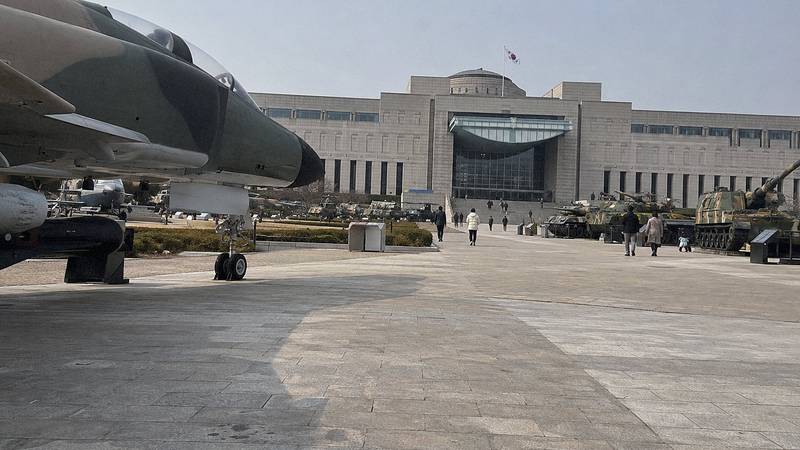
A large museum on Korea's wars, especially the Korean War, with aircraft, tanks and ships displayed in the grounds outside.
Updated
Essentials
- Hours
- Exhibition halls: 09:30–18:00, Tuesday–Sunday (last entry 17:00; halls start closing at 17:40)
- Free English tours: 10:30 and 14:30, Tuesday–Sunday, at the entrance of 6·25 War Room II (2nd floor)
- Closed
- Mondays (when a holiday period includes a Monday, the memorial opens and closes on the day after the holidays instead), 1 January, and the main day of Seollal and of Chuseok
- Admission
- Free for everyone, no booking needed for the permanent exhibition halls and the outdoor display
- Special exhibitions held in rented halls may charge their own admission
- Getting there
- Subway Line 6, Samgakji Station, Exit 12 (about 3 minutes on foot)
- Subway Line 4, Samgakji Station, Exit 1 (about 5 minutes on foot)
- Subway Line 1, Namyeong Station, Exit 1 (about 10 minutes on foot)
- Bus: War Memorial of Korea stop (110A, 110B, 740, 421) or Samgakji Station stops
- Address
- 29 Itaewon-ro, Yongsan-gu, Seoul 04353
서울 용산구 이태원로 29 - Website
- warmemo.or.kr/Eng/index
Book your trip
The War Memorial of Korea is free, open 09:30–18:00 (last entry 17:00) and closed on Mondays. Free English tours of the Korean War galleries start at 10:30 and 14:30. Allow 2–3 hours, and get off at Samgakji Station Exit 12 (Line 6), three minutes away.
It is Korea’s national museum of war, above all the Korean War of 1950–53, set in a large building with around 70 aircraft, tanks, missiles and boats displayed in the grounds outside. For visitors from the US, UK, Canada, Australia, the Philippines or India, it is also where the 22 countries that sent troops or medical units under the UN flag are remembered by name. It sits in Yongsan, a short ride from central Seoul and next to the National Museum of Korea.
When to go
| Time | What happens | Good for |
|---|---|---|
| 10:30 or 14:30 | Free English tour of the Korean War galleries, Tuesday–Sunday | First visit, the war’s story in English |
| Morning | Indoor galleries first, while the outdoor plaza is in full sun | Summer visits |
| Late afternoon | Outdoor aircraft and tanks in softer light; last hall entry 17:00 | Photos |
| Weekends | Busier, with families; car park fills up | Use the subway |
| Late October | UN Day events on the grounds (2026 UN Culture Festival: 23–25 October) | Visitors from UN-allied countries |
| Monday | Closed | – |
Times from the memorial’s official visiting-hours, tour and events pages, checked 18 October 2026. For a first visit, arrive by 10:15 or 14:15: join the English tour on the second floor, then walk the memorial hall and finish outside with the aircraft. Want the outdoor display only? It is free and open-air, so you can walk it in 30–60 minutes.
Hours and admission
The exhibition halls open 09:30–18:00, Tuesday to Sunday. Last entry is 17:00, and the halls start closing at 17:40, so arriving after 16:00 leaves too little time for the galleries. The memorial closes on Mondays; when a holiday period includes a Monday, it opens on the Monday and closes on the day after the holidays instead. It also closes on 1 January and on the main day of Seollal and Chuseok.
Admission is free for everyone and the permanent halls need no booking. Special exhibitions held in rented halls occasionally charge their own fee. The children’s museum on site takes its own bookings through the official website. Hours and fees from the official 관람안내 and booking pages, checked 18 October 2026.
English tours
- Times. 10:30 and 14:30, Tuesday–Sunday, every day the memorial is open. The tour covers 6·25 War Room II on the second floor; meet at the room’s entrance.
- No sign-up needed. Turn up at the start time. You can also book on the website up to 3 days ahead; a booked place is released if you are more than 5 minutes late.
- Who can join. Foreign-language tours are for foreign visitors, and each foreigner may bring up to two Korean companions. Bring your passport or residence card to show.
- Not for tour groups. Private study groups and travel-agency groups with their own guide cannot join the scheduled tours.
- Recording. Filming or recording the guide needs their consent first.
Korean-language tours run more often, including in the war history rooms on the first floor. War Room I on the second floor currently has no guided tours while its displays are being upgraded. Other guided options in the city are compared in tours and activities in Korea.
What you see
The indoor museum fills three floors, and the outdoor display wraps around the building. Most visitors spend the longest on the second floor.
Indoor galleries
- War History Rooms (1st floor) – Korea’s wars from ancient times to the 20th century, including a model of a Joseon-era turtle ship.
- Large Weapons Room (1st floor) – rebuilt for the memorial’s 30th anniversary, with Korean War tanks, a North Korean tank and a US Marine amphibious vehicle.
- Memorial Hall (2nd floor) – a quiet domed hall honouring those who died defending the country, with a crystal taegeuk lit from the ceiling.
- 6·25 War Rooms (2nd and 3rd floors) – the Korean War from the 1945 division to the 1953 armistice: the invasion, the Incheon landing, the recapture of Seoul and the long stalemate. The last room is dedicated to the UN forces.
- Later galleries – North Korean provocations since the armistice, Korea’s overseas deployments, donated items and the development of the armed forces.
Outdoors and the monuments
- Outdoor display – about 70 large pieces from the Korean War and after: a B-52D bomber on loan from the US Air Force museum, a MiG-19 flown south by a defecting North Korean pilot in 1983, the K-1 tank and Buhwal-ho, the first aircraft built in Korea (1953). Some armoured vehicles are open to climb inside.
- Chamsuri 357 – a full-size replica of the patrol boat sunk in the Second Battle of Yeonpyeong in 2002, with a small memorial and a 3D film inside.
- Statue of Brothers – two soldiers embracing, a South Korean officer and his younger brother in the North Korean army, the memorial’s best-known sculpture.
- UN participants’ monument – 22 stones, one per country that sent forces, set in the order they joined the war and inscribed in each country’s language and Korean.
- Names of the war dead – the corridor walls carry the names of Korean soldiers and police killed since the armed forces were founded and of the UN soldiers who died in the Korean War.
- Clock Tower of Peace – one of its two clocks is stopped at 4 a.m. on 25 June 1950, the hour the war began.
Getting there
Take Line 6 to Samgakji Station and use Exit 12; the memorial is about 3 minutes on foot. From Line 4 at the same station, Exit 1 is about 5 minutes. On Line 1, Namyeong Station Exit 1 is about 10 minutes. Buses 110A, 110B, 740 and 421 stop at the War Memorial of Korea stop. A T-money card pays the fare; the Seoul subway guide explains transfers. The address for taxis is 서울 용산구 이태원로 29.
The memorial has ground and underground car parks: ₩4,000 for the first 2 hours, then ₩1,500 per 30 minutes, up to ₩30,000 a day (card payment at the machines). The car park gets crowded at weekends.
Tips for visiting
- Pair it with the National Museum. The National Museum of Korea is close by and is also free; together they fill a full museum day in Yongsan.
- Find your country’s stone. The UN participants’ monument and the names of the UN dead are on the plaza and in the corridors around the building.
- Photo rules. No flash, tripods or selfie sticks inside, and no commercial filming.
- Food and drink. Food is not allowed in the galleries. The grounds have cafés and a 24-hour convenience store.
- Children. Children enjoy the outdoor aircraft and the vehicles they can climb into. Bikes, kick scooters, skateboards and wheeled shoes are not allowed in the outdoor display.
- Dinner nearby. The restaurants and bars of Itaewon are a short taxi or bus ride east along Itaewon-ro.
History in brief
The memorial stands on the former site of the Korean Army headquarters, which moved south to Gyeryongdae in 1989. It opened in 1994 to record the wars fought on the Korean Peninsula, honour the dead and teach the lessons of the Korean War. Today it holds a collection of more than 6,000 items.
Monuments have been added over the years: the clock tower in 2002, the Korean War sculpture group in 2003 for the 50th anniversary of the armistice, the Chamsuri 357 replica in 2010 and the UN participants’ monument in 2015, the UN’s 70th anniversary. Visiting heads of state from countries that fought in the Korean War often lay wreaths here.
Nearby
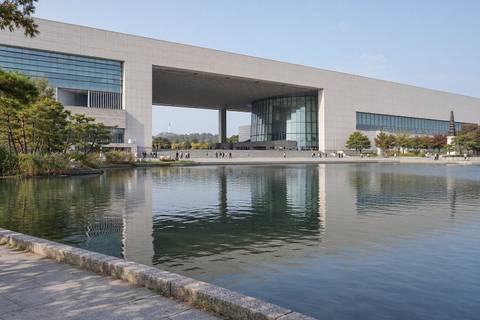
National Museum of Korea
The country's flagship museum, tracing Korean history from prehistory to Joseon through outstanding ceramics, Buddhist art and gold crowns.
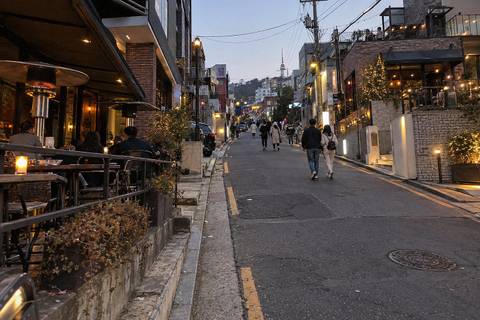
Itaewon
Seoul's most international neighborhood, with restaurants from around the world, rooftop bars and nightlife on the slopes below Namsan.
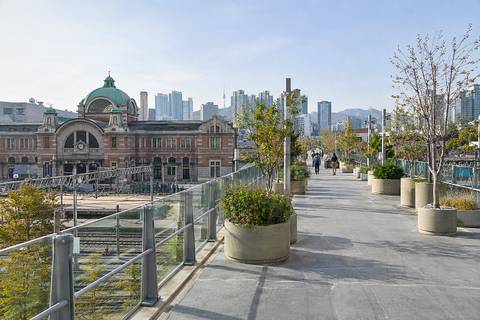
Seoullo 7017
A former highway overpass by Seoul Station reborn as an elevated walkway planted with trees and flowers in round planters.
Frequently asked questions
Is the War Memorial of Korea free?
Yes. The permanent exhibition halls, the memorial hall and the outdoor display of aircraft, tanks and ships are all free, with no ticket or booking. Only occasional special exhibitions held in rented halls charge admission.
Is the War Memorial of Korea open on Monday?
No, it closes every Monday. When a holiday period includes a Monday it opens and closes on the day after the holidays instead. It is also closed on 1 January and on the main day of Seollal and Chuseok. The nearby National Museum of Korea is a Monday alternative.
Are there English tours at the War Memorial of Korea?
Yes. Free English tours of the Korean War galleries start at 10:30 and 14:30, Tuesday to Sunday, at the entrance of 6·25 War Room II on the second floor. Just turn up with a passport, or book on the website up to 3 days ahead; a booking is cancelled if you are more than 5 minutes late.
How long do you need at the War Memorial of Korea?
Allow 2–3 hours: about an hour and a half indoors for the Korean War galleries and the memorial hall, and another 30–60 minutes outside for the aircraft, tanks and the Statue of Brothers. Last entry to the halls is 17:00.
Which subway exit is closest to the War Memorial of Korea?
Samgakji Station Exit 12 on Line 6, about 3 minutes on foot. From Line 4 at the same station use Exit 1, about 5 minutes. Namyeong Station on Line 1, Exit 1, is about 10 minutes away.
Sources
Facts on this page were checked against these sources on 18 October 2026. Prices, hours and rules change — confirm with the operator before you go.
- The War Memorial of Korea – Visiting hours, admission and closures (관람안내) (Korean) · official
- The War Memorial of Korea – Bookings: opening hours, last entry and closing time (예약하기) (Korean) · official
- The War Memorial of Korea – Scheduled guided tours, Korean and English (해설안내) (Korean) · official
- The War Memorial of Korea – Directions (오시는 길) (Korean) · official
- The War Memorial of Korea – Parking information (주차안내) (Korean) · official
- The War Memorial of Korea – Outdoor exhibition (야외전시장) (Korean) · official
- The War Memorial of Korea – Memorial sculptures (기념조형물) (Korean) · official
- The War Memorial of Korea – Cultural events 2026 (문화행사) (Korean) · official
- The War Memorial of Korea – Visiting hours (English) · official
- The War Memorial of Korea – Directions (English) · official
- Seoul Media Hub – June at the War Memorial of Korea: galleries floor by floor (24 Jun 2026) (Korean) · official
- Seoul Media Hub – War Memorial of Korea visitor tips and history (2025) (Korean) · official
- OpenStreetMap – 전쟁기념관 (map coordinates) (Korean)