Seoul · Palace Quarter (Jongno)
Gyeongbokgung Palace 경복궁
The largest and grandest of Seoul's five Joseon palaces, with the throne hall, a lotus-pond pavilion and the changing of the guard.
Updated
Essentials
- Hours
- January–February and November–December: 09:00–17:00 (last entry 16:00)
- March–May and September–October: 09:00–18:00 (last entry 17:00)
- June–August: 09:00–18:30 (last entry 17:30)
- Closed
- Tuesdays (if a Tuesday is a public holiday the palace opens and closes on the next non-holiday day instead)
- Admission
- Adults (foreign visitors aged 19–64): 3,000 won; groups of 10 or more: 2,400 won
- Free: foreign visitors aged 18 and under or 65 and over
- Free: anyone wearing hanbok that meets the palace guideline (jacket with a wrap-over collar plus a skirt or trousers)
- Integrated palace ticket (Gyeongbokgung, Changdeokgung, Changgyeonggung, Deoksugung and Jongmyo, excluding the Secret Garden): 6,000 won, valid 6 months
- Getting there
- Subway Line 3, Gyeongbokgung Station, Exit 5 (about 2 minutes on foot)
- Subway Line 5, Gwanghwamun Station, Exit 2
- Subway Line 3, Anguk Station, Exit 1 (about 6 minutes on foot)
- Address
- 161 Sajik-ro, Jongno-gu, Seoul 03045
서울 종로구 사직로 161 - Website
- royal.khs.go.kr/ROYAL/contents/menuInfo-gbg.do?grpCode=gbg
Book your trip
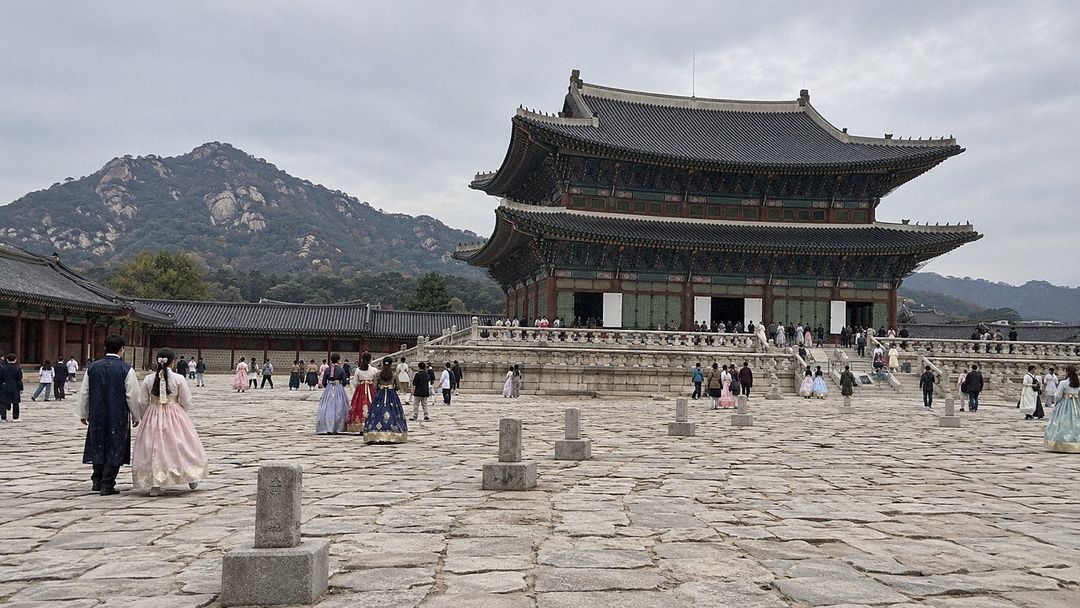
Gyeongbokgung was the first and largest of the five royal palaces built in Seoul during the Joseon dynasty, and it remains the city’s most visited historic site. Its grand halls sit on a north–south axis between Gwanghwamun Gate and the slopes of Bugaksan, with the modern city pressing in on three sides. It is the natural starting point for anyone exploring Seoul’s palaces.
Highlights
- Gwanghwamun and Heungnyemun gates – the formal approach to the palace, where the guard-changing ceremony is performed in reconstructed Joseon-era uniforms.
- Geunjeongjeon – the throne hall, raised on a two-tier stone platform. Rank stones in the courtyard once marked where officials stood during state ceremonies.
- Gyeonghoeru Pavilion – a large banquet hall standing on stone pillars in an artificial pond, one of the most photographed views in Seoul.
- Gangnyeongjeon and Gyotaejeon – the king’s and queen’s living quarters, with the terraced Amisan garden and its decorated chimneys behind them.
- Hyangwonjeong – a small hexagonal pavilion on an island in the northern part of the grounds, reached by a wooden bridge.
- Geoncheonggung – a residential compound added in the 19th century, where Empress Myeongseong was assassinated in 1895.
Tips for visiting
Arrive close to 09:00 or come after mid-afternoon to avoid the largest tour groups. Watch the 10:00 guard ceremony at Heungnyemun, then head deeper into the grounds while the crowds linger at the front gates. The palace is closed on Tuesdays, which makes Tuesday a good day to visit Changdeokgung instead, since that palace closes on Mondays.
Hanbok rental shops line the streets around Anguk and Gyeongbokgung stations, and wearing a full outfit gets you in free. If you plan to see several palaces, the integrated ticket covers Gyeongbokgung, Changdeokgung (main palace only), Changgyeonggung, Deoksugung and Jongmyo. Most buildings can only be viewed from outside, so there is a lot of walking on gravel and stone; comfortable shoes help.
The National Palace Museum, which displays royal artefacts from the Joseon court, stands just inside the grounds near the main entrance and makes a good rainy-day addition. The tree-lined lanes of Bukchon Hanok Village start a short walk east of the palace.
History in brief
King Taejo founded the palace in 1395, three years after establishing the Joseon dynasty, and its name expresses a wish for the new dynasty’s good fortune and prosperity. Hangeul, the Korean alphabet, was created and promulgated here in the 15th century. The palace burned during the Japanese invasion of 1592 and lay in ruins for about 270 years until it was rebuilt in 1867 under King Gojong.
During the colonial period most buildings were torn down, and a massive Japanese Government-General building was put up in front of the throne hall in 1926. Restoration began in the 1990s, the colonial building was demolished in 1996, and reconstruction of halls and gates has continued since. Getting there is easy by subway; see our transportation guide for using the Seoul metro.
Nearby
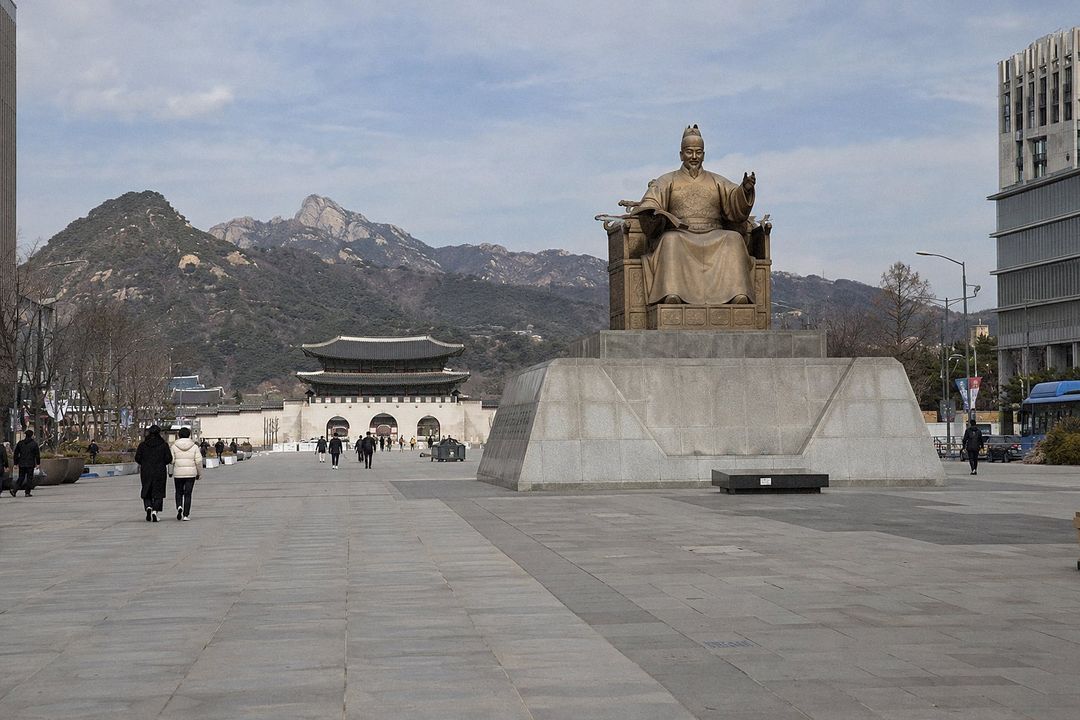
Gwanghwamun Square
The broad plaza in front of Gyeongbokgung's main gate, with statues of King Sejong and Admiral Yi Sun-sin and the mountains beyond.
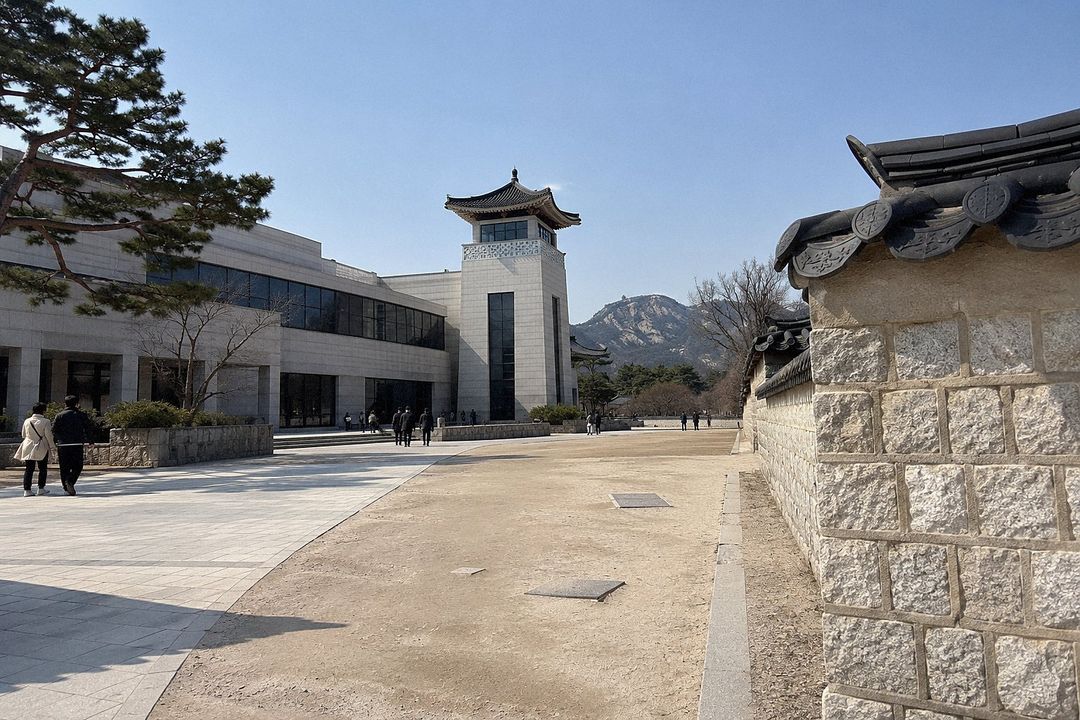
National Palace Museum of Korea
Royal artifacts of the Joseon court and Korean Empire, from thrones and seals to carriages, right beside Gyeongbokgung.
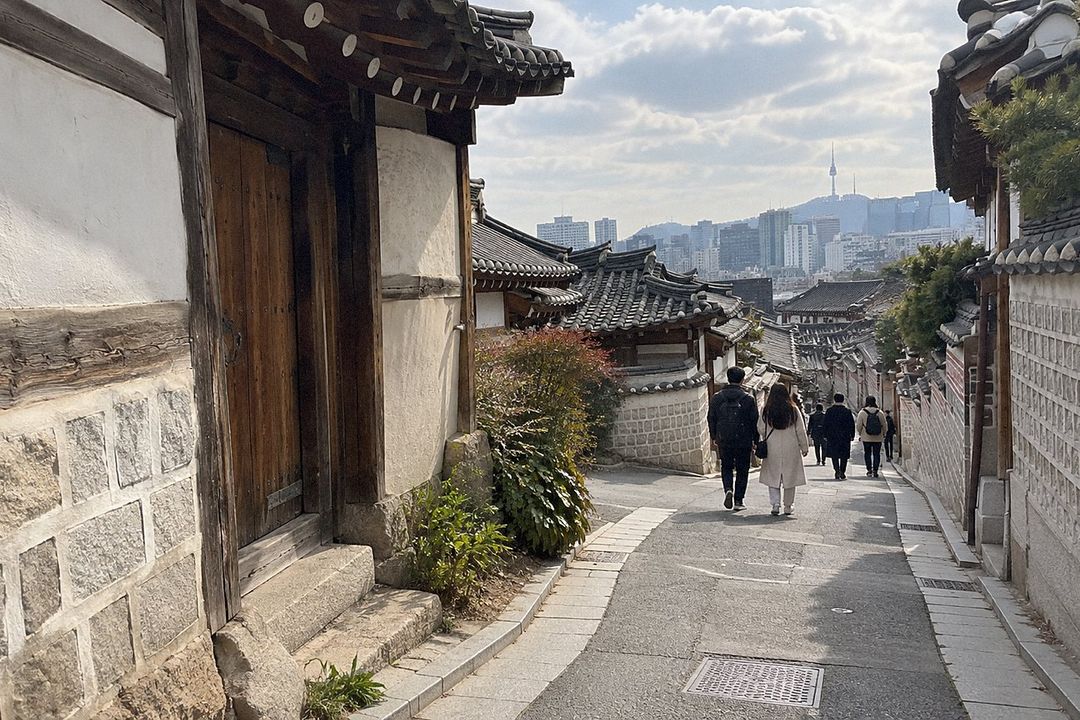
Bukchon Hanok Village
Hillside lanes of traditional tiled-roof houses between two palaces; a lived-in residential area with visiting hours in the busiest part.
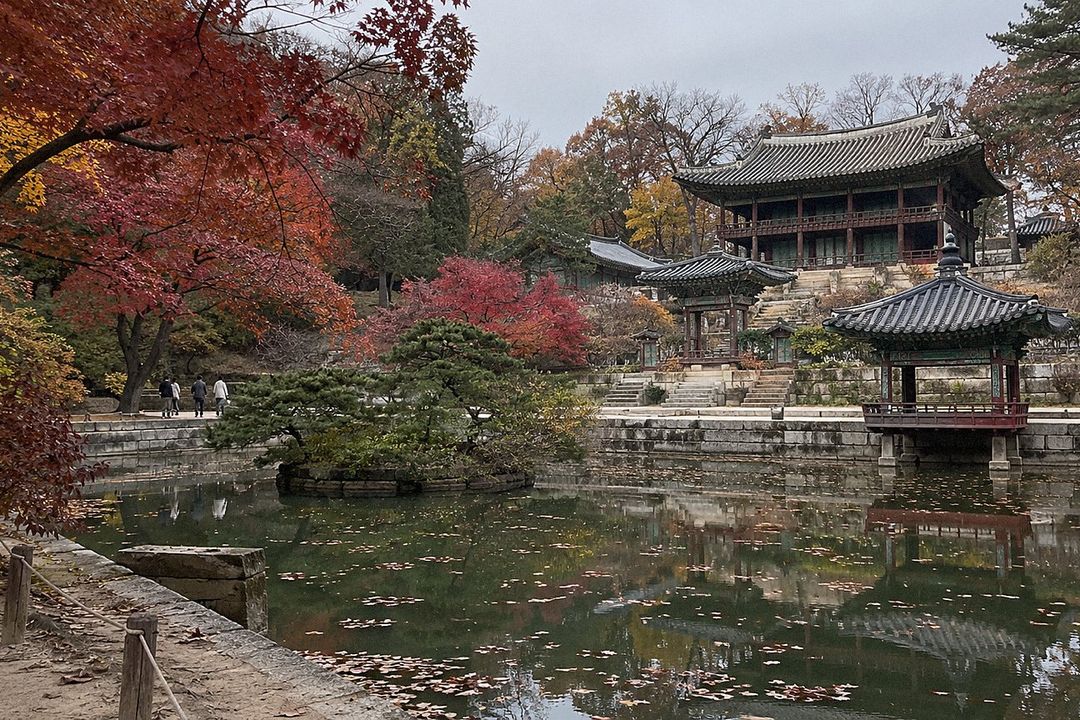
Changdeokgung Palace
A UNESCO-listed palace laid out to follow the hills, famous for its Secret Garden of ponds and pavilions visited on guided tours.
Frequently asked questions
Is Gyeongbokgung really free if I wear hanbok?
Yes. Visitors of any nationality wearing hanbok enter free, but the outfit must include a jacket with a wrap-over collar and a traditional skirt or trousers. A hanbok top with jeans, or a T-shirt with hanbok trousers, does not qualify.
What day is Gyeongbokgung closed?
It closes every Tuesday. When a Tuesday falls on a public holiday the palace stays open and closes on the next non-holiday day instead.
When is the changing of the guard at Gyeongbokgung?
The Royal Guard Changing Ceremony is held at 10:00 and 14:00 and lasts about 20 minutes. A shorter gate-guard ceremony at Gwanghwamun takes place at 11:00 and 13:00.
How long should I allow for a visit?
Allow at least two hours to see the main halls, Gyeonghoeru Pavilion and the residential quarters further north without rushing. The National Palace Museum near the entrance needs extra time.
Sources
Facts on this page were checked against these sources on 2 October 2026. Prices, hours and rules change — confirm with the operator before you go.
- Royal Palaces and Tombs Center – Opening hours (관람시간) (Korean) · official
- Royal Palaces and Tombs Center – Admission fees (관람요금) (Korean) · official
- Royal Palaces and Tombs Center – Hanbok free admission guideline (한복무료관람 가이드라인) (Korean) · official
- Royal Palaces and Tombs Center – Directions to Gyeongbokgung (오시는 길) (Korean) · official
- Royal Palaces and Tombs Center – Gyeongbokgung Palace and Its History · official
- Visit Seoul – Gyeongbokgung Palace · official
- Korea Heritage Agency – Royal Guard Changing Ceremony programme (수문장 교대의식 프로그램 안내) (Korean) · official
- OpenStreetMap – Gyeongbokgung (coordinates)