Seoul · Palace Quarter (Jongno)
National Palace Museum of Korea 국립고궁박물관
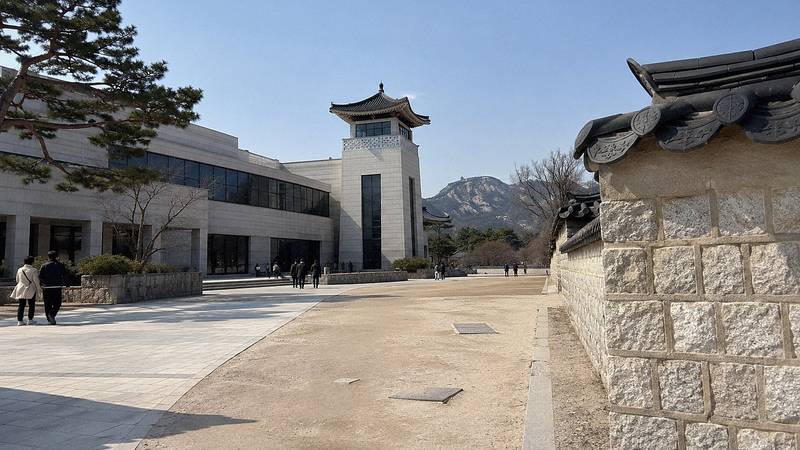
Royal artifacts of the Joseon court and Korean Empire, from thrones and seals to carriages, right beside Gyeongbokgung.
Updated
Essentials
- Hours
- Monday–Friday and Sunday: 09:30–17:30 (last entry 17:00)
- Saturday: 09:30–21:00 (last entry 20:30)
- Last Wednesday of each month (Culture Day): 09:30–21:00 (last entry 20:30)
- Closed
- Last Monday of each month (if it is a public holiday, the next day instead), 1 January, Seollal (Lunar New Year) day and Chuseok day. Remaining 2026 closures: 26 October, 30 November, 28 December
- Admission
- Free admission (the museum says until further notice)
- Audio guide in English, Japanese, Chinese or Korean: 1,000 won (ID required)
- Getting there
- Subway Line 3, Gyeongbokgung Station, Exit 5 (about 2 minutes on foot)
- Subway Line 3, Gyeongbokgung Station, Exit 4 (about 4 minutes on foot)
- Subway Line 5, Gwanghwamun Station, Exit 1 or 2 (about 10 minutes on foot)
- Airport bus 6011 stops at Gyeongbokgung Station
- Address
- 12 Hyoja-ro, Jongno-gu, Seoul 03045
서울 종로구 효자로 12 - Website
- gogung.go.kr/gogungEn/main/contents.do?menuNo=1000002
Book your trip
The National Palace Museum of Korea is free and open daily from 09:30 to 17:30, until 21:00 on Saturdays and the last Wednesday of the month. It closes on the last Monday of each month, but stays open on Tuesdays when Gyeongbokgung is shut. Free English tours run on weekday afternoons. Allow one and a half to two hours.
The museum holds the treasures of the Joseon royal court and the Korean Empire: royal seals, thrones and screens, court paintings, ritual vessels, scientific instruments and the emperor’s and empress’s early-20th-century cars. It stands on the south-west side of Gyeongbokgung, two minutes from the subway, so it is the natural indoor half of a palace day in Seoul. For the palaces themselves, see Seoul’s palaces.
When to go
| Day | Hours | Good to know |
|---|---|---|
| Monday–Friday | 09:30–17:30 | Free English, Japanese or Chinese tour between 13:00 and 15:00 |
| Tuesday | 09:30–17:30 | Gyeongbokgung is closed; the museum is open |
| Last Wednesday of the month | 09:30–21:00 | Culture Day late opening |
| Saturday | 09:30–21:00 | Late opening; no foreign-language tours |
| Sunday | 09:30–17:30 | No foreign-language tours |
| Last Monday of the month | Closed | 26 Oct, 30 Nov and 28 Dec in 2026 |
Hours, closures and tour days from the museum’s Korean and English visitor-information pages, checked 17 October 2026. Last entry is 30 minutes before closing. Want a guided tour in English? Go on a weekday afternoon. Short on daytime? Saturday and last-Wednesday evenings give you until 20:30 to get in.
The hours changed on 1 March 2026. The museum now opens 30 minutes earlier and closes earlier on weekdays. It also added the monthly last-Monday closure and kept the Wednesday late opening for the last Wednesday only. Many older guides and booking sites still show the previous times, 10:00–18:00 with Wednesday nights, or say it closes every Monday. Neither is correct now.
The Culture Day here is still the last Wednesday of the month. That differs from the royal palaces, which made every Wednesday a free day from October 2026. The museum is free every day anyway, so this only affects its late opening.
Closures and admission
Admission is free. The museum describes this as a measure to ease household costs that applies until further notice, so check the official page if you read this much later.
Besides the last Monday of each month, the museum closes on 1 January and on Seollal and Chuseok days, the main days of the Lunar New Year and harvest holidays. When a last Monday falls on a public holiday, the museum opens that day and closes on the next day instead. None of the remaining 2026 last Mondays are holidays.
Tours and audio guides
- Foreign-language tours. Free tours in English, Japanese and Chinese run Monday to Friday, at some point between 13:00 and 15:00. Each date’s language and start time are on the monthly calendar on the museum’s visitor page. Meet at the information desk in the 2nd-floor lobby and ask there on the day.
- For foreign visitors. Korean nationals can join a foreign-language tour only together with a foreign visitor.
- Korean tours run at 10:00 on weekdays and at 10:00 and 15:00 at weekends. Groups run by travel agencies or other commercial operators cannot use them.
- Audio guide. Handsets in English, Japanese, Chinese and Korean cost ₩1,000 (about US$0.70) at the 2nd-floor information desk; you leave an ID while you use it.
- Tour schedules can change with museum operations, so check the calendar on the day.
Getting there
Take Line 3 to Gyeongbokgung Station and use Exit 5. The museum is about a two-minute walk. Exit 4 takes about four minutes. From Line 5, Gwanghwamun Station Exits 1 and 2 are about ten minutes’ walk.
Blue buses 109, 171, 272, 601, 606, 700, 703 and 710 stop nearby, at the Gyeongbokgung Palace, Gyeongbokgung Station and Sajikdong Community Service Center stops. Airport bus 6011 also stops at Gyeongbokgung Station. A tap with a T-money card covers subway and city buses; see the Seoul subway guide for how to ride.
The museum has no car park. Drivers use the paid Gyeongbokgung car park off the road from Gwanghwamun towards Samcheong-dong. The address for taxis is 서울 종로구 효자로 12.
What you see
The permanent galleries cover three floors. The 2nd floor is the largest and holds the royal family’s own objects.
| Floor | Galleries | Look for |
|---|---|---|
| 2F | Kings of the Joseon Dynasty; Life in the Royal Family | The royal throne and its sun, moon and five peaks screen, King Taejo’s gold seal, a bronze dragon found in the Gyeonghoeru pond in 1997, royal robes |
| 1F | Korean Empire; imperial cars in the gallery lobby | Emperor Gojong’s state seal, Empress Myeongseong’s gold seal of 1897, the emperor’s and empress’s cars |
| B1F | Court paintings and calligraphy; Royal rituals; Joseon science | A royal palanquin, stone chimes, a 1395 star chart carved in stone, sundials, part of the 1536 water clock |
Gallery layout from the museum’s permanent-exhibition pages, checked 17 October 2026. If you only have an hour, do the 2nd floor and the cars, then go straight on to the palace.
The two cars are the museum’s best-known pieces. The emperor’s car is a General Motors Cadillac limousine and the empress’s a Daimler limousine, both from the 1910s. They have lacquered wooden bodies and gold plum-blossom crests on the doors. The museum says only three examples of the empress’s Daimler model survive worldwide, and it is the oldest car in Korea.
Paper and textile objects are light-sensitive, so the museum swaps part of the display about every two months. A favourite painting or robe may be resting when you visit. Temporary exhibitions use separate special galleries on the 1st and 2nd floors.
Tips for visiting
- Pair it with the palace. Go to the museum first on a hot, cold or wet morning, then walk into Gyeongbokgung once the weather or the crowds ease. On Tuesdays, when the palace is shut, pair it with Gwanghwamun Square or Bukchon instead.
- Photos are allowed in the galleries, but not with flash, tripods or selfie sticks, and not for commercial use. Some cases are dimly lit to protect the objects.
- Leave food outside. Food and drinks cannot be taken into the museum, and smoking is not allowed anywhere on the grounds. The EDIYA café inside keeps the museum’s hours.
- Use the free facilities. Lockers are behind the 2nd-floor information desk. Strollers and wheelchairs are lent free at the same desk, and there is a nursing room on the 1st floor.
- Only service animals. Pets are not allowed; guide dogs are welcome.
- Compare with the big museum. For Korean history from prehistory onwards, the National Museum of Korea in Yongsan is the next step; this museum covers only the royal court.
History in brief
The museum grew out of the Royal Museum, which opened in 1992 in the Seokjojeon stone hall at Deoksugung to care for court objects gathered from palaces, shrines and royal tombs. That building was too small. In 2005 the collection moved into the former National Museum of Korea building at Gyeongbokgung after the national museum left for Yongsan.
The National Palace Museum of Korea opened on 15 August 2005, the 60th anniversary of Korea’s liberation. All of its galleries reopened after renovation on 28 November 2007. It is run by the Korea Heritage Service.
Nearby
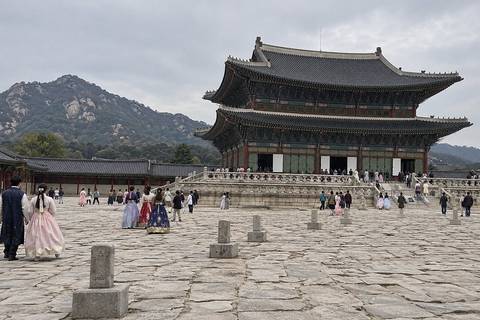
Gyeongbokgung Palace
The largest and grandest of Seoul's five Joseon palaces, with the throne hall, a lotus-pond pavilion and the changing of the guard.
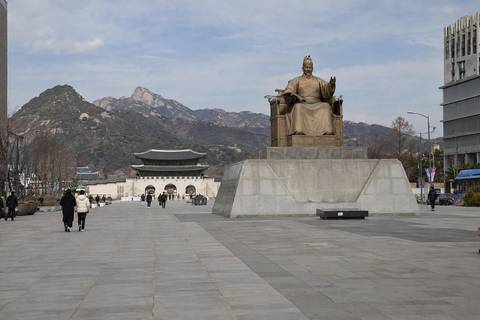
Gwanghwamun Square
The broad plaza in front of Gyeongbokgung's main gate, with statues of King Sejong and Admiral Yi Sun-sin and the mountains beyond.
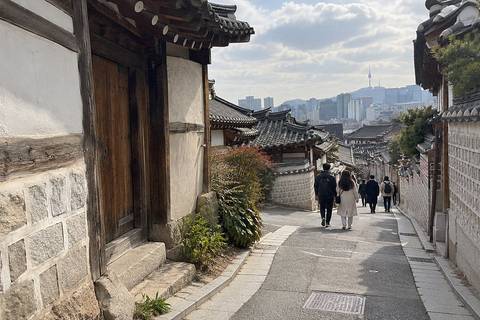
Bukchon Hanok Village
Hillside lanes of traditional tiled-roof houses between two palaces; a lived-in residential area with visiting hours in the busiest part.
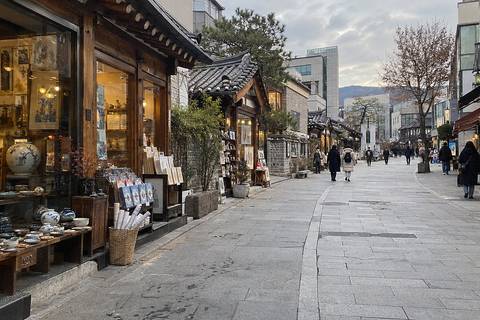
Insadong
A pedestrian-friendly street of craft and antique shops, tea houses and galleries, good for souvenirs such as hanji paper and ceramics.
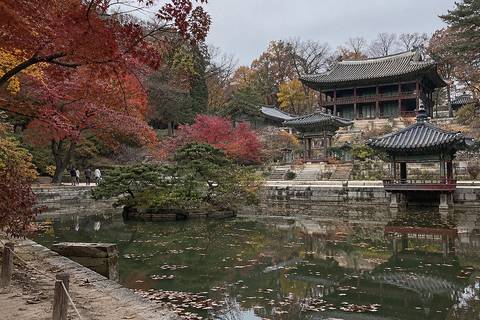
Changdeokgung Palace
A UNESCO-listed palace laid out to follow the hills, famous for its Secret Garden of ponds and pavilions visited on guided tours.
Frequently asked questions
Is the National Palace Museum of Korea free?
Yes. Admission is free, and the museum says this applies until further notice. The only charge inside is the optional audio guide, 1,000 won for adults, available in English, Japanese, Chinese and Korean at the 2nd-floor information desk; you leave an ID while you use it.
Is the National Palace Museum open on Mondays?
Yes, except on the last Monday of each month, when it closes for maintenance. If that Monday is a public holiday it closes on the next day instead. The remaining closures in 2026 are 26 October, 30 November and 28 December. It also closes on 1 January, Seollal day and Chuseok day.
Is the museum open when Gyeongbokgung is closed?
Yes. Gyeongbokgung closes every Tuesday, but the National Palace Museum is open on Tuesdays from 09:30 to 17:30. The museum sits on the palace's south-west side, two minutes from Exit 5 of Gyeongbokgung Station, so it makes a useful Tuesday or rainy-day plan in the palace area.
Are there English tours at the National Palace Museum?
Yes. Free tours in English, Japanese and Chinese run on weekdays, Monday to Friday, at some point between 13:00 and 15:00, for foreign visitors. Each day's language and start time are on the museum's monthly online calendar. Meet at the information desk in the 2nd-floor lobby. There are no foreign-language tours at weekends.
How long do I need at the National Palace Museum?
Allow about one and a half to two hours to walk through all three floors of permanent galleries without rushing. The highlights, the royal seals on the 2nd floor and the imperial cars on the 1st floor, can be seen in under an hour if you are pairing the museum with Gyeongbokgung.
Sources
Facts on this page were checked against these sources on 17 October 2026. Prices, hours and rules change — confirm with the operator before you go.
- National Palace Museum of Korea – Visitor information: free admission, hours, closures, tours (관람안내) (Korean) · official
- National Palace Museum of Korea – General Information (English) · official
- National Palace Museum of Korea – Directions by subway, bus and car (찾아오시는 길) (Korean) · official
- National Palace Museum of Korea – Getting Here (English) · official
- National Palace Museum of Korea – Visitor facilities and audio guide prices (편의시설) (Korean) · official
- National Palace Museum of Korea – Facilities (English) · official
- National Palace Museum of Korea – Permanent exhibitions by floor (상설전시안내) (Korean) · official
- National Palace Museum of Korea – Permanent Exhibitions and museum history (English) · official
- National Palace Museum of Korea – Imperial cars gallery (어차) (Korean) · official
- National Palace Museum of Korea – FAQ: photography and rotation of displays (자주하는 질문) (Korean) · official
- National Palace Museum of Korea (X) – New opening hours and last-Monday closure from 1 March 2026 (Korean) · official
- YTN – National Palace Museum opens 30 minutes earlier from March 2026 and adds a monthly closing day (19 Feb 2026) (Korean)
- OpenStreetMap – National Palace Museum of Korea (coordinates)