Daejeon · Dunsan and Expo Park
National Science Museum 국립중앙과학관
A large national science museum with free main halls and a 23 m dome planetarium (₩2,000); 09:30–17:30, closed Mondays.
Updated
Essentials
- Hours
- 09:30–17:30
- Planetarium shows (30 minutes) start at 10:00, 11:00, 13:30, 14:30, 15:30 and 16:30
- Closed
- Mondays, 1 January, Seollal day and Chuseok day. If the museum opens on a public holiday (including a holiday Monday), it closes on the next weekday instead.
- Admission
- Free: Science & Technology Hall, Natural History Hall, Human Evolution Hall, Future Tech Hall, Children's Science Museum, Botanical Garden, Astronomical Observatory and the outdoor exhibits
- Planetarium and Science Alive Discovery Center: ₩2,000 adults (19–64), ₩1,000 ages 3–18
- KkumAty Hall (preschoolers only): ₩2,000 adults, ₩1,000 children under 7
- Paid halls half price on Wednesdays; free for 65+ and for disabled visitors with one companion (bring ID)
- Parking: ₩4,000 for the first 5 hours, then ₩500 per 30 minutes
- Getting there
- City buses 104, 121 and 604 to the 국립중앙과학관 stop; 301, 318, 606, 918 and 1001 to 국립중앙과학관 입구, 신세계백화점
- From Daejeon Station: subway to Government Complex (정부청사), exit 3, then a bus from the Dunsan Police Station (둔산경찰서) stop, or a taxi of about 2 km and 5 minutes
- About 1.5 km (20 minutes on foot, map estimate) from Hanbit Tower in Expo Science Park
- Address
- 481 Daedeok-daero, Yuseong-gu, Daejeon
대전광역시 유성구 대덕대로 481 - Website
- science.go.kr/eps/index.do
Book your trip
Most of the National Science Museum in Daejeon is free. It opens 09:30–17:30 and closes on Mondays. Only the 23 m dome planetarium and two hands-on halls charge, at ₩2,000 for adults and ₩1,000 for children. Book those online up to 30 days ahead. Allow about half a day, more with young children.
| Your situation | Do this |
|---|---|
| Travelling with children 7–12 | Book a planetarium show and the Science Alive Discovery Center, then spend the gaps in the free Children’s Science Museum |
| Toddlers and preschoolers | Book the KkumAty Hall (under-7s only). The planetarium does not admit under-3s |
| Adults on a KTX stopover | Free halls only: Korean science history on the 2nd floor of the Science & Technology Hall, then the Natural History Hall. About two hours |
| Arriving on a Monday | The museum is closed. Hanbat Arboretum’s West Garden is open, and Sungsimdang opens every day |
| Driving at the weekend | The car park fills from 12:30 to 16:00, with 40–60 minute waits. Come at opening or take the bus |
| Visiting on a Wednesday | The paid halls are half price |
What is the National Science Museum?
The National Science Museum (국립중앙과학관) is Korea’s national science centre. It was founded in Seoul in 1945 and moved to the Daedeok research district of Daejeon, where the present museum opened on 9 October 1990. It sits in the Dunsan and Expo Park district, across the road from Expo Science Park.
The halls are separate buildings spread across a large campus, so you walk outdoors between them. Most exhibits are hands-on and aimed at children and school groups.
Which halls are free and which cost money?
Entry to the grounds and most halls is free, with no ticket. Three halls need a paid, timed ticket.
| Hall | Cost | What it is | Best for |
|---|---|---|---|
| Science & Technology Hall (과학기술관) | Free | Everyday science in the basement, physics, chemistry and biology on 1F, and Korean science history on 2F | Everyone |
| Natural History Hall (자연사관) | Free | The natural history of the Korean Peninsula, with a dinosaur hall and fossils | Everyone |
| Children’s Science Museum (어린이과학관) | Free | Play-based exhibits on nature, people and machines, opened in 2022 | Primary-school children |
| Future Tech Hall (미래기술관) | Free | The industrial revolutions on 1F, future life on 2F | Teens and adults |
| Planetarium (천체관) | ₩2,000 / ₩1,000 | 30-minute shows under a 23 m dome | Ages 3 and up |
| Science Alive Discovery Center (창의나래관) | ₩2,000 / ₩1,000 | 90-minute sessions with drones, an electricity show and game exhibits; recommended from Grade 5 | Children 10+ |
| KkumAty Hall (꿈아띠체험관) | ₩2,000 / ₩1,000 | A 60-minute play hall for preschoolers, with a corner for babies under 24 months | Under-7s with a parent |
Fees from the museum’s Korean pages, checked 17 November 2026. Adults are 19–64. The ₩1,000 rate covers ages 3–18 in the planetarium and the Discovery Center, and every child in the KkumAty Hall. Under-3s are free in the Discovery Center and not admitted to the planetarium.
Visitors aged 65 and over, and disabled visitors with one companion, enter the paid halls free. If you book online, you pay first and are refunded at the ticket office on the day when you show your ID.
With children, book the paid halls before you go. Adults can skip them: the free halls alone fill a morning.
How do you book the planetarium?
The museum calls its planetarium Korea’s first 3D planetarium. Shows last 30 minutes and start at 10:00, 11:00, 13:30, 14:30, 15:30 and 16:30, with 160 seats each.
- Booking: on the museum’s booking site, rsvn.science.go.kr (Korean). Bookings open at 00:00 thirty days before the date. Seats still free on the day are sold at the ticket office beside the main gate.
- Entry: check-in starts 10 minutes before the show. Nobody is let in once a show has begun.
- Seats: unreserved, so arrive early to choose.
- Refunds: in full if you cancel before the show starts, none after.
- Children: under 36 months are not admitted. The museum warns that the dark dome can scare small children.
In November 2026 the programme lists star talks at 13:30 and 15:30, with a museum guide presenting the sky live. Dome films such as We Are Stars and a space-travel show fill the other slots. The museum does not mention English versions, so expect Korean narration.
What should you see in the free halls?
- Korean science history (Science & Technology Hall, 2F). Opened in July 2024. It has working replicas of King Sejong’s water clocks, the Jagyeongnu (1434) and the Ongnu (1438). Look also for the Tongyeong rain-gauge stand (a Treasure) and the Cheonsang Yeolcha Bunyajido star map.
- Natural History Hall. The story of how the Korean Peninsula formed. Korea’s oldest stromatolites, from Socheongdo island, are about 1 billion years old. There are also dinosaur eggs, a mammoth and the Dino Hall’s skeletons.
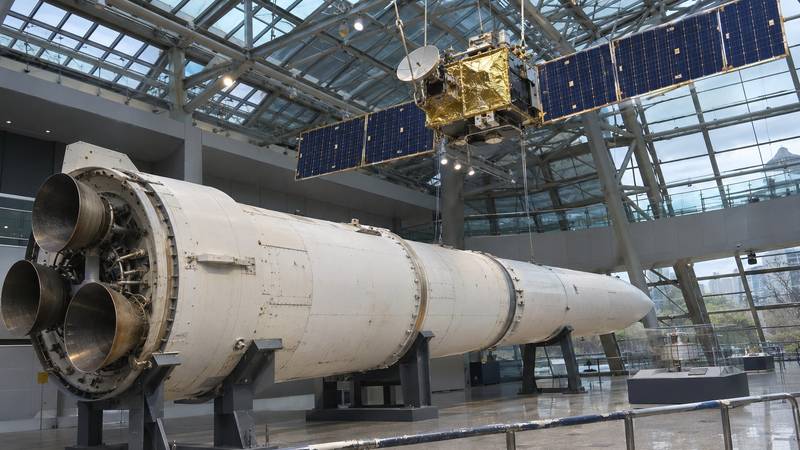
- Maglev Train History Hall (outdoors). Korea’s experimental maglev trains from 1990 to 1997, including the HML-03 that carried visitors at the 1993 Daejeon Expo. The ride ended on 31 December 2020, and the trains are now static displays.
- Astronomical Observatory. Opened in 2021. It shows Korea’s first solar telescope, formerly used at the Bohyunsan Observatory. Its solar viewing sessions depend on the weather and need booking. The museum does not recommend them for children under 7.
- Botanical Garden (생물탐구관). A glasshouse of about 200 evergreen species from Korea’s southern coast and islands, and a cactus corner on 2F.
How do you get there?
The museum is in Yuseong-gu, north of the Gapcheon stream. See getting to Daejeon for trains from Seoul and Busan.
- From Daejeon Station: take subway Line 1 to Government Complex (정부청사), exit 3. Walk to the Dunsan Police Station (둔산경찰서) stop and take bus 301, 318, 604, 705, 707 or 1001. Get off at 국립중앙과학관 or 신세계백화점. A taxi from exit 3 is about 2 km and 5 minutes, the museum says.
- Buses to the door: 104, 121 and 604 stop at 국립중앙과학관. Routes 301, 318, 606, 918 and 1001 use the 국립중앙과학관 입구, 신세계백화점 stop.
- From Seodaejeon Station: bus 318 from the Seodaejeon Station entrance stop (서대전역입구).
- On foot: about 1.5 km, or 20 minutes by map estimate, from Hanbit Tower in Expo Science Park.
- Car: 568 spaces, ₩4,000 for the first 5 hours, then ₩500 per 30 minutes. Payment is by card at machines. Car-park works run until 26 December 2026 (planned), and pile-driving for a new science centre on the next plot causes noise until early December.
Visitor tips
- Holiday Mondays. If the museum opens on a public holiday, it closes on the next weekday. Christmas Day 2026 falls on a Friday, so the museum is open.
- Food. No food in the halls. The food court is open Tuesday to Sunday, 10:40–17:00 (last order 16:30), with pork cutlet, udon and rice bowls. There is also a science café and a convenience store, 09:00–18:00.
- No pets (guide dogs are welcome). Bicycles, scooters and roller shoes are banned across the grounds.
- Combined tickets. Show a paid-hall ticket from the museum for discounted entry to Daejeon O-World and Daejeon Aquarium. O-World or aquarium tickets give 50% off one paid hall here, subject to seats.
- Pair it. Walk on to Expo Science Park and Hanbit Tower, or cross the stream to Hanbat Arboretum, as in the Daejeon one-day plan.
Is it worth it?
Go with children aged about 4–12. Most of it is free, and the paid halls cost ₩1,000–2,000. It is also worth a morning for adults interested in Korean science history.
Skip it on a Monday. Skip it too if you have only a few hours in Daejeon and no children: the halls are built mainly for children, and the museum’s detailed exhibit pages are in Korean only.
See the Daejeon city guide for the rest of the city, museums in Korea for other collections, and the Chungcheong region page for nearby Gongju and Buyeo.
Nearby
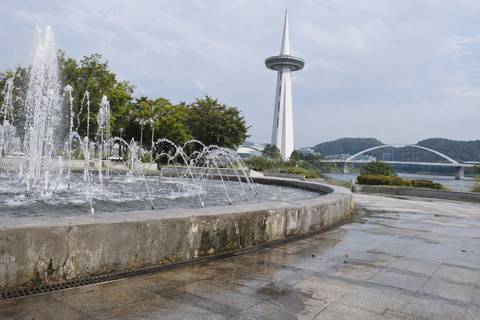
Expo Science Park and Hanbit Tower
The 1993 Expo grounds by the Gapcheon stream, with the 93 m Hanbit Tower observatory and a musical fountain; closed Mondays.
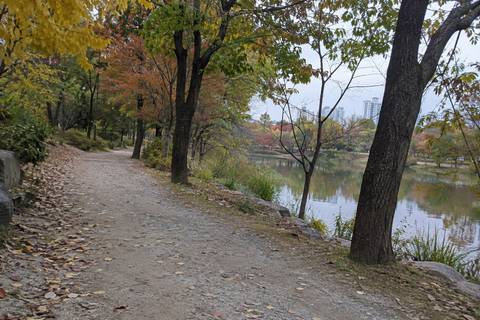
Hanbat Arboretum
Korea's largest man-made urban arboretum, free, with east and west gardens and a tropical glasshouse; winter hours 07:00–19:00.
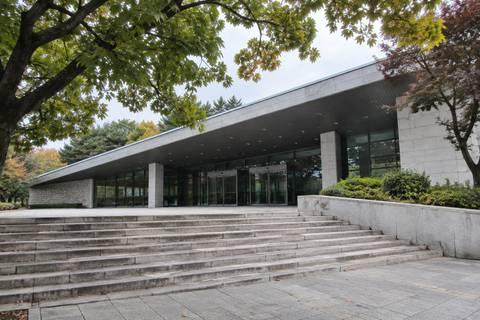
Daejeon Museum of Art
The city's art museum, with changing exhibitions of Korean and regional art; ₩500, closed Mondays.
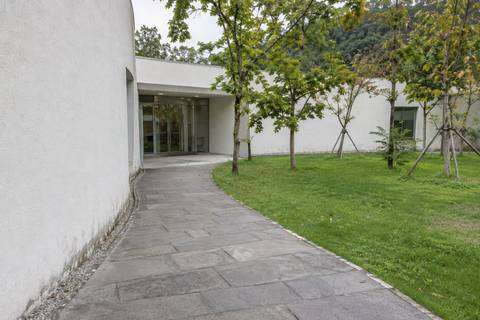
Lee Ungno Museum
Museum of the modern painter Lee Ungno in Dunsan Grand Park, beside the Museum of Art; ₩500, special shows ₩1,000, closed Mondays.
Frequently asked questions
Is the National Science Museum in Daejeon free?
Mostly. Entry and most halls are free, including the Science & Technology Hall, the Natural History Hall and the Children's Science Museum. Only the planetarium, the Science Alive Discovery Center and the KkumAty Hall for preschoolers charge: ₩2,000 for adults and ₩1,000 for children, half price on Wednesdays.
What are the National Science Museum opening hours?
09:30–17:30, Tuesday to Sunday. It closes on Mondays, 1 January, Seollal day and Chuseok day. If it opens on a public holiday, such as a holiday Monday, it closes on the next weekday instead.
Do I need to book the planetarium?
Booking is recommended. Tickets go on sale on the museum's Korean booking site at 00:00 thirty days before the date. Seats left over are sold on the day at the ticket office by the main gate. Seating is unreserved, entry starts 10 minutes before the show, and latecomers are not let in.
Can babies go into the planetarium?
No. Children under 36 months are not admitted to the planetarium. The museum also warns that the dark dome can frighten small children. The KkumAty Hall is the paid hall made for under-7s.
How long do you need at the National Science Museum?
As an estimate, half a day. Two or three free halls take about two hours. Add 30 minutes for a planetarium show and 90 minutes for the Science Alive Discovery Center if you book it.
Is the museum open over the New Year and Seollal 2027?
It is closed on 1 January 2027. The museum's 2027 plan also closes it on 7 February (Seollal day) and 10 February, and opens it on 8–9 February during the holiday.
Sources
Facts on this page were checked against these sources on 17 November 2026. Prices, hours and rules change — confirm with the operator before you go.
- 국립중앙과학관 – 관람 안내 (09:30~17:30, 휴관 매주 월요일·1월 1일·설날·추석 당일, 공휴일 개관 시 다음날 휴관, 입장료 무료, 유료관 창의나래관·꿈아띠체험관·천체관) (Korean) · official
- 국립중앙과학관 – 유료 전시관 (30일 전 0시 예약, 성인 2,000원·청소년 및 어린이·유아 1,000원, 수요일 문화가 있는 날 50%, 65세 이상·장애인 면제, 연령 기준표) (Korean) · official
- 국립중앙과학관 – 천체관 (23m 돔, 국내 최초 3D 천체 투영관, 자유석, 10분 전 입장, 시작 후 입장 불가, 영아 입장 불가, 상영 프로그램) (Korean) · official
- 국립중앙과학관 – 위치안내 (버스 104·121·604 / 301·318·606·918·광역1001, 정부청사역 3번 출구, 택시 2km·5분) (Korean) · official
- 국립중앙과학관 – 주차안내 (568면, 소형 5시간 4,000원·30분당 500원, 주말 12:30~16:00 만차·대기 40~60분) (Korean) · official
- 국립중앙과학관 – 관람객 주차장 환경 개선 공사 및 복합체험랜드 공사 안내 (2026.10.8~12.26 예정, 항타작업 12월 초까지; 2026-10-08) (Korean) · official
- 국립중앙과학관 – 2027년도 개관 및 휴관 계획 알림 (2026-10-28) (Korean) · official
- 국립중앙과학관 – 식음시설 (푸드코트 화~일 10:40~17:00, 편의점 09:00~18:00, 과학 카페) (Korean) · official
- 국립중앙과학관 – 한국과학기술사관 (자격루·옥루 복원품, 통영측우대, 천상열차분야지도) (Korean) · official
- 국립중앙과학관 – 자기부상열차 역사관 (KOMAG-01, HML-03 '93 엑스포, 탑승 체험 2020년 12월 31일 종료) (Korean) · official
- National Science Museum – Visitor Information (hours, closures, paid and free halls) · official
- National Science Museum – Brief History (founded in Seoul 1945, Daejeon museum opened 9 October 1990) · official
- K-TRIP TIPS (한국관광공사 데이터) – 국립중앙과학관 (09:30~17:30, 무료·전시관별 유료, 월요일·1월 1일·설·추석 당일 휴관, 주차 5시간 4,000원; 2026-11-11 갱신) (Korean)
- OpenStreetMap – 국립중앙과학관 (coordinates; walking route to Hanbit Tower by OSRM)