Gongju · Gongsanseong and the old town
Gongsanseong Fortress 공산성
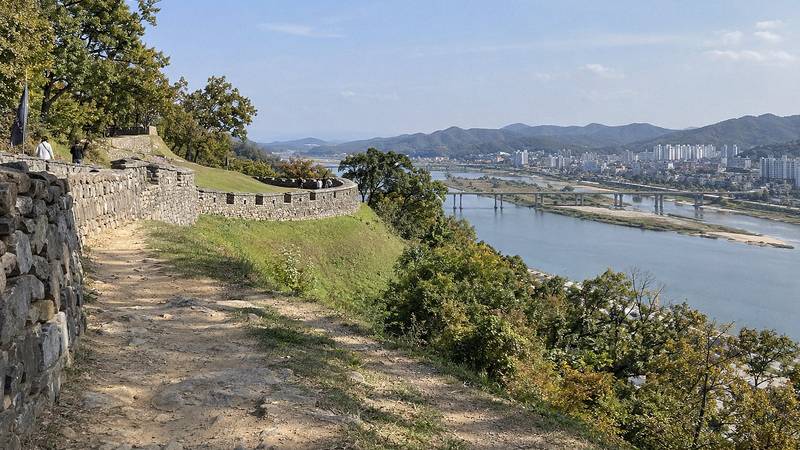
Baekje's royal fortress of 475–538, a wall walk along a ridge above the Geumgang River with the Geumseoru gate; ₩3,000, allow about 1 h 30.
Updated
Essentials
- Hours
- November–February 09:00–17:00; March–October 09:00–18:00
- Last entry 30 minutes before closing
- Closed
- 1 January, Seollal day and Chuseok day
- Admission
- Adult ₩3,000; youth or soldier ₩2,000; child ₩1,000
- Combined ticket with the royal tombs and Seokjang-ri Museum: adult ₩6,000; youth ₩4,000; child ₩2,000
- Preschoolers free; senior-card holders free, though foreign visitors are not specified
- Getting there
- From Gongju Bus Terminal: bus 200 from the 종합버스터미널 stop, 2 stops to 공산성; or bus 125, 8 stops the long way round
- From Gongju Station (KTX): bus 200 to 공산성, about 1 hour
- On to the royal tombs: bus 125 from the 공산성 stop marked 무령왕릉 방면, 2 stops to 무령왕릉
- Express bus from Seoul Express Bus Terminal to Gongju about 1 h 30 min
- Free parking on site
- Address
- 280 Ungjin-ro, Gongju
충청남도 공주시 웅진로 280 - Website
- gongju.go.kr/tour/sub01_01_02.do
Book your trip
Gongsanseong is worth the trip if you pair it with the royal tombs: ₩3,000 buys a 2.66 km wall walk on the ridge where Baekje’s kings ruled from 475 to 538, high above the Geumgang River. Allow 1 h 30 to 2 hours for the full circuit. Until the end of February it opens 09:00–17:00, with last entry at 16:30. From Gongju Bus Terminal, take bus 200 or 125 to the 공산성 stop.
| Your situation | Do this |
|---|---|
| Day trip from Seoul | Take an express bus before 09:00, walk the wall first, then ride bus 125 to the tombs |
| Seeing the fortress and the tombs only | Buy two ₩3,000 tickets or one ₩6,000 combined ticket; the price is the same |
| Adding Seokjang-ri Museum | Buy the combined ticket at your first site, which saves ₩3,000 |
| Travelling with small children or bad knees | Skip the full circuit and take the shorter route described below |
| Arriving by KTX | Allow about an hour each way on bus 200, or use the express bus instead |
| Visiting on a Monday | The fortress and tombs are open, but the National Museum is closed |
What will you see on the wall walk?
The path follows the wall in a loop from the west gate, with the river on the north side and the town to the south. The usual full route runs in this order.
| Stop | What it is | Why stop |
|---|---|---|
| Geumseoru (금서루) | West gate, restored in 1993 | Main entrance, ticket office and the classic wall photo |
| Jinnamnu (진남루) | South gate, built in its Joseon form | The gate on the town side, on the way down to the old town |
| Gwangbokru (광복루) | Pavilion on the eastern ridge | On the eastern stretch, the 735 m of wall traditionally described as earthen |
| Manharu (만하루) and Yeonji (연지) | Riverside lookout and stepped stone pond | Down by the Geumgang, beside the temple Yeongeunsa |
| Gongbungnu (공북루) | North gate, Joseon period | The gate facing the river, before the path heads back to Geumseoru |
From Gongju City’s sight and heritage pages, checked 5 November 2026. The walk is the point of the visit, since most of what stands today is rebuilt, and the wall itself is largely Joseon stone work.
The shorter route leaves Geumseoru and cuts across the middle to Ssangsujeong (쌍수정), the pavilion at the high point of the fortress, and the flat ground of the royal palace site in front of it, which overlooks the city and the royal tombs. Families can also go from Geumseoru past the Gongsanjeong (공산정) viewpoint along the wall to Gongbungnu, then return by the flatter inner path.
Stairs on the wall are narrow and steep, parts of the path have a drop on one side, and the steps down to Geumseoru are steep. Wear shoes with grip and do not plan on a stroller.
Why does this fortress matter?
Baekje moved its capital here in 475 after Goguryeo took its first capital in what is now Seoul, and stayed for 64 years before moving on to Buyeo. The site joined the UNESCO list in 2015 as part of the Baekje Historic Areas. King Uija fled here in 660 and surrendered as Baekje fell. In 1624, King Injo sheltered here during Yi Gwal’s revolt, and Ssangsujeong takes its name from two trees he gave official rank.
How much is it, and which ticket should you buy?
| Ticket | Adult | Youth or soldier | Child |
|---|---|---|---|
| Gongsanseong only | ₩3,000 | ₩2,000 | ₩1,000 |
| Combined ticket (with royal tombs and Seokjang-ri Museum) | ₩6,000 | ₩4,000 | ₩2,000 |
From Gongju City’s fee table, checked 5 November 2026. Youth means middle and high school students, and child means elementary school age. Groups of 20 or more pay ₩2,500 for an adult. The combined ticket only saves money at the third site, and the free National Museum is not part of it.
Preschoolers and disabled visitors enter free. The fee table also lists senior-card holders as free, without saying whether foreign visitors qualify, so bring a passport and be ready to pay. Cards are accepted.
When should you go?
The fortress keeps winter hours now: 09:00–17:00 until the end of February, then 09:00–18:00 from March to October. Last entry is 30 minutes before closing. It closes only on 1 January and on Seollal and Chuseok days, so the next closures are 1 January 2027 and Seollal day, within the 6–9 February 2027 holiday.
- Time of day: go in the morning on a day trip, because the tombs and museum fill the afternoon. The tombs close at the same hour as the fortress.
- Guided commentary: free talks start on the hour from 09:00 to 16:00, but no language is stated, so assume Korean.
- Guard ceremony: do not plan around it. In 2025 the gate guard-changing ceremony ran on weekends and holidays at 11:00, 13:00 and 15:00 from late April to early November, with a break from June to August. No 2026 schedule could be found, so ring 041-856-7700 for the current position.
- Night view: the fortress shuts by evening, but Geumgang Sinkwan Park on the north bank, near the bus terminal, faces the lit walls. The pontoon bridge across the river appears only during the Baekje Cultural Festival, which ran 3–11 October in 2026; the 2027 dates had not been announced.
How do you get there?
| From | Bus | Stops and frequency |
|---|---|---|
| Gongju Bus Terminal | 200, towards 공주역 | 2 stops to 공산성; about 14 a day, 06:10–20:00 |
| Gongju Bus Terminal | 125, towards 웅진동 | 8 stops through the old town to 공산성; every 30 minutes, 40 on non-working days |
| Gongju Station (KTX) | 200, towards the terminal | About 1 hour to 공산성; about 14 a day, 07:30–20:50 |
From Gongju City’s bus system and timetable, checked 5 November 2026. A few extra bus 200 trips run on non-working days only. Both buses leave from the 종합버스터미널 stop marked 옥룡동 방면, so take whichever comes first. The city’s fortress page also names a bus 101, but the bus system lists no route with that number. Check Naver Map before you board.
From Seoul, take an express bus from Seoul Express Bus Terminal (Gyeongbu side), about 1 h 30 and ₩14,900 for premium seats. It stops at the terminal on the north bank, across the bridge from the fortress. Gongju Station is in farmland far south of town, so KTX only saves time if your journey goes on to Jeolla. See Gongju’s transport section for every route.
On a Saturday or Sunday through November 2026, the city tour bus is an alternative from the station. It leaves Gongju Station at 09:00 and City Hall at 09:20 and is back at the station at 17:00, for ₩8,000 or ₩11,000 for an adult depending on the course. The season can end early if its budget runs out.
The visitor centre beside the ticket office has space for storing luggage, according to an undated city article, so ask there before relying on it.
What is around Gongsanseong?
- Royal tombs: bus 125 from the 공산성 stop marked 무령왕릉 방면, 2 stops to 무령왕릉. This is the natural next stop, and the Gongju National Museum with King Muryeong’s gold is about 800 m on foot beyond it.
- Hwangsaebawi and Jungdong Catholic Church: the old-town walk south of the fortress, with Sanseong Market on the way for lunch.
- Gomanaru: the riverside pine grove, about 1 km on foot from the Arts Center stop near the tombs.
For the rest of the day, see the Gongju city guide. To compare the other Baekje capital, see Buyeo and its woodland fortress, Busosanseong. For similar walks, see fortresses in Korea and UNESCO sites in Korea, or the wider Chungcheong guide.
Nearby
Royal Tombs of Gongju (King Muryeong's tomb)
Baekje royal tombs, including King Muryeong's, found intact in 1971; an exhibition hall reproduces the chambers. ₩3,000.
Gongju National Museum
The gold crown ornaments, stone tablets, guardian beast and other finds from King Muryeong's tomb; free, closed Mondays.
Hwangsaebawi Martyrs' Shrine
A hillside shrine to the Catholics executed in Gongju in the 18th and 19th centuries, a short walk from Gongsanseong; free.
Jungdong Catholic Church
A red-brick Gothic church of 1937 on a hill in the old town; free and always open.
Gomanaru
A pine grove on the Geumgang at the old ferry crossing, with the Ungjindan altar and a bear legend behind Gongju's old name; free.
Frequently asked questions
Is Gongsanseong worth a day trip from Seoul?
Yes, if you pair it with the royal tombs and the National Museum, which together make a full day about 1 h 30 from Seoul by express bus. The fortress alone is a fine river-view walk, but other walled sites near Seoul are closer. Come for Baekje history, not just the wall.
How long does it take to walk around Gongsanseong?
Allow 1 h 30 to 2 hours for the full 2.66 km circuit of the wall, with stops at the gates and pavilions. The path climbs and drops steeply in places, so go slower with children. A shorter walk cuts through the middle of the fortress instead of following the whole wall.
Should I buy the combined ticket?
Only if you also plan to visit Seokjang-ri Museum. The ₩6,000 ticket covers Gongsanseong, the royal tombs and Seokjang-ri, but the fortress and tombs alone already cost ₩6,000 at ₩3,000 each. It saves you ₩3,000 only at the third site. Buy it at whichever site you reach first.
Which bus goes from Gongju Bus Terminal to Gongsanseong?
Bus 200 is the shortest, 2 stops across the river to 공산성, but runs only about 14 times a day. Bus 125 comes every 30 to 40 minutes and uses the same terminal stop, but takes 8 stops through the old town. The city's fortress page also mentions bus 101, but its bus system lists no such route.
Is there an English guide at Gongsanseong?
The city does not state a language. Free commentary starts on the hour from 09:00 to 16:00, except on guide days off, so assume Korean unless the visitor centre confirms otherwise on 041-856-7700. Foreign visitors should not build a plan around it.
Is Gongsanseong free for seniors from overseas?
The city's fee table gives free entry to senior-card holders and lists age 65 and over, but does not mention foreign visitors. Bring your passport and ask at the ticket office, and be ready to pay ₩3,000.
Sources
Facts on this page were checked against these sources on 5 November 2026. Prices, hours and rules change — confirm with the operator before you go.
- 공주시 문화관광 – 공산성 (시간, 요금, 휴무일, 주차, 해설, 주요 시설) (Korean) · official
- 공주시 문화관광 – 세계유산 공산성 (역사, 성벽 길이, 왕궁지, 출토 유물) (Korean) · official
- 공주시 문화관광 – 관광지 입장료 현황 (개인·단체 요금, 통합권, 경로증) (Korean) · official
- 공주시 – 문화관광해설사 예약 (해설 시간, 단체 예약) (Korean) · official
- 공주시 버스정보시스템 – 노선 정보 (정류장 순서, 운행 횟수, 첫차·막차) (Korean) · official
- 공주시 – 시내버스 시간표 (200번, 125번) (Korean) · official
- 공주시 문화관광 – 시티투어 (2026년 운행 기간, 요금, 출발 시간) (Korean) · official
- 온누리공주 – 공산성 걷기 (성벽길, 방문자센터, 짐 보관) (Korean) · official
- UNESCO World Heritage Centre – Baekje Historic Areas · official
- 케이트립팁스 – 공산성 (한국관광공사 자료: 시간, 요금, 주차)
- 여행콩닥 – 공주 공산성 (요금, 성벽 길이, 일주 소요 시간) (Korean)
- 충청매일 – 웅진성 수문병 근무 교대식 2025년 일정 (Korean)