Jeju Island · East Jeju
Seongeup Folk Village 성읍민속마을
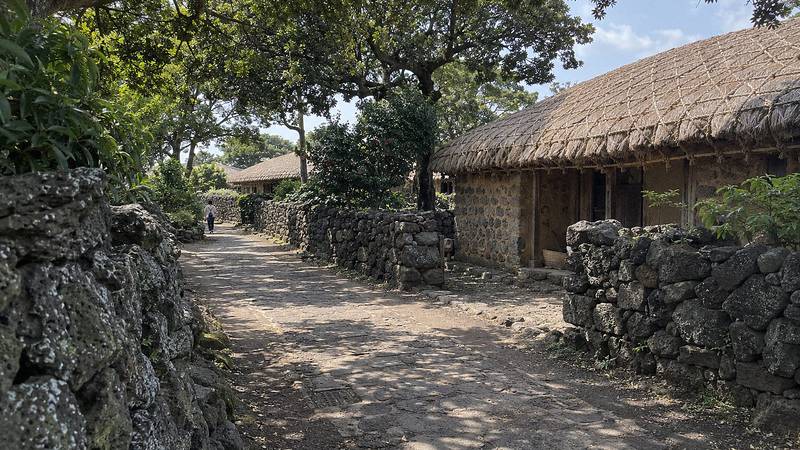
A lived-in village of thatched stone houses and black lava walls, preserving Jeju's traditional architecture.
Updated
Essentials
- Hours
- No set opening or closing time: people live in the village (village notice, 2026)
- Free guided walks: 10:00–17:00, about 60 minutes, lunch break 12:00–13:00
- Closed
- Open all year
- Admission
- Free entry and free parking
- Hands-on programmes and the guesthouse stays are charged separately
- Getting there
- Bus 221 or 222 from Jeju Bus Terminal, or express 121/122 from Jeju Airport, to Seongeup Transfer Stop (성읍환승정류장)
- Trunk-bus fare 1,150 won by card, 1,200 won in cash (adults)
- By car: about 40 minutes from Jeju Airport via Beonyeong-ro (road 97)
- Address
- 20 Seoseongil-ro, Pyoseon-myeon, Seogwipo-si, Jeju
제주 서귀포시 표선면 서성일로 20 - Website
- jeju.go.kr/seongeup/index.htm
Book your trip
Seongeup Folk Village (성읍민속마을) is the old county town of eastern Jeju, a village of thatched houses behind black lava-stone walls where people still live. Entry is free, there is no closing time, and the village runs free guided walks from 10:00 to 17:00. It is a good one-hour stop on the inland road between Jeju City and the south-east coast, and the best place on the island to see traditional Jeju houses in use.
It was the seat of Jeongui County from 1423 until 1914. The whole village has been National Folk Heritage since June 1984, and the protected area covers 477,081 m². Because the houses are private homes, some may be closed to visitors on a given day.
Is Seongeup Folk Village worth it?
Yes, if you want to see how Jeju lived before the resorts: the houses, walls, gates and lanes are original, not a reconstruction. It costs nothing, so the only question is time. Visit Korea suggests 30 minutes for a walk around; a guided walk takes about an hour.
| Your situation | Do this |
|---|---|
| Driving between Jeju City and Seongsan or Seogwipo | Stop for an hour; parking is free |
| No car | Bus 221 or 222 from Jeju Bus Terminal, or express 121/122 from the airport, to Seongeup Transfer Stop |
| Want the stories behind the houses | Ask at the guide office or call 064-710-6810 for a free guided walk (10:00–17:00) |
| Arriving late in the day | Still fine, but the village asks visitors not to come too late in the evening |
| Want to stay the night | Book one of the village’s traditional houses (from 50,000 won a night) |
Village notices and Visit Korea, checked 30 October 2026.
Not the same as Jeju Folk Village. Jeju Folk Village (제주민속촌) is a separate open-air museum near the coast at Pyoseon, with an admission fee. The buses that serve Seongeup end there, so get off at Seongeup.
Hours, fees and guided walks
| Details | |
|---|---|
| Opening hours | None; it is a lived-in village (avoid late evenings) |
| Closed | Never; open all year |
| Entry | Free |
| Parking | Free |
| Guided walks | Free, 10:00–17:00, about 60 minutes, no walks 12:00–13:00 |
Village notice for 2026 and Visit Korea, checked 30 October 2026.
The village’s culture and tourism guides lead walks through the lanes and explain the houses, the county office and the old trees. You can book by phone on 064-710-6810 or ask at the guide office; when there are many bookings, walk-ins may have to wait. The village does not say which languages the guides speak.
What to see
The village sits inside the walls of Jeongui Fortress, built in five days in January 1423 with workers from across the island, with gates on the east, west and south sides. A suggested route from Visit Korea starts and ends at the South Gate.
- Thatched houses. A Jeju home is usually laid out around two long, single-row buildings, with low thatched roofs tied down with rope. Five houses are National Folk Heritage in their own right: the Inn House (Gaekjujip), the Blacksmith’s House and the houses of Go Pyeong-o, Go Chang-hwan and Han Bong-il.
- Geunminheon. The office where the county magistrate worked, the equivalent of a town hall.
- Jeongui Hyanggyo. The county’s Confucian school, with its shrine and lecture hall.
- The old trees. One zelkova and three hackberry trees near the county office have been a Natural Monument since 31 January 1964. The village puts the zelkova at about 1,000 years old and 30 m tall, and the hackberries at about 600 years.
- Dol hareubang. Twelve of the island’s 45 historic stone guardian statues stand at Seongeup’s gates. They average 141 cm tall and are thought to date from around 1754.
Programmes, festival and stays
The village’s intangible-heritage centre runs weekly hands-on sessions, according to the village website (fees not listed; ask when you book):
- Jeju folk songs: Thursdays 11:00–13:00, February to December
- Omegi-sul (millet rice wine): Mondays 10:00–12:00, March to October
- Gosori-sul (distilled liquor): Saturdays 10:00–12:00, March to October
A traditional folk festival is held in front of the South Gate every October. In 2026 it was the 32nd edition, on 3–4 October.
To stay overnight, the village rents eight traditional houses, from 50,000 to 80,000 won a night per house, plus 10,000 won for each extra adult. Booking is on the village website (in Korean), check-in is by 18:00, cooking is not allowed indoors, and you bring your own towels and toiletries.
Getting there
Seongeup lies inland in the south-east of the island, in Pyoseon-myeon, Seogwipo-si (listed under east Jeju). Beonyeong-ro (road 97), the main road from Jeju City to Pyoseon, runs through the village.
| Bus | Route | Get off at |
|---|---|---|
| 221, 222 | Jeju Bus Terminal ↔ Jeju Folk Village (Pyoseon) | Seongeup Transfer Stop (성읍환승정류장) |
| 121, 122 (express) | Jeju Airport ↔ Jeju Folk Village (Pyoseon) | Seongeup Transfer Stop (성읍환승정류장) |
Jeju Bus Information System, checked 30 October 2026. The trunk-bus fare is 1,150 won by card or 1,200 won in cash for adults; express buses cost more. The stop’s full name is Seongeup Transfer Stop (Seongeup 1-ri Community Office). By car, the village’s website gives about 40 minutes from Jeju Airport via Beonyeong-ro, and about 40 minutes from Seogwipo along the coast road.
Around Seongeup
Seongeup fits into a day in the east of the island. Sangumburi Crater is to the north on the way back to Jeju City, and Bijarim forest and the Manjanggul lava tube are further north-east. Seongsan Ilchulbong and the Haenyeo Museum are on the coast. For other traditional villages around the country, see hanok villages. For flights, buses and where to stay, see the Jeju guide and the Jeju region page.
Nearby
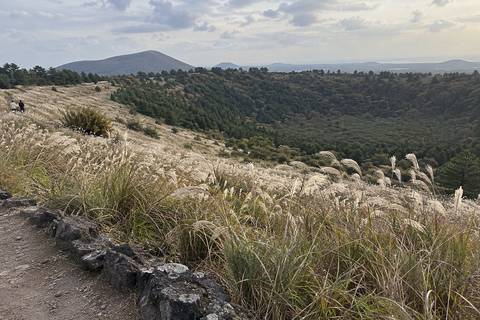
Sangumburi Crater
A broad, deep crater without a cone, rimmed by silver grass that glows in autumn.
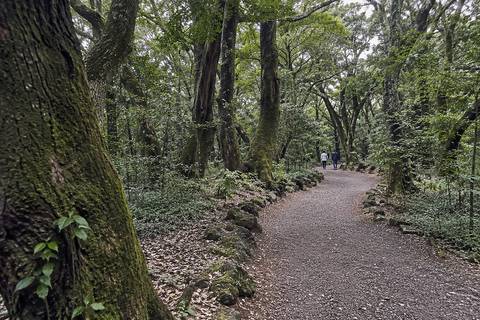
Bijarim Forest
A shady old-growth forest of nutmeg yew trees, some many centuries old, with an easy loop path.
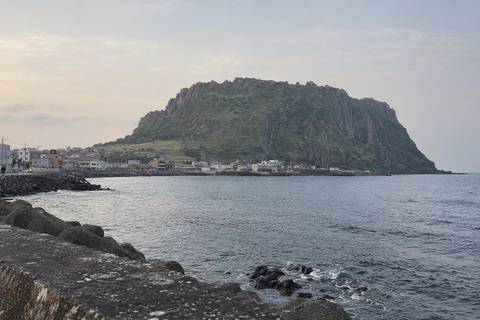
Seongsan Ilchulbong
A steep tuff cone rising from the sea at the eastern tip, climbed by a stair path to a vast grassy crater.
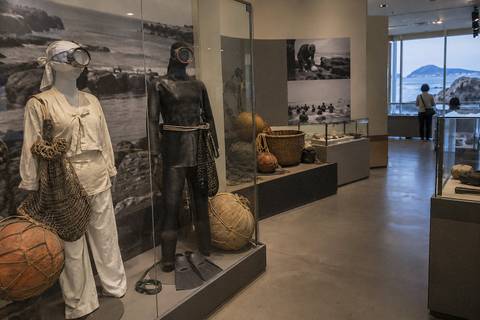
Haenyeo Museum
Explains the life of Jeju's female free divers, whose culture is recognised by UNESCO as intangible heritage.
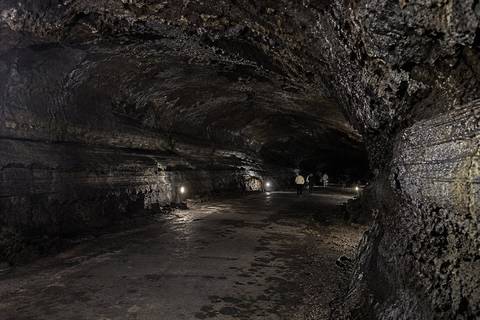
Manjanggul Lava Tube
A huge lava tube with a walkable section ending at a tall lava column; reopened in May 2026 after safety works.
Frequently asked questions
Is Seongeup Folk Village free?
Yes. Entry and parking are free, and so are the guided walks run by the village's culture and tourism guides. You pay only for optional hands-on programmes, shop purchases and overnight stays in the village's traditional houses.
What are the opening hours of Seongeup Folk Village?
There are none. It is a real village where people live, so it has no official opening or closing time. The village asks visitors not to come too late in the evening. The free guided walks run from 10:00 to 17:00, with a lunch break from 12:00 to 13:00.
How do I get to Seongeup Folk Village by bus?
Take bus 221 or 222 from Jeju Bus Terminal, or express bus 121 or 122 from Jeju Airport, and get off at Seongeup Transfer Stop (성읍환승정류장, Seongeup 1-ri Community Office). These buses end at a stop called Jeju Folk Village in Pyoseon, which is a different place, so do not stay on.
Is Seongeup the same as Jeju Folk Village?
No. Seongeup Folk Village is a historic village where people still live, protected as National Folk Heritage. Jeju Folk Village (제주민속촌) is a separate open-air museum near the coast at Pyoseon, and it charges admission. Several buses to Seongeup end at Jeju Folk Village.
How long should I spend at Seongeup Folk Village?
Visit Korea suggests about 30 minutes for a walk around the lanes. A guided walk takes about an hour. Allow an hour and a half if you want a guided walk and a look at the old county office, the Confucian school and the 1,000-year-old zelkova tree.
Sources
Facts on this page were checked against these sources on 30 October 2026. Prices, hours and rules change — confirm with the operator before you go.
- 제주 성읍마을 – 새소식 '2026년 문화관광해설 안내' (2025-12-01; 문화관광해설 무료, 운영시간 10:00~17:00, 예약 064-710-6810; 주민이 실제 거주하는 마을로 별도의 관람 마감시간 없음, 늦은 시간 방문 자제) (Korean) · official
- 제주 성읍마을 – 찾아오시는길 (1163호선·번영로 97호선이 마을 통과; 자가용 제주국제공항→회천교차로→대천교차로→성읍 약 40분, 서귀포 출발 약 40분) (Korean) · official
- 제주 성읍마을 – 지정문화유산 (느티나무 및 팽나무군 1964-01-31 지정, 느티나무 약 30m·약 1,000년, 팽나무 약 600년; 정의향교; 근민헌; 돌하르방 도내 45기 중 12기, 평균 141cm, 1754년경; 정의현성 1423년 5일 만에 축성, 동·서·남 3문) 및 마을역사 (1423~1914 정의현 읍치) (Korean) · official
- 제주 성읍마을 – 전통체험 (제주민요 매주 목 11:00~13:00 2~12월; 오메기술 매주 월 10:00~12:00 3~10월; 고소리술 매주 토 10:00~12:00 3~10월) 및 체험가옥 이용안내 (8가구, 50,000~80,000원, 입실 18시까지, 취사 불가) (Korean) · official
- 제주 성읍마을 – 새소식 '제32회 전통민속 재현축제 알림' (2026년 10월 3일~4일, 남문) 및 전통민속재현 축제 소개 (매년 10월 남문앞 광장) (Korean) · official
- 국가유산청 – 국가민속문화유산 제주 성읍마을 (1984-06-12 지정; 666필지, 477,081㎡; 1423년 정의현 읍치; 객주집·고평오 가옥·고창환 고택·한봉일 고택·대장간집; 소유주 사정으로 관람이 제한될 수 있음; 좌표) (Korean) · official
- VISITKOREA – Seongeup Folk Village (free except hands-on programmes; free parking; open all year; average time 30 minutes; suggested route from the South Gate) · official
- 비짓제주 – 성읍민속마을 (실제 주민 거주; 정의현청 1423년 이전 후 500여 년간 현청 소재지; 문화관광해설사 무료, 1회 60분, 점심 12:00~13:00; 전통 민박) (Korean) · official
- 제주버스정보시스템 – 정류소 성읍환승정류장(성읍1리사무소) 경유 노선 (221·222 제주버스터미널↔제주민속촌, 급행 121·122 제주국제공항↔제주민속촌, 722·732) 및 간선 요금 1,150원 카드/1,200원 현금 (Korean) · official