Jeju Island · East Jeju
Haenyeo Museum 해녀박물관
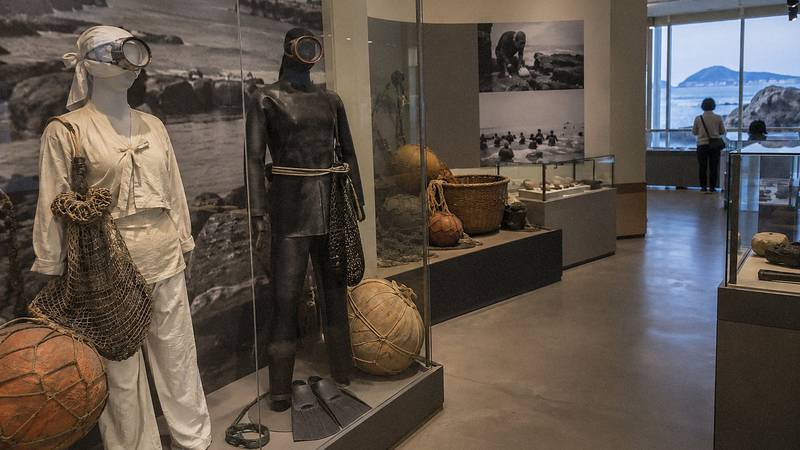
Explains the life of Jeju's female free divers, whose culture is recognised by UNESCO as intangible heritage.
Updated
Essentials
- Hours
- 09:00–18:00; tickets sold 09:00–17:00 (museum website, checked 30 Oct 2026)
- Closed
- Every Monday (or the next working day when Monday is a public holiday), 1 January, Seollal and Chuseok
- Admission
- Adults (25–64): 1,100 won
- Youth (13–24): 500 won
- Children 12 and under, and visitors 65 and over: free
- Getting there
- Bus 260 from Jeju Bus Terminal to its last stop, Haenyeo Museum (해녀박물관)
- Bus 201 (east coast road) from Jeju Bus Terminal to Haenyeo Museum Entrance (해녀박물관 입구), then a 5-minute walk
- Express bus 101 from Jeju Airport to Sehwa Transfer Stop (세화환승정류장), then a 10-minute walk
- By car: about 60 minutes from Jeju Airport along road 1132 (museum estimate)
- Address
- 26 Haenyeobangmulgwan-gil, Gujwa-eup, Jeju-si, Jeju
제주 제주시 구좌읍 해녀박물관길 26 - Website
- jeju.go.kr/haenyeo/index.htm
Book your trip
The Haenyeo Museum in Sehwa, on Jeju’s north-east coast, tells the story of the island’s women free-divers. It is open 09:00–18:00 (tickets until 17:00) and closed on Mondays. Adults pay 1,100 won; under-13s and over-64s go free. Allow about an hour. It is the best rainy-day stop on an east-Jeju day.
The haenyeo (해녀, “sea women”) dive without breathing equipment for abalone, turban shells and seaweed, holding their breath for one to two minutes at a time. Their culture was added to UNESCO’s list of Intangible Cultural Heritage on 30 November 2016. The province-run museum opened in June 2006 and reopened with renovated galleries in March 2015. Many objects on display were donated by divers themselves.
Is the Haenyeo Museum worth it?
Yes, if you are already on the east coast: it is cheap, indoors and the clearest explanation of a culture you will see along Jeju’s shore. It is not a reason to cross the island on its own, and it does not show live diving.
| Your situation | Do this |
|---|---|
| East-coast day by car | Stop for an hour between Bijarim or Manjanggul and Seongsan Ilchulbong |
| Rain or strong wind | Go: the galleries are indoors and the film room is on the ground floor |
| No car, staying in Jeju City | Bus 260 from Jeju Bus Terminal runs to the museum’s door |
| Want to see divers at work | Pair it with the free haenyeo demonstration at the foot of Seongsan Ilchulbong |
| Visiting on a Monday | It is closed; see Bijarim or Manjanggul instead |
| Travelling with children | Under-13s are free, and Visit Jeju lists the museum as barrier-free |
Hours, fees and closing days from the museum’s own website, checked 30 October 2026.
Hours and fees
| Details | |
|---|---|
| Hours | 09:00–18:00 |
| Ticket desk | 09:00–17:00 |
| Closed | Mondays, 1 January, Seollal, Chuseok |
| Adults (25–64) | 1,100 won |
| Youth (13–24) | 500 won |
| Ages 12 and under, 65 and over | Free |
Haenyeo Museum website, checked 30 October 2026. Foreign visitors pay the “outside Jeju” rate above; Jeju residents get 50% off. Visitors with a registered disability, plus one companion, also enter free. Groups of 10 or more pay 800 won (adults) and 300 won (youth).
The Monday rule has a twist. When a Monday is a public holiday, the museum opens that day and closes on the next working day instead. In 2026 it opened on Monday 5 October (a substitute holiday) and closed on Tuesday 6 October. Visit Jeju’s English page says the museum closes only on the first Monday of each month; the museum’s own site says every Monday, so plan on that.
What is inside
The main building has three galleries, a film room on the ground floor and an observation deck on the third floor looking over Sehwa’s harbour and beach.
- Gallery 1: life on land. A real diver’s house, moved here with the household goods of Lee Nam-suk (1921–2008), shows a home of the 1960s and 70s. Displays cover village life, women’s clothing, food, and Yeongdeung rites for the sea goddess.
- Gallery 2: the sea as a workplace. It is built around a bulteok, the stone-walled fire ring where divers changed and warmed up. You see the tewak float and net, abalone hooks, the old cotton diving suit, and the rubber wetsuit that arrived in the early 1970s. Panels and documents cover haenyeo history and the divers’ village associations.
- Gallery 3: divers’ own stories. Video interviews follow a diver from her first dive to becoming a senior diver, including the women who worked abroad. The visit ends at a window onto a scene of divers at work.
Visit Jeju singles out the roughly 7-minute film as worth watching. An hour is enough for most visitors.
The divers today
The museum’s own figures show how fast the profession is shrinking. At the end of 2025, Jeju had 2,371 working haenyeo, down from 2,623 a year earlier. About two-thirds were aged 70 or over, and only 30 were under 40.
The sumbisori (숨비소리) is the whistling breath a diver lets out when she surfaces. It gives its name to the Sumbisori-gil, a 5.6 km loop that starts at the museum. It passes stone field walls, shrines, three bulteok and the old Byeolbangjin fort before returning to the museum.
The 1932 haenyeo protest
In January 1932, haenyeo from Gujwa, Seongsan and Udo rose up against exploitation and discrimination under Japanese colonial rule. The museum calls it the largest women-led anti-Japanese movement in Korea. The garden in front of the museum was the protesters’ second gathering point, and a 12 m memorial tower now stands on the small hill there.
The 19th Jeju Haenyeo Festival ran on 19–20 September 2026, and the museum car park was closed while it was on; watch the museum’s notices for the 2027 dates.
Getting there
The museum is at 26 Haenyeobangmulgwan-gil in Sehwa, Gujwa-eup, about 60 minutes by car from Jeju Airport along road 1132 (the museum’s estimate).
| Bus | Route | Get off at |
|---|---|---|
| 260 | Jeju Bus Terminal ↔ Bonggae ↔ Seonheul ↔ Haenyeo Museum | Haenyeo Museum (last stop) |
| 201 | Jeju Bus Terminal ↔ east coast road ↔ Seongsan Ilchulbong ↔ Seogwipo | Haenyeo Museum Entrance (해녀박물관 입구), 5 min walk |
| 101 (express) | Jeju Airport ↔ east coast road ↔ Namwon | Sehwa Transfer Stop (세화환승정류장), 10 min walk |
| 711 | Gimnyeong-ri ↔ Bijarim ↔ Pyeongdae ↔ Haenyeo Museum | Haenyeo Museum |
Museum directions page and Jeju Bus Information System, checked 30 October 2026. The 201 is the easiest choice if you are travelling along the coast between Jeju City and Seongsan. Rural buses such as the 260 and 711 are not frequent, so check the next departure in a map app before you go in.
Around the Haenyeo Museum
The museum is in Jeju’s east district, a short drive from Bijarim and the Manjanggul lava tube. Head south-east for Seongsan Ilchulbong, where divers give a shore demonstration, and the ferry to Udo. West along the coast lies Hamdeok Beach. For other museums around the country, see museums in Korea; for flights, buses and where to stay, see the Jeju guide and the Jeju region page.
Nearby
Bijarim Forest
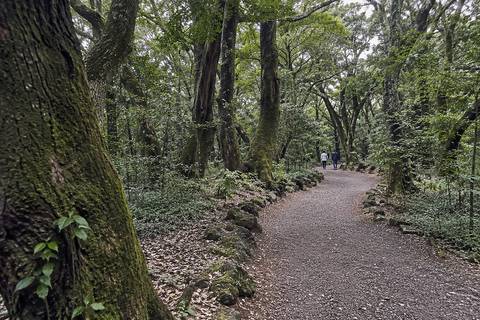
A shady old-growth forest of nutmeg yew trees, some many centuries old, with an easy loop path.
Manjanggul Lava Tube
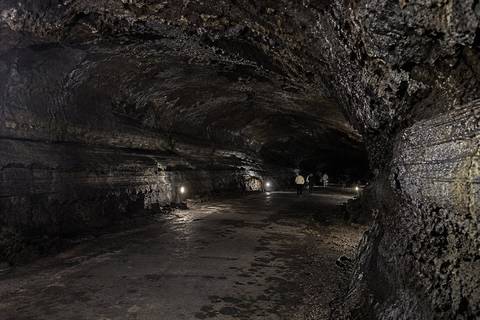
A huge lava tube with a walkable section ending at a tall lava column; reopened in May 2026 after safety works.
Udo
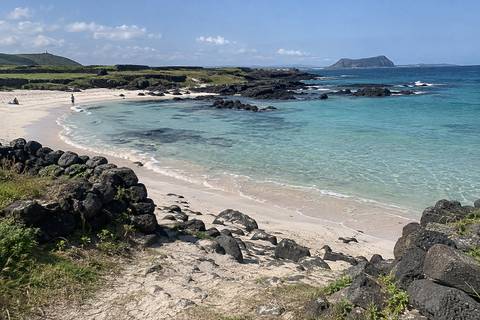
A small island 15 minutes by ferry from Seongsan, with white beaches and a grassy headland; most rental cars can't go.
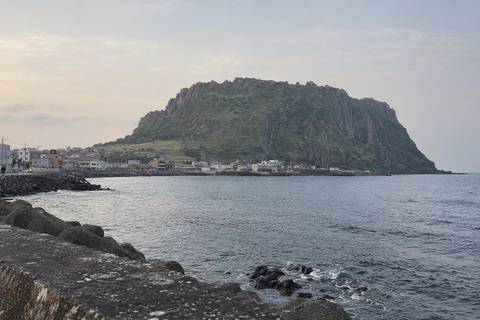
Seongsan Ilchulbong
A steep tuff cone rising from the sea at the eastern tip, climbed by a stair path to a vast grassy crater.
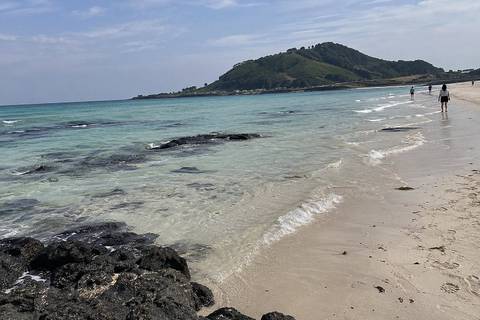
Hamdeok Beach
Shallow, clear water and pale sand east of Jeju City, with a small grassy hill for views over the bay.
Frequently asked questions
How much is the Haenyeo Museum entrance fee?
Visitors from outside Jeju, including foreign tourists, pay 1,100 won for adults aged 25–64 and 500 won for ages 13–24. Children aged 12 and under and visitors aged 65 and over get in free. Jeju residents pay half (museum website, checked 30 October 2026).
What are the Haenyeo Museum's opening hours?
09:00–18:00, with the ticket desk open 09:00–17:00. It closes every Monday, on 1 January, and over Seollal and Chuseok. When a Monday is a public holiday, the museum opens and closes on the next working day instead. In 2026 that meant it closed on Tuesday 6 October.
How long do you need at the Haenyeo Museum?
About an hour covers the three galleries, the short film and the third-floor observation deck. Add time for the anti-Japanese movement memorial outside, or for the 5.6 km Sumbisori-gil village trail that starts at the museum.
Can I see real haenyeo divers at the museum?
The museum shows the divers' history, tools and life stories, not live diving. To watch haenyeo at work, the free shore demonstration below Seongsan Ilchulbong is the easiest option, and divers work along much of the east coast.
Is there an English guided tour?
No. The museum's booked commentary tours are in Korean only. They run at 10:00, 11:00, 13:00, 14:00 and 15:00, last about 40 minutes and need booking 3 days ahead. Foreign visitors usually go round on their own.
Sources
Facts on this page were checked against these sources on 30 October 2026. Prices, hours and rules change — confirm with the operator before you go.
- 해녀박물관 – 관람안내 (관람 09:00~18:00, 매표 09:00~17:00; 휴관 1월 1일·설날·추석·매주 월요일; 도외 어른 25~64세 1,100원, 청소년 13~24세·군인 500원; 12세 이하·65세 이상 면제; 도민 50% 감면) (Korean) · official
- 해녀박물관 – 해설예약 (월요일 공휴일이면 다음 첫 비공휴일 휴관; 3일 전 예약, 한국어만; 10·11·13·14·15시, 40분 내외; 064-710-7773) 및 새소식 '10월 6일(화) 휴관일 안내' (2026-09-23) (Korean) · official
- 해녀박물관 – 찾아오시는 길 (201번 해녀박물관 입구 하차 도보 5분, 260번 해녀박물관 하차, 101번 세화환승정류장 하차 도보 10분; 차량 지방도 1132번 약 60분) (Korean) · official
- 해녀박물관 – 연혁 및 시설안내 (2006-06-09 개관, 2015-03-16 전시실 리모델링 재개관; 본관 지하1층~지상3층, 3층 전망대) · 제1~3전시실 · 해녀소개 (2016-11-30 유네스코 인류무형문화유산 등재) · 제주해녀항일운동기념탑 (1932년 1월) · 제주해녀 현황 (2025년 말 현직 2,371명) · 숨비소리길 (5.6km) (Korean) · official
- Visit Jeju – Jeju Haenyeo Museum (26 Haenyeobangmulgwan-gil, Gujwa-eup; 09:00–18:00; first written record of haenyeo 1629; map coordinates) · official
- 비짓제주 – 제주해녀박물관 (해녀 기증 전시물, 해녀의 집, 약 7분 영상, 1932년 해녀항일운동 2차 집결지; 매주 월 정기휴무; 064-782-9898) (Korean) · official
- 제주버스정보시스템 – 노선 현황 (201 제주버스터미널↔성산일출봉↔서귀포 동일주로, 260 제주버스터미널↔선흘↔해녀박물관, 101 제주공항↔동일주로↔남원, 711 김녕리↔비자림↔해녀박물관) (Korean) · official