Jeju Island · East Jeju
Seongsan Ilchulbong 성산일출봉
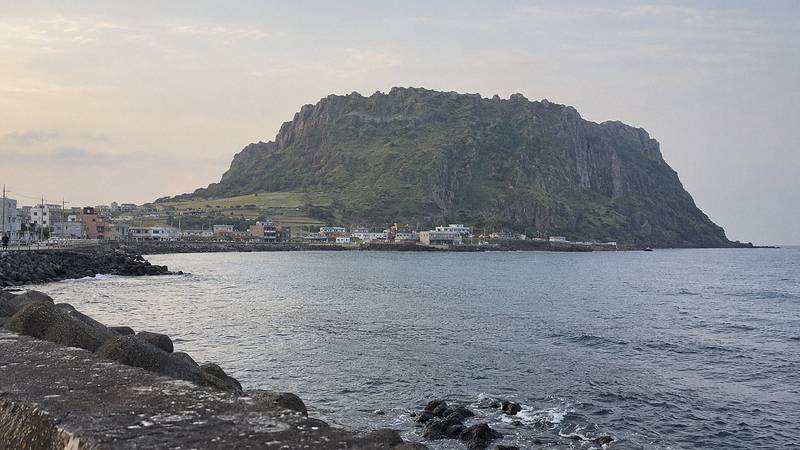
A steep tuff cone rising from the sea at the eastern tip, climbed by a stair path to a vast grassy crater.
Updated
Essentials
- Hours
- March–April and September–October: 05:00–19:00 (tickets until 18:00)
- November–February: 06:00–18:00 (tickets until 17:00)
- May–August: 04:30–20:00 (tickets until 19:00)
- Closed
- First Monday of every month (if it is a public holiday, the next day instead). Next closures: 2 November and 7 December 2026, 4 January 2027
- Admission
- Adults (25–64): 5,000 won; groups of 10 or more: 4,000 won
- Youth and soldiers (13–24) and children (7–12): 2,500 won; groups: 2,000 won
- The shore path to Umutgae is free; parking is free
- Getting there
- Express bus 101 from Jeju International Airport to the Seongsan Ilchulbong Entrance (성산일출봉입구) stop
- Bus 201 along the east coast from Jeju Bus Terminal or Seogwipo Bus Terminal to the same stop
- Buses 111, 211 and 212 end at Seongsan Port (Udo ferry), close by
- Address
- 284-12 Ilchul-ro, Seongsan-eup, Seogwipo-si, Jeju
제주 서귀포시 성산읍 일출로 284-12 - Website
- jeju.go.kr/jejuwnh/heritage/seongsan/intro.htm
Book your trip
Seongsan Ilchulbong opens at 05:00 until the end of October and at 06:00 from 1 November, early enough to stand on the rim at sunrise. The stepped climb takes 30–40 minutes, adults pay 5,000 won, and it is closed on the first Monday of each month (next: 2 November 2026).
Seongsan Ilchulbong (“Sunrise Peak”) is a 180 m tuff cone at the eastern tip of Jeju. It was made about 5,000 years ago when magma met seawater in shallow sea and exploded, piling up layers of wet ash that you can still see in the cliffs. At the top is a bowl-shaped crater about 600 m across, grown over with grass and silver grass. The peak was once an island; sand and gravel later joined it to the mainland. With Hallasan and the Geomunoreum lava tubes, it makes up the UNESCO World Natural Heritage site Jeju Volcanic Island and Lava Tubes (2007), and it has been a Natural Monument since 2000.
Sunrise or daytime?
The opening time is your earliest possible start, and the heritage office set it in March 2025 so that visitors can see the sunrise from the summit in every month. Before that the gates opened at 07:00 or 07:30, too late for most of the year.
| Season | Gates open | Last ticket | Gates close |
|---|---|---|---|
| May–August | 04:30 | 19:00 | 20:00 |
| March–April, September–October | 05:00 | 18:00 | 19:00 |
| November–February | 06:00 | 17:00 | 18:00 |
World Heritage Office, Jeju Special Self-Governing Province, and Visit Jeju; checked 8 October 2026. For a sunrise climb, be at the gate at opening time and look up that day’s sunrise on the official sunrise and sunset calendar for Seongsan. Leave the hotel in the dark with a phone torch or headlamp.
- Choose sunrise if you are staying in Seongsan village or nearby, and if the forecast is clear over the sea to the east. The sunrise from the peak has long been ranked first among the Ten Scenic Views of Jeju.
- Choose daytime if you are coming by bus from Jeju City or Seogwipo, or if you want to combine the peak with the Udo ferry from nearby Seongsan Port.
- New Year is different. The Seongsan Sunrise Festival on 31 December draws large crowds for the first sunrise of the year.
The climb and what you see
The paid trail is a series of stairs and uphill sections to the crater rim, and Visit Jeju gives 30–40 minutes to the top. From the summit you look down into the wide crater and out over Seongsan village, the sea and the low island of Udo across the channel.
Between 09:00 and 16:00, World Natural Heritage interpreters are stationed at the summit and give a free talk of about 40 minutes on how the cone formed and its history.
Allow 1 to 1.5 hours for the round trip with time on top, and more if you also walk the free shore path.
The free section: Umutgae shore and the haenyeo show
You do not need a ticket for the lower path that leads down to the Umutgae shore at the foot of the cone. The slope is gentle, and the layered cliffs rise straight above you. Haenyeo, the island’s women free-divers, work this stretch of sea, and a haenyeo diving demonstration is held at the shore, with an introduction, a dive, the catch and seafood for sale. Korea’s tourism organization says the show is free with a Seongsan Ilchulbong ticket. Official sites do not publish fixed show times, so check the board at the entrance on the day.
Traces of military installations built by the Japanese army during the colonial period survive around the peak, and Teojinmok, the strip of land between the peak and the main island, is a site of the Jeju 4·3 Incident. Both are a reminder that this is not only a scenic spot.
Getting there
The peak sits on the eastern tip of the island, about as far from Jeju City as any major sight. Island buses go there directly, and a T-money card works on them.
| From | Bus | Get off at |
|---|---|---|
| Jeju International Airport | Express 101 | Seongsan Ilchulbong Entrance (성산일출봉입구) |
| Jeju Bus Terminal (Jeju City) | 201 (east coast road) | Seongsan Ilchulbong Entrance |
| Seogwipo Bus Terminal | 201 | Seongsan Ilchulbong Entrance |
| Airport or Jeju Bus Terminal, for the Udo ferry | 111 (both); 211, 212 (terminal) | Seongsan Port (terminus) |
Route ends from the Jeju Bus Information System, checked 8 October 2026. The World Heritage Office puts the bus journey at about 70 minutes from the airport, about 57 minutes from Seogwipo and about 68 minutes from Jungmun. Both routes have several variants, so check the destination board before you board. By car, the coastal road 1132 runs all the way round via Hamdeok and Gimnyeong; parking at the peak is free.
Visitor tips
- Closed day. The first Monday of every month is the regular closure, moved to the Tuesday when the Monday is a public holiday. Next dates: 2 November and 7 December 2026, then 4 January 2027.
- Weather. The rim is exposed to sea wind. The heritage office can change hours when needed, and a sunrise trip is only worth it if the eastern sky is clear.
- No food. Bringing food into the site is not allowed, so eat before or after the climb.
- Shoes. The heritage office recommends trainers and light clothing; the path is stairs and uphill sections, with nothing technical.
- Combine with Udo. Ferries to Udo leave from Seongsan Port, a short distance from the peak, so you can climb first and take a boat afterwards.
Nearby
The rest of the east coast is easy to link up by bus or car: the Udo ferry from Seongsan Port, the Manjanggul lava tube and Bijarim forest to the north-west, and Seongeup Folk Village inland. See the east Jeju list on the Jeju guide and the Jeju region page for the island as a whole. To climb the island’s other UNESCO peak, see Hallasan.
Nearby
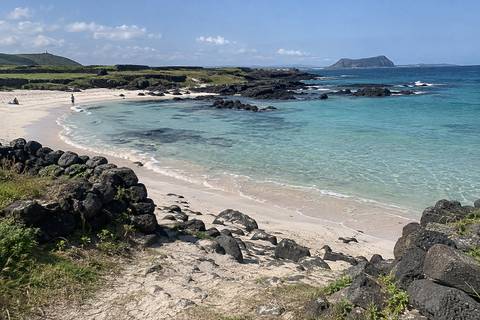
Udo
A small island 15 minutes by ferry from Seongsan, with white beaches and a grassy headland; most rental cars can't go.
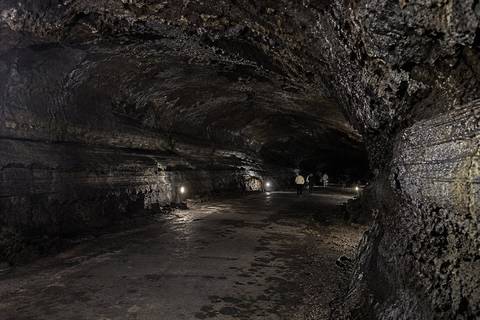
Manjanggul Lava Tube
A huge lava tube with a walkable section ending at a tall lava column; reopened in May 2026 after safety works.
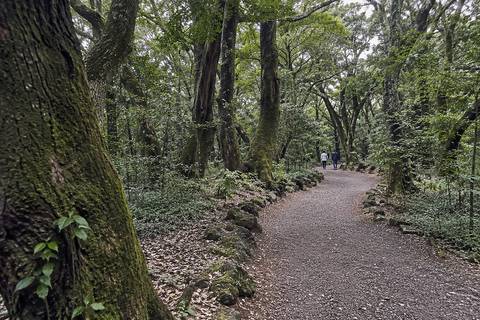
Bijarim Forest
A shady old-growth forest of nutmeg yew trees, some many centuries old, with an easy loop path.
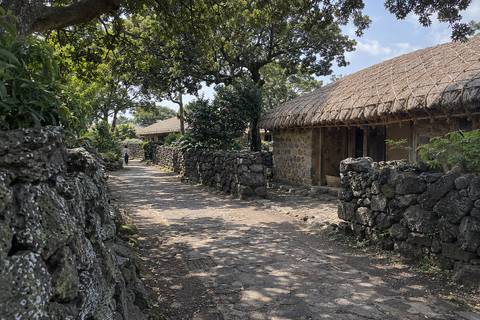
Seongeup Folk Village
A lived-in village of thatched stone houses and black lava walls, preserving Jeju's traditional architecture.
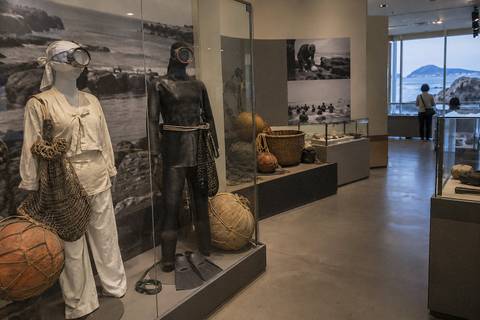
Haenyeo Museum
Explains the life of Jeju's female free divers, whose culture is recognised by UNESCO as intangible heritage.
Frequently asked questions
What time does Seongsan Ilchulbong open for sunrise?
At 05:00 from March to April and September to October, 04:30 from May to August and 06:00 from November to February. The times were moved earlier in March 2025 so that visitors can reach the summit for sunrise all year. The climb takes about 30 to 40 minutes.
How much is the Seongsan Ilchulbong entrance fee?
5,000 won for adults aged 25 to 64 and 2,500 won for visitors aged 7 to 24, with 1,000 won or 500 won off per person for groups of 10 or more. The lower shore path to Umutgae is free, and so is parking.
When is Seongsan Ilchulbong closed?
On the first Monday of every month; if that Monday is a public holiday, it closes the next day instead. The next closures are 2 November and 7 December 2026, then 4 January 2027.
How long does it take to climb Seongsan Ilchulbong?
About 30 to 40 minutes up a stepped path, according to Visit Jeju. Allow 1 to 1.5 hours for the climb, the summit view and the descent, plus time for the free shore path.
How do I get to Seongsan Ilchulbong by bus?
Express bus 101 runs from Jeju International Airport, and bus 201 runs along the east coast from Jeju Bus Terminal or Seogwipo, to the Seongsan Ilchulbong Entrance stop. The World Heritage Office puts the bus journey from the airport at about 70 minutes.
Sources
Facts on this page were checked against these sources on 8 October 2026. Prices, hours and rules change — confirm with the operator before you go.
- 세계자연유산제주 – 성산일출봉응회구 소개·탐방안내 (hours, closed day, fees) (Korean) · official
- 세계자연유산제주 – 세계자연유산해설안내 (heritage interpreters at the summit) (Korean) · official
- Visit Jeju – Seongsan Ilchulbong (English; record updated 1 Oct 2026) · official
- 비짓제주 – 성산일출봉 (Korean) · official
- 대한민국 구석구석 – 성산포 해녀물질공연장 (Korean) · official
- 제주버스정보시스템 – 노선 검색 (routes 101, 111, 201, 211, 212) (Korean) · official
- 뉴시스 – 성산일출봉 3~4월 입장 시간, 오전 5시로 앞당긴다 (25 Feb 2025) (Korean)