Jeju Island · East Jeju
Bijarim Forest 비자림
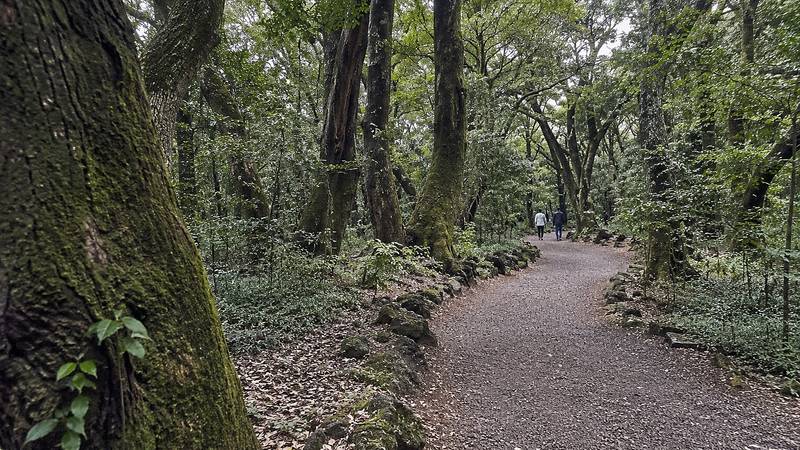
A shady old-growth forest of nutmeg yew trees, some many centuries old, with an easy loop path.
Updated
Essentials
- Hours
- Daily 09:00–18:00; last admission 17:00 (Visit Jeju, checked 30 Oct 2026)
- Closed
- Open all year; no regular closing day
- Admission
- Adults: 3,000 won
- Children and teenagers: 1,500 won
- Free for visitors with disabilities
- Getting there
- Bus 260 from Jeju Bus Terminal (towards the Haenyeo Museum) to the Bijarim (비자림) stop
- Bus 711 from Gimnyeong-ri via Manjanggul, or from the Haenyeo Museum / Sehwa, to the Bijarim stop
- Tourist circulation bus 810 (loop from Daecheon Transfer Stop) also stops at Bijarim
- Bus fare 1,150 won by card, 1,200 won in cash (adults)
- Address
- 55 Bijasup-gil, Gujwa-eup, Jeju-si, Jeju
제주 제주시 구좌읍 비자숲길 55 - Website
- visitjeju.net/en/detail/view?contentsid=CONT_000000000500270
Book your trip
Bijarim is a forest of centuries-old nutmeg yew trees in Jeju’s east, open 09:00–18:00 every day (last entry 17:00). Adults pay 3,000 won. The easy Course A loop is 2.2 km and takes 40 minutes to an hour. Worth adding to an east-coast day; not worth a special trip on its own.
Bijarim (비자림) is a protected forest of bija trees (Japanese nutmeg yew, Torreya nucifera) in Gujwa-eup, in the inland north-east of Jeju. It was designated a Natural Monument on 19 August 1993. The heritage record counts 2,570 bija trees across about 45 hectares, one of the largest stands of the species anywhere. Maples, Machilus trees, subtropical plants and wild orchids fill the gaps between them.
Is Bijarim worth it?
It is a calm, shady walk rather than a big sight. It suits travellers who want a break from coastal crowds, or a gentle walk with children or older relatives. The forest sits between Manjanggul and the coast, so it slots easily into an east-Jeju day.
| Your situation | Do this |
|---|---|
| Driving the east coast for a day | Add Bijarim between Manjanggul and Seongsan Ilchulbong; allow 1–1.5 hours |
| No car, staying in Jeju City | Bus 260 from Jeju Bus Terminal to the Bijarim stop |
| Seeing Manjanggul by bus | Bus 711 links Manjanggul, Bijarim and the Haenyeo Museum |
| Stroller, wheelchair or tired legs | Stick to Course A (mostly flat, a few slopes) |
| Hot day or light rain | The canopy gives shade and some shelter; avoid rocky Course B when wet |
| Travelling with a dog | Not possible: pets are not allowed |
| Only one day on Jeju | Skip it for Seongsan Ilchulbong, Manjanggul or the coast |
Hours, fees and course details from Visit Jeju’s English and Korean pages, checked 30 October 2026.
Hours and fees
| Details | |
|---|---|
| Hours | 09:00–18:00 every day |
| Last admission | 17:00 |
| Adults | 3,000 won |
| Children and teenagers | 1,500 won |
| Visitors with disabilities | Free |
Visit Jeju, checked 30 October 2026. The forest is open all year; in stormy weather, call the management office (064-710-7912) before you set out. In a reply on its Korean page, the Jeju tourist information centre confirms that nobody is let in before the ticket office opens.
- No pets in the forest.
- No food or drink except bottled water. Eat before you go in.
- Stay on the paths. The whole forest is a protected natural monument.
Course A or Course B?
The paths split at a crossroads inside the forest. Both lead to the Millennium Bija Tree (새천년 비자나무), the oldest and best-known tree, and to a pair of trunks that have grown together (연리목, “joined trees”).
- Course A is about 2.2 km and takes 40 minutes to an hour. Most of it is laid with red volcanic scoria (songi) and is fairly flat. Visit Jeju recommends it for pregnant visitors and anyone with a stroller or wheelchair; a few slopes may need a helper.
- Course B runs through rougher, stony ground. It feels wilder but is uneven underfoot, and not suitable for wheels.
Visit Jeju does not give a length for Course B, so plan on Course A plus a short detour if you want to try it. Wear trainers rather than sandals: the scoria is loose and the stones on Course B can be slippery.
Interpretive walks. Forest guides run walks that explain the trees and plants. Times change, so ask at the ticket office on arrival.
How old are the trees?
Sources differ. Visit Jeju describes the bija trees as 500 to 800 years old. The national heritage record estimates 300 to 600 years. Either way, many trees here are several centuries old.
One local explanation, given in the heritage record, is that the forest grew from bija seeds scattered after village ancestral rites. Bija nuts were long used as medicine, including as a remedy for intestinal worms. That gave villagers a reason to protect the trees.
Getting there
Bijarim is at 55 Bijasup-gil in Pyeongdae-ri, Gujwa-eup, inland in the north-east of the island. There are two bus stops right by the forest, Bijarim [South] and Bijarim [North], one for each direction. Do not get off at Bijarim Junction (비자림 삼거리), the next stop along.
| Bus | Route | Use it if |
|---|---|---|
| 260 | Jeju Bus Terminal ↔ Bonggae ↔ Seonheul ↔ Haenyeo Museum | You are based in Jeju City |
| 711 | Gimnyeong-ri ↔ Manjanggul ↔ Bijarim ↔ Sehwa ↔ Haenyeo Museum | You are combining the forest with Manjanggul or the Haenyeo Museum |
| 810 | Tourist loop from Daecheon Transfer Stop via Maze Land, Bijarim, Darangshi and Yongnuni oreum | You want to hop between east-Jeju oreum (volcanic cones) |
Jeju Bus Information System, checked 30 October 2026. All three cost 1,150 won by card or 1,200 won in cash for adults. Buses on these rural routes are not frequent, so check departures in a map app before you leave, and note the time of the next bus back.
Around Bijarim
Bijarim is in Jeju’s east district. A full east-coast day can start with sunrise at Seongsan Ilchulbong and the ferry to Udo, with a rainy-weather alternative at the Haenyeo Museum in Sehwa. Then head inland to Bijarim and the Manjanggul lava tube, and end on the sand at Hamdeok Beach. In October and November, the silver-grass crater of Sangumburi, further inland towards Jeju City, makes a 40-minute detour. For more walks on the island, including the coastal Olle routes, see hiking in Korea. For flights, buses and where to stay, see the Jeju guide and the Jeju region page.
Nearby
Manjanggul Lava Tube
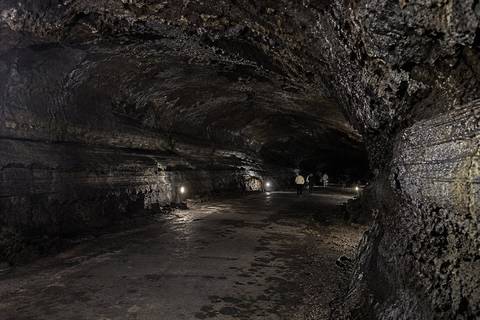
A huge lava tube with a walkable section ending at a tall lava column; reopened in May 2026 after safety works.
Haenyeo Museum
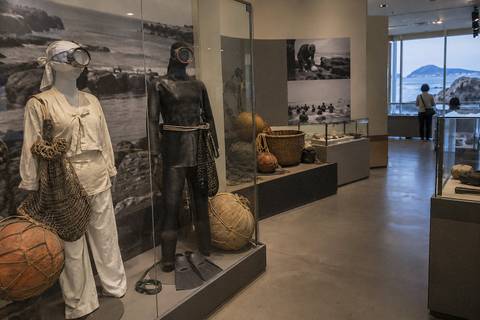
Explains the life of Jeju's female free divers, whose culture is recognised by UNESCO as intangible heritage.
Seongsan Ilchulbong
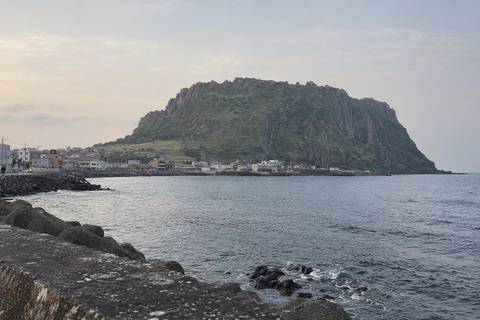
A steep tuff cone rising from the sea at the eastern tip, climbed by a stair path to a vast grassy crater.
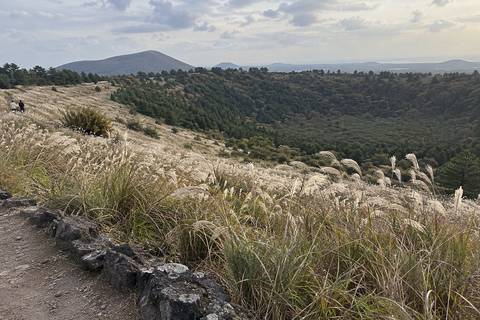
Sangumburi Crater
A broad, deep crater without a cone, rimmed by silver grass that glows in autumn.
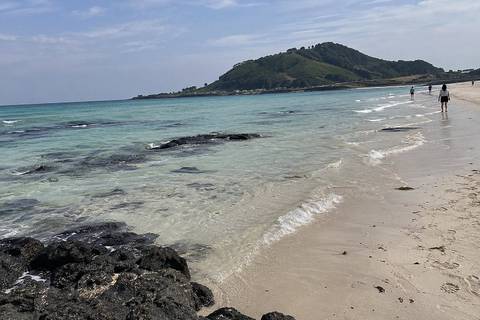
Hamdeok Beach
Shallow, clear water and pale sand east of Jeju City, with a small grassy hill for views over the bay.
Frequently asked questions
How much is the entrance fee for Bijarim Forest?
3,000 won for adults and 1,500 won for children and teenagers. Entry is free for visitors with disabilities. Visit Jeju lists these fees in both its English and Korean pages (checked 30 October 2026).
What are Bijarim's opening hours?
09:00–18:00 every day of the year. Tickets stop at 17:00, and the ticket office does not let anyone in before 09:00. If a storm is forecast, call the management office on 064-710-7912 before you go.
How long does it take to walk Bijarim?
Course A is about 2.2 km and takes 40 minutes to an hour on a mostly level path. Course B branches off at a crossroads inside the forest and is rougher and rockier. Allow 1 to 1.5 hours in total, including the ticket office and toilets.
How do I get to Bijarim by bus?
Take bus 260 from Jeju Bus Terminal towards the Haenyeo Museum and get off at Bijarim (비자림). Bus 711 links Bijarim with Manjanggul and the Haenyeo Museum, and the 810 tourist loop also stops there. Get off at Bijarim, not Bijarim Junction (비자림 삼거리), the stop before or after it.
Is Bijarim good with a stroller or on a rainy day?
Course A is the one to take with a stroller or wheelchair: it is surfaced with crushed volcanic scoria and mostly flat, though a few slopes need a push. The canopy gives some shelter in light rain; Course B gets slippery and is better avoided when wet.
Sources
Facts on this page were checked against these sources on 30 October 2026. Prices, hours and rules change — confirm with the operator before you go.
- Visit Jeju – Bijarim Forest (09:00–18:00, last admission 17:00, open all year; adults KRW 3,000, children and teenagers KRW 1,500, free for persons with disabilities; no pets, no food except bottled water; Courses A and B, Course A 2.2 km, 40 min–1 h) · official
- 비짓제주 – 비자림 (500~800년생 비자나무; A코스 약 2.2km, 40분~1시간, 화산송이길, 유모차·휠체어 가능; B코스 돌멩이길; 새천년 비자나무·연리목; 입장마감 17시, 연중무휴; 일반 3,000원, 어린이·청소년 1,500원; 064-710-7912) (Korean) · official
- 국가유산청 – 천연기념물 제주 평대리 비자나무 숲 (1993-08-19 지정, 448,758㎡, 비자나무 2,570그루, 수령 300~600년 추정) (Korean) · official
- 제주버스정보시스템 – 노선 현황·요금 (260 제주버스터미널↔해녀박물관, 810-1/-2 대천환승정류장 순환 비자림 경유, 간·지선 및 관광지순환 1,150원 카드/1,200원 현금) 및 정류소 비자림[남]·[북] 경유 노선 (260, 711-1/-2, 810-1/-2) (Korean) · official
- 비짓제주 – 버스타고 관광지 골라가기: 동부 810번 버스여행 (810-2 노선: 대천환승센터 … 메이즈랜드 – 비자림 – 다랑쉬오름 입구 – 용눈이오름 …) (Korean) · official