Gyeongju · Central Gyeongju
Gyeongju National Museum 국립경주박물관
Silla gold crowns, Buddhist sculpture and the great bronze Divine Bell of King Seongdeok; the best introduction to the city.
Updated
Essentials
- Hours
- Every day 10:00–18:00
- Saturdays from March to October: until 20:00
- Closed
- 1 January, Lunar New Year's Day and Chuseok day. The galleries also close on the second Monday of March, June, September and December (next: Monday 14 December 2026); the outdoor garden stays open.
- Admission
- Free: permanent galleries and free special exhibitions
- Parking is paid since 2 September 2026 (see Getting there)
- Getting there
- From the express and intercity bus terminals: city bus 600 (every 10–25 minutes) or 11 to the 국립경주박물관 (Gyeongju National Museum) stop, 10 stops
- From Gyeongju Station (KTX): bus 711, 18 stops, about hourly
- On foot: about 500 m south of Donggung Palace and Wolji Pond, about 1 km from Cheomseongdae
- Address
- 186 Iljeong-ro, Gyeongju, Gyeongsangbuk-do
경상북도 경주시 일정로 186 - Website
- gyeongju.museum.go.kr/kor/html/sub01/0101.html
Book your trip
Gyeongju National Museum is free and open every day 10:00–18:00, until 20:00 on Saturdays from March to October. It holds the treasures of the Silla kingdom: the Cheonmachong gold crown, Buddhist sculpture and the 8th-century Divine Bell of King Seongdeok in the garden. Allow 1.5–2 hours. It is about 500 m south of Wolji Pond; from the bus terminals take bus 600 or 11.
| Your situation | Do this |
|---|---|
| One day in Gyeongju | Come in the afternoon, then walk 500 m to Wolji Pond for sunset |
| Arriving by KTX | Bus 711 from Gyeongju Station (18 stops, about hourly) or a taxi |
| Arriving by intercity or express bus | Bus 600 (every 10–25 min) or 11 from the terminal stop, 10 stops |
| On a Monday | Open, except on 14 December 2026 (galleries closed, garden open) |
| Visiting November to February | No late opening; be out by 18:00 |
| Rainy day | Gyeongju’s best indoor plan; only the garden and the bell are outdoors |
| Driving | Parking is now paid; use the east entrance |
Is Gyeongju National Museum worth it?
Yes. Most of what makes Gyeongju famous was dug out of the ground around you, and this is where it went. The tombs at Daereungwon show you grass mounds; this museum shows you the gold, glass and belts found inside them. It also holds the finds from Wolji Pond and a large collection of Silla Buddhist sculpture. Seeing it before the outdoor sites makes the rest of the day easier to read.
| Hours | Every day 10:00–18:00; Saturdays March–October until 20:00 |
| Closed | 1 January, Lunar New Year’s Day, Chuseok day; galleries also on the second Monday of March, June, September and December |
| Admission | Free (paid special exhibitions excepted) |
| Time needed | 1.5–2 hours |
| Nearest bus stop | 국립경주박물관 (Gyeongju National Museum), buses 10, 11, 600-series, 711 |
Hours from the museum’s 2026 visitor page and Gyeongju City’s 2026 listings, checked 31 October 2026. The museum website has been offline for maintenance since 26 October; call +82-54-740-7500 to confirm a closure date. Older listings, including a 2025 VisitKorea column, still give 21:00 and late Wednesdays. The 2026 rule is 20:00 on Saturdays, March to October only.
What to see
Gyeongju City lists five permanent display areas. If you have one hour, do the first one and the bell.
Silla History Gallery
The main building tells the story of Silla from its beginnings to the fall of the kingdom in 935. The highlight is upstairs: the gold crown from Cheonmachong, its tall gold uprights hung with jade and gold spangles, shown with other gold from the royal tombs. Not every Silla crown is here; some are kept at the National Museum of Korea in Seoul. All six known crowns were last shown together here from November 2025 to February 2026, for the museum’s 80th anniversary and the APEC summit. That show drew about 250,000 visitors, and the museum plans the next one for 2035.
Silla Art Gallery
Buddhist sculpture, reliquaries, roof tiles and floor bricks from Silla temples such as Bunhwangsa and Gameunsa. It is the gallery to linger in if you are going on to Bulguksa and Seokguram.
Wolji Gallery
A single-floor hall for the finds from the pond at Donggung Palace. About 30,000 objects came out of the pond; around 1,100 are on show. Look for the scale model of the palace buildings and the pond, timber pieces that survived in the mud, gilt-bronze scissors and roof-end tiles with dragon faces. See it before an evening at Wolji Pond.
Silla Millennium Archive and the garden
The Silla Millennium Archive is a storage building with part of the collection on view, and next to it is a library of museum catalogues with space to sit and read. Outside, about 1,300 stone pieces are set around the lawns: pagodas, lanterns and tortoise-shaped stele bases moved from old temple, palace and fortress sites around Gyeongju. Highlights include the three-storey pagoda from the Goseonsa temple site and copies of the two Bulguksa pagodas, Seokgatap and Dabotap.
The Divine Bell of King Seongdeok
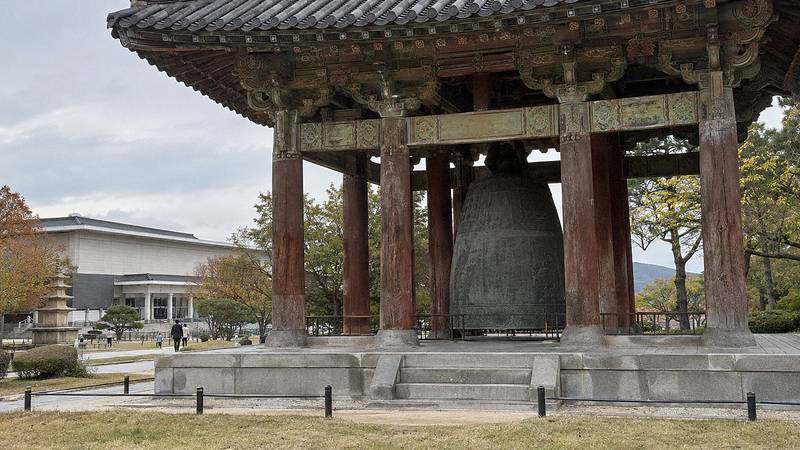
The great bronze bell near the entrance was completed in 771. It is often called the Emille Bell, and its body carries an inscription of more than 1,000 characters. It hung at several temples and later at Gyeongju’s old south gate. It came to this site when the present museum opened in 1975.
The museum stopped ringing it regularly in 1992 to avoid damage. It now strikes the bell only for acoustic surveys, which run every year until 2029, sometimes with a public session. In 2026 that was 15 September, so do not expect to hear it on an ordinary day.
Getting to Gyeongju National Museum
| From | How | Get off / walk |
|---|---|---|
| Express and intercity bus terminals | Bus 600 (06:00–22:20, every 10–25 min), 601–609, or 11 | 국립경주박물관, 10 stops; the stop before is 동궁과월지 (Wolji) |
| Gyeongju Station (KTX) | Bus 711 (07:07–20:23, every 60–70 min) | 국립경주박물관, 18 stops |
| Bulguksa | Bus 10 or 711 | 국립경주박물관, about 20 stops |
| Donggung Palace and Wolji Pond | On foot | About 500 m south |
| Cheomseongdae | On foot | About 1 km south-east |
Routes, stop order, first and last buses and intervals from Gyeongju City’s live bus system, checked 31 October 2026.
- Get off at the right side. Buses 11 and the 600-series from the terminal stop on the museum side. For the return to the terminal, use the stop across the road: buses 10, 600 and 711 go back that way.
- Going on to Bulguksa. Bus 11 and bus 711 carry on from the museum to Bulguksa, about 19 stops. Bus 10 runs the other way, from Bulguksa past the museum to the terminal.
- Fares. A city bus ride is 1,500 won, or 50 won less with a transport card. One transfer within 30 minutes is free.
- From Busan. Take a KTX to Gyeongju Station or an intercity bus to the Gyeongju terminal. The terminal is the easier choice for the museum: bus 600 runs every 10–25 minutes, compared with about hourly from the KTX station.
By car. Since 2 September 2026 the front and east car parks are one paid car park of 357 spaces, with all cars entering from the east side. The local press, quoting Gyeongju City’s facilities corporation, reported the fee as free for the first 20 minutes, 500 won up to 30 minutes, then 200 won for each further 10 minutes, up to 10,000 won a day; no official fee table was online to confirm it.
Tips
- Do the museum first, the pond after. Wolji Pond is at its best after dark. A late-afternoon museum visit followed by the 500 m walk north fits a day neatly, especially on a Saturday from March to October, when the museum stays open until 20:00.
- Plan around the four Monday closures. On the second Monday of March, June, September and December the galleries close, but the garden and the bell stay open. In 2027, check the dates once the museum website is back.
- Use it as your rain plan. Most of Gyeongju’s sights are outdoors, and this is the largest indoor one. It is free, so a short visit costs nothing.
- No bikes in the garden. VisitKorea notes that bikes, kick scooters and skates are not allowed in the outdoor exhibition area. Leave a rental bike at the entrance.
- Pair it with Seoul. If you have already been to the National Museum of Korea, this museum goes deeper on one kingdom. The museums guide compares the free national museums.
Around the museum
The museum sits at the south-east edge of central Gyeongju, between Wolji Pond and the road to Bulguksa. Cheomseongdae, Daereungwon and the cafes of Hwangnidan-gil are within a 15–25 minute walk. For a day that puts it between Bulguksa and the pond, see Gyeongju in one day. For trains and where to stay, see the Gyeongju guide and the Gyeongsang region page. The Silla sites are covered on the UNESCO page.
Nearby
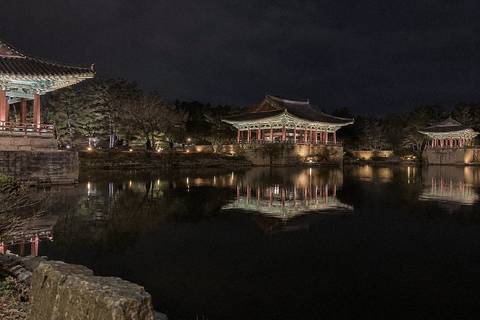
Donggung Palace and Wolji Pond
Reconstructed pavilions of a Silla crown prince's palace beside a landscaped pond, most popular after dark when they are lit up.
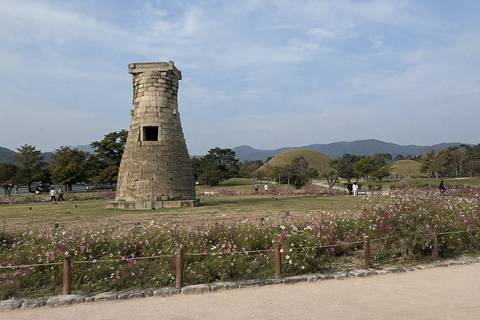
Cheomseongdae Observatory
A bottle-shaped stone tower from the 7th century, often called East Asia's oldest surviving observatory, set in open fields.
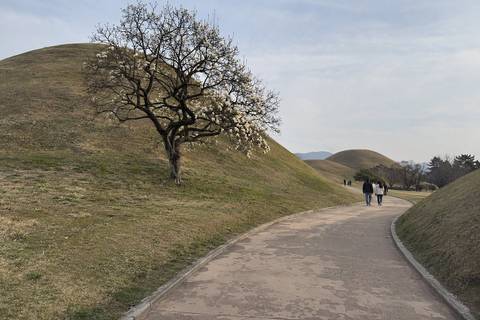
Daereungwon Tomb Complex
A park of huge grassy Silla burial mounds; inside Cheonmachong you can see how a royal tomb was built and what it held.
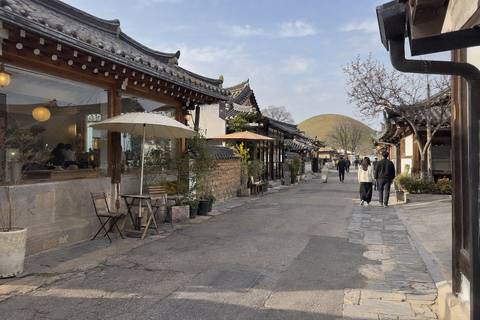
Hwangnidan-gil
A street of hanok cafes, bakeries and small shops beside the tomb park, the liveliest part of town in the evening.
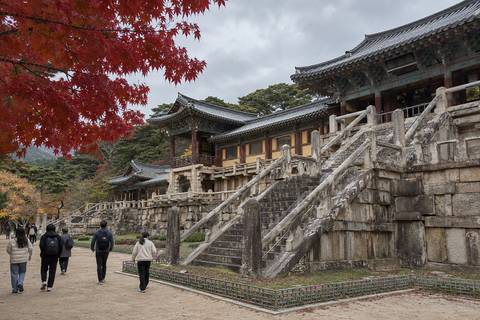
Bulguksa Temple
Korea's most celebrated temple, with Silla-era stone stairways, bridges and the twin pagodas Dabotap and Seokgatap.
Frequently asked questions
Is Gyeongju National Museum free?
Yes. The permanent galleries and the outdoor garden with the Divine Bell are free, with no ticket or booking needed. Only the car park charges: it became paid on 2 September 2026.
What time does Gyeongju National Museum close?
At 18:00 every day. On Saturdays from March to October it stays open until 20:00. From November to February there is no late opening, so plan to finish by 18:00. Older listings still give 21:00, which was the earlier rule.
Is Gyeongju National Museum open on Mondays?
Yes, on most Mondays. The galleries close only on the second Monday of March, June, September and December, when the garden stays open; the next is 14 December 2026. The whole museum closes on 1 January, Lunar New Year's Day and Chuseok day.
Can you see the Silla gold crown at Gyeongju National Museum?
Yes. The gold crown from the Cheonmachong tomb is shown in the Silla History Gallery. Not every Silla crown is in Gyeongju: some are kept at the National Museum of Korea in Seoul. All six were last shown together at this museum from November 2025 to February 2026.
How long do you need at Gyeongju National Museum?
About 1.5–2 hours for the Silla History Gallery, the Silla Art Gallery, the Wolji Gallery and a walk through the garden. With one hour, see the gold in the Silla History Gallery and the bell. It is about 500 m from Wolji Pond, so it fits before an evening there.
Sources
Facts on this page were checked against these sources on 31 October 2026. Prices, hours and rules change — confirm with the operator before you go.
- 국립경주박물관 – 관람안내 (관람시간 10:00~18:00, 야간연장 18:00~20:00 3월~10월 매주 토요일 '26.3.1.부터, 정기 휴실일 3·6·9·12월 둘째 월요일, 휴관일, 입장료) — 2026-10-26부터 누리집 점검 중 (Korean) · official
- 경주시 웹진 아름다운 경주이야기 – 신라의 황금빛 시간을 거닐다, 국립경주박물관 (주소 일정로 186, 휴관일 1월 1일·설날·추석; 신라역사관·신라미술관·월지관·신라천년보고·옥외전시, 월지관 1,100여 점, 옥외 석조품 1,300여 점, 성덕대왕신종 명문 1,000여 자, 1945년 개관·1975년 이전) (Korean) · official
- 경주시 웹진 – 문화 살롱 (국립경주박물관 전시 관람시간 10:00~18:00, 3월~10월 매주 토 야간연장 20:00까지, 관람료 무료) (Korean) · official
- VisitKorea – Pedaling Through Time: A Bike Tour Guide to Gyeongju (Gyeongju National Museum: free, 10:00–18:00, closed 1 Jan, Seollal and Chuseok; column updated March 2025) · official
- 경주시 실시간 버스정보 – 국립경주박물관 정류소 경유 노선 (10·11·600번대·711번), 정류소 순서, 첫차·막차, 배차간격 (Korean) · official
- 경주시 교통정보센터 – 버스요금 안내 (시내버스 일반 1,500원, 교통카드 50원 할인, 30분 이내 1회 환승 무료) (Korean) · official
- 경북매일 (2026-09-01) – 국립경주박물관 주차장 2일부터 유료화 (357면, 동측 출입구 일원화, 20분 무료, 30분 이내 500원, 10분마다 200원, 하루 최대 1만 원) (Korean)
- 시사뉴스 (2026-08-18) – 성덕대왕신종 공개 타종 (771년 완성, 1975년 현 위치, 1992년 정기 타종 중단, 2029년까지 5개년 타음조사) (Korean)
- 뉴시스 (2026-02-11) – 신라 금관 특별전 '신라 금관, 권력과 위신' 관람객 25만 명, 30분 단위 회차·사전 예약, 다음 전시 2035년 (Korean)