Daegu · Central Daegu (Jung-gu)
Modern History Alleys and Cheongna Hill 근대골목 · 청라언덕
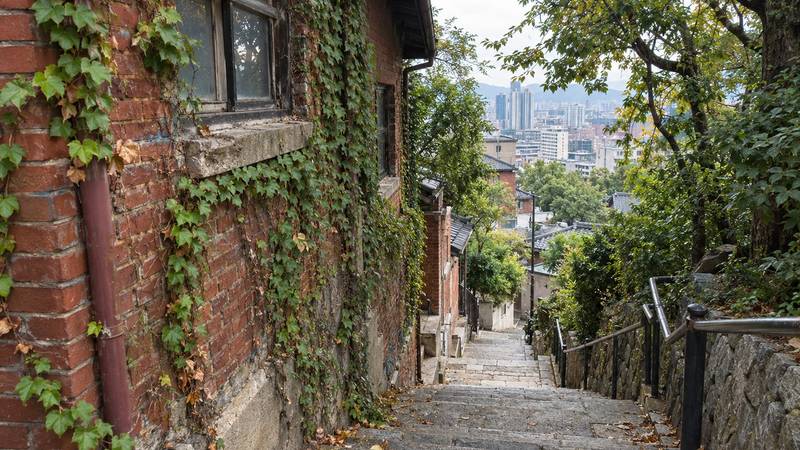
A free 1.64 km walk from the missionary houses on Cheongna Hill down the 90-step 3·1 Movement Road to Gyesan Cathedral.
Updated
Essentials
- Hours
- The streets: open at all hours, free
- Yi Sang-hwa and Seo Sang-don houses: 10:00–17:30
- Gyesan Yega (modern culture centre): 09:00–18:00; 09:00–17:30 November–February
- Herbal Medicine Museum: 09:00–18:00, last entry 17:30
- Free guided walk (Course 2): Saturdays 10:00–12:00 and 14:00–16:00, booked online
- Night walk: Friday and Saturday 19:00–21:00 (18:30–20:30 in the colder months)
- Closed
- The route itself never closes. The Herbal Medicine Museum closes on Mondays (it opens if Monday is a public holiday), 1 January and Seollal and Chuseok days. Gyesan Cathedral is a working church: visit quietly and not during Mass.
- Admission
- Free: the walk, the guided walks, the two old houses, Gyesan Yega and the Herbal Medicine Museum
- Getting there
- Daegu Metro Line 1 to Banwoldang (direct from Dongdaegu Station), exit 18, then about 500 m on foot to Cheongna Hill
- Or Sinnam Station (Lines 2 and 3), exit 9, about 300 m on foot
- The guided walks meet in front of the mission museum on Cheongna Hill; arrive 10 minutes early
- Address
- 66 Gukchaebosang-ro 102-gil, Jung-gu, Daegu (Ssamji Park tourist information, at the foot of the 3·1 Movement Road)
대구광역시 중구 국채보상로102길 66 - Website
- jung.daegu.kr/new/culture/pages/tour/page.html?mc=0789
Book your trip
Daegu’s Modern History Alley walk is free, 1.64 km long and takes about two hours, from the missionary houses on Cheongna Hill down to Jingolmok lane. The district runs free guided walks every Saturday at 10:00 and 14:00, but you must book them online several days ahead. On any other day, walk it on your own. Start from Banwoldang Station (exit 18), about 10 minutes from Dongdaegu on Line 1. It fits easily into a one-night stop on the Seoul–Busan KTX line.
| Your situation | Do this |
|---|---|
| In Daegu on a Saturday | Book the free guided walk (10:00 or 14:00) on the district’s calendar at least four or five days ahead. It meets in front of the mission museum on Cheongna Hill |
| Friday or Saturday evening | Join the free night walk at 19:00 (18:30 in the colder months). Route A ends at the Seomun night market, which runs until December |
| Any weekday, on your own | Start at Cheongna Hill around 10:00 so the old houses (10:00–17:30) and the Herbal Medicine Museum (to 18:00) are open as you pass |
| Monday | Walk it anyway; only the Herbal Medicine Museum is closed |
| You want an English-speaking guide | Korea Tourism lists English, Japanese and Chinese for the Saturday 14:00 walk; confirm on 053-661-2625 before you book |
| Short on time | Do just Cheongna Hill, the 90 steps and Gyesan Cathedral: about 30–40 minutes |
What is the Modern History Alley walk?
Central Daegu kept more of its early 20th-century buildings than most Korean cities. Jung-gu, the old-town district, links what survives into five themed walks it calls golmok (alley) tours. Course 2, the Modern Culture Alley (근대문화골목), is the most popular.
The route covers churches and mission houses from the early 1900s, the steps used in the 1919 independence protests, and the homes of two national figures. It then drops into the herbal-medicine quarter and the lanes of the old city centre. This is a city walk, not a museum visit: most of what you see is outside and costs nothing.
| Admission | Free (route, guided walks, houses, museum) |
| Length | 1.64 km, about 2 hours |
| Start / end | Cheongna Hill → Jingolmok |
| Nearest metro | Banwoldang (Line 1, exit 18) or Sinnam (Lines 2 and 3, exit 9) |
| Free guided walk | Saturday 10:00 and 14:00, online booking |
| Night walk | Friday and Saturday 19:00–21:00, winter 18:30–20:30 |
| Best for | History, photography, a half day between trains |
From the Jung-gu tourism pages, Daegu city tourism and the venues’ own sites, checked 12 November 2026.
The route, stop by stop
The district’s official order runs downhill from Cheongna Hill. Opening hours apply only to the stops that have an inside to visit:
| # | Stop | What it is | Hours |
|---|---|---|---|
| 1 | Cheongna Hill (Dongsan) | Garden hill with three red-brick missionary houses from about 1910 | Garden open; house interiors rarely open |
| 2 | 3·1 Movement Road | 90 stone steps through the trees down to the cathedral | Always open |
| 3 | Gyesan Cathedral | Gothic cathedral, the first Western-style church in the Gyeongsang region | Visit outside Mass |
| 4 | Yi Sang-hwa and Seo Sang-don houses | Restored homes of a resistance poet and a 1907 independence-movement leader | 10:00–17:30 |
| 5 | Gyesan Yega | Free modern-history exhibition centre next to the houses | 09:00–18:00 (17:30 Nov–Feb) |
| 6 | Mulberry alley | Lane linked to Du Sa-chung, a Chinese-born man who settled in Joseon | Always open |
| 7 | Old Jeil Church | Former building of Daegu’s first Protestant church | – |
| 8 | Yangnyeongsi and the Herbal Medicine Museum | Herbal-medicine market street with a free museum | Museum 09:00–18:00, closed Mon |
| 9 | Yeongnam-daero, Jongno and Jingolmok | Old road to Seoul, the former main street and a long, narrow lane | Always open |
| 10 | Overseas Chinese school | The Chinese community’s school building at the end of the walk | Outside only |
Stop order and hours from Jung-gu’s Course 2 and venue pages, checked 12 November 2026. If you start at 10:00, every indoor stop on the route is open when you reach it.
Cheongna Hill. The name means “green ivy”, after the ivy the American missionaries planted around their houses. The Switzer, Chamness and Blair houses are Daegu-listed heritage buildings. They now hold a mission museum, a medical museum and an education-and-history museum. The district publishes no regular opening hours for them. The Chamness house was opened specially for the October 2026 heritage night, and press coverage described it as rarely open. Expect to see the houses from the garden. Also on the hill: the cemetery of the missionaries and their families, a monument to the early Korean song Dongmu Saenggak, and what is said to be Daegu’s first Western apple tree.
3·1 Movement Road. The 90 steps lead through the trees from the hill down to the cathedral. The name recalls Daegu’s March 1919 independence protests against Japanese rule, which local students joined.
Gyesan Cathedral. The first church here, built in Korean style, burned down in 1901. The twin-spired brick cathedral that replaced it was the first Western-style church in the Gyeongsang provinces. It is still a working cathedral of the Daegu Archdiocese, with Mass at 06:30, 11:30 and 19:30 from Tuesday to Friday and many services on Sunday. Visit quietly and keep away from the altar during services.
The two old houses and Gyesan Yega. Yi Sang-hwa (1901–1943) wrote the resistance poem Does Spring Come to Stolen Fields?. Seo Sang-don (1851–1913) proposed the 1907 National Debt Repayment Movement, which tried to buy back Korea’s loans from Japan. Both houses are small and free, and open 10:00–17:30. Gyesan Yega next door has a short video and displays on modern Daegu.
Yangnyeongsi. The 400-year-old herbal medicine market is still lined with herbal pharmacies. The Herbal Medicine Museum shows the market’s history and rare medicinal herbs, and Korea Tourism lists audio guides in English, Japanese and Chinese. For the street itself, see Yangnyeongsi.
Jingolmok. The name comes from the local dialect: jilda is Gyeongsang speech for gilda, “long”. It is a narrow lane of old houses near Jongno, the former main street.
Free guided walks: how to book
Jung-gu has run its alley tours for years with its own trained guides. In July 2026 a guide quoted in the Korean press put the number at about 90, with English, Chinese, Japanese, French and Vietnamese among their languages.
- When: every Saturday, 10:00–12:00 and 14:00–16:00.
- Cost: free.
- Meeting point: in front of the mission museum on Cheongna Hill. Arrive 10 minutes early.
- How to book: on the district’s tour calendar (Korean only, “골목투어 신청”). You get a confirmation by text message. On 12 November 2026 the calendar showed the next few days as closed and took bookings from 16 November, so book at least four or five days ahead.
- Language: the Korean page does not say. Korea Tourism lists English, Japanese and Chinese for the 14:00 walk. Phone the tourism office on 053-661-2625 to confirm before you rely on it.
- Cancellation: a walk may be cancelled if few people sign up. The district texts participants 2–3 days before.
- Groups of 10 or more can book a free two-hour guide on other days through the same calendar; groups of 50 or more must phone.
The district also offers a self-guided stamp tour of Course 2. There are 15 stamp points along the way. It also has a smartphone app for walking without a guide.
The night walk (Fridays and Saturdays)
The Modern Alley Night Walk (근대골목 밤마실) covers 2.5 km in about two hours with a guide.
- When: Friday and Saturday 19:00–21:00; 18:30–20:30 in the colder months.
- Route A: meets at the main entrance of The Hyundai Daegu department store. It passes the Herbal Medicine Museum, Gyesan Yega, the cathedral, the 90 steps and the missionary houses, and ends at the Seomun night market.
- Cost and booking: free, on the same calendar or by phone (053-661-2625).
From Jung-gu’s night-walk page, checked 12 November 2026. A second route (B), ending at a Dongseongno street event, was marked as running in 2025 only. In August 2026 one Korean news report described the night walks as running Friday to Sunday, but the district’s page lists Friday and Saturday. The Seomun night market closes for winter after December, see Seomun Market. The district has not said how the night walk runs in January and February, so ask when you book.
Getting there
- From Dongdaegu Station (KTX/SRT): Daegu Metro Line 1 towards Seolhwa-Myeonggok, straight to Banwoldang. Leave by exit 18 and walk about 500 m to Cheongna Hill.
- From Sinnam Station (Lines 2 and 3), use exit 9, about 300 m from the hill.
- From Seomun Market: a short walk east, or one stop on Line 3 to Sinnam.
- By bus: many city routes stop around Banwoldang and Seomun Market; check Naver Map for the best connection.
Pay with a T-money card; see T-money. Driving is not worth it: the lanes are narrow and parking is scarce.
Tips for your visit
- Walk it downhill. Starting at Cheongna Hill means going down the 90 steps instead of up. The route ends near Jongno and Dongseongno, where there is plenty to eat.
- Go in the morning on weekdays. Start at 10:00 and the old houses, Gyesan Yega and the museum will all be open as you reach them.
- Respect the churches. The cathedral and the churches on the route are places of worship. Keep quiet inside and do not photograph services.
- Dress for steps. The 90 steps and some lanes are uneven. Wear comfortable shoes, and expect the hill to be slippery after rain.
- Pair it with food. Finish at Seomun Market or eat around Dongseongno; see food in Daegu.
- Tourist information: the Ssamji Park office at the foot of the 3·1 steps (053-661-3327), or call the 1330 travel hotline.
Nearby
- Seomun Market: Daegu’s biggest market, with a Friday-to-Sunday night market until December.
- Yangnyeongsi Herbal Medicine Market: the herbal street the walk passes through.
- Dongseongno: the shopping and café district just north of the route’s end.
- Kim Gwang-seok Street: a mural lane for the folk singer, a short ride south-east.
For the rest of the city, see the Daegu guide. For other heritage areas across the country, see museums in Korea and the Gyeongsang region.
Nearby
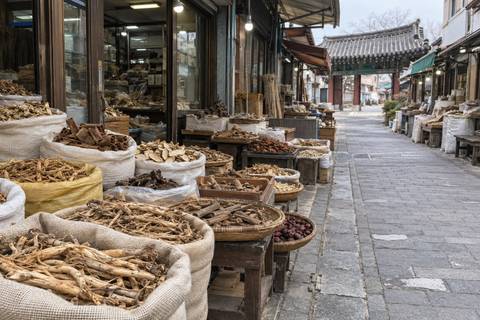
Yangnyeongsi Herbal Medicine Market and Museum
A 650 m street of about 350 herbal medicine shops, with a free museum of Korean medicine; the museum is closed on Mondays.
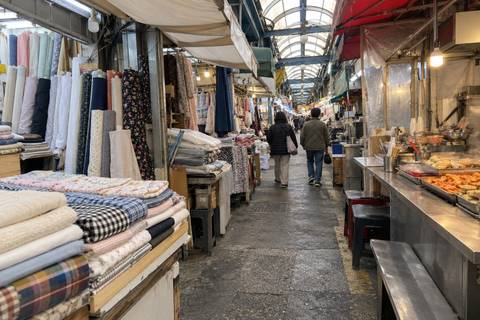
Seomun Market
Daegu's biggest market, with over 5,000 shops in eight sections and a noodle alley; the night market runs Fri–Sun, March to December.
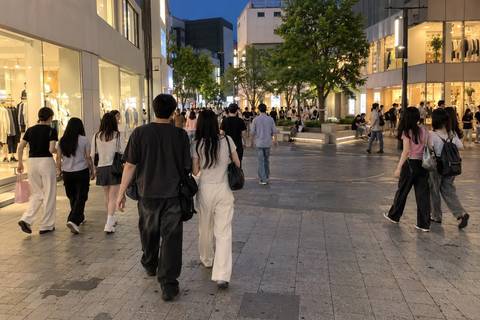
Dongseongno
Daegu's main shopping and nightlife district on the line of the old city wall, centred on a car-free street near Banwoldang.
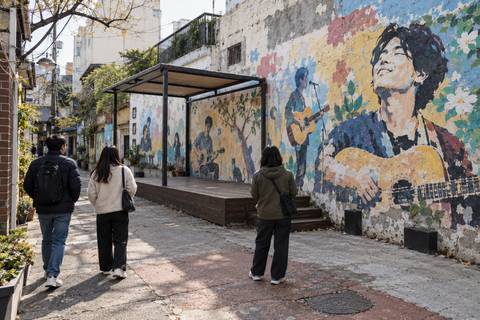
Kim Gwang-seok Street
A 350 m mural alley behind Bangcheon Market in memory of the folk singer Kim Gwang-seok; free and open at all hours.
Frequently asked questions
How long does the Daegu Modern History Alley walk take?
About two hours. Course 2 is 1.64 km from Cheongna Hill to Jingolmok, according to Daegu's Jung-gu district, which runs it. The distance is short, but there are steps and many stops. Allow longer if you plan to go inside the houses, Gyesan Yega and the Herbal Medicine Museum.
Is the Daegu Modern History Alley tour free?
Yes. The route is open at all hours and costs nothing, and so does the guided walk. It runs every Saturday at 10:00 and 14:00, booked on the district's tour calendar. The night walk on Friday and Saturday evenings is free too. The old houses, Gyesan Yega and the Herbal Medicine Museum charge no admission.
Is there an English-speaking guide for the Daegu alley tour?
Possibly, but book and confirm first. The Korea Tourism Organization lists English, Japanese and Chinese for the regular Saturday 14:00 walk. The district's own Korean page does not mention languages. Jung-gu says its 90 or so guides include English, Chinese, Japanese, French and Vietnamese speakers. Call 053-661-2625 to confirm.
Can I do the Daegu modern alleys on a Monday?
Yes. The streets, Cheongna Hill, the 3·1 Movement Road and the outside of Gyesan Cathedral are open every day. The Herbal Medicine Museum closes on Mondays unless it is a public holiday. The Yi Sang-hwa and Seo Sang-don houses list 10:00–17:30 with no closing day.
Can I go inside the missionary houses on Cheongna Hill?
Usually not. The three houses date from around 1910 and now hold small mission, medical and education museums, but no regular opening hours are published. The Chamness house was opened specially for the October 2026 heritage night, and press reports described it as rarely open. Plan to see the houses from the garden.
Sources
Facts on this page were checked against these sources on 12 November 2026. Prices, hours and rules change — confirm with the operator before you go.
- 대구 중구 문화관광 – 제2코스 근대문화골목 (1.64km, 2시간; 정기투어 토 10:00~12:00·14:00~16:00, 무료, 청라언덕 선교박물관 앞 집결; 반월당역 18번 출구 500m, 신남역 9번 출구 300m) (Korean) · official
- 대구 중구 문화관광 – 골목투어 신청 (2026년 11월 신청 달력, 단체 10명 이상 무료 해설, 053-661-2625) (Korean) · official
- 대구 중구 문화관광 – 밤마실투어 (2.5km, 금·토 19:00~21:00, 동절기 18:30~20:30, 무료, A코스 더현대 대구 정문 집결 → 서문야시장) (Korean) · official
- 대구 중구 문화관광 – 이상화 고택 · 서상돈 고택 (이용시간 10:00~17:30) (Korean) · official
- 대구 중구 문화관광 – 근대문화체험관 계산예가 (09:00~18:00, 11~2월 17:30) (Korean) · official
- 대구 중구 문화관광 – 청라언덕 · 스윗즈·챔니스·블레어 주택 (1910년경, 시 유형문화재 제24~26호, 선교·의료·교육역사 박물관) (Korean) · official
- 대구관광 – 대구 근대골목 (2코스 1.64km, 약 2시간, 매주 토요일 10:00·14:00 무료 정기 해설, 이용요금 무료) (Korean) · official
- 대구약령시한의약박물관 – 관람안내 (09:00~18:00, 종료 30분 전까지 입장, 월요일·1월 1일·설·추석 당일 휴관, 무료) (Korean) · official
- 주교좌계산대성당 – 미사 시간 · 사무실 안내 (Korean) · official
- VisitKorea – 3·1 Movement Road (90 steps, open 24 hours, free) · official
- K-Trip Tips (Korea Tourism Organization data) – Daegu Modern History Streets: multilingual regular tour Sat 14:00; Ssamji Park tourist information 053-661-3327 (updated 2026-11-11)
- 경북매일 – 대구 중구 골목문화해설사 인터뷰: 해설사 90여 명(영어·중국어·일본어·프랑스어·베트남어), 금·토 밤마실 투어 (2026-07-12) (Korean)
- 아이뉴스24 – 청사초롱 따라 걷는 대구의 밤: 근대골목 밤마실 (2026-08-19) (Korean)
- 아이뉴스24 – 2026 대구 국가유산 야행 16~17일, 챔니스 주택 내부 개방 (2026-10-14) (Korean)